
Featured Stainless Steel Tubing, Strips & Plates (Part 1)
Factory-direct supply engineered for industrial structural systems, precision pipe fabrication, and high-end architectural decor.

CE Certification China SUS304/304L Stainless Steel Strip Suppliers

China SUS304 Cold-Rolled Stainless Steel Plate Suppliers | Factory Direct

Custom Cost-Effective 201 Cold Rolled Stainless Steel Sheet
CE Certified SUS304/304L Stainless Steel Strips for Pipe Mills

China SUS304/304L Low Carbon Stainless Steel Pipe Suppliers

Custom China 201 Stainless Steel Glossy Pipe Suppliers

Wholesale China Perforated Stainless Steel Sheet Factory
Accurate Thickness 201 Cold Rolled Stainless Steel Sheet
Global Commercial & Industrial Status of Stainless Rectangular Tubing
How structural hollow sections (HSS) made of austenitic, ferritic, and duplex stainless steel are replacing traditional carbon structural steel in modern industrial projects.
Architectural & Infrastructure Demand
Modern structural engineering increasingly mandates stainless rectangular tubing for exterior curtain walls, airport canopies, and high-span bridge handrails. Their high torsional strength-to-weight ratio allows architects to minimize structural bulk while extending life cycles beyond 50+ years without maintenance painting.
Industrial Cleanrooms & Process Lines
In food processing, pharmaceutical cleanrooms, and chemical plants, rectangular profiles act as internal equipment support frames. Smooth, polished surfaces prevent bacterial entrapment and withstand daily CIP (Clean-In-Place) chemical washdowns with chlorine or caustic soda solutions.
Decarbonization & LCC Efficiency
Life Cycle Costing (LCC) models used by Tier-1 procurement teams favor stainless steel rectangular hollow sections. Despite higher upfront raw material costs compared to galvanized carbon steel, the zero-refurbishment policy lowers long-term operational expenditure in aggressive atmospheric zones.
Metallurgical Specifications & Dimensional Standards
Selecting the correct alloy chemistry, tolerance class, and international manufacturing standard for stainless structural rectangular hollow profiles.
Technical Principle: Stainless steel rectangular tubes are roll-formed cold from precision-slit strip coil, then welded along the longitudinal axis via High-Frequency Induction (HFW) or Tungsten Inert Gas (TIG) welding. Understanding the trade-off between yield strength, intergranular corrosion resistance, and corner radius strain hardening is critical for structural safety.
| Alloy Grade | UNS / EN Standard | Yield Strength (MPa) | Tensile Strength (MPa) | Corrosion Index (PREN) | Primary Industrial Use Cases |
|---|---|---|---|---|---|
| 201 (Low Ni) | UNS S20100 / 1.4372 | ≥ 275 | ≥ 520 | ~ 15.5 | Indoor handrails, architectural furniture, bus frames in dry regions. |
| 304 / 304L | UNS S30400 / 1.4301 | ≥ 205 | ≥ 515 | ~ 19.0 | Food equipment, structural framing, municipal guardrails, facades. |
| 316 / 316L | UNS S31600 / 1.4401 | ≥ 220 | ≥ 520 | ~ 25.0 | Marine hardware, coastal architecture, chemical process frames. |
| 310S (High Temp) | UNS S31008 / 1.4845 | ≥ 205 | ≥ 515 | ~ 26.0 | Heat exchangers, furnace structural supports, thermal treatment skids. |
| Duplex 2205 | UNS S31803 / 1.4462 | ≥ 450 | ≥ 620 | ~ 35.0 | Offshore oil & gas, coastal structural beams, high-stress load frames. |
| Super Duplex 2507 | UNS S32750 / 1.4410 | ≥ 550 | ≥ 750 | ≥ 42.0 | Seawater intake structures, aggressive chemical processing plants. |
ASTM A554 (Ornamental & Structural)
Covers welded stainless steel tubing for mechanical applications where appearance and physical properties take precedence over pressure containment. Standard rectangular sizes range from 10mm x 20mm up to 200mm x 400mm, with wall thicknesses from 0.5mm to 12.0mm. Corner radii are tightly controlled to prevent wall thinning during cold bending.
EN 10296-2 / EN 10219 structural
The European benchmark for welded circular and non-circular tubes for structural and general engineering applications. Specifies strict wall thickness tolerances (±10% or ±0.15mm), straightness limits (1.5mm/m), and longitudinal seam weld quality to ensure stress distribution across rectangular corners.
JIS G3446 (Architectural Structural)
Japanese Industrial Standard governing stainless steel pipes for building structures. Emphasizes aesthetic finish consistency (Hairline, 400-grit Satin, 8K Mirror) combined with seismic ductility required for modern high-rise building facades and glass curtain wall structural mullions.
China Stainless Rectangular Tube Benchmark Pricelist Matrix
Understanding FOB/CIF unit pricing drivers, raw material alloy surcharges (Nickel/Chromium indexing), and order volume discount structures.
Note: The prices below represent live mill benchmark ranges based on standard ASTM A554 / EN 10296 specs. Actual quotes vary based on raw material market index fluctuations (LME Nickel / Shanghai Metal Exchange), specialized surface finishes, and custom wall thickness tolerances.
| Dimensions (OD mm) | Wall Thickness (mm) | Grade 201 (USD/Ton) | Grade 304/304L (USD/Ton) | Grade 316/316L (USD/Ton) | Duplex 2205 (USD/Ton) |
|---|---|---|---|---|---|
| 20 x 10 mm to 40 x 20 mm | 0.8 mm - 1.5 mm | $1,150 - $1,350 | $2,100 - $2,380 | $3,100 - $3,450 | $4,100 - $4,600 |
| 50 x 25 mm to 80 x 40 mm | 1.5 mm - 3.0 mm | $1,100 - $1,280 | $2,050 - $2,280 | $3,000 - $3,350 | $3,950 - $4,400 |
| 100 x 50 mm to 150 x 100 mm | 3.0 mm - 6.0 mm | $1,180 - $1,320 | $2,120 - $2,350 | $3,080 - $3,400 | $4,050 - $4,550 |
| 200 x 100 mm to 300 x 200 mm | 4.0 mm - 10.0 mm | Contact Mill | $2,200 - $2,480 | $3,150 - $3,550 | $4,200 - $4,800 |
1. Raw Material Coil Surcharge
60% to 70% of the final tube quote is tied to raw stainless steel strip coil costs. Fluctuations in LME Nickel, Ferrochrome, and Molybdenum directly impact 304/316 prices. Buying directly from Wuxi suppliers connected with Tsingshan and TISCO ensures primary mill price indexing without intermediary markup.
2. Forming & Welding Complexity
Rectangular tube processing requires two steps: cold-rolling circular parent tube followed by squaring rollers. Heavier wall thicknesses (>6mm) or tight radius corners require specialized high-tonnage cold sizing mills, which incurs a slight conversion surcharge per ton.
3. Surface Treatment Surcharges
Standard Mill Finish (2B/No.1) is the cost baseline. Mechanical polishing to 180-Grit Satin, 400-Grit Hairline, or 8K Mirror adds approximately $80 - $250 per ton. Specialized PVD Vacuum Color Coating (Gold, Black, Rose Gold) adds premium aesthetic value for architectural projects.
China Factory Supply Chain Efficiency & Eco-System Advantages
Why sourcing stainless rectangular tubing from Wuxi, Jiangsu—China's primary stainless steel processing hub—delivers unparalleled lead time and quality security.
Vertical Upstream Integration
Wuxi factories maintain strategic reserve contracts with top-tier primary steel makers: Tsingshan, TISCO (Taiyuan Iron & Steel), POSCO, and Baosteel. Slitting precision strip, continuous welding, and square forming occur in one geographic zone, reducing transport delays and material handling damage.
Cost Optimization & Agile Tooling
With access to thousands of precision forming dies and automated slitting machines, Chinese manufacturers can rapidly switch die sets for custom rectangular dimensions (e.g., 120mm x 60mm with 2.75mm wall thickness) without charging exorbitant custom tooling fees to international buyers.
Port & Export Freight Logistics
Located near Shanghai Port and Ningbo Port, factories deliver sea-freight export orders within 15–20 days. Automated seaworthy bundling (wooden crate packaging, PVC film wrapping, steel end caps) prevents seawater corrosion and transportation scratches during long-distance shipping.
Technology Roadmap & Processing Innovations
Next-generation production methodologies enhancing weld integrity, dimensional consistency, and surface corrosion performance.
Precision Strip Slitting
Automated hydraulic slitting lines cut parent coil to exact width tolerances (±0.05mm), eliminating edge burrs that could compromise weld seam geometry.
Laser & HF TIG Welding
Continuous automatic TIG/Plasma or High-Frequency Induction welding ensures complete heat penetration while controlling heat input to avoid chromium carbide precipitation.
Eddy Current Inspection
100% online Eddy Current flaw detection scans the full circumference and longitudinal weld seam to identify micro-cracks or pinholes in real time.
In-line Hydrogen Annealing
Heat treating the welded tube in a pure hydrogen atmosphere at 1050°C restores mechanical ductility and regenerates the passive chromium-oxide surface film.
Localized Engineering Application Scenarios
Real-world structural deployment across extreme environments, architectural monuments, and high-purity industrial plants.
Coastal Curtain Wall Frameworks
In marine coastal projects (e.g., Singapore, Gulf Region), Grade 316L rectangular tubes (150mm x 75mm x 4.0mm) serve as load-bearing structural mullions. The addition of Molybdenum provides critical resistance against chloride pitting from salt spray, maintaining structural integrity without rusting.
High-Speed Rail & Transport Chassis
Lightweighting mandates in electric buses and high-speed rail coaches leverage Grade 201 or 304 rectangular hollow profiles. High yield strength combined with controlled wall thickness reduces vehicle tare weight while absorbing collision kinetic energy safely.
Pharmaceutical Cleanroom Skids
Equipment mounting skids in sterile environments utilize 304L or 316L rectangular tubing with 400-grit Satin polish. Flat surfaces allow seamless integration with sterile sandwich panels, and fully sealed tube ends prevent internal moisture or dust accumulation.
Regulatory Compliance & Quality Control Protocols
Rigorous mill testing procedures ensuring total alignment with international B2B procurement standards.
Mill Test Certificate (EN 10204 3.1)
Every shipment is dispatched with an authentic MTC detailing heat chemical analysis (C, Si, Mn, P, S, Cr, Ni, Mo), yield/tensile mechanical testing, elongation percentage, and hardness testing results traceable to raw coil heats.
Dimensional Micrometer Validation
Precise laser sensors continuously verify wall thickness tolerance, outer rectangular side lengths, diagonal squareness (preventing diamond distortion), and straightness (<1.0mm per meter length) before packaging.
Third-Party Inspection Support
Full support for international third-party verification prior to port dispatch, including SGS, TÜV Rheinland, Bureau Veritas (BV), and Intertek testing for chemical spectral analysis and mechanical weld seam bend tests.
Frequently Asked Questions by Technical Buyers
Clear, engineering-backed answers addressing critical questions regarding stainless steel rectangular tube sourcing.
Q1: How do I choose between Grade 304 and Grade 316L for rectangular tubing?
Grade 304 (18% Cr, 8% Ni) is the standard choice for indoor structural frameworks, dry architectural installations, and food machinery. However, if your installation is located within 5 kilometers of a coastal marine environment or exposed to de-icing salts or industrial acids, Grade 316L (containing 2-3% Molybdenum) is mandatory to avoid localized chloride pitting corrosion.
Q2: What is the standard corner radius for cold-formed stainless rectangular tubing?
According to ASTM A554 standards, the outside corner radius (R) is typically between 1.5 times and 3.0 times the nominal wall thickness (1.5t to 3.0t). Sharp corners (1.0t) can be produced upon request, but they require specialized roll forming steps to ensure corner material thickness does not thin below design minimums.
Q3: How are stainless rectangular tubes priced from Chinese suppliers?
Stainless tubing is priced on a per-metric-ton ($/MT) basis or per-meter basis. Sourcing costs consist of: (1) Primary alloy coil price (indexed to raw Nickel/Chromium), (2) Tube rolling and welding conversion fee, (3) Surface finish surcharge (e.g., 400-grit hairline or mirror polish), and (4) Export packaging/seafreight logistics. Ordering full container loads (FCL, approx. 20-25 tons) maximizes freight efficiency.
Q4: Can Chinese factories supply custom rectangular tube sizes outside standard tables?
Yes. Because Chinese manufacturing hubs in Wuxi operate modular adjustable sizing mills, non-standard rectangular aspect ratios (e.g., 180mm x 60mm, 250mm x 100mm) or non-standard wall thicknesses (e.g., 2.75mm or 3.25mm) can be produced with short tooling setup times for orders exceeding 5 metric tons.
Q5: What protective steps are taken to prevent surface damage during transit?
Rectangular tubes are individual PVC film sleeve wrapped or packed with peelable protective laser film. Bundles are bound with woven plastic strapping, fitted with corner edge protectors, and encased in sturdy wooden boxes or steel-framed seaworthy pallets to prevent ocean moisture exposure and transit abrasion.
Q6: What is the difference between welded and seamless rectangular tubing?
Over 90% of stainless rectangular tubes are produced as welded (HFW/TIG) hollow sections because cold-forming rolled coil produces superior wall thickness uniformity and surface finish at a significantly lower cost. Seamless rectangular tubing is cold-drawn from round seamless billets and is reserved for extreme high-pressure fluid lines or heavy nuclear structural applications.
Featured Stainless Steel Tubing, Strips & Plates (Part 2)
Explore our broader industrial supply offerings, including super duplex plates, heavy hot-rolled coils, and precision strip materials.
Custom Perforated Stainless Steel Sheet Solutions
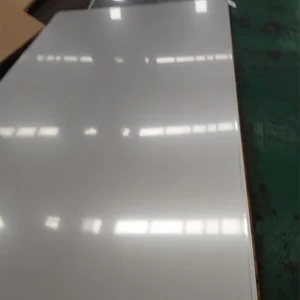
Custom 2507 Super Duplex Steel Plate High Corrosion Resistance
CE Certification SUS304/304L Stainless Steel Strip Direct Source
CE Certified Perforated Stainless Steel Sheet Metal Mesh
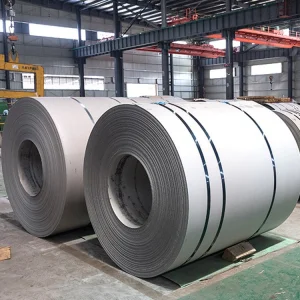
CE Certified Hot Rolled Stainless Steel Coils for Heavy Industry
Precision Custom SUS304/304L Stainless Steel Strip

Wholesale High-Quality 201 Stainless Steel Strip/Coil Supplier