
High-Demand Stainless Steel Pipeline & Flat Products
Direct mill-sourced, precision-processed stainless steel coils, sheets, welded pipes, and structural strips manufactured under ISO 9001 and international standards.



The Ecosystem Advantage of Chinese Hot Product Stainless Steel Factories
Understanding the structural macro-advantages that position China as the undisputed nexus for B2B stainless steel production, processing, and metallurgical innovation.
Vertical Upstream Integration
China's stainless steel manufacturing hub in Wuxi and surrounding industrial clusters operate alongside mega-tier raw material suppliers such as Tsingshan Holding Group, TISCO, Baosteel, and POSCO. By controlling Nickel Pig Iron (NPI) refining, continuous billet casting, and primary hot-rolling under consolidated logistics, factories minimize raw material price volatility and eliminate intermediate markup costs.
In-House Secondary Processing
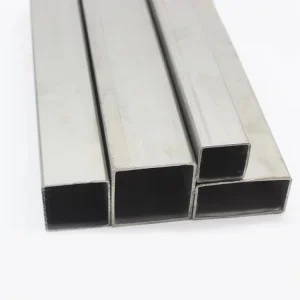
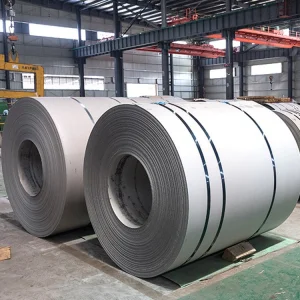
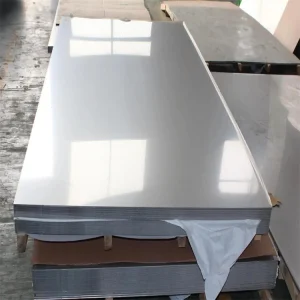
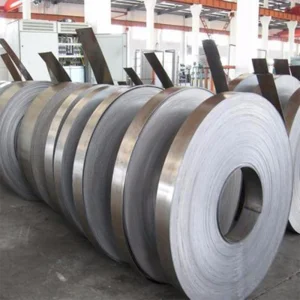
Leading Chinese factories operate integrated secondary conversion lines—including precision cold-rolling, automatic coil slitting, tension leveling, 8K mirror polishing, No.4 hairline brushing, custom perforation, and continuous TIG/High-Frequency welded pipe mills (over 80+ active lines). This internal infrastructure guarantees strict dimensional tolerances down to ±0.02mm.
Economies of Scale & Agile Lead Times
With annual processing capacities exceeding hundreds of thousands of metric tons, manufacturers achieve unrivaled production efficiency. Stocking standard master coils (201, 304/304L, 316L, 2205) enables rapid order turnaround—reducing typical OEM production cycles from 45 days down to 7–14 days for customized orders.
Global Stainless Steel Industry Development Trends
An engineer's perspective on shifting metallurgical demands, environmental mandates, and technological advancements reshaping B2B metal procurement.
1. Accelerated Shift Toward Duplex & Super Duplex Alloys
Global engineering projects are increasingly shifting from standard austenitic alloys (304/316L) toward Duplex 2205 (UNS S31803 / S32205) and Super Duplex 2507 (UNS S32750). Driven by rising nickel price volatility and aggressive marine operational conditions, duplex steels offer almost double the yield strength (≥450 MPa) compared to 304 (≥205 MPa), allowing structural wall thickness reductions of 30% to 40% without compromising pressure safety ratings.
2. AI-Driven Quality Assurance & Real-Time Thickness Gauge Control
Modern Chinese manufacturing facilities have integrated Industry 4.0 automation. Continuous laser-thickness monitoring and automated eddy-current non-destructive testing (NDT) run inline on high-speed welded tube mills. Micro-defects, wall-thinning anomalies, or seam weld deviations are detected instantly at speeds up to 120 meters/minute, ensuring 100% compliance with ASTM A240, ASTM A312, and EN 10088-2 standards.
3. Transition to Ultra-Low Carbon & High-PREN Metallurgy
Industrial buyers in chemical processing and marine engineering demand strict resistance to intergranular corrosion and localized pitting. Production lines are standardizing ultra-low carbon chemistry (C ≤ 0.030% for 304L/316L) alongside precise Molybdenum (Mo) and Nitrogen (N) micro-alloying to boost the Pitting Resistance Equivalent Number (PREN):
PREN = %Cr + 3.3(%Mo + 0.5%W) + 16(%N)
*Standard 304 yields PREN ~19; 316L yields PREN ~23–25; Duplex 2205 yields PREN ~35; Super Duplex 2507 achieves PREN ≥42 for extreme seawater immersion.
4. Decarbonization & Green Steel Manufacturing Initiatives
With global ESG requirements and carbon border adjustments (such as the EU CBAM), Tier-1 Chinese steelmakers are investing heavily in Electric Arc Furnace (EAF) scrap recycling and hydrogen-based direct reduced iron (DRI) processes, significantly lowering the embodied carbon footprint per ton of hot-rolled and cold-rolled stainless coil.
Macro-Industry Solutions & Localized Application Scenarios
Matching specific metallurgical grades, surface topographies, and dimensional profiles to demanding international operating environments.
Chemical, Petrochemical & Process Piping
Primary Selection: 316L, 317L, Duplex 2205 Welded & Seamless Pipes.
In process equipment handling organic acids, chlorides, and high-pressure steam, low-carbon austenitic and duplex pipes prevent sensitization during welding. Applications include heat exchangers, pressure vessels, offshore piping manifolds, and acid storage tanks.
Food, Beverage & Pharmaceutical Systems
Primary Selection: SUS304, SUS304L, 316L Sanitary Tubes (BA / No.4 Finish).
High internal surface smoothness (Ra ≤ 0.4 µm achieved via mechanical and electropolishing) prevents bacterial adhesion and biofilm formation. Essential for dairy processing plants, brewery piping, water purification loops, and sterile processing tanks.
Architectural Facades & High-End Infrastructure
Primary Selection: 201, 304, 316 Embossed, Perforated & 8K Mirror Sheets.
Combines visual aesthetics with long-term atmospheric durability. Applications include exterior curtain walls, elevator cabs, luxury retail storefronts, decorative handrails, and acoustical perforated interior cladding.
Stainless Steel Grade Performance & Selection Guide
A comprehensive technical benchmarking table designed for procurement teams, structural engineers, and metallurgists.
| Grade Designation | Metallurgical Structure | Tensile Strength (MPa) | Yield Strength (0.2% MPa) | PREN Rating | Corrosion Resistance | Recommended Application |
|---|---|---|---|---|---|---|
| Grade 201 | Austenitic (Cr-Mn-Ni) | ≥ 520 | ≥ 275 | ~ 15 | Moderate (Dry Indoor) | Indoor furniture, decorative trim, curtain rods, architectural hardware. |
| Grade 304 / 304L | Austenitic (18/8 Cr-Ni) | ≥ 515 / 485 | ≥ 205 / 170 | ~ 19 | Good (General Purpose) | Food equipment, kitchenware, architectural sheet, municipal piping. |
| Grade 316 / 316L | Austenitic (Cr-Ni-Mo) | ≥ 515 / 485 | ≥ 205 / 170 | ~ 23 – 25 | Very Good (Chlorides/Acid) | Chemical processing, marine fittings, pharmaceutical lines, heat exchangers. |
| Grade 310S | High-Temp Austenitic | ≥ 515 | ≥ 205 | ~ 22 | High Thermal Oxidation | Furnace components, boiler baffles, heat treating fixtures (Up to 1150°C). |
| Grade 430 | Ferritic (Nickel-Free) | ≥ 450 | ≥ 205 | ~ 16 | Moderate (Mild Indoor) | Home appliance panels, washing machine drums, interior kitchen trim. |
| Duplex 2205 | Austenitic-Ferritic | ≥ 620 | ≥ 450 | ~ 34 – 36 | Excellent (SCC Resistant) | Oil & gas, desalination plants, high-chloride chemical tanks, structural members. |
| Super Duplex 2507 | Austenitic-Ferritic | ≥ 750 | ≥ 550 | ≥ 42 | Superior (Marine/Acid) | Offshore platforms, subsea pipelines, flue-gas scrubbers, aggressive seawater loops. |
Global Enterprise Procurement & Risk Mitigation Framework
How Tier-1 international buyers structure technical audits, certification frameworks, and seaworthy logistics when purchasing from Chinese manufacturers.
Traceable Quality Certification
Every shipment must be accompanied by an original EN 10204 3.1 Mill Test Certificate (MTC) issuing actual ladle heat chemical analysis, mechanical tensile yield test results, hardness values, and intergranular corrosion test outcomes. Reputable factories support 3rd-party inspections by SGS, TÜV, Bureau Veritas, or Intertek prior to container loading.
Export Seaworthy Packaging Protection
Flat products and coils are highly susceptible to salt-air corrosion and water staining during multi-week ocean transit. Leading suppliers utilize double-layer heavy-duty waterproof craft paper, heavy VCI (Vapor Corrosion Inhibitor) plastic film wrap, steel edge protectors, and fumigated hardwood skids anchored with high-tensile steel strapping.
Total Cost of Ownership (TCO) Optimization
Evaluating procurement based strictly on base price per ton often leads to hidden fabrication costs if tolerances, flatness, or weld bead heights are inconsistent. Partnering with mill-direct factories with automated leveling and slitting guarantees zero downstream downtime on punching, laser-cutting, or roll-forming lines.
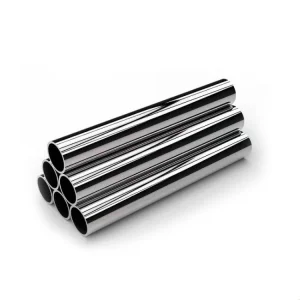
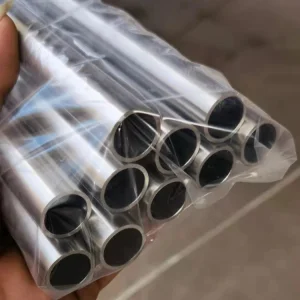
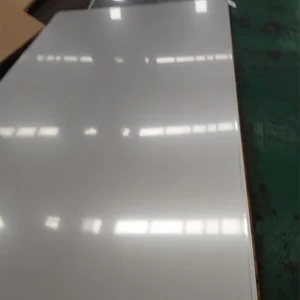
Specialized Stainless Steel Coils, Plates & Custom Tubing
Explore custom engineered cold-rolled sheets, ultra-low carbon pipes, super duplex plates, and precision strip solutions.


Frequently Asked Questions (FAQ) for Industrial Procurement
In-depth answers addressing material specifications, factory processing capabilities, quality verification, and international sourcing logistics.
Our manufacturing and processing facilities cover three major alloy families:
• Austenitic Series: 201, 304, 304L, 316, 316L, 321, 310S.
• Ferritic & Martensitic Series: 430, 410, 420.
• Duplex & Super Duplex Series: 2205 (UNS S31803/S32205) and 2507 (UNS S32750).
All materials are available in master coil, slit strip, cold-rolled sheet, heavy hot-rolled plate, and structural or decorative welded pipes.
Flat steel products (sheets, plates, and coils) conform strictly to ASTM A240 / A240M, EN 10088-2, and JIS G4304 / G4305. Welded and seamless industrial pipes adhere to ASTM A312, ASTM A554 (decorative/structural), ASTM A269, and EN 10217-7. Tolerances, chemical heat analysis, yield/tensile thresholds, and hydrostatic/eddy-current testing parameters are explicitly confirmed in writing prior to production.
100% of master coil feedstock is directly sourced from premier primary steelmakers including Tsingshan, TISCO, Baosteel, and POSCO. Incoming raw coils undergo optical emission spectrometry (OES) chemical analysis. Finished products are supplied with full heat-traceable EN 10204 3.1 Mill Test Certificates detailing exact elemental weight percentages (Cr, Ni, Mo, C, N, Mn, P, S).
Our processing workshop operates 6 polishing lines and 2 custom embossing lines providing:
• No.1: Hot-rolled, annealed, and descaled.
• 2B / BA: Smooth cold-rolled finish and Bright Annealed mirror finish.
• No.4 / Hairline (HL): Directional satin grain polishing for appliances and architectural panels.
• 8K Mirror: High-reflectivity mechanical polishing with optional PVD color coating (Gold, Rose Gold, Black Titanium).
• Embossed & Perforated: Stamped textured patterns or CNC custom hole geometry.
Grade 201 replaces a portion of nickel with manganese and nitrogen, lowering material cost while increasing yield strength. However, Grade 201 has lower pitting corrosion resistance and is strictly recommended for dry indoor environments (furniture, curtain rods, decorative trim). Grade 304 contains ~8% Nickel and ~18% Chromium, offering robust resistance to atmospheric humidity, making it suitable for outdoor structural architectural cladding and kitchen equipment.
All export orders are wrapped with anti-corrosion VCI film, encased in heavy-duty moisture-proof kraft paper, fitted with plastic or metal corner guards, and anchored securely on ISPM-15 compliant fumigated wooden pallets or steel skids. Pipe bundles are capped with protective end caps and wrapped in woven plastic slings to prevent abrasion during crane handling.
For standard stocked coil thickness and tube dimensions, the MOQ starts as low as 1 to 3 metric tons. Custom thickness tolerances, specialized slitting widths, or custom perforated sheets typically carry an MOQ of 3 to 5 tons per specification. Standard lead time for custom production is 7 to 15 business days from deposit confirmation.
Low-carbon variants ("L" denotes carbon ≤ 0.030%) prevent chromium carbide precipitation at the grain boundaries during heavy welding operations (sensitizing temperature range 425°C–860°C). This eliminates intergranular corrosion in the heat-affected zone (HAZ), making 304L and 316L vital for heavy-wall welded industrial pipelines and pressure vessels without requiring post-weld solution annealing.
Partner with a Direct Stainless Steel Manufacturer
Elevate your supply chain efficiency with traceable raw material feedstock, precision in-house slitting and tube welding, and mill-direct factory pricing.