
Featured Product Engineering Specs
Direct Mill Supply: Certified Stainless Steel Pipes, Sheets, and Specialized Industrial Components

Wholesale Stainless Steel Pipe Direct Factory Manufacturer, Factories
View Specifications
CE Certification Stainless Steel Decorative Pipe Supplier, Quotes
Request Quote
Custom Stainless steel industrial welded pipe Manufacturer, Supplier
Explore Custom Specs
Wholesale SUS304/304L lower carbon stainless steel pipe Factory, Quotes
Download Data Sheet
China Prime Quality 201 Stainless Steel Pipe Manufacturers, Manufacturer
Check Availability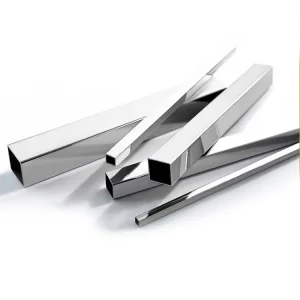
CE Certification Telescopic Stainless Steel Mop Handle Tube, Adjustable, 22mm OD
Inquire Now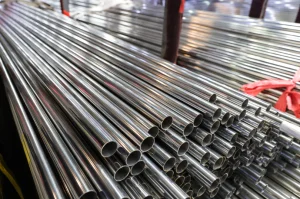
Custom 316L Stainless Steel Weld Pipe Suppliers, Factories
Technical Catalog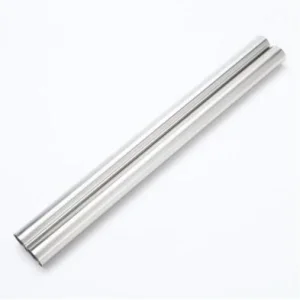
Wholesale 201 Stainless Steel Curtain Rod Tube, 25mm OD, Powder Coated
Get Factory PriceGlobal Stainless Steel Piping Market Evolution & Outlook
Strategic analysis of decarbonization trends, material science advancements, and global procurement shifts.
Decarbonization & Green Steel Transitions
The global industrial sector is undergoing a profound paradigm shift. Industrial procurement mandates now heavily factor Scope 1, 2, and 3 emissions into material selection. Advanced stainless steel pipe manufacturers are integrating Electric Arc Furnace (EAF) technologies fed by renewable energy grids and high-grade scrap steel. This transition significantly lowers the embodied carbon footprint of chromium-nickel alloys while keeping structural and anti-corrosive characteristics intact.
Volatile Raw Material Hedging Strategy
Fluctuating prices in raw nickel, ferrochrome, and molybdenum directly impact structural project budgets worldwide. Tier-1 enterprise buyers are moving away from spot-market buying to strategic long-term supply agreements. High-volume pipe suppliers utilize advanced metallurgical alloy optimization—such as replacing portioned nickel with manganese-nitrogen matrices in 201 series or deploying Duplex 2205 alloys—to yield maximum yield strength per dollar spent.
Rise of High-Performance Duplex Alloys
Traditional 304/304L and 316/316L austenitic stainless steel pipes are increasingly supplemented by Duplex (2205) and Super Duplex (2507) tubing in harsh operational environments. With yield strengths nearly double that of conventional austenitic grades, structural wall thicknesses can be reduced without compromising pressure containment—drastically cutting logistics weight, welding consumables, and total life-cycle maintenance costs.
Industry Insight: Information Gain in Sourcing Stainless Tubing
Procuring industrial welded or seamless pipes goes beyond looking at price-per-ton. Mechanical integrity hinges on precise heat treatment (solution annealing), mechanical testing (hydrostatic and eddy current testing), and strict dimensional tolerances. Modern buyers require full traceability back to original coil heat numbers, documented via EN 10204 3.1 Mill Test Certificates (MTC).
China Factory 4.0: Modern Manufacturing & Supply Resilience
How Wuxi's metallurgical manufacturing hub delivers unmatched lead times, precision tolerances, and cost efficiencies.
Fully Integrated Upstream Mill Partnerships
Located in Wuxi, Jiangsu—China's premier stainless steel distribution and processing capital—leading manufacturers leverage direct raw material sourcing agreements with mega-mills such as Tsingshan, TISCO, POSCO, and Baosteel. This vertical integration guarantees chemical purity, consistent grain structure, and immunity from upstream coil shortages during global market disruptions.
High-Precision Automatic TIG & Plasma Welding
Factory 4.0 integration replaces legacy manual welding with multi-head automated TIG (Tungsten Inert Gas), Plasma Arc, and Laser Welding systems. Internal bead rolling and online bright annealing lines eliminate weld seam vulnerability, ensuring the weld joint factor ($E=1.0$) matches parent metal strength across high-pressure fluid conveyance setups.
Automated Surface Finish & Fabrication Lines
From industrial No.1 acid-pickled finishes to high-grade 8K mirror polishing, 240-grit brushed/hairline finishes, PVD color coating, and anti-fingerprint lacquering, automated processing lines ensure absolute color and texture uniformity across large production runs. Custom cut-to-length and telescopic fabrication meet exact client drawings.
Comprehensive Stainless Steel Alloy & Grade Matrix
Technical reference guide mapping material chemistries, mechanical capabilities, and target operational environments.
| Grade Family | UNS / EN Standard | Nominal Composition | Yield Strength (MPa) | Pitting Resistance (PREN) | Primary Industrial Applications |
|---|---|---|---|---|---|
| Austenitic 201 | UNS S20100 / 1.4372 | 16-18% Cr, 3.5-5.5% Ni, 5.5-7.5% Mn | ≥ 310 | ~ 17 | Decorative tubing, architectural handrails, household hardware, structural trims. |
| Austenitic 304 / 304L | UNS S30400 / 1.4301 (304L: 1.4307) | 18-20% Cr, 8-10.5% Ni, ≤0.03% C (304L) | ≥ 205 | ~ 19 - 21 | Food & beverage processing, potable water networks, general sanitary piping, kitchenware. |
| Austenitic 316 / 316L | UNS S31600 / 1.4401 (316L: 1.4404) | 16-18% Cr, 10-14% Ni, 2-3% Mo | ≥ 220 | ~ 23 - 25 | Marine hardware, chemical processing lines, pharmaceutical tubing, coastal structures. |
| High-Temp 310S | UNS S31008 / 1.4845 | 24-26% Cr, 19-22% Ni | ≥ 205 | ~ 26 | Furnace muffles, thermal treatment piping, power generation heat exchangers (≤1150°C). |
| Ferritic 430 | UNS S43000 / 1.4016 | 16-18% Cr, <0.75% Ni (Magnetic) | ≥ 260 | ~ 16 | Appliance paneling, interior architectural cladding, mild indoor atmospheric environments. |
| Duplex 2205 | UNS S31803 / 1.4462 | 22% Cr, 5% Ni, 3% Mo, 0.17% N | ≥ 450 | ~ 34 - 36 | Oil & gas flowlines, seawater desalination plants, chemical tankers, high-chloride setups. |
| Super Duplex 2507 | UNS S32750 / 1.4410 | 25% Cr, 7% Ni, 4% Mo, 0.27% N | ≥ 550 | ≥ 42 | Offshore oil platforms, subsea manifolds, aggressive pulp/paper bleaching, acid processing. |
Localized Application Scenarios & Engineering Integration
Matching precise pipe specifications to mission-critical industrial operational environments worldwide.
Chemical & Petrochemical Processing
Required Grades: ASTM A312 TP316L, Duplex 2205
Critical Demand: High resistance to intergranular corrosion and chloride stress-corrosion cracking (SCC). Solutions must feature full solution annealing (1040°C–1100°C followed by rapid quenching) to re-dissolve chromium carbides into matrix, preventing intergranular attack along weld heat-affected zones (HAZ).
Food, Dairy & Bio-Pharmaceutical
Required Grades: 304L, 316L Sanitary Tubing (ASTM A270)
Critical Demand: Ultra-smooth internal surface roughness ($Ra < 0.4\,\mu\text{m}$ or mechanical polishing/electro-polishing). Ensures zero bacterial trap zones, supports Clean-In-Place (CIP) and Sterilize-In-Place (SIP) protocols without surface pitting from aggressive caustic wash solutions.
Desalination & Marine Structural Engineering
Required Grades: Super Duplex 2507, 316L
Critical Demand: Extremely high PREN requirements ($\ge 42$) to combat warm marine environments, high salinity, and high-velocity turbulent flow. Protects against crevice corrosion around pipe flanges, valves, and structural support joints.
Architecture, Infrastructure & OEM Products
Required Grades: ASTM A554 201, 304 Ornamental Pipe
Critical Demand: Aesthetics, tight bendability, and exterior durability. Used for luxury curtain rod systems, anti-fingerprint mop handles, structural building handrails, facade supports, and decorative interior metalwork.
Quality Assurance Protocol & International Certifications
Demonstrating rigor through certified testing procedures, mill origin verification, and dimensional accuracy.
Non-Destructive Testing (NDT)
Every industrial fluid pipe undergoes 100% inline Eddy Current Testing (ASTM E426) or Hydrostatic Pressure Testing (ASTM A999) to verify zero wall leaks, micro-cracks, or weld seam voids prior to surface finishing and bundling.
Chemical & PMI Verification
Handheld Positive Material Identification (PMI) X-ray spectrographic analysis verifies chemical elements (Cr, Ni, Mo, Mn) on raw coil receipt and final pipe delivery, avoiding material mix-ups.
Mechanical Performance Testing
Batch testing includes Tensile Strength, Yield Strength, Elongation, Flattening, and Flaring tests in accordance with ASTM A312 and EN 10217-7. Full test results are issued on EN 10204 3.1 certificates.
Frequently Asked Questions (Procurement & Technical FAQ)
Expert answers addressing global B2B buyer concerns on lead times, engineering tolerances, and compliance.
Complete Stainless Product Portfolio
Cold-Rolled Sheets, Heavy Plates, Duplex Alloys & Perforated Metal Mesh

Custom 2507 Super Duplex Steel Plate Supplier, Quotes
Inquire Plate Specs
Custom High Cost-effective 201 Cold Rolled Stainless Steel Sheet
Request Pricing
CE Certification China Perforated Stainless Steel Sheet Suppliers
View Mesh Options
Custom China Perforated Stainless Steel Sheet Suppliers
Custom Hole Pattern
Wholesale Perforated Stainless Steel Sheet from China Suppliers & Factory
Download Sheet Catalog
CE Certification China Stainless Steel Industrial Welded Pipe
View Industrial Specs
Custom Prime Quality 201 Stainless Steel Pipe from China Suppliers
Request Price Quote