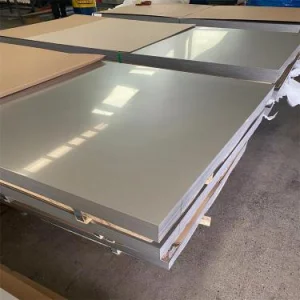
Featured Precision Cold-Rolled & Stainless Products
Certified Industrial Raw Materials Direct from China Manufacturing Hubs







Metallurgical Foundations of Cold Rolled Steel Strength
Understanding Strain Hardening, Microstructural Evolution, and Dislocation Density in Modern Metallurgy
Core Metallurgical Fact: Cold rolling increases dislocation density within the ferrite or austenite crystal structure from approximately $10^8\text{ cm}^{-2}$ to upwards of $10^{12}\text{ cm}^{-2}$. This physical pinning of dislocations requires higher shear stress to initiate plastic deformation, elevating structural strength by 50% to 150% compared to hot-rolled precursor slabs.
Grain Elongation & Anisotropy
As steel passes through precision cold-rolling stands under hydrostatic pressures exceeding 1,000 MPa, equiaxed microscopic grains stretch along the longitudinal rolling direction. This directional elongation establishes crystallographic texture, influencing both planar anisotropy ($r$-value) and strain hardening exponents ($n$-value) crucial for complex deep-drawing operations.
Precision Yield Control
By tailoring cold reduction ratios (ranging from 10% skin-pass sizing to 85% full-hard reductions), Chinese steel mills accurately tune the yield-to-tensile ratio ($R_p / R_m$). Controlled temper rolling eliminates the discontinuous yield point phenomenon (Lüders lines), ensuring smooth surface finishes for automotive body panels and precision stamping enclosures.
Austenitic Hardening Kinetics
In cold-rolled stainless steel grades such as SUS304 and 316L, plastic deformation triggers strain-induced martensitic transformation ($\gamma \rightarrow \alpha'$). This phase shift provides exceptional work-hardening rates, granting high tensile resistance while retaining structural ductility needed for demanding load-bearing frameworks.
Cold Rolled Steel Strength & Grade Standard Matrix
Comprehensive Mechanical Property Comparison across Commercial, High-Strength Low-Alloy (HSLA), and Stainless Steel Specifications
| Steel Classification | Standard & Grade | Yield Strength $R_{p0.2}$ (MPa) | Tensile Strength $R_m$ (MPa) | Elongation $A_{80}$ (%) | Primary Industrial Utility |
|---|---|---|---|---|---|
| Commercial Carbon | EN 10130 DC01 / JIS SPCC | 140 – 280 | 270 – 410 | ≥ 28 | General fabrication, appliance housings, ductwork |
| Structural Carbon | ASTM A1008 SS Grade 33 | ≥ 230 | ≥ 360 | ≥ 20 | Load-bearing frames, purlins, structural tubing |
| HSLA Steel | EN 10268 HC340LA | 340 – 420 | 410 – 510 | ≥ 21 | Automotive safety crossmembers, heavy chassis brackets |
| Dual-Phase (AHSS) | WSS-M1A341-A CR590T/340DP | 340 – 450 | ≥ 590 | ≥ 19 | Automotive crash zones, B-pillar reinforcements |
| Austenitic Stainless | ASTM A240 SUS304 / 304L | ≥ 205 | ≥ 515 | ≥ 40 | Food processing machinery, chemical piping, tanks |
| Marine Stainless | ASTM A240 316L | ≥ 220 | ≥ 520 | ≥ 40 | Offshore equipment, pharmaceutical vessels, coastal architectural mesh |
| Super Duplex | ASTM A240 UNS S32750 (2507) | ≥ 550 | 750 – 1000 | ≥ 15 | Extreme pressure chemical lines, desalination plants |
*Note: Mechanical values are based on ambient temperature standard testing according to ISO 6892-1 / ASTM A370. Cold-rolled products can be supplied in varied tempers (Quarter Hard, Half Hard, Full Hard) yielding custom strength profiles exceeding 1,200 MPa.
Global Industrial Demand & Macro Trend Analysis
Key Commercial Drivers Shaping Cold-Rolled Steel Sourcing & Engineering
Automotive Lightweighting (AHSS & UHSS)
Global vehicle electrification (EVs) demands lightweight materials with superior crash energy absorption. Dual-Phase (DP) and Transformation-Induced Plasticity (TRIP) cold-rolled steels allow automotive engineers to down-gauge panel thickness without compromising passenger cabin structural integrity, reducing curb weight while increasing battery range.
Precision Stamping & Electronics
The miniaturization of electronic enclosures, server racks, and automated logistics hardware requires cold-rolled coils with ultra-tight thickness tolerances (±0.01 mm) and flat stress-relieved profiles. High-strength cold-rolled strips prevent springback variations during high-speed multi-stage progressive stamping.
Supply Chain Resilience & Green Steel
International procurement managers prioritize suppliers offering full material traceability, ISO 9001 quality audits, and low-carbon hydrogen-reduced cold rolling processes. China's modern mills integrate energy-efficient continuous annealing lines (CAL) that reduce carbon intensity while ensuring structural yield consistency.
Cold Rolling Process Engineering & Quality Control
From Hot-Rolled Pickled Bands to Precision High-Strength Finished Coils
1. Continuous Acid Pickling
Hot-rolled coils pass through turbulent hydrochloric acid baths to completely strip surface iron oxide scale ($Fe_2O_3, Fe_3O_4, FeO$). Clean metallic contact is mandatory before rolling to avoid pressing scale impurities into the steel matrix, which causes stress concentration points and micro-cracks under load.
2. Tandem Cold Mill Reduction
The strip enters multi-stand tandem cold rolling mills equipped with Automatic Gauge Control (AGC) and work-roll bending systems. Under severe compressive shear, the steel thickness is reduced by up to 85%. Dislocation multiplication dramatically raises hardness and yield stress across the entire cross-section.
3. Hydrogen Atmosphere Annealing
To restore necessary ductility for forming, cold-worked coils undergo Continuous Annealing (CAL) or Batch Annealing (BA) in a 100% protective hydrogen gas environment. Controlled heating and cooling cycles recrystallize the deformed grain structure, relieving internal peak stresses while locking in targeted mechanical strength grades.
4. Temper Rolling & Tension Leveling
A final light pass (0.5% to 2.5% reduction) imparts the precise final surface texture (bright, matte, or satin), eliminates yield point elongation fluting defects, and ensures exceptional strip flatness through automated stretch tension levelers.
Industrial Application Scenarios for High-Strength Steel
Where Precision Cold-Rolled Strength Meets Real-World Structural Challenges
Structural Welded Tubing
Cold-rolled steel strips serve as the primary raw material for ERW (Electric Resistance Welded) industrial pipes. Uniform yield strength prevents seam wall buckling during high-speed roll forming and ensures bursting pressure compliance in hydraulic fluid lines.
Corrosion-Resistant Food & Chemical Processors
Cold-rolled austenitic stainless steel (SUS304/316L) provides a smooth, non-porous 2B or BA finish that prevents bacterial adhesion. High tensile resilience allows thin-walled sanitary pressure vessels to operate safely under cyclic pressure loads.
Architectural & Decorative Facades
Perforated cold-rolled sheets and decorative stainless steel panels require consistent flexural rigidity to resist wind load deflection on high-rise building curtain walls and structural ceiling screens.
Quality Assurance & Testing Infrastructure
Rigorous Physical & Chemical Validation Protocols Ensuring Zero-Defect Shipments
Tensile & Hardness Testing
Every master coil is sampled for uniaxial tensile testing according to ISO 6892-1 / ASTM E8. Computer-controlled testing frames plot stress-strain curves to measure true $R_{p0.2}$ yield stress, ultimate tensile limit, and total percentage elongation. Hardness is verified using Rockwell (HRB/HRC) and Vickers (HV) scale meters.
XRF Chemical Spectrometry
Optical Emission Spectrometry (OES) and X-ray Fluorescence (XRF) verify elemental compliance (Cr, Ni, Mo, C, Mn, P, S) against international standards. Precise carbon control ensures optimal weldability without susceptibility to intergranular corrosion.
Non-Destructive Defect Detection
Inline eddy current testing and ultrasonic thickness gauges scan cold-rolled sheets and welded pipes for internal inclusions, laminations, or wall thickness variations during high-speed production.
Future Technical Roadmap: Advanced Cold Rolling (2025–2035)
Next-Generation Alloy Innovations, AI Mill Control, and Ultra-High-Strength Nanostructures
1. Nanostructured Grain Refinement
By introducing severe plastic deformation (SPD) and precise micro-alloying additions of Niobium (Nb), Titanium (Ti), and Vanadium (V), future cold-rolled steels will achieve sub-micron grain sizes. This Hall-Petch strength enhancement increases yield strength past 1,500 MPa without sacrificing strain ductility.
2. AI-Driven Closed-Loop Rolling Mills
Integrating machine learning models with real-time laser gauge sensors allows rolling mills to dynamically adjust roll pressure and tension profiles every millisecond. This eliminates gauge taper along coil lengths and guarantees uniform strength from head to tail.
3. 3rd Generation AHSS Development
3rd Gen Advanced High-Strength Steels leverage complex multi-phase microstructures (quenched and partitioned steel) offering unprecedented strength-ductility combinations ($R_m \times A > 30,000\text{ MPa}\%$) to power the next generation of safe, ultra-light vehicles and industrial machinery.
Frequently Asked Questions: Cold Rolled Steel Strength
Expert Engineering Clarifications for Procurement Directors and Structural Designers
What is the typical yield strength difference between hot-rolled and cold-rolled steel?
Cold rolling significantly increases yield strength through work hardening. While standard hot-rolled structural steel (e.g., Q235B / ASTM A36) typically exhibits yield strengths around 235 MPa, cold-reducing the same chemical composition can elevate yield strength to 350 – 600+ MPa depending on the reduction percentage and annealing tempers.
Does high cold-rolled strength reduce material formability?
Yes. As strain hardening increases yield strength ($R_{p0.2}$), dislocation movement becomes restricted, which reduces percentage elongation ($A_{80}$). For deep-drawing applications requiring complex geometry, full-annealed grades (such as DC04 or SUS304 2B) are selected to balance formability and structural yield.
How does cold work affect the magnetic permeability of stainless steel?
Austenitic stainless steels (like 304) are non-magnetic in the fully annealed state. However, severe cold work induces a microstructural transformation from non-magnetic austenite ($\gamma$) to magnetic martensite ($\alpha'$). This causes cold-worked 304 sheet or wire to exhibit mild ferromagnetism, which can be eliminated via solution annealing if non-magnetic properties are required.
What international standards govern cold-rolled structural steel supply?
Major global standards include ASTM A1008 and ASTM A240 (USA), EN 10130 and EN 10088-2 (Europe), JIS G3141 and JIS G4305 (Japan), and GB/T 5213 (China). Mill Test Certificates (MTC) according to EN 10204 3.1 are routinely provided to verify chemical and mechanical compliance.
Complete Industrial Product Portfolio
Explore High-Performance Pipes, Plates, Sheets, and Precision Strips