
Mill-Direct SUS316L & Austenite Stainless Steel Portfolio
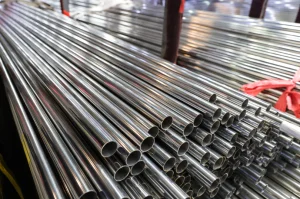
Explore our core range of precision-rolled plates, sheets, and welded piping, engineered for severe marine, biopharmaceutical, and chemical processing environments.





Metallurgical Architecture of SUS316L (UNS S31603 / 1.4404)
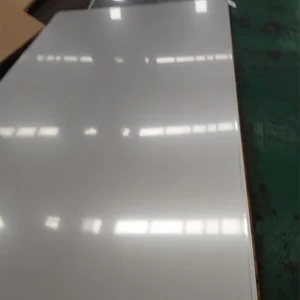
In modern heavy industry, selecting structural materials is no longer just about meeting yield requirements—it is about managing long-term lifecycle degradation. SUS316L stainless steel plate represents the pinnacle of austenitic alloy refinement, distinguished by its ultra-low carbon content (≤0.03%) and strategic addition of 2.0% to 3.0% Molybdenum (Mo).
Unlike standard 304-grade alloys, SUS316L provides exceptional immunity to intergranular corrosion post-welding. When standard austenitic alloys are subjected to thermal cycles between 450°C and 850°C (the sensitization zone), chromium carbides precipitate along grain boundaries, depleting the adjacent matrix of chromium and triggering intergranular attack. SUS316L eliminates this failure mode by restricting carbon levels, ensuring the passive chromium-oxide film ($Cr_2O_3$) remains unbroken across heat-affected zones (HAZ).
| Standard / Grade | C (%) | Si (%) | Mn (%) | Cr (%) | Ni (%) | Mo (%) | P/S (%) |
|---|---|---|---|---|---|---|---|
| ASTM A240 316L | ≤ 0.030 | ≤ 0.75 | ≤ 2.00 | 16.0 - 18.0 | 10.0 - 14.0 | 2.00 - 3.00 | P ≤ 0.045 / S ≤ 0.030 |
| EN 10088-2 (1.4404) | ≤ 0.030 | ≤ 1.00 | ≤ 2.00 | 16.5 - 18.5 | 10.0 - 13.0 | 2.00 - 2.50 | P ≤ 0.045 / S ≤ 0.015 |
| JIS G4304 SUS316L | ≤ 0.030 | ≤ 1.00 | ≤ 2.00 | 16.0 - 18.0 | 12.0 - 15.0 | 2.00 - 3.00 | P ≤ 0.045 / S ≤ 0.030 |
Global Procurement Demand & Economic Macro-Trends
The international supply chain for wholesale SUS316L stainless steel plates is experiencing a structural pivot. Driven by rapid expansion in green hydrogen production, offshore wind energy infrastructure, and global biopharmaceutical manufacturing facilities, EPC (Engineering, Procurement, and Construction) contractors are demanding higher structural integrity and stricter traceability.
Green Energy Infrastructure
Polymer Electrolyte Membrane (PEM) electrolyzers and hydrogen transport networks require zero-pitting materials. SUS316L plates serve as essential raw stock for end-plates, pressure headers, and fuel cell balance-of-plant components.
Biopharma & High-Purity Processing
With ultra-clean vessel mandates (ASME BPE compliance), global buyers specify low-ferrite SUS316L hot-rolled plates capable of sustaining electropolishing to surface roughness metrics under $Ra \le 0.25\,\mu m$.
Desalination & Marine Assets
High chloride exposure in reverse osmosis (RO) systems causes rapid crevice corrosion in lower-grade alloys. SUS316L provides an optimal ratio of cost-efficiency to Pitting Resistance Equivalent Number (PREN ≥ 25).
Industrial Supply Chain Resilience & Mill Automation
As a major manufacturing node in Wuxi, Jiangsu, Jiangsu Renzhi Holding Group Co., Ltd. combines raw material access with smart processing technology. By securing primary coil stock from tier-one steelmakers—such as Tsingshan, TISCO, POSCO, and Baosteel—we maintain full control over chemistry and mechanical performance.
Automated Processing Lines
Our Wuxi manufacturing hub operates 5 continuous coil-flattening and high-precision slitting lines, 6 automated surface-refining machines (producing 8K mirror, No.4, and hairline finishes), and over 80 high-frequency automated welded pipe lines. Smart optical laser-gauging systems monitor thickness tolerances real-time down to $\pm 0.02\text{ mm}$.
Traceability & Quality Assurance
Every batch of SUS316L plate undergoes non-destructive testing (NDT), hydrostatic testing for piping, Positive Material Identification (PMI) spectral analysis, and grain boundary etch tests per ASTM A262 Practice E. Mill Test Certificates (MTCs) conforming to EN 10204 3.1 are automatically linked to heat numbers.
Localized Application Scenarios & Engineering Field Use
Because of its adaptable mechanical properties and formability, wholesale SUS316L stainless steel plate serves as a core material across specialized industrial installations:
Offshore Platform Scrubber Units
Exhaust gas cleaning systems (scrubbers) installed on ocean vessels run sulfur-rich acidic condensate at elevated temperatures. 316L plate delivers the necessary chemical resistance to withstand sulfuric vapors, preventing premature structural thinning.
Cryogenic LNG Storage Components
With no ductile-to-brittle transition temperature, SUS316L keeps high impact toughness at cryogenic temperatures below $-196^\circ\text{C}$. It is frequently specified for liquified natural gas containment structural gussets and internal piping manifolds.
High-Purity Chemical Reactors
In organic synthesis reactors involving organic acids and halides, SUS316L hot-rolled heavy plates (12mm–50mm thickness) provide low-risk pressure boundary shell fabrication with reliable fatigue life under thermal cycling.
Comprehensive Alloy Comparison & Engineering Selection
Use this comparative matrix to select the appropriate grade for your pressure, environmental, and financial constraints:
| Alloy Grade | PREN Value | Yield Strength (MPa) | Corrosion Resistance Level | Primary Industrial Use Case |
|---|---|---|---|---|
| SUS201 | ~ 15.0 | ≥ 275 | Basic / Indoor Use | Indoor architecture, decorative tubes, handrails |
| SUS304 / 304L | 18.0 - 20.0 | ≥ 205 | Moderate / Industrial | Food equipment, general fluid piping, kitchenware |
| SUS316L | 23.0 - 25.5 | ≥ 220 | High / Acid & Chloride | Biopharma, marine structures, chemical reactors |
| Duplex 2205 | 32.0 - 35.0 | ≥ 450 | Superior / Stress Cracking | Oil & Gas offshore platforms, desalination plants |
| Super Duplex 2507 | 41.0 - 43.0 | ≥ 550 | Extreme / Severe Marine | Subsea pipelines, aggressive acid handling |
Explore Related Factory-Direct Products
In addition to standard 316L plates, our factory manufactures duplex grades, perforated patterns, and structural tubing to supply complete project packages.


Frequently Asked Questions (FAQ) for Technical Buyers
In-depth answers curated by our metallurgical engineers to assist procurement managers and structural specifiers.