
Featured Wholesale Stainless Steel Plates & Tubes
Explore our top-tier manufacturing output certified under rigorous quality inspection systems. Direct factory quotes available for volume orders.
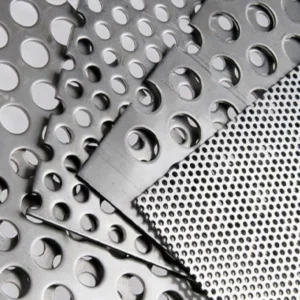
Custom China Suppliers for Perforated Stainless Steel Sheet - High-Quality Metal Mesh Solutions
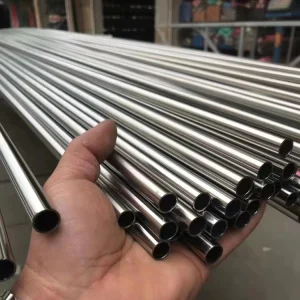
Wholesale China Stainless Steel Pipe Factory - Complete Specifications & Processing Services
China Stainless Steel Pipe Factory Direct Suppliers for All Sizes with Custom Processing
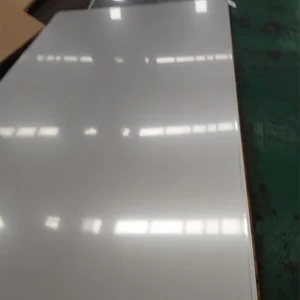
Wholesale Super Duplex Steel Plate 2507 UNS S32750 - High Corrosion Resistance Solutions
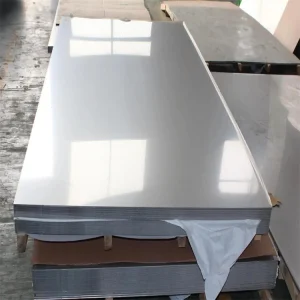
China Cold Rolled Stainless Steel Sheet - High Strength & Corrosion Resistant Factory Direct
Wholesale China Stainless Steel Pipe Factory - Direct Supplies with Material Certification
Executive Summary: Navigating Wholesale Stainless Steel Procurement
Deconstruct price drivers, metallurgical selection criteria, and direct factory mill logistics to optimize total cost of ownership (TCO).
In the global industrial manufacturing landscape, procuring stainless steel plate at wholesale scale requires an in-depth understanding of material science, raw mill pricing mechanisms, and factory production ecosystems. The phrase "Wholesale Stainless Steel Plate Factories & Quotes" is not merely a commercial search query—it represents a complex engineering intent where buyers must balance mechanical yield parameters, pitting resistance, standard tolerances (ASTM A240, EN 10088-2, JIS G4304), and supply chain logistics.
This technical whitepaper, developed by senior metallurgical procurement specialists and supply chain engineers at Jiangsu Renzhi Holding Group Co., Ltd., bridges the gap between raw factory pricing models and field performance demands. By leveraging raw material stock directly from tier-one steelmakers—including Tsingshan, TISCO (Taiyuan Iron and Steel Group), POSCO, and Baosteel—modern Chinese manufacturing hubs have redefined global sourcing benchmarks through vertical integration, automated precision slitting, continuous rolling mills, and advanced surface finishing.
Alloy Surcharge Transparency
Wholesale quotes depend directly on LME Nickel, Molybdenum, and Chromium spot prices. We provide index-linked pricing formulas to hedge against raw material volatility.
Traceable QA/QC Protocols
Every steel plate leaves our facility with a certified EN 10204 3.1 Mill Test Certificate (MTC), detailing exact chemical heats and mechanical tension tests.
End-to-End Processing
Eliminate secondary vendor markups. From hot-rolled master coils to laser-cut, perforated, mirror-polished plates, processing is consolidated under one roof.
China's Stainless Steel Manufacturing Advantage
Why leading global EPC contractors, stocking distributors, and OEMs source stainless steel plate direct from Jiangsu & Guangdong manufacturing hubs.
Vertical Supply Chain Integration
China commands over 55% of the world's stainless steel smelting capacity. Factories centered in Wuxi, Jiangsu operate in proximity to deep-water ports and cold-rolling complexes. By eliminating intermediate transport and utilizing direct RKEF (Rotary Kiln-Electric Furnace) nickel pig iron technology, raw material production cost efficiency is maximized without compromising purity or grain structure.
Advanced Metallurgy & Precision Processing
Modern Chinese stainless steel factories house multi-high cold rolling mills (20-high Sendzimir mills), automated continuous levelling lines, optical surface inspection systems, and heavy-duty plasma/laser cutting tables. This infrastructure guarantees strict adherence to thickness tolerances (e.g., ASTM A480 fine tolerances) and superior flatness for down-stream automated welding.
Alloy Selection Matrix & Metallurgical Properties
Select the optimal stainless steel plate grade based on mechanical parameters, chemical composition, and pitting corrosion resistance (PREN).
| Steel Grade | Alloy Classification | Key Chemical Elements | PREN Rating | Yield Strength (MPa) | Primary Industrial Application |
|---|---|---|---|---|---|
| SUS201 / UNS S20100 | Austenitic (Cr-Mn) | 16-18% Cr, 3.5-5.5% Ni, 5.5-7.5% Mn | ~17.5 | ≥ 275 | Decorative trim, indoor structural panels, appliances |
| SUS304 / 06Cr19Ni10 | Austenitic (Standard 18/8) | 18-20% Cr, 8-10.5% Ni, C ≤ 0.07% | ~19.0 | ≥ 205 | Food processing machinery, architectural facades, tanks |
| SUS304L / Low Carbon | Austenitic (Weldable) | 18-20% Cr, 8-12% Ni, C ≤ 0.03% | ~19.0 | ≥ 175 | Heavy-gauge welded structural components, chemical piping |
| SUS316L / UNS S31603 | Austenitic (Mo-Bearing) | 16-18% Cr, 10-14% Ni, 2-3% Mo | ~23.0 - 25.0 | ≥ 170 | Marine hardware, pharmaceutical vessels, chloride service |
| SUS310S / UNS S31008 | High Temp Austenitic | 24-26% Cr, 19-22% Ni, High Heat Res. | ~25.0 | ≥ 205 | Heat exchangers, kiln muffles, furnace baffles (up to 1150°C) |
| SUS430 / Ferritic | Ferritic (Nickel-Free) | 16-18% Cr, Ni ≤ 0.75%, C ≤ 0.12% | ~16.5 | ≥ 205 | Kitchenware, elevator cladding, magnetic applications |
| Duplex 2205 / S31803 | Austenitic-Ferritic Duplex | 21-23% Cr, 4.5-6.5% Ni, 2.5-3.5% Mo, N | ~35.0 | ≥ 450 | Oil & Gas separators, chemical tankers, desalination systems |
| Super Duplex 2507 / S32750 | Super Duplex (High Alloy) | 24-26% Cr, 6-8% Ni, 3-5% Mo, 0.27% N | ≥ 42.0 | ≥ 550 | Offshore platform piping, aggressive seawater scrubbers |
* Note: PREN (Pitting Resistance Equivalent Number) = %Cr + 3.3(%Mo) + 16(%N). Values calculated based on nominal mid-range alloy compositions standard to ASTM A240 / EN 10088-2.
Surface Finishes & Custom Value-Added Processing
From heavy industrial mill finishes to high-spec decorative surfaces and custom perforation, engineered for ready-to-assemble manufacturing.
Standard Mill Surfaces (No.1, 2B, BA)
No.1 Finish: Hot-rolled, annealed, and descaled. Ideal for heavy structural tanks and high-temperature service.
2B Finish: Cold-rolled, heat-treated, pickled, light skin-passed. Smooth, matte finish suitable for deep drawing.
BA (Bright Annealed): Bright cold-rolled surface annealed in a controlled atmosphere furnace for mirror-like clarity.
Decorative Polishing (No.4, Hairline, 8K Mirror)
No.4 / Satin: Uniform directional grain produced by 150-240 grit abrasives. Standard for architectural cladding and kitchen equipment.
HL (Hairline): Continuous long grain texture for premium aesthetics.
8K Mirror: Non-directional multi-stage mechanical polishing achieving distortion-free reflective clarity.
Precision Metalworking & CNC Fabrication
Perforation & Mesh: Round, square, slotted, and decorative hole geometry stamped with custom open area percentages.
Laser Cutting & Plasma: High-precision fiber laser cutting for plates up to 50mm thick with clean bevel-free edges.
Slitting & Shearing: High-speed precision decoiling, shearing, and tension leveling.
Macro Trends Driving the Global Stainless Steel Industry
Key technological shifts redefining stainless steel production, sustainability compliance, and global B2B procurement strategies.
01. Decarbonization & Green Steel
Leading Chinese mills are rapidly transitioning toward Electric Arc Furnace (EAF) recycling powered by renewable energy grids and Direct Reduced Iron (DRI) utilizing hydrogen fuel cells. Sourcing low-carbon stainless steel plates helps global buyers meet Scope 3 emissions targets and comply with international carbon adjustments (such as Europe's CBAM).
02. High-Strength Duplex Alloys
Demand for Duplex 2205 and Super Duplex 2507 is surging. Due to their double-yield strength compared to 304/316, engineers can down-gauge wall thicknesses by up to 30% in structural pressure vessels, significantly cutting overall material tonnage, shipping weights, and structural support budgets.
03. AI-Driven Smart QC
Integration of AI computer-vision surface defect detectors on high-speed cold-rolling lines enables real-time pinhole, scratch, and inclusion detection down to 0.05mm scales. This guarantees zero-defect deliveries for high-value applications like semiconductor cleanroom panels and LNG storage tanks.
Strategic Global Logistics & Risk Mitigation
Ensuring material integrity, tariff optimization, and seamless ocean transportation from factory loading to destination port.
Export Packaging & Seaworthy Protection
Preventing surface scratching, water ingress, and edge damage during long-distance ocean transit is paramount. Wholesale steel plate exports utilize heavy-duty wooden skids/crates, waterproof VCI (Vapor Corrosion Inhibitor) paper lining, plastic film wrap, and heavy steel strapping. Corner protectors ensure edge squareness is preserved for automated robot feeding.
Landed Cost Optimization & Compliance
Calculating total landed cost requires expert navigation of HS Codes (e.g., 7219.11, 7219.12, 7219.34), regional anti-dumping duties, freight forwarding options (FCL container vs Breakbulk for heavy plates), and trade agreements. Direct manufacturer relationships enable flexible pricing terms (FOB, CFR, CIF, DDP) and documentation support (Form E, Certificate of Origin, Mill Test Certificates).
Localized Application Scenarios & Engineering Solutions
Tailored material specifications designed for demanding industrial environments across global markets.
Chemical & Petrochemical Processing
Heavy-gauge 316L and 310S hot-rolled plates engineered to withstand sulfuric acid, organic acids, and high-temperature hydrocarbon cracking. Compliant with ASME Section VIII pressure vessel codes.
Offshore Marine & Desalination
Super Duplex 2507 plates providing immunity to stress-corrosion cracking (SCC) and severe pitting in hyper-saline seawater environments, offshore oil platforms, and reverse osmosis plants.
Architecture, Elevators & Interior Infrastructure
Cold-rolled 304 and 430 sheets finished with 8K Mirror, Hairline, PVD color coating, or customized perforation for decorative exterior curtain walls, luxury elevator cabs, and acoustic panels.
Wholesale Sourcing & Technical FAQ
Answers to common engineering, ordering, quality certification, and logistics inquiries from international industrial buyers.
What is the difference between Hot-Rolled (No.1) and Cold-Rolled (2B) Stainless Steel Plates?
Hot-rolled plates (No.1 finish) are rolled at temperatures above 1100°C, producing thicker gauges (typically 3.0mm to 100mm+) with a rougher, descaled matte finish. They are chosen for structural and industrial applications where visual appearance is secondary. Cold-rolled plates (2B or BA finish) are processed at room temperature, offering tighter thickness tolerances, smoother surface topography, and thinner gauges (0.3mm to 6.0mm).
How are wholesale quotes calculated for large-volume factory orders?
Wholesale prices are structured using a base price per metric ton plus alloy surcharges (driven by London Metal Exchange spot rates for Nickel, Molybdenum, and Ferro-chromium). Quotes factor in order volume, requested surface processing (e.g., 8K mirror vs 2B), cutting tolerances, export packaging specifications, and Incoterms (FOB Shanghai/Ningbo, CIF, or DDP).
Which quality certifications accompany every steel shipment?
All products shipped from Jiangsu Renzhi Holding Group Co., Ltd. are accompanied by EN 10204 3.1 Mill Test Certificates (MTC). These reports provide complete heat-number traceability, chemical composition analysis (via optical emission spectrometry), mechanical test results (tensile, yield, elongation, hardness), and intergranular corrosion testing (ASTM A262 Practice E) where required.
When should I specify Duplex 2205 over 316L stainless steel plate?
Duplex 2205 should be specified when your application involves elevated chloride concentrations, high working pressures, or risk of Stress Corrosion Cracking (SCC). Duplex 2205 offers nearly twice the yield strength of 316L and a higher PREN (~35 vs ~24), allowing engineers to reduce plate thickness and structural weight while extending operational lifespan in harsh environments.
What custom perforation patterns and open areas are available?
We offer round, square, slotted, hexagonal, and decorative perforation geometries. Hole sizes range from 0.5mm micro-perforations to 50mm+ heavy industrial screens. Open area percentages can be engineered from 10% to 70% based on structural load calculations and acoustic/filtration design criteria.
What is the standard Minimum Order Quantity (MOQ) and production lead time?
For standard stock sizes (e.g., 1219x2438mm, 1500x3000mm, 1500x6000mm in 304/316L), MOQ is as low as 1 metric ton. Custom alloy meltings or specialized non-standard dimensions typically require 3-5 metric tons per specification. Standard production and processing lead times range from 7 to 15 working days.
Extended Stainless Steel Sheet & Pipe Inventory
Select additional product categories to request instant pricelists, sample kits, or custom dimension mill runs.
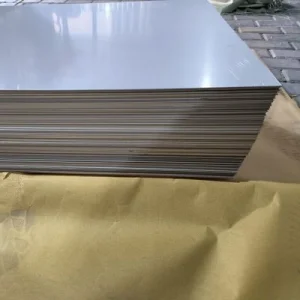
China SUS304 (06Cr19Ni10) Stainless Steel Cold-Rolled Plate Corrosion-Resistant Factory
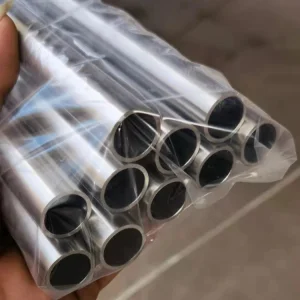
China SUS304/304L Lower Carbon Stainless Steel Pipe for Enhanced Corrosion Resistance
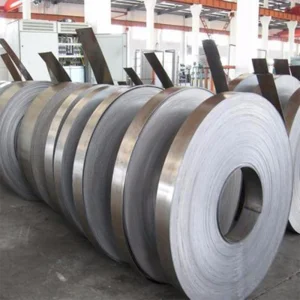
CE Certification High Quality 201 Stainless Steel Strip/Coil - Reliable China Supplier
Custom Perforated Stainless Steel Sheet from China Suppliers | Durable & Customizable
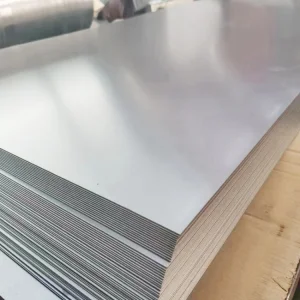
Custom China 316L Stainless Steel Sheet Suppliers - High Quality Factory Manufacturers
Custom China 316L Stainless Steel Sheet - High-Quality Supplier & Trusted Factory Pricelist
Wholesale Perforated Stainless Steel Sheet | Custom Metal Mesh for Industrial Applications
Request Direct Factory Quotations & Technical Data
Connect directly with our senior metallurgical sales engineers for volume discounts, customized slitting, surface sample books, and Mill Test Report (MTC) verification.