
Featured Stainless Steel Pipe & Material Solutions
Explore our certified mill products engineered for extreme pressure tolerance, zero-permeability gas containment, and maximum corrosion resistance.
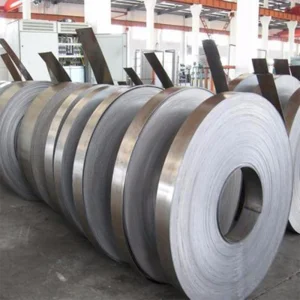
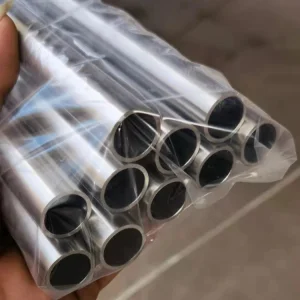
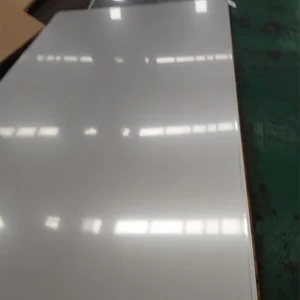


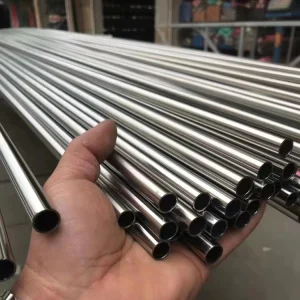


Macro Global Landscape: The Transition to Stainless Steel Gas Piping
An authoritative analysis of global energy infrastructure modernization, material science advancements, and safety compliance paradigms in commercial and municipal gas distribution.
Global energy transmission networks are undergoing a monumental paradigm shift. As municipal infrastructure ages and industrial facilities demand higher purity, thermal resilience, and zero-permeability gas delivery, traditional materials such as carbon steel, black iron, copper, and polyethylene (PE) are rapidly reaching their physical limitations. Corrosion, micro-cracking, joint fatigue, and gas permeation pose substantial environmental risks and multi-million-dollar operational liabilities.
Today, corrugated stainless steel tubing (CSST) and rigid stainless steel gas pipes represent the pinnacle of gas conveyance engineering. Manufactured primarily from high-grade austenitic alloys (SUS304, SUS304L, SUS316L) and specialized duplex grades (2205, 2507), stainless steel gas piping delivers an operational lifespan exceeding 50 years with virtually zero degradation. As a premier wholesale manufacturer and direct factory supplier, our facility integrates advanced continuous TIG/Laser welding, online bright annealing, and yellow UV-resistant polyethylene jacket encapsulation to satisfy stringent international safety codes.
Material Comparison Matrix: Gas Conveyance Performance
To assist procurement managers, EPC contractors, and mechanical engineers in choosing optimal piping systems, the technical matrix below outlines performance parameters under rigorous operational conditions:
| Performance Criterion | Stainless Steel (316L/304L) | Black Iron / Carbon Steel | Copper Tubing | Polyethylene (PE) Pipe |
|---|---|---|---|---|
| Corrosion Resistance | Exceptional (Passivated Chromic Oxide Film) | Poor (Prone to rust & scaling) | Moderate (Vulnerable to sulfur/acid corrosion) | High (Chemical resistance, but non-UV resistant) |
| Gas Permeation & Permeability | Absolute Zero (100% Hermetic Seal) | Near Zero (Joint leaks common over time) | Near Zero | Slight permeability to hydrocarbon gases |
| Seismic & Flexibility Tolerance | High (CSST absorbs structural shifts) | Zero (Rigid; snaps under shear stress) | Moderate (Prone to work hardening) | High flexibility (Underground only) |
| Hydrogen Embrittlement Resistance | Excellent (Stable Austenitic Microstructure) | Very Low (Severe embrittlement risk) | Low | Unsuitable for high-pressure H2 |
| Fire & Thermal Endurance | Melting Point > 1400°C (Fire-Safe) | Melting Point ~1500°C (Loses integrity) | Melting Point ~1083°C (Fails rapidly) | Melts at < 130°C (Hazardous in fires) |
| Expected Service Lifespan | 50+ Years (Maintenance Free) | 15–25 Years (Requires frequent inspection) | 20–30 Years | 25–30 Years (Underground restricted) |
Metallurgical Precision & Technical Specifications
Designed to withstand extreme pressure, corrosive trace compounds, and high-frequency thermal cycling in critical gas distribution infrastructure.
SUS316L Ultra-Low Carbon Alloy
Formulated with 16-18% Chromium, 10-14% Nickel, and 2-3% Molybdenum. The addition of Molybdenum drastically inhibits chloride pitting and sour gas corrosion caused by hydrogen sulfide (H2S).
- Intergranular corrosion resistant
- Carbon content ≤ 0.03% prevents carbide precipitation
- Ideal for offshore and coastal gas pipelines
- PREN (Pitting Resistance) ≥ 25
Hydrostatic & NDT Integrity Assurance
Every meter of gas piping manufactured in our factory undergoes rigorous online non-destructive eddy current testing and offline hydrostatic pressure testing up to 25 MPa.
- 100% online continuous seam defect testing
- Pneumatic underwater bubble leak testing
- X-ray weld seam inspection for heavy wall pipes
- Burst pressure safety factor exceeding 4:1
Yellow PE Protective Encapsulation
Co-extruded outer polyethylene (PE) layer provides flame-retardant, anti-static, and dielectric isolation, safeguarding buried and concealed piping against ground currents.
- UV-stabilized weather protection
- Continuous length marking & depth meter scales
- Flame retardant rating: UL 94 V-0 compliant
- Provides arc-resistant protection against lightning
Localized Application Scenarios & Commercial Engineering
From high-density urban commercial towers to remote industrial refining complexes, our stainless steel gas piping delivers reliable fluid containment across diverse environments.
1. High-Density Commercial & High-Rise Gas Distribution
In modern multi-story residential complexes and commercial skyscrapers, installing rigid steel pipe requires costly on-site thread cutting, elbow welding, and heavy lifting equipment. Our semi-rigid CSST stainless gas pipe reduces installation time by up to 70%. Its continuous coil length allows runs from main riser manifolds directly to appliance regulators without intermediate joints, eliminating internal wall leak points.
Key Standard: CSA 6.26 / ANSI LC 12. Industrial Processing, Chemical Plants & Breweries
Industrial boilers, furnace heating systems, and chemical synthesis units require steady gas pressure under high vibration and elevated ambient temperatures. SUS316L seamless gas pipes maintain structural yield strength at temperatures exceeding 600°C while resisting sulfur compounds found in raw natural gas feedstock. Their ultra-smooth inner bore minimizes pressure drops across extended plant distances.
Key Standard: ASTM A312 / EN 10217-73. Underground Municipal Gas Mains & Trenchless Installation
For municipal gas utilities replacing degraded cast-iron mains, yellow jacketed stainless gas pipe provides high tensile strength against soil settlement, frost heaves, and root intrusion. Ideal for directional drilling and trenchless utility installation, the tough poly jacket resists abrasion while the stainless steel inner core prevents stress corrosion cracking (SCC).
Key Standard: ISO 10380 / GB/T 260024. Hydrogen Blended Natural Gas (H2NG) Infrastructure
As global energy grids mix green hydrogen into natural gas pipelines (up to 20-30% H2 blends), standard carbon steel pipes suffer from catastrophic hydrogen embrittlement. Austenitic stainless steel grades (304L and 316L) feature a face-centered cubic (FCC) crystal lattice that resists hydrogen atom permeation, making our gas pipes future-proof for net-zero energy transitions.
Key Standard: ASME B31.12 Hydrogen PipingGlobal Compliance, Certification & Localized B2B Support
We combine massive manufacturing scale with localized engineering support, tailored custom fitting options, and transparent quality documentation for overseas buyers.
Certified Quality System
Our manufacturing facility operates under strict ISO 9001:2015 Quality Management and ISO 14001 Environmental System protocols. Every order includes a complete EN 10204 3.1 / 3.2 Mill Test Certificate (MTC).
Custom Reels & OEM Fittings
We supply flexible CSST gas tubing in continuous coils from 30 meters up to 500 meters, alongside push-fit, flared, and NPT/BSPT male/female brass and stainless steel compression fittings.
Seaworthy Export Logistics
To eliminate transoceanic moisture degradation, pipes are treated with VCI (Vapor Corrosion Inhibitor) packaging, plastic end caps, steel-banded wooden crates, and moisture-proof container lining.
Technical Roadmap: Next-Generation Smart & Green Gas Piping
A strategic vision into our ongoing R&D initiatives, smart sensing integration, and carbon-neutral manufacturing practices.
Smart Sensing Fiber Integration
We are pioneering the integration of micro fiber-optic leak detection wires embedded directly within the protective PE jacket of CSST gas tubing. These sensors allow continuous real-time temperature and pressure monitoring along long commercial pipeline runs.
100% Pure Hydrogen Readiness
Collaborating with metallurgical research institutes, our R&D team is refining specialized low-nickel high-manganese austenitic stainless steel alloys engineered specifically for 700 bar ultra-high pressure pure hydrogen fuel cell station lines.
Zero-Carbon Green Steel Manufacturing
By transitioning our bright annealing electric furnaces to renewable solar energy and utilizing low-carbon hydrogen-reduced raw steel coils, we aim to reduce the embedded carbon footprint of our gas piping products by 45% by 2030.
Frequently Asked Questions by Gas Piping Engineers & Buyers
In-depth technical answers addressing code compliance, pressure ratings, installation techniques, and material selection.
What is the difference between CSST and rigid stainless steel gas pipe?
CSST (Corrugated Stainless Steel Tubing) is flexible and can be bent by hand around structural framing, making it ideal for indoor fuel distribution in residential and commercial buildings without using multiple elbow fittings. Rigid stainless steel gas pipe (manufactured to ASTM A312) offers higher wall thickness and pressure resistance, designed for heavy industrial gas mains, chemical plants, and high-pressure outdoor pipelines.
Is stainless steel gas piping safe for direct underground burial?
Yes, provided the stainless steel pipe is protected with an extruded yellow polyethylene (PE) or PVC jacket. The protective jacket isolates the metal from direct contact with corrosive soil, moisture, and stray electrical currents, preventing galvanic corrosion. Unjacketed stainless pipe should be installed above ground or inside conduit.
Should I select SUS304 or SUS316L for natural gas piping?
SUS304 is suitable for standard dry indoor natural gas and LPG distribution in mild environments. However, for coastal areas, underground installations, industrial facilities with high humidity, or raw gas containing trace hydrogen sulfide (H2S), SUS316L is recommended due to its Molybdenum content, which offers superior resistance to pitting and stress corrosion cracking.
Can your stainless steel gas pipes handle hydrogen gas transportation?
Yes. Both SUS304L and SUS316L austenitic stainless steel pipes are fully compatible with hydrogen and hydrogen-natural gas blends. Unlike carbon steel, austenitic stainless steels maintain ductility and resist hydrogen embrittlement under elevated pressure.
What testing certifications accompany wholesale factory orders?
Every shipment is accompanied by Mill Test Reports (MTR) according to EN 10204 3.1. These report exact chemical composition (spectrometric analysis), tensile strength, yield strength, elongation, hydrostatic test pressure results, and non-destructive eddy current test verification.
Additional Factory Supply & Industrial Stainless Steel Items
Select from our extended catalog of industrial pipes, cold-rolled sheets, and super duplex materials for engineering projects.


Partner with a World-Class Stainless Steel Gas Pipe Factory
Get direct mill pricing, specialized technical consultations, custom OEM manufacturing, and rapid global export delivery for your gas piping projects.
Request Instant Wholesale Quote