
Featured Mill Products Collection (Batch A)
Explore our top-tier stainless steel cold-rolled, hot-rolled coils, pipes, and plates directly sourced from premier Chinese manufacturing hubs.
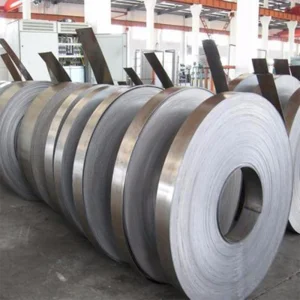
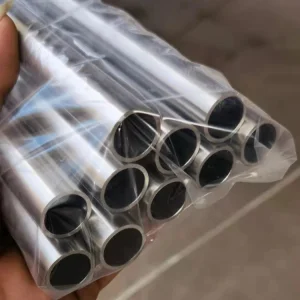
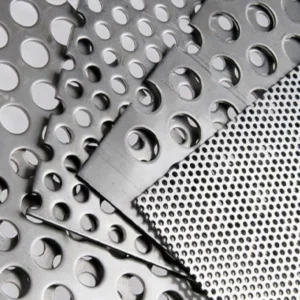
Cold Rolled Coil Engineering Whitepaper & Specifications
A comprehensive metallurgical breakdown of cold-rolled stainless steel coils, cold rolling mechanics, dimensional tolerances, and alloy grade chemistry.
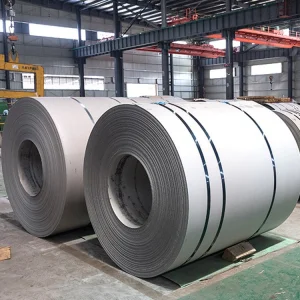
In modern industrial manufacturing, Stainless Steel Cold Rolled Coil (CRC) serves as the essential foundational material across automotive, HVAC, chemical processing, commercial food equipment, and architectural cladding sectors. Cold rolling is an advanced secondary metalworking process executed below the recrystallization temperature of the steel—typically at ambient room temperature. By passing hot-rolled pickling coils (HRC) through state-of-the-art multi-roll mills (such as 20-high Sendzimir cluster mills), manufacturers achieve exceptional surface finishes, tightly controlled dimensional tolerances, precise grain refining, and superior mechanical properties.
1. The Cold Rolling Process Mechanics
The transition from raw hot-rolled black coil to a high-precision cold-rolled stainless steel coil involves rigorous metallurgical steps:
- Descaling & Pickling: Hot-rolled coils undergo chemical pickling in mixed acid solutions (HF/HNO3) to eliminate surface scale formed during hot rolling, yielding a clean, metallic substrate.
- Cold Reduction Rolling: The pickled coil is processed through Sendzimir or continuous cold rolling tandem mills. Work hardening occurs as the crystal lattice dislocations accumulate, significantly enhancing yield strength and hardness while reducing thickness down to as thin as 0.3mm to 3.0mm.
- Bright Annealing (BA) or Continuous Annealing & Pickling (2B): To relieve internal residual stresses and restore ductility, the cold-rolled strip is heat-treated in a protective atmosphere (hydrogen/nitrogen mix for BA finish) or in an open furnace followed by acid pickling (for standard 2B finish).
- Tension Leveling & Skin Pass (Temper Rolling): A final ultra-light pass (skin pass) eliminates yield-point elongation, enhances strip flatness, imparts anti-stretcher strain properties, and establishes the specified surface roughness ($R_a$).
2. Grade Selection & Chemical Composition Matrix
Selecting the optimal stainless steel alloy grade requires aligning environmental corrosion exposure, mechanical load requirements, and budget parameters. Below is a detailed technical reference matrix comparing primary cold-rolled stainless steel grades supplied by top China mills:
| Grade (AISI/EN) | Nominal Composition | Tensile Strength (MPa) | Yield Strength (MPa) | PREN Value | Primary Industrial Applications |
|---|---|---|---|---|---|
| 201 (1.4372) | 16-18% Cr, 3.5-5.5% Ni, 5.5-7.5% Mn | ≥ 520 | ≥ 275 | ~ 17 | Indoor furniture, decorative tubing, kitchenware, architectural trims |
| 304 (1.4301) | 18-20% Cr, 8-10.5% Ni | ≥ 515 | ≥ 205 | ~ 19 | Food equipment, sanitary piping, household appliances, heat exchangers |
| 304L (1.4306) | 18-20% Cr, 8-12% Ni, C ≤ 0.03% | ≥ 485 | ≥ 170 | ~ 19 | Welded chemical structures, heavy-wall tanks, intergranular corrosion protection |
| 316L (1.4404) | 16-18% Cr, 10-14% Ni, 2-3% Mo | ≥ 485 | ≥ 170 | ~ 25 | Marine fittings, pharmaceutical equipment, high-chloride chemical lines |
| 430 (1.4016) | 16-18% Cr, Nickel-Free (Ferritic) | ≥ 450 | ≥ 205 | ~ 16.5 | Washing machine drums, oven liners, magnetic shielding, automotive trim |
| Duplex 2205 (1.4462) | 22% Cr, 5% Ni, 3% Mo, 0.17% N | ≥ 655 | ≥ 450 | ≥ 34 | Offshore oil & gas, desalination plants, pressure vessels, chemical tankers |
Strategic Sourcing: China's Stainless Steel Industrial Ecosystem
Why international buyers, stockholders, and global OEMs consolidate their supply chain with integrated mills located in Wuxi and Jiangsu metal processing hubs.
Tier-1 Mill Sourcing
Direct raw material allocation from global steel giants including Tsingshan, TISCO, Baosteel, POSCO, and Delong ensures consistent chemistry, verified melt origin, and flawless crystal purity.
Vertical Processing Integration
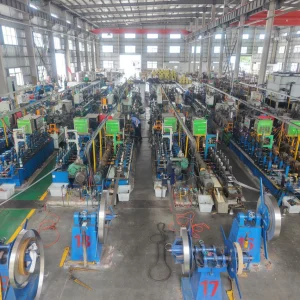
Under one roof, Chinese processing centers combine coil flattening, high-speed slitting, edge deburring, surface grinding (No.4/Hairline/8K Mirror), and PE film laminating to reduce total turnaround times.
Rigorous Quality Control
Factories utilize automated Automatic Gauge Control (AGC) systems, laser micrometer width checking, inline eddy-current defect monitoring, and positive material identification (PMI) chemical analysis.
Seaworthy Logistics Packaging
Coils are protected with VCI anti-rust paper, galvanized metal inner/outer edge protectors, plastic film wrapping, and heavy-duty wooden skids loaded in 20ft container eye-to-sky or eye-to-wall formats.
Macro Industry Development & Green Metallurgy Trends
How technological transformation and environmental policies are shaping the future of global stainless steel manufacturing.
The global stainless steel industry is experiencing a profound shift driven by global decarbonization targets, carbon border adjustment mechanisms (CBAM), and demands for hyper-precision thin strip products. Key trends transforming cold-rolled stainless coil production include:
1. Electric Arc Furnace (EAF) Decarbonization
China’s leading steel mills are shifting toward recycled stainless steel scrap input and hydrogen-rich direct reduced iron (DRI) processes. EAF production reduces carbon emissions per ton by up to 60% compared to traditional blast furnace routes.
2. Ultra-Thin Precision Foils (< 0.05mm)
The explosive growth of new energy vehicles (EVs) and consumer electronics requires ultra-thin stainless steel "hand-tearable metal steel" for lithium-battery casing, hydrogen fuel cell bipolar plates, and flexible solar substrate backings.
3. AI-Driven Automatic Surface Inspection
High-resolution optical cameras coupled with machine learning algorithms inspect coil surfaces in real-time at rolling speeds exceeding 800 meters per minute, tagging tiny pinholes, scratches, or oil spots instantly.
Localized Applications & Sector Engineering Solutions
From architectural design to heavy chemical reactors, cold-rolled stainless steel coils deliver specialized surface and structural properties.
Automotive & Exhaust Systems
Grade 409L and 439 cold-rolled coils are specifically engineered for high-temperature oxidation resistance in automotive mufflers, exhaust manifolds, and catalytic converter casings.
Commercial Appliances & Kitchenware
Grade 304 2B/BA and 430 cold-rolled coils provide deep-drawing capability, pristine polishability, and stain resistance required for refrigerators, dishwashers, sinks, and cookware.
Pharmaceutical & Chemical Processing
Molybdenum-alloyed Grade 316L cold-rolled coils prevent pitting corrosion in high-salinity reactors, pressure vessels, and sanitary welded tube manufacturing for biotech plants.
Architecture & Elevator Cabins
Decorative surface-treated coils (No.4 hairline, 8K mirror, titanium PVD color coated, embossed) offer high visual appeal and durability for building facades and elevator interiors.
Global Enterprise Procurement & Quality Protocols
Essential guidelines for international B2B purchasers when contracting stainless steel coil manufacturing orders.
When purchasing cold-rolled stainless steel coils in bulk volume (FCL or breakbulk charter), procurement officers must define precise technical parameters to prevent discrepancies upon port arrival. Top compliance factors include:
1. International Standard Cross-Reference
Orders should explicitly state the technical delivery conditions matching global standards:
- American Standards: ASTM A240 / A240M (Standard Specification for Chromium and Chromium-Nickel Stainless Steel Plate, Sheet, and Strip for Pressure Vessels and General Applications), ASTM A480 (General Requirements).
- European Standards: EN 10088-2 (Stainless steels - Technical delivery conditions for sheet/plate and strip of corrosion resisting steels for general purposes).
- Japanese Standards: JIS G4305 (Cold-rolled stainless steel plate, sheet and strip).
2. Mill Test Certificate (MTC) Verification
Every shipped batch must be accompanied by an authentic EN 10204 3.1 Mill Test Certificate issued by the manufacturing mill's accredited laboratory. The certificate must document heat number traceability, ladle chemical analysis, tensile strength ($R_m$), yield strength ($R_{p0.2}$), elongation ($A_5$), hardness (HV/HRB), and intergranular corrosion test results (ASTM A262 Practice E).
3. Edge Condition & Slitting Tolerances
Specify whether your processing line requires Mill Edge (N) or Slit Edge (H). Precision slitting lines cut coil mother coils into custom narrow strips down to 10mm width with edge camber controlled within < 1.5mm per 2000mm length and burr height held under 10% of total strip thickness.
Featured Mill Products Collection (Batch B)
Explore our extended catalog of specialty super duplex plates, custom slit strips, industrial welded pipes, and cold-rolled sheets.
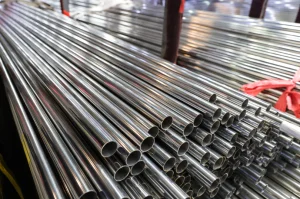
Frequently Asked Questions (FAQ) & Knowledge Base
Detailed answers addressing common technical queries, order specifications, lead times, and sourcing procedures.