
Precision Stainless Steel Feedstock & Industrial Tubing Range
Explore our core export-grade stainless steel products engineered for high-pressure hydraulic lines, fluid conveying systems, structural frameworks, and precision machining.




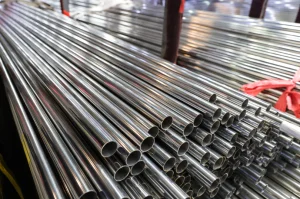
High-Pressure Stainless Hydraulic Tubing: Technical Foundations & Alloy Mechanics
An in-depth analysis of structural integrity, pressure tolerance, corrosion kinetics, and cold-drawing dynamics for B2B engineering buyers.
In modern industrial hydraulic architectures, fluid power systems operate under extreme working pressures often exceeding 350 bar to 700 bar (5,000 psi to 10,000+ psi). The structural reliability of hydraulic lines is non-negotiable; catastrophic tubing failure leads to fluid leakage, pressure drop, severe system downtime, and critical safety hazards. Sourcing from accredited wholesale stainless hydraulic tubing manufacturers and factories ensures that metallurgical purity, dimensional precision, and grain structure align with rigorous international standards such as ASTM A269, ASTM A213, EN 10216-5, and DIN 2391.
1. Metallurgical Classification & Grade Optimization
The selection of the appropriate stainless steel alloy for hydraulic tubing requires evaluating mechanical yield strength, pitting resistance, weldability, and resistance to stress corrosion cracking (SCC):
- Austenitic SUS304 / 304L (UNS S30400 / S30403): The baseline alloy for medium-pressure hydraulic lines operating in non-aggressive atmospheric environments. 304L provides ultra-low carbon content (≤0.03%), preventing chromium carbide precipitation during welding and ensuring intergranular corrosion resistance.
- Austenitic SUS316 / 316L (UNS S31600 / S31603): Enhanced with 2.0% to 3.0% Molybdenum (Mo), Grade 316L is the industry benchmark for offshore, chemical, and marine hydraulic actuation lines. The addition of molybdenum drastically improves resistance to chloride pitting and crevice corrosion.
- Duplex 2205 (UNS S31803 / S32205): Featuring a dual-phase micro-structure (50% ferrite, 50% austenite), Duplex 2205 offers twice the yield strength of conventional 316L (Rp0.2 ≥ 450 MPa vs. 220 MPa). This high strength allows engineers to down-gauge tube wall thickness without compromising safety margins, significantly reducing overall skid weight in offshore oil platforms.
- Super Duplex 2507 (UNS S32750): Boasting a Pitting Resistance Equivalent Number (PREN = %Cr + 3.3%Mo + 16%N) greater than 42, 2507 is designed for hyper-aggressive subsea hydraulic control umbilicals and desalination high-pressure pumps.
Cold Pilgering & Drawing
Multi-pass cold drawing and pilgering reduce outer diameter and wall thickness with micron-level accuracy, creating work-hardened precision grain structures capable of withstanding immense cyclical pulse pressures.
Hydrogen Bright Annealing (BA)
Thermal treatment performed at 1,050°C in a pure hydrogen protective atmosphere produces a mirror-like, scale-free inner surface (Ra ≤ 0.4 µm), eliminating fluid turbulence and particle contamination in sensitive valves.
100% Non-Destructive Testing
Every single hydraulic tube undergoes full-length Eddy Current Testing (ECT) according to ASTM E426 and hydrostatic pressure validation, guaranteeing zero micro-cracks, pinholes, or longitudinal defects.
Hydraulic Tubing Pressure Dynamics & Technical Specification Matrix
Validating burst pressure vs. working pressure ratings using Barlow’s Formula for precision engineering compliance.
When selecting seamless vs. welded stainless hydraulic tubes, mechanical design engineers rely on Barlow’s Formula to calculate theoretical internal working pressures and burst thresholds based on material allowable stress ($S$), wall thickness ($t$), and outer diameter ($D$):
$P = \frac{2 \cdot S \cdot t}{D}$
Where $P$ represents internal fluid pressure, $S$ denotes the allowable design stress (typically yield strength divided by a safety factor of 4 for hydraulic shock environments), $t$ is the nominal wall thickness, and $D$ is the outside diameter. Chinese specialized hydraulic tube factories utilize automated ultrasonic wall thickness gauge monitoring to maintain uniform concentricity, avoiding local stress concentration points that lead to premature fatigue failure under pulsating hydraulic shocks.
| Stainless Steel Grade | Standard Spec | Yield Strength (MPa) | Tensile Strength (MPa) | PREN Value | Max Working Temp (°C) | Primary Hydraulic Application |
|---|---|---|---|---|---|---|
| SUS304 / 304L | ASTM A269 / EN 10216-5 | ≥ 205 | ≥ 515 | 18.0 - 20.0 | -196 to 400 | Industrial machinery, indoor hydraulic lines, return loops |
| SUS316 / 316L | ASTM A269 / DIN 2391 | ≥ 220 | ≥ 520 | 23.0 - 25.0 | -196 to 600 | Offshore rigs, marine steering, chemical processing manifold |
| SUS321 | ASTM A213 / EN 10216-5 | ≥ 205 | ≥ 515 | 18.0 - 20.0 | -196 to 800 | Aerospace actuators, high-temperature thermal oil hydraulic systems |
| Duplex 2205 | ASTM A789 / EN 10216-5 | ≥ 450 | ≥ 650 | 32.0 - 35.0 | -40 to 250 | High-pressure subsea lines, heavy earthmoving equipment hydraulics |
| Super Duplex 2507 | ASTM A789 / UNS S32750 | ≥ 550 | ≥ 750 | > 42.0 | -40 to 250 | Subsea control umbilicals, hyperbaric naval fluid power systems |
Why Sourcing Stainless Hydraulic Tubing from China Mills Yields Competitive Advantage
Combining world-class raw material steel mills, complete vertical integration, advanced cold-finishing technologies, and cost efficiencies.
Global procurement directors and supply chain managers increasingly pivot toward tier-1 China stainless hydraulic tubing manufacturers and factories located in industrial clusters like Wuxi, Jiangsu, and Zhejiang. The strategic competitive advantages extend far beyond unit price reductions:
1. Direct Raw Material Supply Chain Integration
Chinese tubing manufacturers maintain direct strategic supply partnerships with premier global stainless steel producing conglomerates, including Tsingshan Holding Group, TISCO (Taiyuan Iron & Steel), POSCO China, and Baosteel. This raw material security ensures:
- Traceable Heat Numbers: Every billet, slit coil, and mother tube can be traced back to its molten heat batch with complete Mill Test Certificates (MTC complying with EN 10204 3.1 or 3.2).
- Chemical Purity: Low-inclusion, vacuum-degassed raw steel feedstock minimizes non-metallic inclusions, ensuring exceptional internal cleanliness necessary for orbital welding and high-pressure compression fitting flare joints (e.g., 37° JIC, DIN 2353 / ISO 8434-1 bite-type fittings).
2. Advanced Processing Capabilities & Scalable Capacity
Chinese state-of-the-art factories feature integrated manufacturing clusters under one roof. By combining cold-rolling mills, multi-head automatic TIG/Laser welding lines, 6-pass continuous bright annealing furnaces, and high-precision straighteners, China-based suppliers offer drastically reduced lead times for custom tubing orders—delivering high-tonnage consignments within 15 to 30 days.
3. Rigorous Quality Management Systems (QMS)
Modern Chinese hydraulic tube factories operate under strict ISO 9001:2015, IATF 16949 (automotive grade), and PED 2014/68/EU (Pressure Equipment Directive) certifications. Quality assurance protocols include:
- Spectrometric Chemical Verification: Positive Material Identification (PMI) using X-ray Fluorescence (XRF) prior to dispatch.
- Surface Roughness Control: In-house electro-polishing (EP) achieving internal surface roughness down to Ra ≤ 0.25 µm for ultra-clean semiconductor and pharmaceutical hydraulic lines.
- Mechanical Destructive Testing: Flattening, flaring, reverse bending, tensile, and hardness testing (Rockwell HRB / Vickers HV) on every production lot.
Macro Industrial Solutions & Field Applications
Where precision stainless hydraulic tubing powers heavy industrial machinery, offshore platforms, and next-generation energy infrastructure.
Offshore Oil & Gas Rigs
High-pressure topside instrumentation lines, hydraulic power units (HPUs), and subsea tree controls operating in saline spray environments requiring 316L or Super Duplex 2507 seamless BA tubing.
Heavy Earthmoving Construction
Excavator main valve blocks, hydraulic cylinder feed lines, and mobile crane boom hydraulics. Requires impact-resistant 304L/316L cold-drawn seamless tubing designed to withstand severe vibration.
Aerospace & Flight Actuators
Flight control surface hydraulics, landing gear deployment circuits, and brake fluid lines engineered under ultra-tight wall thickness tolerances utilizing Grade 321 or 316L seamless tubes.
Hydrogen Fuel Systems (70MPa+)
High-pressure gaseous hydrogen dispense lines for refueling stations. Requires low-temperature ductile 316/316L BA tubes specially treated to resist hydrogen embrittlement.
Automotive GDI & Braking Systems
Gasoline Direct Injection (GDI) fuel rails and Anti-lock Braking System (ABS) hydraulic units requiring high fatigue strength and automated double-flare forming capabilities.
Industrial Automation & Robotics
Precision robotic arm fluid lines and hydraulic presses requiring high dimensional stability, vibration resistance, and seamless joint integration with compression fittings.
Enterprise Sourcing & Supply Chain Risk Management Strategy
How overseas procurement managers optimize Total Cost of Ownership (TCO) while securing quality-assured factory shipments.
Procuring wholesale stainless hydraulic tubing involves complex supply chain logistics, export compliance, packaging protocols, and strict quality verification. International B2B buyers must implement a robust framework to mitigate procurement risks:
1. Total Cost of Ownership (TCO) Optimization
Focusing strictly on unit price per meter can lead to unexpected expenses if tubing suffers from concentricity variations or surface defects during fabrication. Leading global enterprises evaluate suppliers based on:
- Yield Rate during Bending & Flaring: High-purity BA tubing ensures zero cracking during cold bending (up to 180° bending radius), preventing material scrap during assembly.
- LCL & FCL Logistics Efficiency: Sourcing from integrated manufacturers offering custom bundle packing, plastic end capping, and sea-worthy wooden box encapsulation reduces transit damage claims to virtually zero.
2. Vendor Audit Checklist for Hydraulic Tube Factories
Prior to issuing purchase orders, engineering buyers should verify manufacturer credentials against the following criteria:
- Is the factory equipped with continuous bright annealing furnaces in a pure hydrogen atmosphere?
- Does the supplier provide 100% Eddy Current Test (ECT) and Hydrostatic test certificates according to ASTM A269 / EN 10216-5?
- Can the supplier guarantee tight wall thickness tolerance (e.g., ±7.5% or ±5% of nominal wall)?
- Does the Mill Test Certificate (EN 10204 3.1) include full heat numbers, chemical composition analysis, tensile properties, hardness values, and intergranular corrosion test results (ASTM A262 Practice E)?
Frequently Asked Questions by Global Hydraulic Engineers & Buyers
Addressing core search intent, manufacturing technicalities, selection criteria, and logistics queries.
- ASTM A269: Standard Specification for Seamless and Welded Austenitic Stainless Steel Tubing for General Service.
- ASTM A213: Standard Specification for Seamless Ferritic and Austenitic Alloy-Steel Boiler, Superheater, and Heat-Exchanger Tubes.
- EN 10216-5: European standard for seamless steel tubes for pressure purposes.
- DIN 2391 / EN 10305-1: Precision steel tubes for hydraulic and pneumatic power systems.
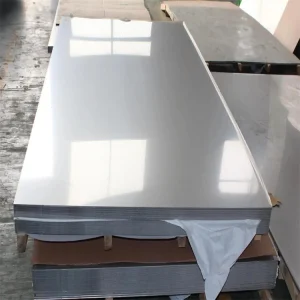
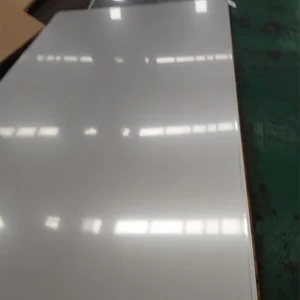
High-Grade Stainless Steel Sheets, Plates & Welded Pipes
Browse additional custom stainless steel processing products supplied direct from our factory lines.



Request Factory Direct Wholesale Quotes & MTC Documentation
Speak directly with our metallurgical engineers to specify outer diameter tolerances, bright annealing requirements, pressure test certifications, and mill bulk pricelists.
Contact Engineering Sales Team