
Engineered to international standards including ASTM, EN, JIS, and DIN. Direct mill access, certified mechanical integrity, and mill-to-site traceability.
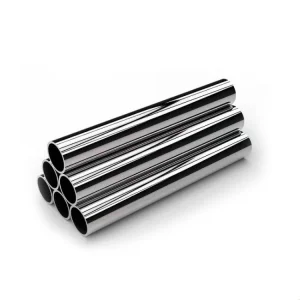
Custom China Stainless Steel Decorative Pipe Suppliers - Exquisite Designs

China 201 Stainless Steel Strip/coil Manufacturers, Factories

China Factory Suppliers for 316L Stainless Steel Sheet - Durable Solutions

Custom China Suppliers for Perforated Stainless Steel Sheet - Metal Mesh

Custom China SUS304/304L Low Carbon Stainless Steel Pipe Suppliers
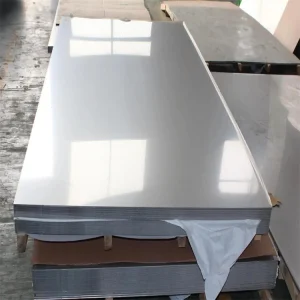
High-Strength Cold Rolled Stainless Steel Sheets - Corrosion Resistant

Custom SUS304/304L Stainless Steel Strip for Precision Machining
Custom Perforated Stainless Steel Sheet - Durable & Customizable
1. Metallurgy & Engineering Breakdown: Custom Stainless Steel Bar Manufacturing
Modern industrial procurement requires a granular understanding of chemical stoichiometry, phase transitions, and thermal processing. Custom stainless steel bars serve as the backbone for high-stress shafting, valve components, medical instruments, and aerospace fasteners.
When sourcing from tier-1 custom stainless steel bar manufacturers, structural stability and mechanical consistency under multi-axial fatigue are paramount. Stainless steel bars—available in round, square, hexagonal, flat, and engineered cross-sections—are manufactured through rigorous metallurgy routes including Electric Arc Furnace (EAF) melting, Argon Oxygen Decarburization (AOD) refining, Vacuum Degassing (VD), continuous casting, and hot rolling or cold drawing.
In high-chloride offshore environments, raw material specification relies heavily on PREN calculation: PREN = %Cr + 3.3(%Mo + 0.5%W) + 16%N. Standard 304 achieves a PREN of ~19, whereas Super Duplex 2507 exceeds 42. Custom bar manufacturers fine-tune chemical tolerances to ensure pitting resistance while maintaining optimal machinability indices.
Comparative Matrix: Alloy Chemistry & Mechanical Metrics
The following technical reference outlines the primary material families utilized across custom bar drawing and forging processes:
| Alloy Family | Grade Designation | Yield Strength (MPa min) | Tensile Strength (MPa) | Corrosion Index / Feature | Primary Industrial Use Case |
|---|---|---|---|---|---|
| Austenitic | AISI 304 / 304L | 205 / 170 | 515–700 | Standard atmospheric & organic resistance | Food equipment shafts, architectural trim, fluid fittings |
| Austenitic (Mo-Enhanced) | AISI 316 / 316L | 240 / 205 | 515–710 | PREN ~23–25; Superior marine pitting resistance | Chemical pump shafts, marine hardware, medical tools |
| Heat Resistant Austenitic | AISI 310S / 321 | 205 / 205 | 515–750 | High-temperature scaling resistance up to 1150°C | Furnace guide rails, heat exchanger ties, thermal nozzles |
| Duplex Stainless | UNS S31803 / 2205 | 450 | 655–880 | PREN ~34; High yield strength & SCC immunity | Petrochemical pump rods, desalination valves, marine shafts |
| Super Duplex | UNS S32750 / 2507 | 550 | 750–1000 | PREN >42; Extreme chloride & acidic service | Subsea oil manifolds, acid scrubbers, high-pressure pumps |
| Ferritic / Martensitic | AISI 430 / 410 / 420 | 275–450 | 480–950 | Magnetic; Heat-treatable for extreme hardness | Cutlery, turbine blades, surgical instruments, wear plates |
Precision Processing: Cold Drawing vs. Centerless Grinding
Custom stainless steel bar suppliers employ specialized post-processing steps to ensure exact dimensional tolerances (ISO fit classes h8, h9, h11) and surface finishes ($Ra$ values as smooth as $0.1\,\mu\text{m}$):
Cold Drawing & Strain Hardening
Hot-rolled black bars are pulled through tungsten carbide dies. This work-hardens the outer surface, enhancing tensile yield strength by up to 30% while achieving precise h9/h10 dimensional limits.
Precision Centerless Grinding
For high-speed rotating equipment (e.g., electric motor shafts, CNC lathe feedstock), centerless grinding removes surface decarburization and delivers ultra-tight h8/h7 diameter tolerances with zero ovality.
Solution Annealing & Pickling
Heating austenitic bars to 1040°C–1120°C followed by rapid water quenching dissolves carbide precipitates back into solid solution, restoring maximum corrosion resistance and magnetic permeability $\mu \approx 1.0$.
2. China Factory 4.0: Supply Chain Resilience & Cost Optimization
How integrated industrial clusters in Wuxi, Jiangsu elevate production throughput, lower scrap rates, and guarantee supply continuity for international buyers.
Modern stainless steel procurement is no longer just about per-ton material cost; it centers on total supply chain resilience, lead-time predictability, and vertical process control. Based in Wuxi—the global hub for stainless steel processing—leading Chinese custom stainless steel bar manufacturers operate within an ultra-dense industrial ecosystem.
Feedstock Strategic Alliances
Direct supply contracts with primary steelmaking giants such as Tsingshan Holding Group, TISCO (Taiyuan Iron & Steel), POSCO, and Baosteel ensure traceable chemical heats. Every batch of coil, billet, or bar originates from audited ladle metallurgy with full 3.1 chemical certificates.
Vertical Processing Synergy
By housing slitting, forging, cold drawing, peeling, heat treatment, and tube welding within a centralized manufacturing footprint, lead times are compressed by up to 40%. Inter-facility transport delays and third-party processing markups are eliminated.
Automated NDT & Quality Gateways
Factory 4.0 integration includes inline Eddy Current testing, continuous laser dimensioning, automated ultrasonic flaw detectors for internal bar void analysis, and optical emission spectrometry (OES) for instant chemistry verification.
To shield international procurement teams from raw material nickel/chromium price volatility, manufacturers offer flexible hedging arrangements, buffer stock holding agreements (VMI - Vendor Managed Inventory), and mixed-container shipping configurations combining bars, sheets, coils, and welded tubes.
3. Technology Roadmap & Future Outlook: Next-Gen Metallurgy
Decarbonization mandates, additive manufacturing integration, and AI-assisted alloy design are redefining the global stainless steel landscape over the coming decade.
Green Steelmaking & Low-Carbon Alloys
Hydrogen Direct Reduction (H-DRI) paired with 100% Electric Arc Furnace recycling is rapidly replacing fossil-fueled melt processes. Global enterprises can meet Scope 3 emissions targets by sourcing carbon-neutral certified stainless steel bars.
Nanostructured Surface Coatings
Plasma-assisted chemical vapor deposition (PACVD) and automated passivating treatments create nano-thin amorphous chromium oxide barriers. These treatments enhance wear resistance and double pitting resistance in high-salinity marine environments.
Powder Metallurgy & 3D Printing Bar Feedstock
Custom stainless bars are increasingly produced as pre-alloyed wire and atomized powder feedstocks for direct energy deposition (DED) and laser powder bed fusion (LPBF) in specialized aerospace component repairs.
4. Macro Industry Solutions: Field-Tested Application Engineering
Delivering bespoke material specifications tailored to stress dynamics, thermal profiles, and aggressive chemical exposure.
Marine & Offshore Oil & Gas
Exposure to continuous salt spray, splash zones, and sour gas ($H_2S$) environment causes rapid failure in conventional metals. Custom Duplex 2205 and Super Duplex 2507 round bars provide maximum resistance against stress corrosion cracking (SCC) and localized pitting in subsea valving and propulsion shafts.
- NACE MR0175 / ISO 15156 compliance
- Charpy V-Notch impact testing down to -46°C
- Zero micro-segregation via secondary vacuum refining
Chemical & Pharmaceutical Processing
Processing aggressive media (sulfuric, nitric, and organic acids) requires high-purity ultra-low carbon alloys. 316L and 310S continuous-cast bars are cold drawn into precision valve stems, agitator shafts, and reaction vessel supports that eliminate grain boundary carbide precipitation.
- Intergranular corrosion tests (ASTM A262 Practice E)
- Smooth electropolished surface option ($Ra < 0.2\,\mu\text{m}$)
- Complete FDA/CIP cleanability compliance
Heavy Automotive & High-Speed Rail
High dynamic loads require high torque capacity and fatigue limits. Heat-treatable Martensitic stainless steel bars (410, 420, 630/17-4PH) offer high yield strength after aging, ideal for axle components, drive shafts, and hydraulic piston rods.
- Controlled hardenability & micro-cleanliness
- Straightness tolerances up to 0.5mm/meter
- High fatigue endurance limits under torsional stress
5. Global Enterprise Procurement & Sourcing Protocol
Standardizing quality control, audit protocols, and total cost of ownership (TCO) evaluation for Fortune 500 procurement teams.
Systemic purchasing strategies require a comprehensive risk-management matrix. When evaluating custom stainless steel bar manufacturers, multinational engineering EPCs assess four key pillars of compliance:
1. Full Traceability & MTC
Issuance of EN 10204 3.1 or 3.2 inspection certificates detailing actual heat chemistry, tensile/yield values, elongation, hardness, and heat treatment lot numbers for total compliance auditing.
2. Global Standard Alignment
Strict manufacturing adherence across multiple international standards: ASTM A276 / A479 (bars), ASTM A240 (plate/sheet), EN 10088-3, and JIS G4303 / G4304.
3. Seaworthy Protective Packaging
Heavy-duty wooden crates, plastic end-cap protection, anti-rust VCI film wrapping, and steel banding safeguard precision ground bars against corrosion and physical impact during oceanic transport.
6. Quality Assurance & Technical Field Support
From pre-shipment sample verification to localized technical field engineering—protecting project timelines and operational reliability.
Quality assurance extends far beyond basic dimensional checks. Integrated mills utilize multi-stage testing gates prior to dispatch:
- Positive Material Identification (PMI): X-ray Fluorescence (XRF) hand scanners verify chemical composition prior to container loading, eliminating grade mix-ups.
- Hydrostatic & Ultrasonic Inspection: High-pressure hydraulic testing for fluid tubes alongside 360-degree ultrasonic rotary scanning for internal micro-cracks in forged bars.
- Third-Party Inspection Support: Complete transparency for independent inspection agencies including SGS, TÜV, Bureau Veritas (BV), and Lloyd's Register.
- Custom Machining Services: Pre-cut lengths, chamfered ends, thread rolling, drilling, and custom profile extrusion reduce downstream machining costs for buyers.
7. Technical FAQ: Sourcing Custom Stainless Steel Bars
Detailed answers to technical questions commonly submitted by engineering consultants and procurement leads.
Explore our full line of stainless steel plates, cold-rolled sheets, strips, coils, and structural welded pipes engineered for global industrial buyers.

Custom China SUS304 Stainless Steel Cold-Rolled Plate Suppliers

Custom Prime Quality 201 Stainless Steel Pipe from China Suppliers
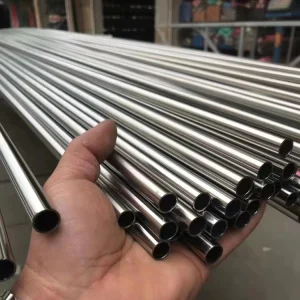
Wholesale China Stainless Steel Pipe Factory - Reliable Specifications
Wholesale High-Quality 201 Stainless Steel Strip/Coil Suppliers
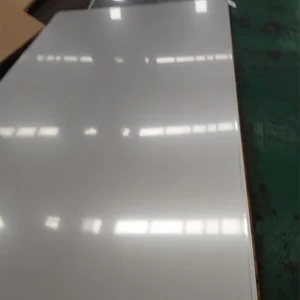
Wholesale 2507 Super Duplex Stainless Steel Plate - High Strength
High-Quality SUS304 Stainless Steel Cold-Rolled Plate - Food Grade
CE Certification Premium 201 Stainless Steel Pipes from China Factory