
Featured Stainless Steel Inventory
Certified Hot-Rolled, Cold-Rolled, and Processed Tubing Solutions Sourced Directly from Prime Mills
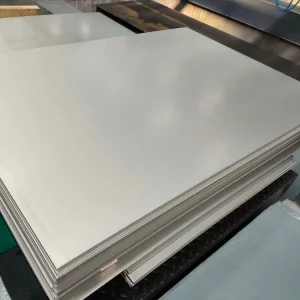




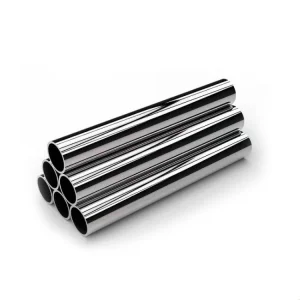
Custom 321 Stainless Steel Round Pipe Engineering & Manufacturing Architecture
A Comprehensive Analysis of Titanium Stabilization, High-Temperature Creep Resistance, and Intergranular Corrosion Mitigation in Modern Industrial Piping.
In ultra-critical thermal processing, aerospace propulsion, and petrochemical refining environments, standard austenitic stainless steels such as Grade 304 or 316 encounter severe structural degradation when exposed to temperatures within the carbide precipitation range of 800°F to 1500°F (427°C to 816°C). Within this thermal window, chromium carbides precipitate along the grain boundaries, depleting adjacent areas of chromium and rendering the alloy acutely vulnerable to Intergranular Corrosion (IGC) and stress corrosion cracking.
AISI Grade 321 (UNS S32100 / EN 1.4541) resolves this fundamental metallurgical limitation through the controlled addition of titanium. As a titanium-stabilized austenitic stainless steel, Grade 321 exhibits a thermodynamic preference for titanium carbide (TiC) formation over chromium carbide formation. The required titanium concentration is strictly calculated according to the metallurgical stoichiometry formula:
By tying up carbon atoms in stable titanium carbides, Grade 321 maintains the chromium content in solid solution throughout the matrix (minimum 17.0% Cr), thereby preventing localized intergranular attack and preserving long-term mechanical integrity under sustained high-temperature operations.
Core Chemical & Metallurgical Specifications
Custom 321 stainless steel round pipes supplied by Jiangsu Renzhi Holding Group Co., Ltd. adhere rigorously to international standards including ASTM A312, ASTM A213, EN 10216-5, and JIS G3459.
- Chromium (Cr): 17.00% – 19.00% (Ensures baseline oxidation resistance)
- Nickel (Ni): 9.00% – 12.00% (Stabilizes the fully austenitic structure)
- Titanium (Ti): 5×(C+N) min – 0.70% max (Prevents carbide precipitation)
- Carbon (C): 0.08% Maximum (Controlled to minimize carbide volume)
- Silicon (Si): 0.75% Max | Manganese (Mn): 2.00% Max
- Yield Strength (0.2% Offset): ≥ 205 MPa (30 ksi)
- Tensile Strength: ≥ 515 MPa (75 ksi) | Elongation: ≥ 35%
Comparative Alloy Selection Matrix for High-Temperature Services
Evaluating Grade 321 against alternative austenitic alloys (304L, 316L, 310S, and 347) to optimize life-cycle performance and material costs.
| Alloy Grade | UNS / EN Standard | Stabilization Mechanism | Creep & Stress Rupture (500–800°C) | Intergranular Corrosion Risk | Primary Industrial Use Case |
|---|---|---|---|---|---|
| 321 Stainless Steel | UNS S32100 / 1.4541 | Titanium (Ti) Stabilized | High (Superior to 304L/316L) | Immune after thermal exposure | Aircraft exhaust, refinery hydrocrackers, boilers |
| 304L Stainless Steel | UNS S30403 / 1.4307 | Ultra-Low Carbon (≤0.03%) | Low (Subject to high-temp creep) | Low during short welding; High under prolonged thermal exposure | General chemical processing, ambient food & dairy |
| 316L Stainless Steel | UNS S31603 / 1.4404 | Ultra-Low Carbon + 2% Molybdenum | Moderate | Controlled via low carbon | Marine fittings, chloride-containing chemical media |
| 347 Stainless Steel | UNS S34700 / 1.4550 | Niobium (Nb / Cb) Stabilized | Very High (Slightly superior to 321) | Immune after thermal exposure | Heavy welded pressure vessels, ultra-high temp piping |
| 310S Stainless Steel | UNS S31008 / 1.4845 | High Chromium (25%) & Nickel (20%) | Extremely High (Up to 1150°C) | Low due to high alloy content | Furnace parts, heat treatment retorts, incinerators |
When to Choose 321 over 304L
While 304L resists sensitization during brief welding cycles through ultra-low carbon, it lacks long-term stress-rupture strength above 427°C (800°F). Grade 321 provides superior creep resistance and higher elevated-temperature yield strength for continuous duty.
321 vs. 347 Economic Trade-Offs
Grade 347 utilizes Niobium, which is significantly more expensive and subject to volatile global raw material pricing. Grade 321 provides identical intergranular corrosion protection at a far more favorable economic price point for large-scale piping systems.
Polythionic Acid Service
In refinery desulfurization units and catalytic reformers, sulfur compounds form polythionic acid during shutdowns. Grade 321 round pipes withstand Polythionic Acid Stress Corrosion Cracking (PASCC) far better than non-stabilized 300-series alloys.
Global Industry Development Trends & Macro Application Solutions
How advanced engineering sectors leverage custom 321 stainless steel round pipes to meet rising efficiency, decarbonization, and extreme reliability demands.
Aerospace & Propulsion Systems
Next-generation commercial and defense aerospace engines operate at elevated combustion temperatures to maximize fuel efficiency. Custom 321 round tubing is deployed extensively in jet engine exhaust manifolds, piston engine stack collectors, turbine bypass lines, and thermal expansion joints where high fatigue resistance and thermal stability under cyclical shock are non-negotiable.
Petrochemical & Refinery Operations
Modern refineries are converting to heavier, higher-sulfur crude feedstocks, increasing chemical aggressiveness. Grade 321 pipes serve as primary conduits in hydrocrackers, catalytic cracking units, thermal cracking furnaces, and high-pressure steam superheaters. Their immunity to chromium depletion ensures multi-year operating campaigns without unscheduled shutdown risks.
Energy Transition & Green Hydrogen
As global energy infrastructure transitions toward synthetic fuels and high-temperature electrolysis, piping materials must handle superheated steam and hydrogen gas mixtures at elevated pressures. Grade 321 seamless and welded round tubing provides an optimal balance of hydrogen embrittlement resistance and thermal creep life for high-temperature fuel cell balance-of-plant (BOP) systems.
Global Procurement Sourcing Framework & Technical Execution
Mitigating procurement risks, verifying mill metallurgy, and executing custom manufacturing specifications for major B2B global buyers.
Seamless vs. Welded Pipe Production Routes
Understanding the structural implications of manufacturing processes is critical for project engineers:
- Custom Seamless 321 Pipes (Hot Extruded / Cold Drawn): Manufactured according to ASTM A312 / ASME SA312. Seamless pipes feature a continuous, homogeneous cross-section with no longitudinal weld seam. Ideal for ultra-high-pressure hydraulic systems, high-temperature heat exchangers, and nuclear pressure boundary piping.
- Custom Welded 321 Pipes (EFW / GTAW / Laser Welded): Produced from high-precision slit coil. Electric Fusion Welding (EFW) and Gas Tungsten Arc Welding (GTAW) with 100% X-ray radiography (RT) offer cost-effective, large-diameter piping solutions (up to 48" OD) with tight wall thickness tolerances.
Precision Processing & Surface Customization
At Jiangsu Renzhi Holding Group Co., Ltd., custom round pipes are engineered to exact client drawing specifications, including precise cut-to-length options, beveling for field welding (ANSI B16.25), bright annealing (BA) for ultra-clean internal ID surfaces, and mechanical polishing up to 800 Grit mirror finish.
Total Quality Assurance & NDT Protocol
Every production heat undergoes comprehensive destructive and non-destructive testing prior to dispatch:
Localization Support, Regulatory Framework & Compliance Guarantee
Navigating international engineering standards, regional pressure vessel directives, and global logistics nodes with complete peace of mind.
Pressure Equipment Compliance (PED 2014/68/EU)
For European contractors and engineering firms, our custom 321 stainless steel round pipes meet the strict safety mandates of the Pressure Equipment Directive (PED). Full documentation includes Certificate of Specific Inspection according to EN 10204 Type 3.1 or independent third-party 3.2 inspection (TÜV, Lloyd's Register, SGS, Bureau Veritas).
ASME Boiler & Pressure Vessel Code (BPVC)
Pipes intended for North American installation are manufactured fully compliant with ASME Section II Part A (SA312) and Section VIII Division 1 guidelines. Material chemistry and mechanical yield curves are certified to ensure seamless integration into registered ASME code stamp vessels and boilers.
NACE MR0175 / ISO 15156 Sour Service
When deployed in offshore oil and gas production facilities containing hydrogen sulfide ($H_2S$), our heat treatment solution annealing (1020°C–1120°C followed by water quenching) ensures hardness levels remain below 22 HRC, satisfying NACE MR0175 requirements for sulfide stress cracking (SSC) resistance.
Export-Grade Seaworthy Packaging & Fast-Track Logistics
To prevent mechanical damage, scratch marks, or marine atmospheric corrosion during ocean transit, all custom 321 round pipes are fitted with plastic end caps, wrapped in waterproof heavy-duty woven plastic, and secured inside wooden cases or reinforced steel-framed crates.
Strategically located in Wuxi, Jiangsu—adjacent to Shanghai Port and Ningbo Port—Jiangsu Renzhi Holding Group optimizes shipment timelines with direct vessel calls, multimodal rail freight across Eurasia, and expedited customs clearance via preferential Certificate of Origin (Form E, Form R, FTA) documentation.
Exporting to 60+ Countries across Europe, North America, Middle East & SE Asia
100% Traceable Mill SupplyTechnology Roadmap & Metallurgy Horizons (2025–2035)
Emerging manufacturing innovations and material science advances transforming Grade 321 stainless steel round pipe fabrication.
Vacuum Induction Melting (VIM-VAR)
Transitioning high-grade 321 manufacturing to Vacuum Induction Melting followed by Vacuum Arc Remelting (VIM-VAR) dramatically reduces non-metallic inclusions, gases, and trace impurities. This yields ultra-clean 321 pipe stock with enhanced fatigue resistance for aerospace hydraulic systems.
AI-Driven Real-Time Weld Monitoring
Integrating inline laser-spectral and acoustic emission monitoring on automated TIG welded 321 pipe production lines allows instantaneous micro-flaw detection. Artificial intelligence algorithms dynamically adjust welding current, shielding gas flow, and feed speed to eliminate weld seam porosity.
Green Steel & Low-Carbon Processing
Utilizing hydrogen-reduced direct reduced iron (DRI) feedstock and 100% renewable electric arc furnace (EAF) melting dramatically lowers the embedded carbon footprint of custom 321 piping, helping global buyers achieve Scope 3 supply chain sustainability targets.
Frequently Asked Questions (Technical & Commercial FAQ)
Expert answers to common engineering, quality control, and procurement queries regarding custom 321 stainless steel round pipes.
Explore Complete Product Line
Comprehensive Range of Stainless Steel Plates, Coils, Decorative Tubes, and Duplex Alloys
Partner with China's Premier 321 Stainless Steel Piping Manufacturer
Direct Mill Pricing • Customized Technical Tolerances • Fast Global Shipping • Full EN 10204 3.1 MTC Documentation