
Factory-Direct Stainless Steel Solutions
Mill-sourced pipes, plates, coils, and custom decorative tubing fabricated to ASTM, EN, and JIS standards.

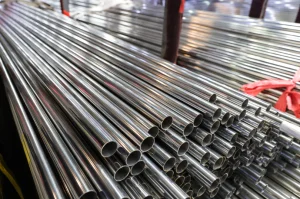





Executive Summary & Industrial Intelligence
Austenitic Grade 304 (UNS S30400, EN 1.4301, SUS304) remains the cornerstone of global fluid handling, structural engineering, and sanitary piping systems. Accounting for over 50% of total global stainless steel production, 304 stainless steel tubing delivers a precise balance of mechanical ductility, oxidation resistance, and ease of fabrication. However, procuring SS 304 pipes from China’s complex manufacturing ecosystem requires technical discernment regarding raw material origin, cold-working tolerances, heat treatment protocols, and non-destructive testing (NDT) compliance.
This technical whitepaper provides overseas EPC contractors, procurement directors, stockists, and structural engineers with an authoritative analytical breakdown of the Chinese SS 304 manufacturing sector. Sourcing directly from premier steel hubs like Wuxi and Foshan involves navigating critical metallurgical parameters, understanding microstructural phase balances, evaluating seam-welding versus seamless extrusion technologies, and establishing verifiable Quality Assurance (QA) frameworks to guarantee project longevity.
Technical Procurement Takeaway: Not all Grade 304 pipes are created equal. The mechanical performance and localized corrosion resistance of a China-manufactured SS 304 pipe depend directly on the control of residual trace elements (S, P, C), the degree of solution annealing (1040°C–1120°C rapid water quenching), and compliance with international ASTM A312, ASTM A213, or EN 10217-7 specifications.
Global Market Status & China's Supply Chain Integration
The global demand for Grade 304 stainless steel pipes is driven by mega-infrastructure expansions, expanding municipal wastewater treatment networks, food and beverage processing upgrades, and high-purity chemical processing facilities. China has solidified its position as the world's primary manufacturing hub for stainless steel piping products, backed by fully integrated supply chains extending from raw nickel pig iron (NPI) smelting to high-precision cold tube drawing and automated TIG/Plasma welding.
Leading Chinese industrial hubs—specifically Wuxi (Jiangsu Province) and Foshan (Guangdong Province)—utilize state-of-the-art continuous casting and automated rolling technology. By leveraging feedstock from global steel giants such as Tsingshan, TISCO, POSCO, and Baosteel, Chinese SS 304 pipe manufacturers achieve unprecedented economies of scale while maintaining strict dimensional tolerances and metallurgical homogeneity.
Raw Material Traceability
Direct integration with primary steel mills (TISCO, Tsingshan) ensures fully traceable heat numbers and verifiable chemical ladles with ultra-low tramp element concentrations.
Advanced Processing Automation
Modern Chinese mills feature automated multi-head TIG/Laser welding, online inner-weld bead flattening, and continuous bright annealing furnaces operating under pure hydrogen gas protection.
Lead Time & Freight Efficiency
Proximity to deep-water ports like Shanghai and Ningbo enables rapid containerized and break-bulk exports, offering shorter lead times for major global construction schedules.
Metallurgical Engineering & Chemical Balance
The alloy composition of Grade 304 stainless steel is defined by its 18% Chromium and 8% Nickel base (commonly termed 18/8 stainless steel). Chromium is responsible for forming an adherent, self-healing, microscopic passive chromium oxide film ($\text{Cr}_2\text{O}_3$) on the surface, which blocks atmospheric oxygen and liquid electrolytes from oxidizing the iron substrate. Nickel stabilizes the face-centered cubic (FCC) austenitic crystal structure down to cryogenic temperatures, granting exceptional toughness, non-magnetic traits, and high formability.
Understanding the distinction between 304, 304L (Low Carbon), and 304H (High Carbon) is critical for structural and thermodynamic applications:
| Grade / UNS | Carbon (C) | Chromium (Cr) | Nickel (Ni) | Manganese (Mn) | Yield Strength (0.2% Proof) | Primary Engineering Domain |
|---|---|---|---|---|---|---|
| 304 (UNS S30400) | ≤ 0.08% | 18.0 - 20.0% | 8.0 - 10.5% | ≤ 2.00% | ≥ 205 MPa | General fluid handling, architecture, structural framing |
| 304L (UNS S30403) | ≤ 0.03% | 17.5 - 19.5% | 8.0 - 12.0% | ≤ 2.00% | ≥ 170 MPa | Heavy-wall welded process lines requiring immune HAZ to intergranular corrosion |
| 304H (UNS S30409) | 0.04 - 0.10% | 18.0 - 20.0% | 8.0 - 10.5% | ≤ 2.00% | ≥ 205 MPa | High-temperature pressure vessels, superheaters, boiler tubing (>500°C) |
Preventing Intergranular Corrosion & Sensitisation
When standard Grade 304 is subjected to temperatures in the sensitisation range of 425°C to 850°C (such as during welding or slow cooling), carbon atoms diffuse toward grain boundaries and combine with chromium to form chromium carbides ($\text{Cr}_{23}\text{C}_6$). This depletes the adjacent grain boundaries of chromium below the critical 10.5% threshold necessary for passivity, leaving the steel susceptible to intergranular corrosion (IGC). Chinese mills address this issue through controlled solution annealing (1050°C followed by rapid quenching) or by substituting SS 304L for heavy-gage welding projects.
Manufacturing Engineering: Seamless vs. Welded SS 304 Pipes
A core procurement decision when engaging Chinese SS 304 factories is choosing between Seamless (SMLS) and Welded (ERW / EFW / TIG) manufacturing routes. Each methodology addresses specific pressure ratings, dimensional constraints, and budget realities.
Seamless (SMLS) SS 304 Pipes
Manufactured by hot-extruding or cold-drawing a solid stainless steel round billet (piercing process). SMLS pipes contain no longitudinal weld seam, offering maximum pressure resistance and uniform structural strength around the circumference.
- Standards: ASTM A312, ASTM A213, DIN 17458
- Wall Thickness Range: SCH 10S through SCH XXS
- Key Application: High-pressure steam lines, offshore oil conduits, severe thermal cycling units.
Automated Welded (TIG / Laser) Pipes
Produced from precision cold-rolled SS 304 coil strip fed into continuous roll-forming mills. The seam is fused using Gas Tungsten Arc Welding (GTAW/TIG), High-Frequency Induction (HFW), or Solid-State Fiber Laser, with online weld bead removal.
- Standards: ASTM A312, ASTM A249, ASTM A554 (Decorative)
- Tolerance Advantage: Superior wall thickness uniformity and concentricity.
- Key Application: Sanitary fluid delivery, food manufacturing, heat exchangers, architectural tubing.
Electric Fusion Welded (EFW) Pipes
Fabricated by cold-forming heavy stainless steel plates (ASTM A240 304) into tubular cylinders, followed by multi-pass automatic submerged arc welding (SAW) or TIG welding with filler metal addition.
- Standards: ASTM A358, EN 10217-7
- Diameter Range: Large-bore piping from 14 inches to 80 inches OD.
- Key Application: Municipal water distribution, paper pulp headers, power plant exhaust lines.
Technical Roadmap & Technological Outlook (2025–2035)
The Chinese stainless steel pipe manufacturing sector is undergoing a technology-driven evolution centered on carbon neutrality, smart factory automation, and ultra-high surface purity engineering. Buyers seeking long-term manufacturing partners should evaluate factories based on their alignment with these technological trends:
AI-Driven Inline NDT Flaw Detection
Integrating real-time multi-frequency Eddy Current Inspection and Phased Array Ultrasonic Testing (PAUT) directly into welded pipe lines allows mills to detect micro-cracks under 0.05mm instantly.
Green Hydrogen Bright Annealing
Replacing traditional cracked ammonia or fossil-fuel-fired furnaces with green hydrogen-powered induction bright annealing units eliminates surface oxide scaling without hazardous acid pickling.
Ultra-High Purity Electropolishing (EP)
Advancements in automated chemical-mechanical polishing achieve internal surface roughness levels down to $Ra \le 0.25\,\mu\text{m}$, satisfying stringent semiconductor and biopharmaceutical requirements.
Sector-Specific Applications & Macro Procurement Solutions
Grade 304 pipes serve as critical components across diverse engineering disciplines. Matching surface treatment, wall tolerance, and testing certifications to operational stress environments is essential:
1. Food, Beverage & Pharmaceutical Processing
In food processing, dairies, and breweries, SS 304 sanitary tubing compliant with 3-A or DIN 11850 standards prevents bacterial growth. Internal surfaces are mechanically polished or electropolished ($Ra < 0.4\,\mu\text{m}$) to eliminate microscopic pits where organic residue can lodge. Orbital TIG welding with argon gas backing preserves the protective oxide layer across joint seams.
2. Municipal Water, HVAC & Fire Protection Systems
Th thin-wall press-fit SS 304 piping technique has transformed municipal water delivery and high-rise building plumbing. Offering a service life exceeding 50 years, SS 304 pipes resist chlorine-induced pitting up to ~200 ppm at ambient temperatures, reducing lifecycle maintenance costs compared to galvanized carbon steel or copper.
3. Petrochemical Refineries & Chemical Fluid Lines
In non-marine chemical handling, Grade 304 transports dilute organic acids, alcohols, nitric acid, and mild alkaline solutions. For applications involving elevated temperatures or pressure, engineering teams specify Schedule 40S or Schedule 80S seamless SS 304/304L pipes tested to ASTM A312 hydropressures ($\ge 1000\,\text{PSI}$).
4. Architecture, Handrails & Decorative Infrastructure
For architectural balustrades, airport terminals, and curtain wall frames, structural SS 304 tubing conforms to ASTM A554. Precision surface polishes—such as No.4 Brushed, 180-Grit Satin, or 8K Mirror finish—provide clean aesthetics while resisting urban atmospheric staining.
Quality Assurance, Mill Test Certificates & Factory Auditing
Mitigating risk in China-based procurement requires a rigorous Quality Assurance (QA) protocol. Overseas buyers should enforce clear contract specifications and request verified documentation before dispatch:
Essential Supplier Compliance Checklist:
- EN 10204 3.1 Mill Test Certificate (MTC): Must detail actual heat-specific chemical ladle analysis and mechanical property testing (Tensile, Yield, Elongation, Hardness).
- Intergranular Corrosion Testing: Verification according to ASTM A262 Practice E (Copper-Copper Sulfate-16% Sulfuric Acid Test) to guarantee absence of sensitisation.
- Non-Destructive Testing (NDT): 100% online Eddy Current Testing (ASTM E426) or Hydrostatic Pressure Testing (ASTM A999) on all pressure pipe batches.
- Dimensional Tolerance Controls: Adherence to ASTM A530 / A999 for outer diameter (OD), wall thickness variations ($\le \pm 10\%$), and straightness ($\le 1.5\,\text{mm/m}$).
- Third-Party Inspection (TPI): Pre-shipment verification by independent agencies such as SGS, TÜV, Bureau Veritas (BV), or Intertek.
Frequently Asked Questions
Detailed answers to technical questions concerning Grade 304 stainless steel pipe procurement, standards compliance, and performance.
What is the main difference between Grade 304 and Grade 316 stainless steel pipes?
Grade 304 contains 18% Chromium and 8% Nickel, making it highly versatile and cost-effective for general industrial and architectural environments. Grade 316 includes an addition of 2% to 3% Molybdenum (Mo), significantly boosting resistance to pitting and crevice corrosion in chloride-rich environments like seawater, marine hardware, and harsh chemical processing plants.
Why is 304L preferred over standard 304 for heavy-wall welded pipes?
304L has a lower carbon limit (≤ 0.03% vs. ≤ 0.08% for standard 304). This low carbon level minimizes harmful chromium carbide precipitation during welding, preventing sensitisation of the Heat-Affected Zone (HAZ) and maintaining intergranular corrosion resistance without requiring post-weld solution annealing.
Which international specifications apply to industrial SS 304 pressure piping?
The primary international standards include ASTM A312 (for seamless, welded, and heavily cold-worked austenitic pipes), ASTM A213 (for seamless boiler/heat-exchanger tubes), ASTM A269 (for general tubing), EN 10217-7 (European welded pressure pipes), and JIS G3459 (Japanese stainless steel pipes).
Are Grade 304 stainless steel pipes magnetic?
In their fully solution-annealed state, SS 304 pipes feature an austenitic microcrystalline structure and are non-magnetic (or exhibit negligible magnetic permeability). However, severe cold working—such as cold drawing, tube bending, or roll forming—can induce a partial phase transformation from austenite to deformation martensite, introducing mild magnetism. Solution heat treatment restores the fully non-magnetic austenitic structure.
How do Chinese manufacturers ensure export packaging prevents transit damage?
Reputable factories utilize seaworthy export packaging: bundle wrapping with protective plastic film/woven geotextile, end-capping on both tube apertures to exclude debris and moisture, wooden crate framing or ISPM-15 compliant fumigated wooden boxes, and internal steel banding with plastic edge protectors to prevent metal-on-metal chafing during ocean transport.
Explore Extended Factory Offerings
Full mill spectrum including duplex plates, precision strips, sanitary cold-rolled sheets, and custom railings.


