
Precision Engineered Sanitary Stainless Steel Solutions
Mill-direct high-purity tubing, cold-rolled stainless sheets, structural welded pipes, and corrosion-resistant alloys manufactured strictly to ASME BPE, 3-A, ISO 2037, and DIN 11850 standards.

Custom China SUS304 Stainless Steel Cold-Rolled Plate Supplier - Corrosion-Resistant Food Grade Factory Material Manufacturers, Factories
View Details
CE Certification 316l Stainless Steel Sheet Factory, Quotes
View Details
Custom Stainless steel industrial welded pipe Manufacturer, Supplier
View Details
Custom China SUS304 Stainless Steel Cold-Rolled Plate Suppliers - Corrosion-Resistant Food Grade Factory Products Suppliers, Factory
View Details
CE Certification China Stainless Steel Pipe Direct Factory Suppliers - MTC Certified, Full Specifications Available Manufacturers, Suppliers
View Details
China China SUS304 Cold-Rolled Stainless Steel Plate Suppliers - Corrosion Resistant Food Grade Factory Products Factories, Quotes
View Details
China Corrosion-Resistant SUS304 Cold-Rolled Plate from China Suppliers | Food Grade Stainless Steel Factory Manufacturers, Suppliers
View Details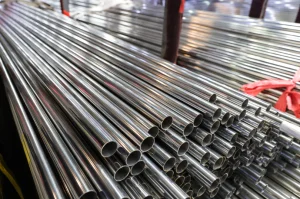
Custom 316L Stainless Steel Weld Pipe Suppliers, Factories
View DetailsSanitary Stainless Steel Tubing: The Engineering Foundation of Hygienic Fluid Systems
In high-purity industrial fluid handling—spanning biopharmaceutical synthesis, ultra-pure water (UPW) distribution, commercial food processing, and semiconductor manufacturing—the structural integrity and surface micro-topology of piping systems are non-negotiable parameters. China has emerged as the global epicenter for precision sanitary stainless steel tubing manufacturing, leveraging advanced metallurgy, state-of-the-art bright annealing furnaces, and automated electropolishing (EP) tech.
As global enterprise procurement officers and process engineers seek resilient, high-capability OEM supply partners, leading Chinese manufacturers such as Jiangsu Renzhi Holding Group Co., Ltd. offer complete end-to-end traceabilities—from raw coil melting at Tsingshan and TISCO to final cleanroom ISO Class 5 packaging.
China Factory 4.0: Supply Chain Resilience & Production Efficiency
How modernized Chinese manufacturing infrastructures combine upstream raw-material integration with advanced digital quality control to deliver unmatched cost-to-performance metrics.
Upstream Raw Material Integration
Direct strategic sourcing of low-carbon austenitic slabs (304L, 316L) and Duplex stock (2205, 2507) from Tier-1 steelmakers like Tsingshan, TISCO, POSCO, and Baosteel ensures chemical purity, tight nickel/molybdenum chemistry tolerances, and verifiable heat batch traceability.
Continuous Bright Annealing Tech
Utilizing high-temperature, pure hydrogen atmosphere continuous bright annealing furnaces (1050°C - 1150°C) prevents oxide scale formation. This process relieves cold-working stress, restores austenitic crystal structure, and guarantees uniform corrosion resistance across both base metal and weld seam.
Inline Laser & NDT Defect Detection
Every meter of sanitary tubing passes through automated laser OD profiling, real-time multi-channel eddy current fault detection, and online weld-seam leveling, guaranteeing internal diameter wall consistency and zero micro-fissures prior to mechanical polishing.
Technical Roadmap: Next-Generation Sanitary Tubing Innovations
The global shift toward high-yield biomanufacturing, gene therapy production, microelectronics, and green hydrogen synthesis is pushing sanitary tubing specifications into ultra-high-purity (UHP) realms. Leading Chinese factories are driving technological shifts across four core pillars:
1. Super Duplex & Nitrogen-Strengthened Alloys for Harsh Media
While standard AISI 316L remains the workhorse for general food and pharmaceutical processing, aggressive environments containing high chloride concentrations, hot organic acids, or high pressure (e.g., desalination clean-in-place CIP lines) demand materials with higher Pitting Resistance Equivalent Number (PREN). Factories are advancing continuous thin-wall welding of Duplex 2205 (PREN ≥ 34) and Super Duplex 2507 (PREN ≥ 42) sanitary tubing, providing double the yield strength of austenitic grades while eliminating stress corrosion cracking risks.
2. Advanced Electropolishing (EP) and Nano-Passive Layer Engineering
Future sanitary systems require near-zero rouge formation. Innovations in multi-stage anodic electropolishing using proprietary electrolyte solutions and computer-controlled current densities achieve internal surface roughness down to $Ra \le 0.15 \mu m$ ($10 \mu in$). Subsequent high-concentration nitric/citric passivations build an enriched Chromium-to-Iron ratio ($Cr/Fe \ge 1.8$), drastically diminishing ion leaching into sensitive pharmaceutical media or ultra-pure water.
3. Green Metallurgy & Zero-Carbon Manufacturing
Aligning with global ESG and EU CBAM regulatory frameworks, top-tier Chinese manufacturers are implementing zero-carbon bright annealing processes powered by green hydrogen fuel cells and recycled solar energy. Furthermore, steel scrap utilization is optimized via electric arc furnace (EAF) steelmaking, reducing the lifecycle carbon footprint of exported sanitary piping by over 40%.
| Grade / Standard | Chemical Composition Key | Surface Finish Options | PREN Rating | Primary Target Application |
|---|---|---|---|---|
| SUS304 / 304L (ASTM A270 / 3-A) | 18% Cr, 8% Ni, Low C | MP Ra ≤ 0.8μm (Grit 180/240) | ~19 | Dairy, Brewery, Beverage, Cosmetic Lines |
| 316L / EN 1.4404 (ASME BPE / DIN 11850) | 17% Cr, 12% Ni, 2.5% Mo | MP/EP Ra ≤ 0.38μm (SF1 / SF4) | ~25 | Biopharma, CIP/SIP Systems, API Synthesis |
| Duplex 2205 (EN 1.4462) | 22% Cr, 5% Ni, 3% Mo, 0.18% N | MP Ra ≤ 0.4μm / Custom EP | ≥ 34 | High-Chloride Media, Saline CIP, Chemical Foods |
| Super Duplex 2507 (EN 1.4410) | 25% Cr, 7% Ni, 4% Mo, 0.28% N | Custom High-Precision Polish | ≥ 42 | Seawater Fluid Systems, High-Pressure UHP |
Macro Industry Solutions & Application Scenarios
Tailored sanitary piping engineering frameworks designed to eliminate bio-burden, prevent cross-contamination, and maximize operational uptime across diverse industrial domains.
Biopharmaceuticals & Vaccines
ASME BPE compliant 316L electropolished tubing ($Ra \le 0.25 \mu m$) designed for WFI (Water for Injection) loops, bioreactor harvest lines, and sterile filtration manifolds. Certified dead-leg free and capable of withstanding continuous SIP steam sterilization at 135°C.
Food, Dairy & Craft Beverage
3-A and DIN 11850 food-grade 304L/316L mechanical polished tubes with ultra-smooth internal longitudinal seams. Engineered for high-viscosity fluid transmission, pasteurization heat exchangers, and rapid Clean-in-Place (CIP) chemical wash cycles.
Semiconductor UHP & Cleanrooms
Ultra-High Purity (UHP) seamless and welded electropolished tubing optimized for specialty gas distribution, chemical delivery, and deionized water loops in microchip fabrication, featuring total trace moisture levels below 10 ppb.
Global Enterprise Procurement Intent & Specifications Guide
When engineering procurement teams evaluate sanitary stainless steel tubing suppliers from China, rigorous verification protocols must be established to guarantee total cost of ownership (TCO) optimization and zero line shut-downs. Key procurement intent matrices include:
- Material Test Report (MTR): Complete certification according to EN 10204 3.1 or 3.2, including Positive Material Identification (PMI), heat number traceability, chemical breakdown, and mechanical tensile/yield data.
- Dimensional Tolerances: Strict compliance with ASTM A269/A270 standards for Outer Diameter (OD), Wall Thickness (WT), and ovality tolerances ($\le \pm 0.05 mm$).
- Weld Seam Quality: 100% orbital TIG welding or plasma-TIG hybrid welding with complete helium leak testing or eddy current testing compliant with ASTM E426.
- Surface Roughness Certification: Surface profilometer test reports detailing internal $Ra$ values at multiple random cross-sections along the 6-meter tube length.
Logistics, Export Packaging, and Local Support Safeguards
To preserve pristine electropolished or bright annealed surface finishes during ocean transit across humid environments, leading factories enforce strict cleanroom packaging protocols: plastic end-caps, individual sleeves, vacuum-sealed polyethylene wrapping, and ISPM-15 compliant heat-treated wooden crates with internal dampening structures.
Frequently Asked Questions (Technical & Procurement FAQ)
In-depth technical answers addressing critical questions asked by piping designers, quality assurance managers, and global sourcing leaders.
Mechanical Polishing (MP) uses abrasive grits (e.g., 180, 240, 320, 400 Grit) to physically smooth the internal stainless steel surface, achieving $Ra$ values down to $\sim 0.4 \mu m$. Electropolishing (EP) is an electrochemical process that selectively dissolves peaks on the metal surface, removing microscopic micro-burrs and embedding a rich chromium-oxide passive film. EP yields a mirror-like finish ($Ra \le 0.15 - 0.25 \mu m$), drastically reduces surface area, and provides superior resistance to bacterial adhesion and rouge formation.
Ferrite is a magnetic phase in austenitic stainless steel welds. While a small amount of ferrite (3-8%) prevents hot cracking during welding, excessive ferrite in pharmaceutical tubing exposed to pure steam or WFI can lead to selective corrosion, rouge accumulation, and iron leaching. Standards such as ASME BPE strictly dictate ferrite limits (often $\le 1-3\%$ in polished fluid-contact areas) to guarantee chemical inertness.
Export-grade Chinese factories produce sanitary tubing strictly adhering to international specifications including ASME BPE (North America Biopharma), 3-A Sanitary Standard 33-02 (Dairy & Food), DIN 11850 / EN 10357 (European Food & Chemical), ISO 2037, and ASTM A270 (Sanitary Seamless and Welded Austenitic Tubing).
Factories utilize multi-head automated internal tube polishing machinery equipped with expanding polishing heads, fluid coolants, and digital pressure feedback systems. For Electropolishing, custom long-cathode rods traverse the entire length of the tube inside specialized electrolysis baths, followed by high-pressure deionized water rinsing and boroscope visual inspection along 100% of the internal length.
Yes. OEM Chinese manufacturers provide tailored production runs covering outer diameters from 6mm to 304.8mm ($1/4"$ to $12"$), wall thicknesses from 0.8mm to 4.0mm, custom cut lengths, non-standard alloy grades (e.g., 317L, 904L, Hastelloy C22), and integrated sanitary fittings (tri-clamp ferrule ends, bends, tees, and reducers).
Complete Industrial Stainless Steel Materials & Components
Explore our comprehensive portfolio including low-carbon austenitic pipes, cold-rolled sheets, perforated meshes, decorative tubes, and heavy industrial coils.
Custom China SUS304 Stainless Steel Cold-Rolled Plate Suppliers - Factory Direct, Corrosion-Resistant Food Grade Material Manufacturers, Factory
View Details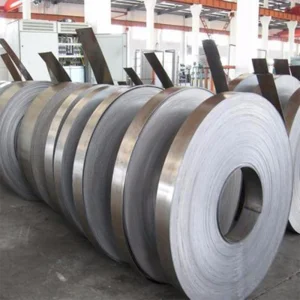
China High-Quality 201 Stainless Steel Strip/Coil from China Suppliers | Factory Direct Discounts & Excellent Processing Properties Factories, Pricelist
View Details
Custom High Cost-effective 201 Cold Rolled Stainless Steel Sheet - China Suppliers and Factory Supplier, Factory
View Details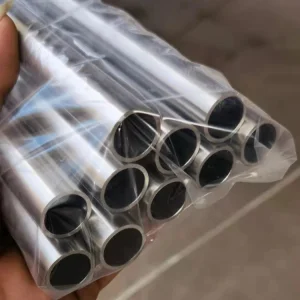
Custom China SUS304/304L Low Carbon Stainless Steel Pipe Suppliers | Factory for Ultimate Corrosion Resistance Supplier, Quotes
View Details
CE Certification High Cost-effectiveness 201 Cold Rolled Stainless Steel Sheet Supplier, Factories
View Details
Wholesale China Perforated Stainless Steel Sheet - High-Quality Metal Mesh from Reliable Suppliers and Factory Suppliers, Factory
View Details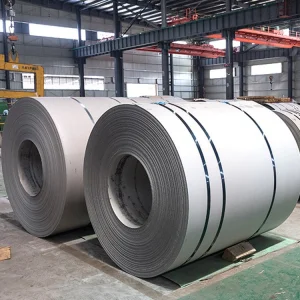
Wholesale China Hot Rolled Stainless Steel Coil Suppliers - Durable Thick & Wide Industrial Coils from Trusted Factory Manufacturer, Factories
View Details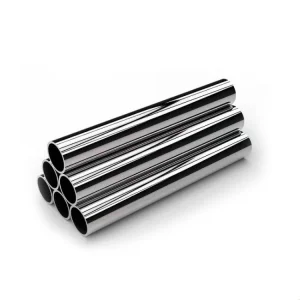
Custom Stainless Steel Decorative Pipe - High-Quality China Suppliers & Factory, Exquisite Surfaces and Diverse Designs Manufacturer, Supplier
View DetailsPartner with China's Premier Sanitary Tubing OEM Factory
Request mill test certificates, technical surface roughness samples, and real-time FOB/CIF container pricing from our dedicated team of senior metallurgical sales engineers.
Contact Engineering Sales (+86 17312767610)