
Primary Stainless Steel Sheet, Plate & Pipe Inventory
Direct mill-sourced metal solutions engineered for agricultural, industrial, and post-frame pole barn structures.





Navigating China Pole Barn Sheet Metal Quotes & Pricelists in 2026
Understanding search intent, material specs, and price-per-ton vs. price-per-square-foot dynamics for global B2B metal buyers.
Key Insight for Procurement Officers: Search intent surrounding "China Pole Barn Sheet Metal Quotes & Pricelist" has evolved from simple unit-price lookups to complex, lifecycle-cost modeling. Modern commercial and agricultural developers are increasingly replacing traditional painted galvanized sheets with cold-rolled stainless steel profiles (Grades 201, 304, and 316L) to eliminate rust-induced structural failures and achieve 50+ year maintenance-free lifespans.
When engineering post-frame structures—commonly known as pole barns—cladding material selection dictates not only initial capital expenditure (CapEx) but long-term operational expenditure (OpEx). Historically, 29-gauge to 26-gauge prepainted galvanized (PPGI) or Galvalume (PPGL) steel dominated the agricultural market. However, severe micro-climates, livestock waste emissions (high ammonia concentration), coastal salt spray, and aggressive industrial chemical exposure routinely destroy conventional zinc coatings within 7 to 15 years.
Today, direct purchasing from tier-1 Chinese stainless steel manufacturers like Jiangsu Renzhi Holding Group Co., Ltd. allows global buyers to bypass intermediate markup channels. By accessing raw mill feedstock (sourced directly from Tsingshan, TISCO, POSCO, and Baosteel), procurement teams can lock in highly competitive volumetric quotes for stainless steel sheet metal tailored specifically for pole barn roofing, wall panels, trims, and structural framing.
Decoding the Pricing Equation: Freight, Gauge, Finish, and Grade
Quotes for imported Chinese sheet metal depend on four primary variables: material grade selection, structural thickness (gauge vs. millimeter precision), surface passivation/finishing processing, and ocean freight logistics packaging. Below is an engineering overview of how these variables impact price formation:
- Alloy Composition & Grade Surcharges: Grade 201 offers maximum affordability for dry indoor framing and low-corrosion pole barn walls. Grade 304 provides universal corrosion protection for agricultural housing. Grade 316L includes 2-3% Molybdenum for extreme coastal or chemical environments.
- Thickness Tolerances: Precision cold-rolling guarantees tight wall and sheet thickness tolerances (+/-0.02mm), ensuring predictable structural load performance under snow and wind shear forces.
- Surface Finishes: Options range from standard 2B mill finish and Bright Annealed (BA) to No.4 brushed anti-glare finishes and custom anti-fingerprint hydrophobic coatings.
Global Market Status & Industrial Demand Analysis
Post-frame construction is rapidly expanding across North America, Europe, Australia, and the Middle East driven by commercial and agricultural modernization.
North American Post-Frame Boom
In the United States and Canada, pole barn construction has expanded far beyond basic agricultural storage into multi-use commercial facilities, horse arenas, suburban "barndominiums," and heavy equipment workshops. Extreme weather events (snow loads, hail, high velocity winds) have forced builders to transition to higher tensile strength metal panels. Importing high-yield stainless steel sheet metal from Chinese manufacturers provides North American distributors with a 20% to 35% cost advantage over local domestic steel processors.
European Sustainability & Lifecycle Mandates
European Union directives regarding circular economy and carbon footprint metrics heavily favor fully recyclable materials like stainless steel over short-lived coated carbon steel sheets that leach synthetic chemicals or micro-plastics during degradation. Standardized to EN 10088-2 specifications, cold-rolled 304 and 316L sheets exported from Jiangsu, China meet stringent European construction product regulations (CPR) while providing exceptional return on investment (ROI).
Pole Barn Sheet Metal Benchmark Price Matrix (2026 Direct-Factory Rates)
Transparent cost estimates based on metric tonnage and square meter coverage for B2B procurement planning.
| Stainless Grade | Common Thickness (Gauge / mm) | Corrosion Resistance Level | Surface Finish | Est. Factory Price Range (USD / Metric Ton) | Ideal Application Scenario |
|---|---|---|---|---|---|
| Grade 201 (Cr-Mn Series) | 29 Ga (0.35mm) – 24 Ga (0.60mm) | Moderate (Indoor / Mild Weather) | 2B / BA / Powder Coated | $1,250 – $1,550 | Interior ceiling panels, partition walls, economical rural dry storage pole barns. |
| Grade 304 (Standard 18/8) | 28 Ga (0.38mm) – 22 Ga (0.75mm) | High (Universal Outdoor) | 2B / No.4 / Embossed | $2,100 – $2,550 | Standard exterior roof & wall cladding, livestock housing, grain storage facilities. |
| Grade 316L (Low Carbon + Mo) | 26 Ga (0.45mm) – 20 Ga (0.90mm) | Superior (Chloride / Marine) | 2B / BA / No.4 | $3,200 – $3,850 | Coastal post-frame structures, chemical processing sheds, fertilizer storage facilities. |
| Grade 430 (Ferritic Nickel-Free) | 28 Ga (0.38mm) – 24 Ga (0.60mm) | Moderate-High (Dry Outdoor) | 2B / BA | $1,350 – $1,700 | Architectural trim, interior liner panels, budget-conscious agricultural roofs. |
| Duplex 2205 (Austenitic-Ferritic) | 24 Ga (0.60mm) – 18 Ga (1.20mm) | Extreme (Heavy Industrial) | No.1 / 2B | $4,100 – $4,900 | Heavy industrial post-frame warehouses, severe acid/saline environmental exposure. |
*Note: Price quotes fluctuate based on global LME Nickel, Molybdenum, and Chromium spot prices. Volume discounts apply for orders exceeding 20 Metric Tons. Contact Jiangsu Renzhi Holding Group sales engineers for live FOB/CIF pricing.
Understanding Structural Profile Roll-Forming Impacts on Sheet Quotes
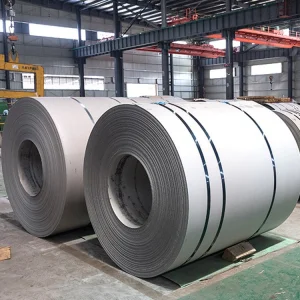
Raw stainless steel coils are processed into specialized pole barn profiles. Selecting the right profile geometry directly affects structural integrity and overall square-foot metal coverage cost:
- Ag-Panel (Tuf-Rib): Features 3/4" ribs on 9" centers. Most cost-effective coverage for agricultural buildings. Requires lightweight gauge material (29 to 26 Gauge).
- R-Panel / PBR-Panel: 1-1/4" major ribs on 12" centers with purlin bearing legs. Engineered for higher wind load ratings and wider spans in commercial pole barns.
- Standing Seam Panels: Concealed fastener system offering ultimate water-tightness. Utilizes 24 Gauge to 22 Gauge cold-rolled stainless steel strip to allow for expansion and contraction.
China Factory Supply Chain Resilience & Wuxi Hub Efficiency
How Jiangsu Renzhi Holding Group integrates R&D, primary smelting sources, precision slitting, and export packaging under one roof.
Traceable Feedstock Partners
Raw coil feedstock is sourced directly from tier-1 global mills including Tsingshan, TISCO, POSCO, and Baosteel. This ensures strict chemical heat-number traceability, preventing batch-to-batch variation in tensile strength or corrosion resistance.
Integrated In-House Processing
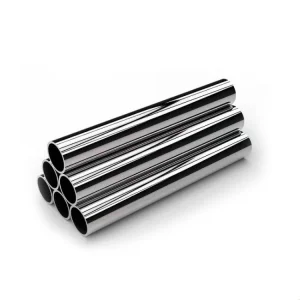
Operating 5 automatic flattening and slitting lines, 6 polishing lines (8K mirror, No.4, hairline), 2 embossing lines, and 80+ welded pipe lines. Eliminating third-party processing reduces lead times by 40% and lowers unit cost.
Seaworthy Export Packaging
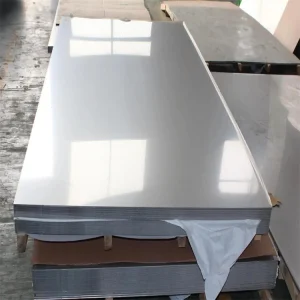
Pole barn metal sheets and coils are protected with heavy-duty plastic film, waterproof craft paper, metal edge protectors, and robust wooden pallets or steel frames designed to withstand long ocean transport moisture.
Technical Roadmap & Future Outlook: Next-Gen Sheet Metal Cladding
Innovations shaping the next decade of post-frame building envelope performance, thermal efficiency, and sustainability.
1. Cool-Roof Solar Reflective Coatings
Future pole barn metal sheets integrate advanced nanoscale ceramic pigments applied onto stainless substrates. These coatings reflect solar infrared radiation, reducing interior barn temperatures by up to 12°C during peak summer months and slashing HVAC energy demands for livestock housing or cold storage facilities.
2. Self-Healing Nano-Passivation Layers
Move beyond standard nitric-acid pickling. Modern Chinese mills are deploying titanium-zirconium chemical passivation films that actively re-passivate scratches caused by field-drilling or installation handling, preventing micro-corrosion around fastener holes.
3. BIPV (Building-Integrated Photovoltaics) Compatibility
As post-frame buildings become distributed energy generation hubs, stainless standing-seam sheet profiles are engineered with ultra-flat tolerances to accept direct-bonding flexible thin-film solar arrays without structural weight penalties.
4. Ultra-High Strength Ferritic Formulations
Next-generation low-nickel ferritic alloys (such as stabilized 444 or 439 grades) provide structural yield strength exceeding 350 MPa at pricing near carbon steel, unlocking extreme wind-shear resistance for large-span commercial pole barns.
Localized Application Scenarios & Structural Engineering Fits
Matching stainless metal sheeting grades to specific environmental stressors and regional building codes.
Agricultural Livestock Housing
Environment: High ammonia, high humidity, bio-waste acid vapors.
Recommended Solution: Grade 304 2B Finish, 26 Gauge.
Outcome: Prevents panel perforation common with galvanized steel. Lifespan increased from 8 years to 40+ years without surface degradation.
Coastal Commercial Storage Warehouses
Environment: Heavy saline atmosphere, high wind shear, salt spray.
Recommended Solution: Grade 316L No.4 Finish, 24 Gauge Standing Seam.
Outcome: Zero pitting corrosion observed after 1000-hour salt spray testing (ASTM B117). Resists hurricane-force wind uplift.
Suburban Barndominium Residential Roofing
Environment: Aesthetic architectural appeal, seasonal freeze-thaw cycles.
Recommended Solution: Grade 304 BA Finish or Embossed Textured Sheet.
Outcome: Combines modern metallic aesthetics with 100% ice-dam protection and zero thermal cracking over long-term exposure.
Localized Support, Testing & Global Compliance Guarantees
Rigorous quality control protocols ensuring every shipment meets international structural standards.
To eliminate procurement risk for overseas B2B importers, Jiangsu Renzhi Holding Group enforces a full-process quality management protocol covering raw material receipt through final port clearance:
Strict Compliance Standards
All sheet metal products are certified to ASTM A240 / A240M (American Standard for Chromium and Chromium-Nickel Stainless Steel Plate, Sheet, and Strip for Pressure Vessels and General Applications), EN 10088-2 (European Standard for Stainless Steel Sheet/Plate), and JIS G4304 (Japanese Standard).
In-House Metallurgical Testing
Every shipment is accompanied by a formal Mill Test Certificate (MTC) to EN 10204 3.1. Testing includes Spectrometric Chemical Analysis, Tensile & Yield Strength Verification, Hardness Testing (HRB/HV), Intergranular Corrosion Testing (ASTM A262 Practice E), and Thickness Tolerance Audits.
Secondary Stainless Steel Sheet, Plate & Coil Inventory
Custom cold-rolled, hot-rolled, and decorative stainless products ready for worldwide export dispatch.

Frequently Asked Questions (Technical & Commercial FAQ)
Expert engineering answers to common inquiries regarding pole barn metal sheet quotes, minimum order quantities, logistics, and metallurgical specs.