
Featured Industrial Steel Plates & Structural Products
Direct factory sourcing with fully certified chemistry, mill test reports (MTC EN 10204 3.1), and customizable dimensional tolerances for global engineering projects.


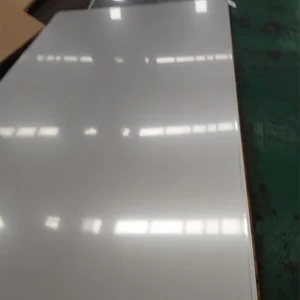




Global Industrial Status of Hot Rolled Steel Plates
An authoritative breakdown of structural steel plate demand, metallurgical fundamentals, and macroeconomic drivers in modern heavy engineering.
Hot rolled steel plate serves as the fundamental backbone of modern industrial infrastructure and global heavy manufacturing. Produced through a high-temperature rolling process exceeding the steel's recrystallization temperature (typically above 1,100°C / 2,012°F), hot rolled plates possess superior mechanical toughness, high yield stress thresholds, and exceptional weldability compared to thinner cold-processed gauge metals. As global infrastructure investments expand across energy, maritime transport, urban civil engineering, and heavy equipment manufacturing, the international market demand for high-integrity hot rolled carbon, structural alloy, and stainless steel plates has reached unprecedented structural importance.
From a metallurgical perspective, the hot rolling process refines the internal microcrystalline grain structure of cast steel slabs. As molten steel cast from continuous slab casters passes through roughing and finishing rolling stands, heavy hydraulic deformation breaks down dendritic cast structures, eliminating internal porosity and consolidating the metal matrix. This results in uniform grain alignment along the rolling axis, imparting isotropic mechanical strength and high resistance to dynamic mechanical stress. For B2B procurement managers and structural engineering firms, understanding these thermo-mechanical properties is paramount when specifying materials for load-bearing girders, pressure vessel shells, subsea pipelines, and mining machinery frames.
Microstructural Integrity
Hot rolling above recrystallization temperatures removes internal voids, yielding refined equiaxed ferrite-perlite or austenitic microstructures capable of absorbing severe impact loads.
High Fatigue Thresholds
Thermal tension relief during controlled cooling allows hot rolled plates to endure structural flex, thermal cycling, and high dynamic forces without micro-fracturing.
Superior Weldability
Low carbon equivalent values (CEV) engineered into modern hot rolled plate chemistry prevent hydrogen cracking during heavy field arc and submerged-arc welding.
Across North America, Western Europe, and the Asia-Pacific region, industrial buyers face distinct supply chain challenges: volatile raw material pricing, stringent environmental regulations, and fluctuating local mill lead times. Consequently, global procurement strategies have shifted toward established Chinese manufacturing hubs capable of delivering consistent heavy-gauge hot rolled steel plates manufactured to global standard specifications such as ASTM, EN, JIS, and GB/T.
China Hot Rolled Steel Manufacturing & Supply Chain Advantages
How vertical integration, advanced rolling mills, and automated quality control drive unparalleled cost-efficiency and delivery reliability for international procurement.
China's steel manufacturing sector represents over 50% of total global crude steel output, supported by the world’s most advanced thermo-mechanical controlled processing (TMCP) hot-strip mills and heavy plate mills. Leading Chinese manufacturers, such as Jiangsu Renzhi Holding Group Co., Ltd., operate vertically integrated production ecosystems that bridge raw material refining, continuous slab casting, hot rolling, leveling, heat treatment, and precision slitting within unified industrial parks.
This massive scale offers direct competitive edges for international B2B buyers:
- Integrated Raw Material Sourcing: Direct strategic partnerships with tier-one primary mills (such as Tsingshan, TISCO, POSCO, and Baosteel) guarantee traceable chemical purity, consistent melt chemistry, and low tramp-element levels across every production heat.
- Advanced TMCP Milling Technology: State-of-the-art heavy plate mills utilize automated hydraulic automatic gauge control (AGC) and online ultrasonic thickness scanners to maintain tight dimensional tolerances across width, length, and cross-sectional flatness.
- Flexible Custom Batching: Unlike overseas mills requiring massive minimum order quantities (MOQs) for non-standard thicknesses or custom alloy chemistries, Chinese suppliers accommodate specialized project orders with rapid mill setup turnarounds.
- Port & Logistics Integration: Located near coastal maritime hubs (Shanghai, Ningbo, Qingdao, and Tianjin), Chinese factories streamline export packing, containerization, breakbulk loading, and customs documentation for seamless sea transport.
Material Grade Specifications & Standards Comparison
Cross-reference international steel grade standards to align your engineering requirements with optimal carbon, alloy, and stainless steel hot rolled plates.
| Steel Grade Family | Common Standards | Yield Strength (MPa) | Tensile Strength (MPa) | Key Metallurgical Characteristics | Primary Industrial Sector |
|---|---|---|---|---|---|
| Carbon Structural | ASTM A36 / Q235B / S235JR | ≥ 235 - 250 | 400 - 550 | Excellent ductility, easy cold forming, high weldability without preheating. | General Construction, Machinery Frames, Structural Columns |
| High-Strength Low-Alloy (HSLA) | Q355B / S355JR / ASTM A572 Gr 50 | ≥ 355 | 470 - 630 | Micro-alloyed with Nb, V, Ti for elevated strength and toughness balance. | Bridges, Heavy Cranes, Offshore Jackets, Mining Vehicles |
| Pressure Vessel Carbon | ASTM A516 Gr 70 / Q345R / P355GH | ≥ 345 - 385 | 485 - 620 | Fine-grain killed steel, normalized, crack-resistant in thermal/pressure cycles. | Boilers, Storage Tanks, Petrochemical Heat Exchangers |
| Weathering Structural | Corten A/B / ASTM A588 / Q355NH | ≥ 355 | 490 - 630 | Cu-Cr-Ni alloyed to form dense self-protecting oxide patina under atmospheric exposure. | Architectural Facades, Railway Cars, Unpainted Bridges |
| Austenitic Stainless HR | ASTM A240 304 / 304L / 316L | ≥ 205 - 240 | ≥ 515 - 580 | High Cr-Ni-Mo matrix delivering outstanding pitting resistance and cryogenic ductility. | Chemical Processing, Food & Beverage Vessels, Marine Fittings |
| Duplex / Super Duplex | S31803 (2205) / S32750 (2507) | ≥ 450 - 550 | 650 - 880 | Dual-phase ferrite-austenite micro-structure; extremely high yield strength and PREN ≥ 40. | Desalination Plants, Offshore Oil & Gas, Acid Scrubbers |
Localized Application Scenarios in Global Industry
How specialized hot rolled plate grades fulfill stringent engineering demands in severe operating environments across critical sectors.
1. Heavy Earthmoving & Mining Machinery
Excavator booms, dump truck bodies, bucket loaders, and crushing equipment operate under continuous abrasive impact and shock loading. Utilizing quenched and tempered wear-resistant hot rolled plates (such as NM400, NM500, or Hardox equivalents) extends operational lifespan, reduces structural tare weight, and prevents premature structural fatigue.
2. Marine Engineering & Shipbuilding
Hull plating, deck structures, subsea manifolds, and harbour infrastructure demand shipbuilding-grade hot rolled plates certified by classification societies (e.g., CCS, DNV, ABS, LR). These plates feature strict control over carbon equivalents, z-direction tensile properties (to resist lamellar tearing), and impact energy toughness at -20°C to -40°C.
3. Renewable Energy Infrastructure & Power Generation
Wind turbine towers, hydro-electric penstocks, and solar tracker mounting brackets rely on high-strength hot rolled steel plates (S355NL, S460QL). Their high tensile strength allows engineers to optimize wall thickness while maintaining seismic and aerodynamic stability in off-shore and high-altitude turbine installations.
4. Petrochemical Pressure Vessels & Boilers
Storage spheres, distillation columns, and high-pressure steam boilers require normalized hot rolled plates manufactured to ASTM A516 / ASME SA516 standards. These steel plates resist hydrogen-induced cracking (HIC) and sulfide stress corrosion cracking (SSCC) in sour refinery gas environments.
Future Industry Trends in Hot Rolled Steel Manufacturing
Technological shifts shaping the global steel market: decarbonization, high-strength lightweighting, and digital metallurgy.
The global steel industry is undergoing a structural transition driven by decarbonization mandates, energy efficiency targets, and smart manufacturing adoption. As B2B buyers evaluate long-term supply chain partnerships, Chinese manufacturers are pioneering key technological innovations:
Green Steel & Low-Carbon Smelting
Transitioning from traditional Blast Furnace-Basic Oxygen Furnace (BF-BOF) routes to Electric Arc Furnace (EAF) recycling and Hydrogen-based Direct Reduced Iron (H2-DRI) processes significantly lowers the carbon footprint per ton of hot rolled plate produced.
HSLA Lightweighting & Yield Optimization
Advanced alloy design utilizing nano-precipitation hardening allows mills to produce ultra-high-strength hot rolled plates (yield strength exceeding 700-900 MPa), reducing material consumption in heavy machinery without sacrificing load capacity.
AI-Driven Smart Quality Inspection
Integration of real-time surface laser scanning, automated ultrasonic internal flaw detection, and infrared thermography thickness profiling during high-speed rolling ensures zero-defect quality before plate cutting and dispatch.
Global B2B Procurement Criteria & Quality Assurance Protocol
Critical risk-mitigation factors that purchasing managers, EPC contractors, and stockholders must verify when importing hot rolled steel plates from China.
Securing high-quality hot rolled steel plates across international borders requires a comprehensive inspection framework and rigorous verification protocol. To ensure material compliance with engineering project specifications, enterprise procurement teams should enforce the following standard evaluation criteria:
1. Chemical Traceability & Mill Test Certificates
Every shipment of hot rolled steel plate must be accompanied by an authentic Mill Test Certificate (MTC) conforming to EN 10204 3.1 or 3.2. The certificate must document heat number, melt ladle chemical analysis (C, Mn, Si, P, S, Cr, Ni, Mo, V, Nb), and carbon equivalent values (CEV / CET) to confirm field weldability.
2. Non-Destructive Testing (NDT) & Mechanical Verification
For pressure vessel and structural plates, NDT testing protocols—such as Ultrasonic Testing (UT) conforming to ASTM A578 / EN 10160—are critical to detect internal laminations or inclusions. Mechanical testing must confirm yield stress, ultimate tensile strength, elongation, and Charpy V-notch impact energy at specified temperatures.
3. Surface Condition & Dimensional Tolerances
Plates should be inspected for mill scale cleanliness, flatness tolerances according to GB/T 709 / EN 10029 / ASTM A6, and edge squareness. Optional surface treatments include shot-blasting (Sa 2.5), anti-corrosion shop priming, or light oiling to preserve metal surfaces during ocean transit.
4. Export Packaging & Maritime Logistics Protection
Sea transport exposes steel plates to salt spray and high humidity. Direct factory suppliers must utilize seaworthy packaging: steel strapping with edge protectors, waterproof VCI paper wrapping, wooden dunnage separating plate layers, and secure containerization or breakbulk stowing in ship holds.
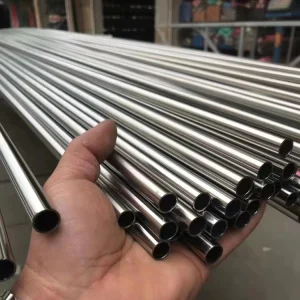
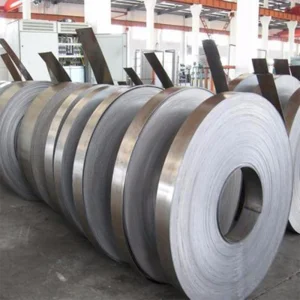
Additional Stainless & Structural Steel Products
Explore our factory-direct stainless steel sheet, pipe, plate, and strip inventory available for immediate global export.

Frequently Asked Questions by Global Steel Buyers
Direct answers to technical, commercial, and logistical inquiries regarding China hot rolled steel plate manufacturing and export procedures.