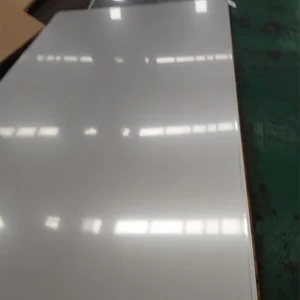
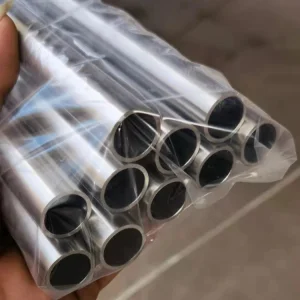
Featured Stainless Steel Products & Precision Materials (Part I)
Explore our top-tier stainless steel inventory manufactured under strict ISO 9001 and CE frameworks. From cold-rolled sheets to industrial grade coils and custom strips.





1. Global Industrial Landscape & The Role of China 304 Stainless Steel Coils
Austenitic 304 stainless steel coil—designated under EN standard as 1.4301 and UNS S30400—represents the global workhorse of industrial and architectural metallurgy. Accounting for over 50% of the worldwide stainless steel output, 304 grade owes its market dominance to its ideal balance of mechanical ductility, superior deep-drawing capability, atmospheric corrosion resistance, and exceptional weldability. When engineering procurement teams source China 304 stainless steel coil suppliers & factory networks, they navigate a mature ecosystem that synthesizes raw nickel/chromium refining, precision cold-reduction rolling, and automated surface treatment.
In the contemporary B2B supply chain, 304 stainless steel coils serve as the core raw material for down-stream processing, including pipe fabrication, stamping into kitchen equipment, roll-forming for architectural facades, and thermal exchanger coil manufacturing. China’s stainless steel production capacity, concentrated in strategic metallurgical hubs like Jiangsu (Wuxi) and Guangdong (Foshan), leverages integrated production routes (such as Rotary Kiln-Electric Furnace processes coupled with continuous casting). This engineering integration yields substantial information gain for global procurement officers seeking chemical consistency, predictable grain size distribution, and tight dimensional tolerances.
Chemical & Mechanical Grade Comparative Matrix
To assist technical directors and supply chain engineers in grade selection, the following analytical matrix compares Grade 304 against alternative austenitic, ferritic, and duplex stainless steel grades commonly processed alongside 304 coils:
| Grade Designation (UNS / EN) | Chromium (Cr %) | Nickel (Ni %) | Molybdenum (Mo %) | Yield Strength Rₚ₀.₂ (MPa) | Tensile Strength Rₘ (MPa) | PREN Value | Primary Application Environment |
|---|---|---|---|---|---|---|---|
| 304 (UNS S30400 / 1.4301) | 17.5 - 19.5 | 8.0 - 10.5 | - | ≥ 205 | 515 - 700 | ~ 18.5 - 19.5 | General Food Grade, Architecture, Chemical Tanks |
| 304L (UNS S30403 / 1.4307) | 17.5 - 19.5 | 8.0 - 12.0 | - | ≥ 170 | 485 - 650 | ~ 18.5 - 19.5 | Heavy Weldments, Pressure Vessels (Anti-Intergranular) |
| 316L (UNS S31603 / 1.4404) | 16.5 - 18.5 | 10.0 - 13.0 | 2.0 - 2.5 | ≥ 220 | 520 - 680 | ~ 23.0 - 25.0 | Marine, Medical Implants, High Chloride Services |
| 201 (UNS S20100 / 1.4372) | 16.0 - 18.0 | 3.5 - 5.5 (Mn 5.5-7.5) | - | ≥ 275 | ≥ 685 | ~ 16.0 | Cost-Effective Indoor Decor, Structural Trim |
| 2205 Duplex (UNS S31803 / 1.4462) | 21.0 - 23.0 | 4.5 - 6.5 | 2.5 - 3.5 | ≥ 450 | 620 - 880 | ~ 32.0 - 35.0 | Oil & Gas Pipelines, Offshore Platforms, Desalination |
2. Cold-Rolled vs. Hot-Rolled 304 Stainless Steel Coil Technical Processing
Understanding the metallurgical distinction between Hot-Rolled (HR) and Cold-Rolled (CR) 304 stainless steel coils is fundamental to optimizing downstream fabrication costs and product performance. Industrial factories in China deploy advanced continuous tandem cold mills (such as 20-high Sendzimir mills) to achieve tight strip thickness tolerances and superior surface finishes.
Cold Rolled 304 Coil (CR)
Processed at ambient temperatures after initial hot rolling and pickling. Available thickness range: 0.3mm to 3.0mm. Characterized by smooth surface reflectivity (2B, BA, No.4), superior yield strength enhanced by strain hardening, and extremely narrow width/thickness tolerances according to ASTM A480.
Hot Rolled 304 Coil (HR)
Produced above recrystallization temperatures (1100°C to 1250°C) followed by continuous scale breaking and acid pickling (No.1 finish). Thickness range: 3.0mm to 16.0mm+. Ideal for heavy structural weldments, industrial fluid piping, pressure tanks, and deep structural stamping where surface mirror finish is secondary to ductility.
Surface Finish Engineering & Roughness (Ra) Specifications
Factory direct suppliers in China supply 304 coils customized with specialized mechanical and chemical surface polishes. Roughness average values (Ra) dictate cleanability, aesthetic appeal, and resistance to bacterial adhesion in sanitary operations:
- 2B Finish (Smooth, Cold Rolled Annealed & Pickled + Skin Passed): Ra 0.1 to 0.5 µm. The baseline industrial surface for sheet metal fabrication, paneling, and stampings.
- BA Finish (Bright Annealed): Ra 0.05 to 0.1 µm. Annealed in a atmosphere-controlled nitrogen-hydrogen furnace preventing oxidation; yields a mirror-like highly reflective surface ideal for appliances and decorative trim.
- No.4 / Hairline Finish (Brushed Grit 150 - 320): Unidirectional mechanical polishing creating delicate parallel grain lines. Widely used in elevator interiors, kitchen cabinets, and architectural facades.
- 8K Mirror Finish: Mechanically buffed with fine alumina compounds to eliminate all polish lines, creating optical reflectivity for luxury architecture and reflective solar concentrates.
- Embossed / Patterned Finish (Linen, Leather, Diamond): Cold-rolled between patterned cylinders to increase rigid strength-to-weight ratio while hiding scratch marks in high-traffic commercial spaces.
3. China Stainless Steel Supply Chain Resilience & Manufacturing Superiority
The structural efficiency of China 304 stainless steel coil suppliers & factory networks is rooted in geographically dense industrial clusters. The Wuxi metallurgical zone in Jiangsu Province, coupled with the Foshan processing center in Guangdong, provides an integrated supply chain that handles every stage from raw nickel pig iron (NPI) refining to precision slitting and international sea freight dispatch.
Key advantages that solidify China's global B2B competitive edge include:
Direct Tier-1 Mill Integration
Partnerships with primary steelmaking giants like Tsingshan Holding Group, TISCO (Taiyuan Iron & Steel), Baosteel, and POSCO guarantee fully traceable melt chemical heats and steady coil feedstock supply even during global material shifts.
Automated Precision Slitting
High-speed rotary shear slitting lines enable custom coil width trimming down to narrow strips (e.g., 10mm to 600mm) with minimal edge burr (≤ 0.02mm), directly feedable into automated pipe welding or stamping machinery.
Rigorous QA & Testing Scope
In-house laboratories conduct optical emission spectrometry (OES) chemical verification, intergranular corrosion tests per ASTM A262 Practice E, yield/tensile strength testing, and Rockwell/Vickers hardness validation.
4. Localized Application Scenarios Across Global Industries
Grade 304 stainless steel coil's versatile material characteristics allow it to adapt to diverse engineering requirements. Below are detailed sector breakdowns illustrating where 304 coils are fabricated into mission-critical components:
A. Architecture, Building Facades & Interior Infrastructure
In modern urban architecture, 304 cold-rolled coils are slit and roll-formed into exterior curtain wall panels, standing-seam roofing profiles, and decorative column covers. The material's weatherability resists oxidation under varied humidity and seasonal thermal cycling. Elevator cab manufacturers rely on 304 No.4 brushed and 8K mirror coils to manufacture scratch-resistant, aesthetically refined paneling that complies with stringent fire safety regulations (non-combustible Class A1 rating).
B. Sanitary Food Processing, Dairy & Beverage Engineering
In accordance with global hygienic equipment standards (such as EHEDG and 3-A Sanitary Standards), 304 stainless steel coil is the primary feed material for deep-drawn kitchen sinks, commercial food warming tables, brewery storage vats, and milk processing vessels. Its non-porous passive layer prevents metallic contamination of consumables and withstands aggressive Clean-in-Place (CIP) chemical washdowns using sodium hydroxide and nitric acid solutions.
C. Automotive, Electric Vehicles (EV) & Rail Transport
In the automotive industry, 304 coils are stamped into complex exhaust system heat shields, catalytic converter housings, and structural flexible bellows. For Electric Vehicle (EV) platforms, precision 304 thin strips serve as cell interconnectors, busbar enclosures, and battery tray structural reinforcement due to their non-magnetic properties, high energy absorption during crash impact, and thermal resistance.
D. Energy, Petrochemical Heat Exchangers & Environmental Systems
Coil stock is continuously roll-formed and TIG/Laser welded into heat exchanger tubing, condenser bundles, and pressure vessel internal baffles. Grade 304 maintains structural toughness at cryogenic temperatures (down to -196°C) and resists oxidation at elevated operating temperatures up to 870°C in continuous service.
5. Technical Roadmap & Decarbonization in Chinese Stainless Steel Mills
As global supply chains shift toward carbon neutrality and Scope 3 emissions reporting, leading Chinese stainless steel factories are advancing their manufacturing technologies. The metallurgical roadmap for 304 stainless steel coil manufacturing focuses on three key innovations:
Hydrogen-Based Direct Reduction (DRI)
Transitioning from traditional coal-based Electric Arc Furnaces to green hydrogen metallurgies, reducing embedded carbon dioxide emissions per ton of crude stainless steel by up to 40%.
AI-Driven Smart Roll Gauge Control
Integration of real-time X-ray thickness gauges and automated hydraulic gap control (AGC) system on Sendzimir cold mills, guaranteeing thickness variations under ± 0.005mm across 1500mm wide coil strips.
Ultra-Thin Precision Foil Strip Rolling
Development of micro-gauge 304 precision foil (down to 0.02mm thickness), expanding applications into solar panel backing, flexible electronics, and medical device enclosures.
6. International Compliance, Export Packaging & Freight Protection
Exporting heavy stainless steel coils demands robust protective packaging to prevent sea-freight transit damage, salt-spray corrosion, and telescoping during port handling. Professional China suppliers adhere to rigorous international sea-freight packing protocols:
- VCI (Vapor Corrosion Inhibitor) Film Wrapping: Coils are wrapped in moisture-impermeable VCI plastic sheets that continuously release anti-corrosive molecules, protecting steel surfaces during long oceanic transit.
- Heavy-Duty Eye-to-Sky & Eye-to-Wall Wooden Skids: Secured on fumigated ISPM-15 compliant wooden pallets with steel outer perimeter protection rings and radial banding straps.
- Third-Party Quality Verification: Full compliance with SGS, BV, Intertek inspection mandates, confirming chemical analysis (ASTM A240), mechanical yield strength, and surface roughness before container sealing.
Frequently Asked Questions: Technical Sourcing & Factory Capabilities
Get clear answers to common technical queries from procurement directors and engineering leads regarding 304 stainless steel coil ordering, tolerances, and international standards compliance.
What is the key difference between Grade 304 and Grade 304L stainless steel coil?
Which international material standards govern China 304 stainless steel coil manufacturing?
Is 304 stainless steel coil magnetic after cold rolling processing?
What custom coil width, thickness, and inner diameter (ID) specifications are available?
How do factory direct suppliers prevent surface scratches on high-polish coils during uncoiling?
What third-party inspection certifications are accepted for international orders?
Featured Stainless Steel Products & Precision Materials (Part II)
Discover our comprehensive collection of industrial pipes, decorative tubing, super duplex plates, and custom-slit stainless strips engineered for extreme service environments.