
CE-Compliant Magnetic & Structural Stainless Steel Series
Explore our top-tier stainless steel sheet, coil, and tube formulations. Engineered for precise magnetic response, structural rigidity, and certified EU market compliance.

China High Quality 201 Stainless Steel Strip/Coil - Excellent Ductility & Hardness Supplier

Custom China Suppliers Stainless Steel Industrial Welded Pipe - Quality 201, 304, 316L High Strength

CE Certification Premium 201 Stainless Steel Pipes for Long-Lasting Home & Stair Applications

Custom Perforated Stainless Steel Sheet - High-Quality Metal Mesh Solutions Factory Direct

Custom High Cost-Effective 201 Cold Rolled Stainless Steel Sheet - Accurate Thickness & Performance
Wholesale Perforated Stainless Steel Sheet - Durable Custom Metal Mesh for Multi-Applications

CE Certification China SUS304/304L Low Carbon Stainless Steel Pipe - Corrosion Resistant Quotes
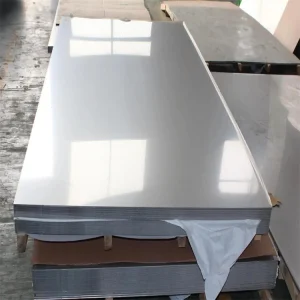
CE Certification Cold Rolled Stainless Steel Sheet - High Strength & Custom Processing Supplier
Metallurgical Physics: Why & How Certain Stainless Steels Retain Magnetic Permeability
A comprehensive guide for procurement leads, structural engineers, and design teams evaluating magnetic responsiveness, ferrite phase stability, and CE-marked structural integrity.
A widespread misconception across engineering procurement is that "all stainless steel is non-magnetic." In physical metallurgy, magnetism is governed entirely by atomic crystal lattice structure—specifically whether the alloy exhibits a Body-Centered Cubic (BCC) or a Face-Centered Cubic (FCC) atomic arrangement. Understanding these microstructural dynamics is critical when sourcing CE-certified magnetic stainless steel sheets for induction heating, magnetic separation, automotive solenoids, and structural cladding.
1. Ferritic Phase Stability & Chemical Composition Dynamics
Ferritic stainless steels—such as AISI 430 (EN 1.4016), AISI 439 (EN 1.4510), and AISI 444 (EN 1.4521)—are intrinsically ferromagnetic at ambient temperatures. Their chemistry is carefully balanced with high Chromium contents (10.5% to 30%) and minimal or zero Nickel addition. The absence of Nickel prevents the formation of the austenitic phase, locking the alloy into a ferromagnetic ferritic matrix.
| Grade (AISI / EN) | Magnetic Behavior | Chromium (%) | Nickel (%) | Saturation Induction (Bs) | Primary Industrial Utility |
|---|---|---|---|---|---|
| 430 / 1.4016 | Ferromagnetic (Strong) | 16.0 - 18.0 | < 0.75 | ~1.55 Tesla | Induction Cookware Bottoms, Elevator Panels, Automotive Trim |
| 439 / 1.4510 | Ferromagnetic (Strong) | 17.0 - 19.0 (Ti Stabilized) | < 0.50 | ~1.60 Tesla | Automotive Exhaust Solenoids, Heat Exchanger Plates |
| 444 / 1.4521 | Ferromagnetic (Strong) | 17.5 - 19.5 (Mo 1.75-2.5) | < 1.00 | ~1.50 Tesla | Solar Water Tanks, Marine Magnetic Enclosures |
| 410 / 1.4006 (Martensitic) | Ferromagnetic (Hard) | 11.5 - 13.5 | < 0.75 | ~1.70 Tesla | Wear-Resistant Magnetic Plates, Valve Components |
| 201 / 304 (Cold-Worked) | Semi-Magnetic (Induced) | 16.0 - 18.0 | 1.0 - 8.5 | 0.05 - 0.4 Tesla | Structural Strips, Deep-Drawn Formed Components |
2. Strain-Induced Martensite Transformation in Austenitic Alloys
While standard 304 and 201 series stainless steels are fully austenitic and non-magnetic in their solution-annealed state, severe cold working (such as cold rolling, deep drawing, or bending) induces a microstructural shift known as strain-induced martensitic transformation (γ → α' martensite). As the austenitic lattice deforms, it generates magnetic domains. This phenomenon explains why cold-rolled 201 strip/coil or cold-drawn 304 sheets frequently display noticeable magnetic attraction along sheared edges or high-strain zones.
3. CE Certification & Compliance Protocols for European Markets
Sourcing magnetic stainless steel sheets for structural or pressure applications within the European Union requires strict compliance with CE Marking mandates under EN 10088-2 (Stainless steel sheet/plate for general purposes) and EU Regulation No 305/2011 (Construction Products Regulation - CPR). A valid CE-certified quote guarantees:
- Factory Production Control (FPC): Verified by notified bodies to ensure consistent chemical and mechanical batch traceability.
- EN 10204 Type 3.1 / 3.2 Mill Test Certificates (MTC): Documented spectral chemical analysis, tensile strength (Rm), yield strength (Rp0.2), elongation (A5), and Charpy V-notch impact values.
- Dimensional & Surface Flatness Tolerances: Compliance with EN ISO 9445 for cold-rolled narrow/wide strip and sheet, ensuring uniform thickness for automated laser-cutting and robotic pressing.
Industry 4.0 Production Capacity & Quality Control
Our smart mill infrastructure delivers reliable dimensional tolerances, low-interstitial elemental control, and seamless volume shipping worldwide.
Macro-Industry Solutions: Deploying Magnetic Stainless Sheets
How leading industrial manufacturers leverage ferritic and martensitic magnetic stainless steel grades to replace high-cost Nickel alloys and optimize structural performance.
Automotive & EV Propulsion Systems
High-induction ferritic sheets (such as 439 and 444) are crucial for electromagnetic actuators, fuel injection solenoids, and EV motor stator laminations. Their low thermal expansion coefficient matches carbon steel components while providing robust oxidation resistance up to 850°C.
Induction Cookware & Commercial Kitchenware
Multi-ply cookware relies on CE-certified AISI 430 stainless steel bottom plates to transfer electromagnetic energy from induction cooktops into heat. Our cold-rolled 430 sheets provide superb deep-drawing capability, crack resistance, and anti-warping planar stability under rapid heat cycles.
EMI Shielding & High-Frequency Enclosures
Industrial control cabinets, transformer shielding, and medical diagnostic equipment require low-coercivity magnetic steel sheets to attenuate high-frequency Electromagnetic Interference (EMI). Ferritic grades absorb stray magnetic flux, protecting sensitive microprocessor arrays.
Magnetic Separation & Bulk Handling
In food processing and mineral extraction, high-strength magnetic separator plates made from cold-worked martensitic (410/420) or high-grade ferritic sheets concentrate magnetic fields to strip ferrous contaminants from moving process streams cleanly and efficiently.
Elevator Cab Interiors & Architectural Panels
Magnetic stainless steel sheets allow invisible magnetic mounting systems for architectural cladding, elevator interiors, and retail display panels. Magnetic mounting permits rapid assembly and replacement without visible screw heads or destructive adhesives.
Thermal Heat Exchangers & Burners
Ferritic alloys lack volatile Nickel cost fluctuations while demonstrating high thermal conductivity (25% higher than austenitic 304). This makes CE-certified magnetic stainless steel sheets preferred for burner tubes, heat exchanger plates, and boiler liners.
China Industry 4.0: Supply Chain Resilience & Metallurgical Engineering
How modernized cold-reducing mills, continuous bright annealing, and integrated quality monitoring lower Total Cost of Ownership (TCO) for global enterprise purchasers.
Precision Rolling & Ultra-Low Interstitial Refining
Modern magnetic stainless steel sheet production relies on Vacuum Induction Melting (VIM) and Argon Oxygen Decarburization (AOD) refining. By reducing Carbon and Nitrogen levels below 0.015% (ultra-low interstitials) and micro-alloying with Niobium (Nb) and Titanium (Ti), our mill facilities produce ferritic magnetic sheets with exceptional ductility, deep drawability, and elevated intergranular corrosion resistance.
Technology Roadmap & Future Outlook
- High-Induction Micro-Alloyed Ferritics: Development of specialized 400-series grades with enhanced magnetic permeability tailored for high-frequency wireless power transfer pads and electric vehicle inductive charging roads.
- Ultra-Thin Precision Magnetic Foils: Cold-rolling capabilities reaching down to 0.05mm gauge sheets with bright-annealed (BA) surfaces for miniature electronic sensors and biomedical diagnostic relays.
- Green Hydrogen Metallurgical Refining: Transitioning furnace reheating to green hydrogen mixtures to reduce carbon intensity per ton, aligning with EU Carbon Border Adjustment Mechanism (CBAM) standards.
Global Enterprise Procurement Requirements & TCO Optimization
When purchasing magnetic stainless steel sheets in volume, calculating the Total Cost of Ownership (TCO) extends far beyond base metal price. Because ferritic stainless steel grades (such as 430/439) replace expensive Nickel with Chromium, raw material costs remain immune to volatile London Metal Exchange (LME) Nickel spikes. This provides supply chain predictable budgeting for multi-year OEM contract manufacturing.
Industrial Grade Stainless Steel Plates, Sheets & Pipes
Direct factory quotes for low-carbon SUS304/304L, 316L, 2507 super duplex, and precision cold-rolled 201 magnetic-transformed series.
Wholesale China SUS304/304L Low Carbon Stainless Steel Pipe - Factory Direct Solutions
Wholesale High Cost-Effective 201 Cold Rolled Stainless Steel Sheet - Precision Tolerances Pricelist
Wholesale High Cost-effective 201 Cold Rolled Stainless Steel Sheet - Accurate Thickness Options Quotes
China Factory Suppliers for 316L Stainless Steel Sheet - High Quality & Durable Metal Solutions
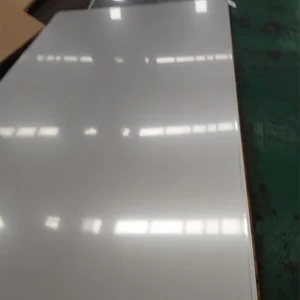
Custom 2507 Super Duplex Steel Plate - High Corrosion Resistance from China Factory

China SUS304 Cold-Rolled Stainless Steel Plate - Corrosion-Resistant Food Grade Manufacturer
China 316L Stainless Steel Sheet - Quality Products from Leading Factory Suppliers
Custom China 316L Stainless Steel Sheet - High-Quality Supplier & Trusted Factory Pricelist
Localized Support, Quality Verification & Export Security
How we eliminate cross-border sourcing risks through comprehensive quality testing, certified seaworthy packaging, and flexible RFQ quote parameters.
Laboratory Quality Verification
Every export lot undergoes rigorous non-destructive and destructive testing: X-ray Fluorescence (XRF) spectrographic alloy verification, Eddy Current testing, Salt Spray testing (ASTM B117), and BH hysteresis loop magnetic measurement to confirm flux density parameters prior to dispatch.
Seaworthy Export Protective Packaging
Preventing moisture ingress and edge deformation during long maritime transit is essential. Our magnetic stainless steel sheets feature neutral PE film interleaving, Volatile Corrosion Inhibitor (VCI) paper wrapping, heavy-duty steel corner guards, and fumigated solid wooden pallets built for 20ft/40ft container loading.
Transparent Quotation & Pricing Models
We provide clear FOB, CIF, or DDP pricing structures. Quotations break down base metal pricing, slitting/surface processing surcharges, and CE certification documentation fees. Flexible payment terms (T/T, L/C at sight) protect procurement liquidity.
Frequently Asked Questions: Magnetic Stainless Steel Procurement
Answers to common technical, metallurgical, and certification queries asked by structural engineers and global purchasing directors.