
Primary Stainless Steel Coil & Sheet Specifications for Sydney Projects
Engineered for immediate deployment across Sydney Metro infrastructure, maritime transport hubs, and precision Western Sydney manufacturing centers.
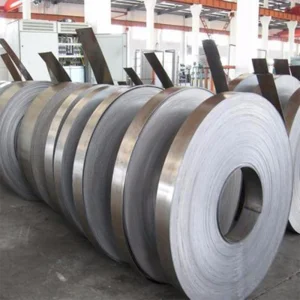
Sydney Architectural Trim Grade 201 Stainless Steel Strip & Coil
Request Sydney Quote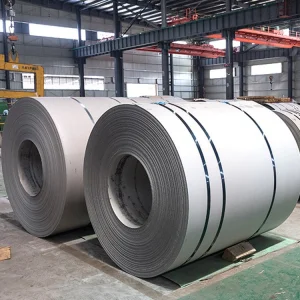
AS/NZS Hot Rolled Heavy Industry Stainless Coil for Port Botany Infrastructure
Request Sydney Quote
Sydney Food & Beverage Grade SUS304/304L Precision Slit Stainless Strip
Request Sydney Quote
Sydney Architectural Facade & Acoustic Mesh Perforated Stainless Steel Sheets
Request Sydney QuoteIndustrial Demand & Economic Footprint of Stainless Steel in Sydney
Greater Sydney stands as Australia's primary economic engine, undergoing unprecedented civil infrastructure expansion driven by multi-billion-dollar developments such as the Western Sydney Aerotropolis, Sydney Metro West, and Port Botany logistics upgrades. This urban and industrial evolution has generated intensive demand for high-performance flat-rolled stainless steel products, specifically cold-rolled (CR) and hot-rolled (HR) stainless steel coils, slit strips, and processed plates.
Unlike inland manufacturing environments, Sydney’s geographic positioning presents severe environmental challenges. Coastal infrastructure along Sydney Harbour, Botany Bay, and Northern Beaches exposes architectural facades and structural elements to aggressive marine atmospheric salt sprays (classified under AS/NZS 2312 atmospheric corrosivity categories C4 to C5-M). Consequently, procurement managers and structural engineers require precise material chemistry—balancing chromium, nickel, and molybdenum content to eliminate chloride pitting while maintaining structural yield integrity.
This whitepaper addresses the core technical and financial drivers for sourcing stainless steel coils in Sydney. By bridging direct mill manufacturing capabilities with localized engineering standards, Sydney fabricators and OEMs can navigate supply chain volatility, optimize total cost of ownership (TCO), and secure guaranteed compliance with Australian standards.
Sydney Key Industrial Growth Drivers
- Transport Infrastructure: High-volume rail and busway structural framing utilizing high-yield 304 and 316L slit coils.
- Coastal Architecture: Perforated decorative screens, facades, and sunshades built with high-PREN marine-grade 316L/Duplex 2205.
- Water & Waste Treatment: Sydney Water facility upgrades requiring pit-resistant 316L/2205 welded process tubing made from precision strip.
- Food & Beverage Processing: Western Sydney manufacturing hubs utilizing sanitary-polished SUS304 2B/BA coils for processing vats.
Global Raw Material Dynamics vs. Landed CIF Sydney Pricing
Understanding global nickel, molybdenum, and scrap indices allows Sydney buyers to benchmark real coil quotes and lock in favorable procurement cycles.
Alloy Surcharge Transparency
Stainless steel coil prices in Sydney are heavily influenced by LME Nickel cash prices and Platts Molybdenum oxide indices. By sourcing direct from primary integration mills (Tsingshan, TISCO, Baosteel), buyers bypass intermediary stockist markups and receive transparent alloy-surcharge calculations reflecting real-time raw material costs.
Precision Slitting & Inventory Optimization
Shipping full-width master coils (1219mm / 1500mm) or custom-slit strips directly to Sydney fabricators drastically minimizes local scrap loss. Advanced tension leveling and slitting equipment maintain width tolerances within ±0.05mm, ensuring seamless automation in continuous roll-forming and laser-cutting lines across Sydney workshops.
Port Botany Logistics Streamlining
Through established sea freight routes operating directly from Wuxi/Shanghai manufacturing corridors to Port Botany, transit times are stabilized at 14–18 days. Fully seaworthy packing—utilizing heavy-duty wooden skids, anti-humidity VCI plastic wrapping, and steel circumferential banding—guarantees rust-free coil delivery upon container unpack.
Metallurgical Breakdown: Selecting the Correct Grade for Sydney Environments
Selecting the ideal stainless steel coil grade requires balancing chemical composition against atmospheric pitting indices. The formula for the Pitting Resistance Equivalent Number (PREN) dictates performance in high-chloride coastal zones:
PREN = %Cr + 3.3(%Mo + 0.5%W) + 16%N
| Grade Family | UNS / EN Standard | Chemical Key (%) | PREN Value | Yield Strength (MPa) | Sydney Atmospheric Suitability |
|---|---|---|---|---|---|
| Grade 201 | S20100 / 1.4372 | 16-18 Cr, 3.5-5.5 Ni, 5.5-7.5 Mn | ~16.5 | ≥ 275 | Indoor furniture, dry architectural trim (Western Sydney inland) |
| Grade 304 / 304L | S30400 / 1.4301 | 18-20 Cr, 8-10.5 Ni, ≤0.03 C (304L) | ~19.0 | ≥ 205 | General food processing, indoor transport, urban facades (>5km from coast) |
| Grade 316 / 316L | S31603 / 1.4404 | 16-18 Cr, 10-14 Ni, 2.0-3.0 Mo | ~25.0 | ≥ 220 | Marine Grade: Harbour-front structures, Port Botany equipment, splash zones |
| Grade 310S | S31008 / 1.4845 | 24-26 Cr, 19-22 Ni | ~26.0 | ≥ 205 | High-temperature industrial furnaces, heat exchangers, exhaust systems |
| Duplex 2205 | S31803 / 1.4462 | 21-23 Cr, 4.5-6.5 Ni, 2.5-3.5 Mo, 0.14-0.20 N | ~35.0 | ≥ 450 | Heavy civil structural engineering, chemical tanks, extreme coastal exposure |
| Super Duplex 2507 | S32750 / 1.4410 | 24-26 Cr, 6-8 Ni, 3-5 Mo, 0.24-0.32 N | > 42.0 | ≥ 550 | Offshore desalination plants, aggressive marine mining equipment |
Precision Manufacturing & AI Optical Quality Inspection
Modern stainless steel coil manufacturing has evolved far beyond basic hot and cold rolling. To satisfy Sydney’s stringent tier-1 construction contractors, factory operations integrate continuous online thickness monitoring via laser micrometers and real-time AI optical surface inspection systems.
These automated optical inspection (AOI) algorithms continuously scan moving strip surfaces at speeds up to 600 meters per minute, detecting pinholes, scratches, oil stains, or micro-cracks down to 0.02mm resolution. Unconforming coil segments are automatically flagged and excised during precision slitting, ensuring that every coil dispatched to Sydney maintains flawless surface perfection (2B, BA, No.4 brushed, or 8K mirror).
Decarbonization & Green Steel Commitment
With Australia’s push toward sustainable infrastructure governed by the Green Building Council of Australia (GBCA), our primary mill partners utilize high-efficiency Electric Arc Furnace (EAF) smelting paired with up to 70% recycled stainless scrap. This approach yields up to 60% lower Scope 1 and Scope 2 carbon intensity compared to traditional blast-furnace routes, helping Sydney developers earn maximum Green Star ratings.
Factory Quality Control Roadmap
Spectrometric Melt Control
XRF laser spectroscopy ensures exact elemental matching (Cr, Ni, Mo) before casting.
Cold Rolling & Bright Annealing
20-high Sendzimir mill rolling secures tight thickness tolerance (±0.01mm) with BA protective atmosphere.
Tension Leveling & Slitting
Eliminates coil set, waviness, and camber for high-speed continuous feeding into manufacturing automated lines.
Final MTR 3.1 Certification
Comprehensive tensile, hardness, intergranular corrosion, and dimensional inspection reporting.
Total Cost of Ownership (TCO) & Lifecycle Cost Modeling
Why initial coil purchase price represents only 15% of the total 30-year lifecycle expenditure in coastal Sydney projects.
30-Year Lifecycle Cost Equation (LCC)
LCC = AC + OC + MC + DC - RV
- AC (Acquisition Cost): Initial raw material purchase price, shipping, tariffs, and inland transport to Sydney shop floor.
- OC (Operating Cost): Surface maintenance, washing, chemical cleaning, and passivation routines.
- MC (Maintenance & Repair): Remediation of localized pitting corrosion, welding repairs, or structural member replacement.
- DC (Downtime Cost): Production stoppage costs during structural maintenance along critical infrastructure corridors.
- RV (Residual Value): High recyclable scrap value of stainless steel (up to 60-70% metal value recovery).
Comparative Sydney Case Study: Grade 304 vs. 316L vs. Duplex 2205
When installing exterior architectural cladding within 2 km of Sydney Harbour:
Standard Grade 304: Lower AC, but high MC due to severe tea-staining and chloride pitting. Requires replacement or intensive polishing every 7–10 years. Total LCC is 2.4x higher.
Marine Grade 316L: Moderate AC (+20-25% over 304). Exceptional resistance to tea-staining with standard bi-annual rainfall cleaning. Optimal 30-year LCC benchmark.
Duplex 2205: Higher initial AC, but allows 30-40% wall-thickness gauge reduction due to double yield strength. Highly economical for load-bearing civil infrastructure.
Australian Standards Alignment & Sydney Delivery Protocol
Navigating local compliance is critical to avoiding costly site rejections in New South Wales. All stainless steel coils, strips, and plates manufactured for Sydney distribution conform strictly to:
- AS/NZS 1594 & AS/NZS 4673: Structural stainless steel material & design codes.
- ASTM A240 / A240M: Chromium and chromium-nickel stainless steel plate, sheet, and strip for pressure vessels and general applications.
- EN 10088-2 / JIS G4304: European and Japanese technical delivery conditions for general purpose corrosion-resistant flat products.
Every shipment arrives accompanied by an authentic EN 10204 3.1 Mill Test Report (MTR) verified by independent NATA-accredited testing laboratories, documenting heat numbers, exact ladle analysis, mechanical proof stress, elongation values, and intergranular corrosion test results (ASTM A262 Practice E).
Direct Shipping & Customs Protocol
Port of Origin: Shanghai / Ningbo Deepwater Port
Port of Discharge: Port Botany, Sydney, NSW
Container Configuration: 20ft Heavy Duty Containers fitted with wooden cradles; max load weight up to 26–28 MT per container.
Customs Clearance: Full support with ChAFTA (China-Australia Free Trade Agreement) Certificate of Origin (COO), enabling 0% preferential import tariff rates into Sydney.
Full Range Stainless Steel Coils, Sheets & Strips Available for Sydney
Direct factory export stock engineered to meet Sydney's diverse commercial, structural, and architectural fabrication needs.
High-Yield 201 Cold Rolled Precision Stainless Steel Coil for Sydney OEMs
Request Sydney Quote
Architectural Decorative Perforated Stainless Steel Sheets for Sydney Towers
Request Sydney Quote
Cost-Effective Cold Rolled 201 Stainless Steel Sheets for Sydney Enclosures
Request Sydney Quote
Marine-Grade 316L Stainless Steel Sheet & Coil for Sydney Harbour Facilities
Request Sydney Quote
Marine & Chemical Processing 316L Stainless Steel Plate for Sydney Plants
Request Sydney Quote
Food-Grade SUS304 Cold-Rolled Stainless Steel Plate for Sydney Food Sector
Request Sydney Quote
Certified SUS304/304L Precision Stainless Strip & Coil for Sydney Engineering
Request Sydney Quote
Mirror-Polished 201 Stainless Steel Tubing for Sydney Architectural Balustrades
Request Sydney QuoteFrequently Asked Questions: Sourcing Stainless Steel Coils in Sydney
Direct engineering clarity regarding shipping logistics, grade selection, chemical certifications, and pricing structures for NSW buyers.
Purchasing direct from our Wuxi manufacturing hub eliminates multiple tier-2 stockist markups, middleman handling margins, and local warehousing overheads. For container-load orders (typically 20-28 metric tons), Sydney buyers experience cost reductions ranging between 18% and 28% compared to local warehouse off-the-shelf pricing, even after factoring in ocean freight and Port Botany customs handling.
Grade 316L contains 2.0% to 3.0% Molybdenum, which boosts its Pitting Resistance Equivalent Number (PREN) to ~25, compared to ~19 for Grade 304. In Sydney's coastal atmosphere (e.g., Darling Harbour, Manly, Port Botany), airborne salt spray induces rapid "tea-staining" and micro-pitting on Grade 304. Grade 316L effectively withstands chloride ion attack, ensuring long-term structural and aesthetic performance under AS/NZS 2312 C4/C5 marine classifications.
Production, slitting, and export packing require approximately 7–10 days. Ocean transit from Shanghai/Ningbo ports directly to Port Botany takes 14–18 days. Total door-to-door delivery time for Sydney fabricators generally averages 25 to 32 days, complete with full customs clearance support.
Every shipment includes an authentic EN 10204 3.1 Mill Test Report (MTR). This document details heat tracing, exact chemical ladle analysis (spectrometric test), mechanical properties (Yield, Tensile, Elongation, Hardness), intergranular corrosion test compliance (ASTM A262 Practice E), and dimensional verification matching AS/NZS 1594 / ASTM A240 standards.
Yes. Our factory operates 5 automated precision slitting lines capable of processing master coils into narrow strips starting from 10mm width up to 1500mm, with width tolerances held strictly within ±0.05mm. Tension leveling is applied to remove camber and coil set, ensuring seamless auto-feeding into continuous tube mills or stamping presses.
Under the China-Australia Free Trade Agreement (ChAFTA), qualified stainless steel flat-rolled products enter Australia at a 0% tariff rate when presented with an official Certificate of Origin (COO Form FTA). Our logistics department provides complete document packages to ensure seamless zero-tariff entry through Australian Border Force (ABF) customs.
Optimize Your Sydney Stainless Steel Procurement Today
Connect directly with our metallurgical sales engineers to receive mill-direct quotes, request EN 10204 3.1 sample test certificates, or discuss custom slitting schedules for Greater Sydney project sites.