Precision Stainless Steel Products & Mill Feedstock
Direct mill supply of high-grade stainless steel coils, sheets, plates, and tubing engineered for industrial reliability and corrosion resistance.




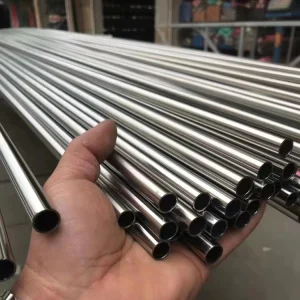
Understanding Ultra High Purity (UHP) Tubing Systems
In advanced microelectronics, sub-nanometer semiconductor fabrication, high-tier biopharmaceuticals, and specialty chemical delivery, liquid and gas transport infrastructure cannot act as a passive conduit. Standard industrial tubing—even high-spec 316L commercial piping—contains micro-cavities, inclusions, surface roughness variations, and non-passivated iron sites that contaminate ultra-pure gases (such as silane, arsine, ammonia, and high-purity nitrogen) and pharmaceutical-grade fluids.
When engineering procurement directors evaluate wholesale UHP tubing options, the purchasing intent spans beyond raw material cost. Buyers seek verification of microstructural stability, zero particle shedding, minimal moisture entrapment, and compliance with stringent international standards such as SEMI F19, SEMI F20, and ASME BPE. Establishing a baseline understanding of material grades—specifically single-vacuum melted vs. double-vacuum melted (VIM+VAR) 316L—is crucial for high-yield fab construction.
Industry Application Scenarios & Regional Integration
UHP tubing selection varies significantly across different industrial sectors and geographic clusters depending on regional regulatory frameworks, environmental ambient conditions, and process chemistry aggressive levels.
Semiconductor Sub-Fab & Cleanroom Gas Lines
In microchip manufacturing centers across East Asia and North America, UHP 316L VIM/VAR electropolished tubing is the non-negotiable standard for bulk and specialty gas distribution lines (BSGS). Tubes must resist severe pitting from pyrophoric and corrosive gases like hydrogen chloride (HCl) and chlorine trifluoride (ClF3) while maintaining a ultra-smooth mirror finish that prevents micro-particle generation in 3nm and 2nm process nodes.
Biopharmaceutical & WFI Distribution Systems
Within European and North American bio-processing clusters, UHP bright annealed (BA) and electropolished (EP) stainless steel tubing compliant with ASME BPE standards is essential for Water-For-Injection (WFI) loops and Clean-in-Place (CIP) / Steam-in-Place (SIP) systems. The smooth passive layer ($Cr_2O_3$) inhibits biofilm formation and micro-organism adhesion, enabling continuous thermal sterilization up to 135°C without Rouge formation.
Solar PV & Green Hydrogen Infrastructure
As green energy mega-projects expand globally, high-pressure hydrogen refuel stations and photovoltaic cell factories utilize wholesale UHP tubing for ultra-clean, high-pressure gas transport. Low-carbon chemistry prevents hydrogen embrittlement, while rigorous helium leak checking ($< 1 \times 10^{-9} \text{ atm}\cdot\text{cc/sec}$) eliminates fire hazards associated with fugitive combustible gas leaks.
Manufacturing Technology Roadmap: 2025 to 2035
The evolution of Ultra High Purity stainless tubing is driven by metallurgical refinements in melt chemistry, advanced cold-working techniques, automated orbital welding optimization, and AI-controlled electrochemical surface engineering.
1. Melt Chemistry Refinement (VIM vs. VAR)
Standard 316L stainless steel contains trace amounts of non-metallic inclusions (sulfides, oxides, silicates) and variable manganese levels. In UHP manufacturing, double melting—starting with Vacuum Induction Melting (VIM) followed by Vacuum Arc Remelting (VAR)—drastically reduces sulfur levels ($S \le 0.005\%$) and non-metallic inclusions. Lowering sulfur minimizes pitting corrosion, while tightly controlling manganese suppresses outgassing during high-temperature baking in vacuum gas lines.
2. Advanced Electropolishing (EP) Dynamics
Electropolishing is an anodic electrochemical process that selectively dissolves surface micro-protrusions. Operated in a temperature-controlled bath of phosphoric and sulfuric acids, electropolishing converts the mechanical surface profile into a featureless planar topography with $Ra \le 0.13 \, \mu m$. Furthermore, EP enriches the surface oxide layer with chromium, yielding a $Cr/Fe$ atomic ratio exceeding $1.5$, which provides exceptional resistance to chloride-induced pitting.
| Processing Metric | Commercial AP Tubing | Bright Annealed (BA) Tubing | Electropolished (EP) UHP Tubing |
|---|---|---|---|
| Internal Surface Roughness ($Ra$) | 1.0 µm - 2.5 µm (40 - 100 µin) | 0.25 µm - 0.50 µm (10 - 20 µin) | ≤ 0.13 µm (5 µin) max |
| Passivation Oxide Film ($Cr_2O_3$) | Basic, passive air film | Uniform thermal oxide layer | Chromium-rich ($Cr/Fe \ge 1.5$), thick passivation layer |
| Non-Metallic Inclusions | Standard ASTM A240 level | Controlled levels | Ultra-low sulfur & oxide inclusion count (SEMI F20 compliant) |
| Cleaning & Packaging | Standard degreasing | Solvent washed, capped ends | 18 MΩ·cm DI water rinse, ISO Class 4 cleanroom double bag |
3. Future Technology Horizon: Zero-Outgassing & AI-Driven Surface Control
Looking toward 2030, UHP factories are integrating in-line atomic force microscopy (AFM) and Auger Electron Spectroscopy (AES) to verify passivated chromium layer thickness in real time. Concurrent developments include plasma-assisted atomic layer deposition (ALD) onto internal tube walls to create zero-outgassing barrier coatings for quantum computing fluid cooling and extreme ultraviolet (EUV) lithography gas manifolds.
China Factory Supply Chain Resilience & Wholesale Pricelist
China’s stainless steel manufacturing ecosystem—centered in regional hubs like Jiangsu (Wuxi) and Zhejiang—provides unmatched vertical integration. From raw ingot melting at Tsingshan and TISCO to precision cold drawing, bright annealing, and cleanroom electropolishing, Chinese UHP factories offer significant cost efficiencies and agile lead times.
Wholesale Pricing Factors & Cost Structure
Wholesale prices for UHP stainless steel tubing are determined by four core variables:
- Raw Material Melt Grade: Single VAR vs. Double Melt VIM+VAR 316L pricing variance.
- Surface Finish Technology: Cost premium for electropolishing (EP) over bright annealing (BA).
- Wall Thickness & Tolerances: Precision tight-tolerance cold drawing to meet SEMI F19 / ASTM A269 dimensions.
- Cleanroom Packaging Protocols: Nitrogen purging, plastic end capping, and cleanroom vacuum double bag sealing.
Indicative Wholesale Pricelist Benchmark (FOB China Port)
*Prices are indicative for bulk wholesale orders (>500 meters). Final quotes vary based on nickel/molybdenum market surcharges and cleanroom specs.
| Outer Diameter (OD) | Wall Thickness | Material Grade | Surface Treatment | Est. Wholesale Price (USD / Meter) |
|---|---|---|---|---|
| 1/4 inch (6.35 mm) | 0.035 inch (0.89 mm) | 316L VIM+VAR | Electropolished (EP, Ra ≤ 0.13 µm) | $12.50 - $18.00 |
| 3/8 inch (9.53 mm) | 0.035 inch (0.89 mm) | 316L VIM+VAR | Electropolished (EP, Ra ≤ 0.13 µm) | $16.00 - $22.50 |
| 1/2 inch (12.70 mm) | 0.049 inch (1.24 mm) | 316L VIM+VAR | Electropolished (EP, Ra ≤ 0.13 µm) | $21.00 - $29.00 |
| 3/4 inch (19.05 mm) | 0.065 inch (1.65 mm) | 316L Standard / VIM | Bright Annealed (BA, Ra ≤ 0.25 µm) | $14.00 - $19.50 |
| 1.0 inch (25.40 mm) | 0.065 inch (1.65 mm) | 316L Standard / VIM | Bright Annealed (BA, Ra ≤ 0.25 µm) | $18.50 - $25.00 |
| 2.0 inch (50.80 mm) | 0.065 inch (1.65 mm) | 304L / 316L | Annealed & Pickled (AP) | $11.00 - $15.50 |
Global Regulatory Compliance Standards & Quality Assurance
To enter international supply chains for fab construction, pharmaceutical plants, and high-purity fluid manifolds, factories must comply with rigorous international testing regimes and quality assurance certifications.
SEMI Standards (Microelectronics)
Compliance with SEMI F19 (qualification of UHP tubing), SEMI F20 (chemical composition of 316L stainless steel), and SEMI F72 (surface finish quality) is mandatory for microchip fabrication plants. Testing includes surface roughness verification by profilometer, particle counting, and outgassing analysis.
ASME BPE (Bioprocessing Equipment)
For pharmaceutical and biotechnology applications, tubes must meet ASME BPE standards governing surface finish designations (SF1 through SF6), mechanical dimensions, orbital weldability, and strict cleanability requirements to maintain hygienic integrity.
ASTM & EN / JIS Specifications
General industrial fluid systems leverage ASTM A269 (seamless and welded austenitic tubing), ASTM A632 (small-diameter tubing), EN 10217-7, and JIS G3459 to guarantee mechanical strength, hydrostatic pressure rating, and dimensional accuracy.
Frequently Asked Questions (FAQ)
Answers to key technical and commercial questions raised by global procurement teams, EPC contractors, and engineering leads.
Complete Wholesale Product Lineup
Explore certified industrial pipes, perforated sheets, precision strips, and low-carbon stainless steel tubing manufactured under strict quality standards.