
Precision Engineered Stainless & Structural Products
Direct mill supply featuring rigorous dimensional tolerances, customizable cross-sections, and certified chemical traceability for structural applications worldwide.
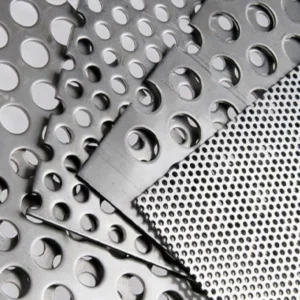
CE Certification China Perforated Stainless Steel Sheet Suppliers - High-Quality Metal Mesh from Reliable Factory
View Product Specs
Wholesale Perforated Stainless Steel Sheet from China Suppliers & Factory - Durable Custom Metal Mesh
View Product Specs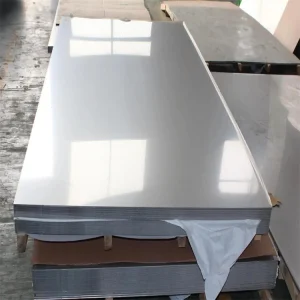
Custom High-Quality Cold Rolled Stainless Steel Sheet from China Suppliers & Factory - Corrosion Resistant
View Product Specs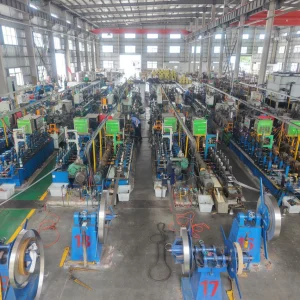
CE Certification High-Quality SUS304/304L Stainless Steel Strip from China Suppliers for Premium Manufacturing
View Product Specs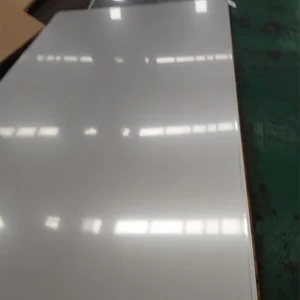
Custom 2507 Super Duplex Steel Plate Supplier & Structural Solutions - High Strength Quotes
View Product Specs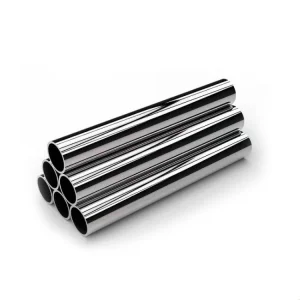
China Stainless Steel Decorative Pipe Suppliers - Exquisite Designs & Structural Tube Factory
View Product Specs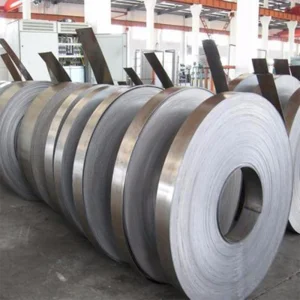
Custom High-Quality 201 Stainless Steel Strip/Coil from China Suppliers - Factory Direct Discounts
View Product Specs
Custom China Factory Direct Stainless Steel Industrial Welded Pipe in Various Sizes & Specifications
View Product Specs1. Macro Economy & Global Commercial Status of Structural Tubing
Hollow Structural Sections (HSS)—encompassing square, rectangular, and round structural tubing—form the load-bearing skeleton of modern global infrastructure. As civil architecture transitions toward longer spans, modular prefabrication, and extreme environmental durability, the demand for high-strength carbon steel, alloy steel, and stainless structural tubing has reached unprecedented levels.
Globally, procurement managers and structural engineering firms encounter complex supply dynamics. Asia-Pacific, particularly key industrial clusters in Jiangsu (such as Wuxi), serves as the global primary hub for stainless steel and structural hollow section manufacturing. Modern steel producers like Jiangsu Renzhi Holding Group Co., Ltd. integrate upstream raw material procurement from primary domestic mills (Tsingshan, TISCO, Baosteel, POSCO) with advanced high-frequency induction welding (HFIW) and continuous cold forming to provide international EPC contractors with scalable OEM supply chains.
High Strength-to-Weight Ratio
Hollow structural profiles maximize section modulus and torsional rigidity while reducing total structural weight by up to 30% compared to open I-beams or channel sections.
Corrosion Immunity Options
Utilizing austenitic grades (304/304L, 316/316L) and Duplex structural alloys (2205, Super Duplex 2507) guarantees decades of maintenance-free service in marine and chemical environments.
Aerodynamic & Architectural Efficiency
Closed tubular profiles significantly lower drag coefficients in exposed bridges, wind turbine tower supports, and high-rise curtain wall structural systems.
2. Metallurgical Engineering, Standards & Parameter Matrix
Engineering high-performance structural hollow tubing requires balancing chemical compositions with cold-forming or hot-finishing operations. Global buyers must align procurement specifications with regional building codes—such as North American ASTM A500 / ASTM A1085, European EN 10219 / EN 10210, and Japanese JIS G3466. When marine atmospheric corrosion or severe chemical exposure is present, moving from carbon grades to austenitic or duplex stainless structural tubing becomes mandatory.
| Standard / Grade | Material Classification | Min. Yield Strength (MPa) | Min. Tensile Strength (MPa) | PREN Rating | Primary Industrial Application |
|---|---|---|---|---|---|
| ASTM A500 Grade C | Carbon Steel HSS | 345 MPa (50 ksi) | 427 MPa (62 ksi) | N/A | Commercial framing, building trusses, bridge supports |
| EN 10219 S355J2H | Non-alloy Structural Steel | 355 MPa | 470 - 630 MPa | N/A | Offshore jackets, heavy machinery, agricultural chassis |
| AISI 304 / 304L (EN 1.4301/1.4307) | Austenitic Stainless Steel | 205 - 240 MPa | 515 - 620 MPa | ~18 - 20 | Architectural structural glass facades, cleanroom supports |
| AISI 316 / 316L (EN 1.4401/1.4404) | Molybdenum Stainless Steel | 220 - 290 MPa | 520 - 680 MPa | ~23 - 25 | Marine handrails, coastal structural piling, chemical plants |
| Duplex 2205 (EN 1.4462 / UNS S31803) | Austenitic-Ferritic Duplex | 450 - 550 MPa | 680 - 880 MPa | 32 - 35 | Desalination plants, offshore structural tubing, oil/gas rigs |
| Super Duplex 2507 (UNS S32750) | Super Duplex Stainless | 550 - 650 MPa | 750 - 1000 MPa | > 42 | Subsea structural manifolds, highly aggressive chloride service |
*Pitting Resistance Equivalent Number (PREN) formula: PREN = %Cr + 3.3(%Mo + 0.5%W) + 16%N. Higher PREN values indicate superior resistance to localized pitting in chloride-laden media.
3. Precision Manufacturing Processes & Quality Control Protocol
Producing structural hollow tubing requires continuous quality monitoring from coil slitting to dimensional straightening and non-destructive testing (NDT).
Feedstock Slitting
Precision slitting of hot-rolled or cold-rolled parent strip (Tsingshan/TISCO/Baosteel mill coils) maintaining strict width tolerances for exact perimeter formation.
Roll Forming & HFIW
Multi-stage progressive cold-roll forming shapes the strip into round tube geometry, followed by High-Frequency Induction Welding (HFIW) or TIG welding without added filler metals.
Sizing & Turk's Head
Passing through sizing stands and Turk's head rolls transforms round welded profiles into precise square or rectangular cross-sections with controlled corner radii.
In-Line NDT & Heat Tx
Continuous online Eddy Current Testing and Ultrasonic Testing detect weld seam discontinuities. Full-body solution annealing is performed when specified for stainless grades.
Final QC & MTC Certification
Hydrostatic testing, dimensional verification (squareness, twist, wall thickness), and generation of EN 10204 3.1 Mill Test Certificates detailing heat chemistry.
4. Technical Roadmap, Decarbonization & Industry Trends
EAF Green Steel Feedstock
Transitioning toward Electric Arc Furnace (EAF) steelmaking driven by renewable power sources drastically cuts Scope 1 and Scope 2 embodied carbon footprints in structural steel tubing supply chains.
Automated Laser Cut Profiling
Modern structural steel distributors provide pre-fabricated structural tubing processed on multi-axis 3D laser cutting centers, delivering ready-to-weld coped joints, bolt holes, and slot cutouts.
Ultra High-Strength Duplex Alloys
Replacing traditional carbon hollow sections with Lean Duplex (e.g., 2101, 2304) or standard Duplex 2205 allows engineers to reduce wall thickness by up to 40% while preserving structural load capacity.
5. Localized Industrial Application Scenarios
Structural tubing is deployed across vastly different environments worldwide. Below are key field implementations where structural hollow sections deliver economic and mechanical advantages:
Architectural Facades & Roof Trusses
Large-span spaces such as airport terminals, sports stadiums, and convention centers utilize polished round and rectangular stainless structural tubing (304/316) for aesthetic, exposed support structures.
Renewable Energy Infrastructure
Solar single-axis trackers require torque tubes with minimal torsional deformation under high wind loads, while offshore wind jackets demand heavy-wall Duplex structural piling.
Transportation & Heavy Machinery
Commercial vehicle frames, crane booms, and agricultural machinery rely on cold-formed ASTM A500 Grade C or EN 10219 S355 structural tubing for cyclic load fatigue resistance.
6. Macro Industry Supply Solutions for Global Buyers
Procuring structural tubing at scale requires resolving issues related to freight protection, dimensional consistency, surface finish preservation, and full metallurgical compliance.
Seaworthy Bundling & Export Packaging
Export orders feature plastic end caps, protective surface masking, steel-strapped wooden crate supports, and anti-corrosion VCI wrapping to prevent sea-freight transit oxidation.
Consolidated Freight & Inventory Management
Combining structural tubing, sheets, plates, and coils in unified container shipments reduces ocean logistics expenses and simplifies customs documentation for overseas stockholders.
Third-Party Inspection Support
Full support for independent third-party inspections (SGS, Bureau Veritas, TÜV, Lloyd's Register) including PMI chemical verification, ultrasonic seam testing, and tensile testing.
Industrial Stainless Steel Tubes, Sheets & Plates
Explore additional factory-direct products manufactured under ISO quality management standards for structural, decorative, and fluid service.
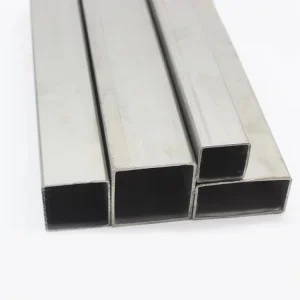
Custom Prime Quality 201 Stainless Steel Pipe from China Suppliers - Durable & Aesthetic Structural Tube Selection
View Product Specs
Custom China Suppliers for Perforated Stainless Steel Sheet - High-Quality Factory Metal Mesh Solutions
View Product Specs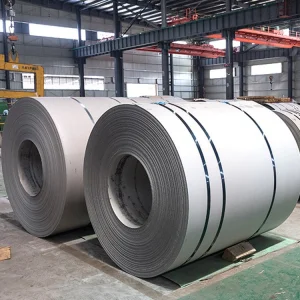
China High-Quality Hot Rolled Stainless Steel Coils from China Suppliers - Factory Direct Industrial Solutions
View Product Specs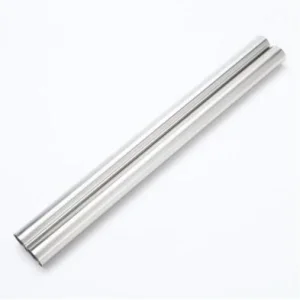
Wholesale 201 Stainless Steel Curtain Rod Tube, 25mm OD, Powder Coated, Custom Length Structural Factory
View Product Specs
China 201 Stainless Steel Strip/Coil Manufacturers & Processing Factories - Precision Slitting Services
View Product Specs
Wholesale 2507 Super Duplex Steel Plate - High Strength & Extreme Corrosion Resistance from China Suppliers
View Product Specs
China Stainless Steel Industrial Welded Pipe - 201, 304, 316L Materials, Wide Range of Specifications
View Product Specs
Wholesale 2507 Super Duplex Stainless Steel Plate - High Corrosion Resistance Structural Plate Supplier
View Product Specs7. Frequently Asked Questions (FAQ) & Search Intent Insights
What is the key difference between ASTM A500 and EN 10219 structural tubing standards?
ASTM A500 is the primary North American specification for cold-formed welded and seamless carbon steel structural tubing in round, square, and rectangular shapes. It specifies Grades A, B, C, and D, with Grade C offering 345 MPa (50 ksi) minimum yield strength. Conversely, EN 10219 is the European standard for cold-formed welded structural hollow sections (e.g., S235JRH, S355J2H). Key differences lie in dimensional tolerance definitions, corner radius limits, impact test temperature requirements (such as -20°C testing for J2 grades), and mass calculations.
Why choose Stainless Steel 316L or Duplex 2205 for structural tubing instead of carbon steel?
While carbon structural tubing (e.g., ASTM A500) offers low upfront material costs, it requires galvanizing or epoxy coatings to resist atmospheric corrosion. In marine, offshore, or chemical plant applications, coated carbon steel eventually degrades, leading to high maintenance costs. Stainless steel 316L (containing 2-3% Molybdenum) prevents pitting from airborne chlorides. Duplex 2205 double the yield strength of austenitic grades while offering immunity to stress corrosion cracking (SCC), enabling engineers to reduce wall thickness and achieve lower lifetime lifecycle cost.
What surface finishes are available for structural and decorative stainless steel tubing?
Mill finishes include No.1 hot-rolled annealed and pickled (HRAP) for heavy industrial framing, and 2B cold-rolled smooth finish. Decorative and architectural structural tubing can be supplied in No.4 (satin/brushed hairline finish), 180-600 grit mechanical polish, 8K mirror polish, or specialized anti-fingerprint and powder-coated surface layers.
How does mill test traceability work for wholesale structural tubing orders?
Every production batch from Jiangsu Renzhi Holding Group is linked to a specific raw material heat number sourced directly from primary mills like Tsingshan, TISCO, or Baosteel. We issue certified EN 10204 3.1 Mill Test Reports (MTR) with every shipment. The MTR details exact chemical ladle analysis (Cr, Ni, Mo, C, N, Mn), mechanical property results (yield strength, tensile strength, elongation, hardness), and non-destructive test compliance (Eddy Current or Hydrostatic testing).