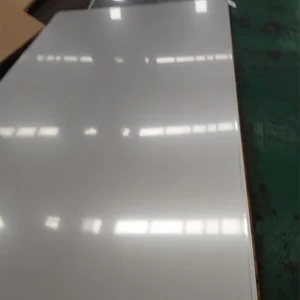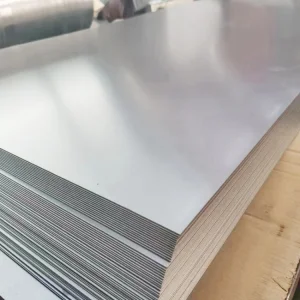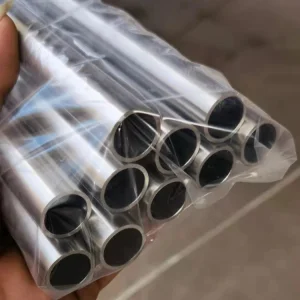
Featured Industrial Steel Plates & Structural Products
Explore our mill-sourced inventory engineered to ISO 9001, ASTM A240, EN 10088-2, and JIS standards for global structural and decorative applications.
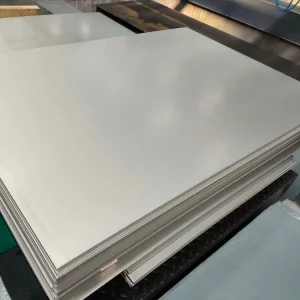
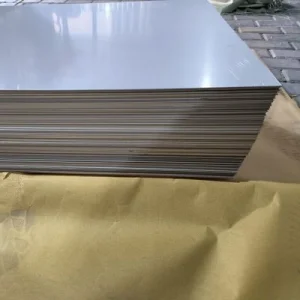
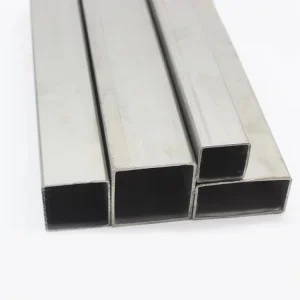
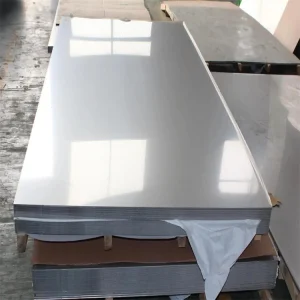
Executive Summary: The Mechanics & Procurement Architecture of Steel Checker Plates
Steel checker plate sheets—variously designated as diamond plate, tread plate, or floor plate—represent a critical category of raised pattern structural steel products engineered for high traction, structural integrity, and environmental resilience. Global demand for industrial floor solutions across marine, petrochemical, logistics, and heavy transport infrastructure has fundamentally altered procurement dynamics. Procurement professionals can no longer evaluate checker plate purely on raw steel spot prices. Modern engineering dictates evaluating pattern topography (5-bar vs. teardrop vs. diamond), metallurgical composition (austenitic, duplex, or carbon steel matrices), manufacturing strain dynamics (hot-rolled embossed vs. cold-embossed), and comprehensive lifecycle cost analysis.
This industrial whitepaper serves as an authoritative buyer's manual for global procurement managers, structural engineers, and steel stockholders seeking to optimize bulk purchasing strategy from direct-factory supply chains. Sourcing directly from integrated Chinese metal clusters—such as the Wuxi industrial hub—delivers significant mill-to-site price leverage while strictly complying with international standards including ASTM A786/A786M, EN 10088-2, and JIS G4304.
Pattern Topology, Pattern Friction Coefficients & Mechanical Integrity
The primary engineering objective of checker plate sheets is providing dynamic multidirectional slip resistance under dry, fluid-contaminated, or oily operating conditions. The geometry of the raised lug (pattern) determines both the static coefficient of friction (SCOF) and dynamic coefficient of friction (DCOF).
5-Bar (Willow Leaf) Pattern
Features five parallel raised lugs arranged perpendicular to adjacent clusters. Provides superior liquid drainage and uniform multidirectional anti-skid capability. Highly favored in European (EN) and Asian (JIS) industrial platforms, food plants, and commercial vehicles.
Diamond (Single Lug) Pattern
The traditional North American (ASTM A786) standard diamond shape. Features discrete diagonal diamond lugs. Offers exceptional heavy-duty vehicle tire traction and rugged mechanical wear resistance for loading docks and ramps.
Teardrop & Lentil Patterns
Designed with rounded, smooth-transition lug profiles. This pattern minimizes dirt accumulation and allows effortless pressure washing, making it optimal for architectural walkways, cleanrooms, and food equipment floors.
Technical Matrix: Coefficient of Friction (COF) & Mechanical Ratings
Below is the empirical test comparison showing friction performance across operating environments evaluated under DIN 51130 and ASTM C1028 testing protocols:
| Pattern Type | Standard Lug Height (h) | Dry Surface COF | Wet Surface COF | Oily Surface COF | Primary Industrial Sector |
|---|---|---|---|---|---|
| 5-Bar (Willow Leaf) | 1.0mm - 2.2mm | 0.85 - 0.92 | 0.72 - 0.78 | 0.58 - 0.64 | Marine Decks, Chemical Plant Flooring |
| ASTM Diamond | 1.2mm - 2.5mm | 0.82 - 0.88 | 0.68 - 0.74 | 0.54 - 0.60 | Logistics Ramps, Truck Bed Beds |
| Lentil / Teardrop | 0.8mm - 1.8mm | 0.78 - 0.84 | 0.65 - 0.71 | 0.48 - 0.53 | Pharma Cleanrooms, Public Architecture |
| T-Pattern / 1-Bar | 1.5mm - 2.0mm | 0.80 - 0.86 | 0.70 - 0.75 | 0.52 - 0.57 | Railway Stairs, Heavy Transport Footing |
When calculating freight logistics and load-bearing parameters, remember that checker plate weight is calculated based on the base thickness ($t_{base}$) plus an added pattern factor ($W_{pattern}$). Theoretical weight formula:
$Theoretical\ Weight\ (kg/m^2) = [t_{base} (mm) \times 7.85\ (or\ 7.93\ for\ stainless)] + Pattern\ Weight\ Allowance\ (approx.\ 2.5\ to\ 3.6\ kg/m^2)$.
Wholesale Steel Checker Plate Sheets Quotes & Pricelist Framework
Achieving cost optimization in wholesale steel procurement requires understanding the primary market variables that govern price per metric ton ($/MT). Stainless steel and carbon steel checker plate quotes fluctuate based on alloy indices (LME Nickel, Ferrochrome, Molybdenum), rolling methods (hot-rolled continuous inline embossing vs. secondary cold stamp press), surface finish requirements, and order volume tiers.
Empirical B2B Price Range Tiers (Benchmark Quotes for Global Buyers)
| Material Grade Matrix | Thickness Range | Standard Dimension (mm) | Wholesale Price Range (FOB China $/MT) | MOQ Requirements |
|---|---|---|---|---|
| Carbon Steel Q235B / A36 | 2.0mm - 12.0mm | 1220x2440 / 1500x6000 | $580 - $720 / MT | 10 Metric Tons |
| Austenitic 201 Stainless Steel | 1.0mm - 6.0mm | 1000x2000 / 1220x2440 | $1,250 - $1,550 / MT | 5 Metric Tons |
| Austenitic 304 / 304L Stainless | 1.2mm - 8.0mm | 1220x2440 / 1500x3000 | $2,100 - $2,600 / MT | 3 Metric Tons |
| Austenitic 316 / 316L Stainless | 1.5mm - 10.0mm | 1220x2440 / 1500x6000 | $3,200 - $3,900 / MT | 2 Metric Tons |
| Duplex 2205 (UNS S31803) | 2.0mm - 10.0mm | 1500x3000 / Custom Cut | $4,100 - $4,900 / MT | 1 Metric Ton |
| Super Duplex 2507 (UNS S32750) | 3.0mm - 12.0mm | Custom Mill Orders | $5,800 - $6,900 / MT | 1 Metric Ton |
Hot-Rolled vs. Cold-Rolled Economics
Hot-rolled (No.1 finish) plates offer lower initial cost per ton and superior heavy structural strength. Cold-rolled checker sheets deliver tighter thickness tolerances, bright aesthetic surface finish (2B/BA), and reduced tare weight per sheet.
Alloy Index Volatility Surcharges
For 316L and Duplex grades, Molybdenum and Nickel surcharges dictate up to 60% of quote variations. Forward-buying bulk contracts during market consolidation cycles yields substantial financial margins for international distributors.
Value-Added Processing Impact
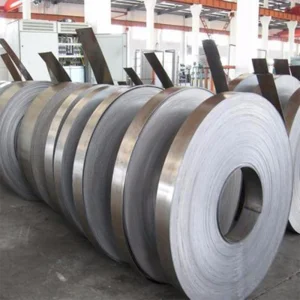
Custom laser cutting, beveling, protective PVC filming, plasma edge trimming, and custom coil slitting typically add $40–$120/MT, but eliminate costly secondary processing steps at destination fabrication yards.
The China Supply Chain Nexus: Jiangsu & Wuxi Manufacturing Dominance
China produces over 55% of the world's raw stainless and carbon steel. Jiangsu Province—specifically the Wuxi industrial hub—serves as the international focal point for stainless steel processing, cold slitting, continuous pattern embossing, and export logistics. Sourcing directly from factory manufacturers in this ecosystem confers distinct structural advantages:
Direct Mill Feedstock Traceability
Raw coils are directly drawn from primary steelmakers like Tsingshan, TISCO, POSCO, and Baosteel. This eliminates intermediate distribution margins and guarantees consistent chemical heats.
In-House Deep Processing
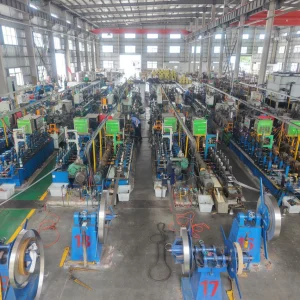
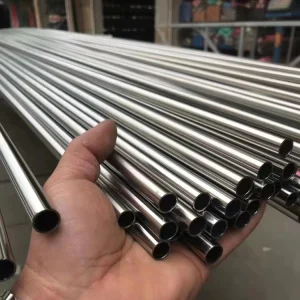
Equipped with 5 automatic leveling/slitting lines, 6 high-speed surface polishing units, 2 large-format embossing rolling stands, and 80+ welded pipe/profile lines for complete project integration.
Compressed Lead Times
Massive ready-stock inventory of standard dimensions (1220x2440mm, 1500x3000mm) enables dispatch within 7 to 10 working days, drastically reducing project schedule exposure.
Seaworthy Export Packaging
Heavy-duty wooden skids, anti-corrosion VCI paper wrapping, corner protection guards, and steel banding ensure complete protection against salt-spray degradation during ocean freight.
Localization, Global Standards Compliance & Certification Architecture
International EPC contractors and tier-1 stockists require absolute verification that physical goods meet regional building codes and industrial mandates. Sourcing steel checker plates requires compliance cross-referencing across North American, European, and Japanese regulatory standardizations.
| Standard Body | Designation Code | Scope & Material Coverages | Quality Assurance Protocols |
|---|---|---|---|
| ASTM (USA) | ASTM A786 / A786M | Standard Specification for Hot-Rolled Carbon, Low-Alloy, and Stainless Steel Raised Floor Plates | Dimensional tolerance verification, lug height compliance, tensile & bend testing. |
| EN (Europe) | EN 10088-2 / EN 10025 | Stainless Steel Sheet/Plate for Construction Purposes (CE Marked) & Structural Steels | Impact energy testing (Charpy V-notch at -20°C/-40°C), Intergranular Corrosion Test (ASTM A262 Pr. E). |
| JIS (Japan) | JIS G4304 / JIS G3101 | Hot-Rolled Stainless Steel Plate, Sheet, and Strip & General Structural Rolled Steel | Spectrometric chemical heat verification, ultrasonic flaw detection (UT testing). |
| ISO System | ISO 9001:2015 / ISO 14001 | Factory Quality Management & Environmental Operational Standards | Full lot traceability from melt furnace heat number to finished master coil index. |
Mill Test Certificates (MTC) EN 10204 3.1 & 3.2 Guarantee
Every wholesale shipment is delivered with certified Mill Test Reports verifying chemical analysis (Carbon, Chromium, Nickel, Molybdenum, Nitrogen), mechanical yield strength ($R_{p0.2}$), ultimate tensile strength ($R_m$), elongation ($A_5$), and PMI (Positive Material Identification) readings. Third-party inspections via SGS, Bureau Veritas, or TÜV are available upon request.
Localized Application Scenarios & Engineering Case Profiles
Different operational environments necessitate distinct grade selections and surface treatments. Understanding these localized engineering demands ensures maximum structural service life without over-specifying material costs.
Petrochemical & Offshore Marine Platforms
Recommended Grade: Stainless Steel 316L or Duplex 2205.
Engineering Rationale: Extreme chloride exposure and salt-spray atmospheres induce rapid pitting in mild carbon steel. 316L (with 2-3% Molybdenum) and 2205 Duplex deliver exceptional pitting resistance equivalent numbers (PREN > 34), maintaining walkway anti-slip safety on offshore oil rigs and marine docks.
Food Processing & Hygienic Cleanrooms
Recommended Grade: SUS304 / 304L Cold-Rolled Teardrop.
Engineering Rationale: Food safety standards (FDA/EC 1935/2004) mandate non-porous surfaces that withstand aggressive caustic sanitization without bacteriological retention. Smooth teardrop patterns offer easy washability.
Logistics Hubs & Heavy Vehicle Transit Ramps
Recommended Grade: Hot-Rolled Carbon Steel Q235B / A36.
Engineering Rationale: High wheel axle loads from forklifts and semi-trailers require high yield strength and economic bulk mass. Hot-rolled diamond plates provide maximum load distribution at optimized cost-per-square-meter.
Wholesale Sourcing & Engineering FAQ
Detailed technical answers to common queries submitted by global procurement managers and structural engineers.
What is the key structural difference between hot-rolled embossed and cold-stamped steel checker plate? +
How do I determine whether to specify SS 304, SS 316L, or Carbon Steel for platform flooring? +
What dimensional standards and width options are available for direct container loading? +
What testing documentation is provided with wholesale B2B shipments? +
How does China factory direct purchasing optimize total landed cost for steel importers? +
Additional Mill Direct Products & Custom Specifications
Browse our complementary catalog of super duplex plates, industrial welded pipes, strips, and specialty metal meshes available for consolidated sea freight.