
Featured Wholesale Stainless Steel Solutions
Explore our mill-direct inventory of stainless steel tubing, sheets, plates, and customized structural components engineered for high load-bearing and extreme corrosion resistance.
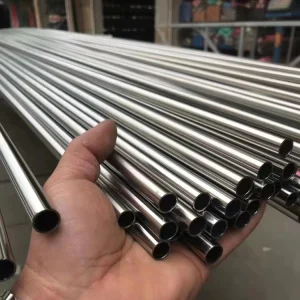
China Stainless Steel Pipe Factory: Direct Suppliers for All Sizes with Custom Processing
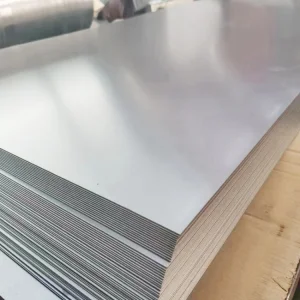
Custom High-Quality 316L Stainless Steel Sheet from China Factory - Trusted Solutions
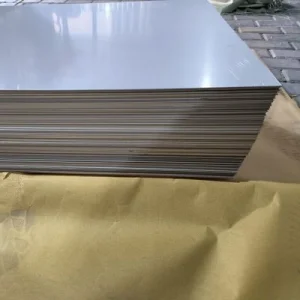
China SUS304 Stainless Steel Cold-Rolled Plate - Food Grade & Corrosion Resistant
Wholesale 316L Stainless Steel Sheet Direct from China Factory Manufacturers
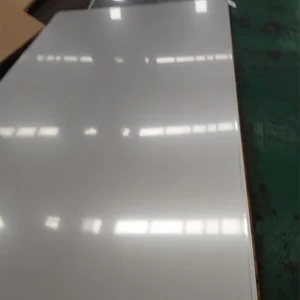
China 2507 Super Duplex Steel Plate - High Strength & Chloride Resistance
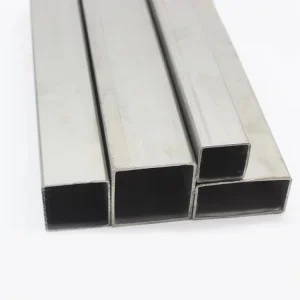
Wholesale Prime Quality 201 Stainless Steel Pipe - Glossy Finish for Structural Use
China Factory SUS304 Cold-Rolled Stainless Steel Plate - Precision Tolerances
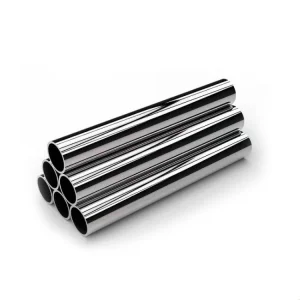
Wholesale China Stainless Steel Decorative Pipe - Exquisite Surfaces & Custom Finishes
Executive Overview: Structural & Architectural Rectangular Tubing
Stainless steel rectangular tubing (Rectangular Hollow Sections - RHS) serves as a critical structural component in modern civil engineering, heavy machinery framework, marine fabrication, and sanitary food processing environments. By combining flat external faces that simplify joining and framing with high torsional rigidity, rectangular tubing out-performs conventional open structural steel profiles.
| Steel Grade Family | Key Chemical Elements | Tensile Strength (MPa) | Yield Strength (MPa) | Primary Industrial Application |
|---|---|---|---|---|
| AISI 201 / SUS201 | 16-18% Cr, 3.5-5.5% Ni, 5.5-7.5% Mn | ≥ 520 | ≥ 275 | Indoor architecture, commercial furniture, display racks, decorative handrails |
| AISI 304 / 304L | 18-20% Cr, 8-10.5% Ni, Low C (<0.03%) | ≥ 515 | ≥ 205 | Food processing machinery, architectural facades, structural frameworks, HVAC |
| AISI 316 / 316L | 16-18% Cr, 10-14% Ni, 2-3% Mo | ≥ 485 | ≥ 170 | Chemical processing plants, marine hardware, pharmaceutical piping, coastal structures |
| Duplex 2205 (UNS S31803) | 22% Cr, 5% Ni, 3% Mo, 0.18% N | ≥ 625 | ≥ 450 | Offshore oil & gas, desalination plants, high-stress load-bearing industrial framing |
| Super Duplex 2507 | 25% Cr, 7% Ni, 4% Mo, 0.27% N | ≥ 750 | ≥ 550 | Extreme chloride marine environments, chemical scrubbers, subsea equipment |
Localized Application Scenarios & Industry Integration
Stainless steel rectangular tubing is engineered to fulfill critical performance metrics across vastly different environmental conditions. Below is an engineering breakdown of localized deployment scenarios.
1. Structural Architecture & Curtain Walls
In modern architectural engineering, 304 and 316L rectangular tubing serves as load-bearing mullions and structural glass support frames. The high moment of inertia along the major axis allows slim profile sightlines without compromising wind-load resistance. Satin hairline (No.4) and 8K mirror polishes provide maintenance-free aesthetic longevity in urban skyscapes.
2. Hygienic Food & Pharmaceutical Skid Frames
Food processing facilities require structural skid frameworks that withstand caustic CIP (Clean-In-Place) washdown chemicals containing sodium hydroxide and nitric acid. Smoothly welded SUS304L and SUS316L rectangular hollow sections eliminate internal crevices where bacterial bio-films assemble, fully satisfying FDA and EHEDG sanitary standards.
3. Heavy Machinery & Energy Generation
Heavy machinery chassis, solar tracker torque tubes, and nuclear containment substructures demand extreme yield strength under cyclic vibration. Duplex 2205 rectangular tubing provides twice the yield strength of traditional austenitic steel, enabling weight reduction (lightweight design) while resisting stress corrosion cracking (SCC).
4. Transportation & Automotive Frame Fabrication
Commercial vehicle chassis, bus frames, and passenger rail car bodies utilize cold-formed 304 rectangular tubing due to its superior energy absorption during crash impact. The high work-hardening rate of chromium-nickel alloys delivers structural integrity while significantly minimizing deadweight payload.
5. Marine Engineering & Offshore Rigs
Offshore platform handrails, splash-zone walkways, and subsea cable trays subjected to high-salinity spray rely on Super Duplex 2507 and 316L rectangular tubing. With a Pitting Resistance Equivalent Number (PREN) exceeding 40 for Super Duplex, these tubes withstand aggressive pitting and crevice corrosion indefinitely.
6. High-End Commercial Interior & Fixture Design
Precision-drawn 201 and 304 decorative rectangular tubes with PVD titanium vacuum coatings (Rose Gold, Champagne Gold, Black Titanium) are widely deployed in luxury retail interiors, elevator door frames, and architectural room dividers demanding flawless visual appeal.
Advanced Technical Roadmap & Next-Generation Manufacturing
The manufacturing evolution of stainless steel rectangular tubing is transitioning toward high-precision automated laser welding, real-time non-destructive quality verification, and decarbonized green steel production.
High-Speed Fiber Laser Welding Technology
Traditional TIG (Tungsten Inert Gas) welding, while reliable, induces a relatively wide Heat-Affected Zone (HAZ) that can alter the fine austenitic grain structure. Our mill utilizes state-of-the-art multi-kilowatt continuous fiber laser welding lines. Laser welding concentrates energy into an ultra-narrow bead, yielding:
- Minimal Heat-Affected Zone (HAZ): Preserves parent metal corrosion resistance and grain boundary stability without sensitization.
- Superior Weld Seam Geometry: Smooth internal bead clearance ideal for mechanical sleeve insertion and fluid conduits.
- 100% Weld Joint Efficiency: Matching the mechanical shear and tensile values of the virgin strip material.
Industry 4.0 Inline QC & Bright Annealing
Quality verification is integrated directly into the continuous sizing and shaping roll stands:
- Inline Laser Dimension Profiling: Real-time 360-degree laser scanning measures side dimensions, concavity, convexity, and corner radius tolerance continuously.
- Online Eddy Current Defect Detection: Electromagnetic induction coils detect micro-cracks or seam discontinuities at line speeds up to 60 meters/minute.
- Hydrogen-Atmosphere Bright Annealing: Thermal stress relief performed at 1050°C - 1100°C in pure hydrogen atmosphere restores ductility and prevents surface oxidation without requiring acid pickling.
Future Outlook: Green Steel & Decarbonized Stainless Sourcing
Global regulatory landscapes, including the European Union's Carbon Border Adjustment Mechanism (CBAM), necessitate low-carbon manufacturing footprint metrics. Future production roadmaps emphasize Electric Arc Furnace (EAF) steelmaking utilizing up to 80% recycled stainless scrap, powered by renewable solar and hydro-electric grids. Purchasing low-carbon rectangular tubing ensures global environmental compliance for tier-1 engineering contractors.
China Supply Chain Resilience & Wuxi Industrial Hub Efficiency
Located in Wuxi, Jiangsu—the premier stainless steel logistics and processing capital of Asia—our manufacturing base operates at the intersection of raw material access, precision processing infrastructure, and deep sea export port connectivity.
Direct Mill Raw Material Integration
We maintain strategic long-term feedstock partnerships with top-tier primary stainless mills including Tsingshan, TISCO, POSCO, and Baosteel. Direct coil sourcing guarantees traceable chemical heat numbers, consistent prime master coils, and immunity against raw material spot-market volatility.
Vertical In-House Custom Fabrication
From primary coil slitting to tube roll-forming, corner profiling, surface polishing, cut-to-length laser processing, and export bundling—every stage occurs within a single controlled complex. Eliminating external sub-contracting cuts lead times by 35% compared to fragmented supply chains.
Agile Freight & Logistics Consolidation
Proximity to Shanghai and Ningbo deep-water ocean ports allows swift container loading and break-bulk chartering. Our export packaging uses seaworthy heavy-duty wooden crate frameworks, corner protectors, waterproof plastic wrapping, and anti-corrosion VCI film protection.
Global Market Insights & Procurement Sourcing Strategy
Evaluating global purchasing shifts across North America, Europe, the Middle East, and Southeast Asia to optimize cost efficiency and regulatory risk.
Regional Demand Profiles & Standards Alignment
- North America (USA & Canada): High demand for ASTM A554 ornament structural tubing and ASTM A312 fluid/structural lines in 304L/316L. Imperial sizes (e.g., 2"x4", 1.5"x3" with 11GA, 14GA wall thicknesses) dominate infrastructure tenders.
- European Union: Governed by EN 10296-2 and EN 10088-2 standards. Strong preference for strict CE marking compliance, EN 10204 3.1 certification, and traceable low-carbon scrap ratios.
- Middle East Megaprojects: Massive infrastructure and desalination expansions drive high-tonnage consumption of Duplex 2205 and 316L heavy-wall rectangular sections designed for high-ambient heat and coastal salinity.
- Southeast Asia Sourcing Hubs: Rapid industrialization in Vietnam, Thailand, and Indonesia relies on cost-competitive 201 and 304 tubing for commercial construction, equipment chassis, and agricultural assembly lines.
Mitigating Tariff & Supply Chain Geopolitics
B2B buyers frequently navigate anti-dumping duties, Section 232 tariffs, and fluctuating freight indices. Partnering with a large-scale OEM manufacturer offers flexible commercial strategies:
- Custom Cut-to-Length Processing: Ordering exact finished lengths eliminates scrap wastage at destination fabrication sites, saving up to 15% in net material costs.
- VMI & Buffer Stock Agreements: High-volume distributors can utilize contractual consignment stock or staggered container shipping schedules to hedge against steel coil price spikes.
- Complete Document Compliance: Complete provision of Origin Certificates, Form E, Form F, and customs-ready HS code documentation simplifies clearance.
Global Standards Compliance & Testing Protocols
Every shipment of stainless steel rectangular tubing undergoes rigorous mechanical and chemical verification to guarantee absolute reliability in structural duty.
ASTM A554 / A269
Strict structural & ornamental tube tolerance control, covering outer dimensions, wall thickness, squareness, and twist.
EN 10204 3.1 MTC
Full Material Test Certificates accompanying every batch, detailing chemical ladle analysis and mechanical destructive tests.
PMI & Spectrometer Inspection
X-ray Fluorescence (XRF) Positive Material Identification verifies exact Chromium, Nickel, and Molybdenum composition prior to dispatch.
Hydrostatic & NDT Testing
100% Eddy Current flaw detection and optional hydrostatic pressure testing for fluid-handling structural applications.
Frequently Asked Technical & Sourcing Questions
Direct answers to crucial procurement, material selection, and structural engineering queries.
What are the primary structural differences between 304 and 316L rectangular tubing?
While both are austenitic stainless alloys with excellent mechanical ductility, 316L contains 2% to 3% Molybdenum, whereas 304 does not. Molybdenum dramatically increases resistance to pitting and crevice corrosion in chloride-rich environments (such as coastal areas, de-icing salts, and chemical processing). Additionally, the "L" designation in 316L indicates low carbon content (<0.03%), which eliminates harmful carbide precipitation during welding and maintains corrosion resistance along the weld seam.
How does rectangular hollow section (RHS) tubing compare to square or round tubing for structural framing?
Rectangular tubing offers asymmetrical moment of inertia properties ($I_x \neq I_y$), making it significantly more efficient when structural loads are directed predominantly along one axis (such as bending forces in floor beams or roof rafters). Flat sides facilitate clean, right-angle joining and flush bolting or welding of exterior cladding panels, whereas round tubing requires complex saddle cuts (fish-mouth coping) for structural intersections.
What custom surface polishes and coatings are available for architectural wholesale orders?
We supply a complete spectrum of surface finishes: 2B (mill finish), No.4 Satin Hairline (brushed 180-320 grit), 8K Mirror polish, Sandblasted non-reflective matte, Embossed texture finishes, and PVD Titanium vacuum color coatings (Gold, Black, Rose Gold, Bronze, Blue). All decorative tubes are protected with laser-cut-compatible PE or PVC protective films.
When should Duplex 2205 rectangular tubing be selected over 316L?
Duplex 2205 should be specified when structural load requirements require higher yield strength (approx. 450 MPa vs. 170-205 MPa for 316L/304) or when operating in severe stress-corrosion cracking (SCC) conditions containing hydrogen sulfide or concentrated chlorides. The higher strength allows wall thickness reduction, reducing total tonnage and transport costs.
What is the standard Minimum Order Quantity (MOQ) and lead time for wholesale factory shipments?
For standard stock dimensions (e.g., 20x40mm, 40x80mm, 50x100mm in 304/316L), MOQs start as low as 1 metric ton. Custom non-standard dimensions, specific wall gauge cold-drawing, or special alloy heats (2507/310S) typically require 3 to 5 metric tons per size. Production lead times range from 10 to 20 days depending on surface polishing and cutting specifications.
Explore Additional Specialized Stainless Steel Products
Browse our extended product catalogue featuring precision perforated sheets, decorative specialty tubing, cold-rolled coils, and low-carbon industrial pipes.
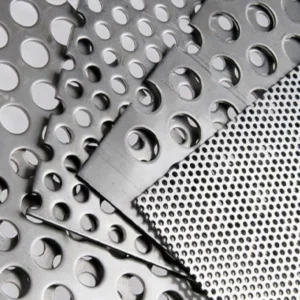
Wholesale China Perforated Stainless Steel Sheet - High Quality Metal Mesh
Custom Stainless Steel Decorative Pipe - High Quality China Manufacturer
China Factory Suppliers for 316L Stainless Steel Sheet - Durable Metal Solutions
Wholesale High Cost-Effective 201 Cold Rolled Stainless Steel Sheet
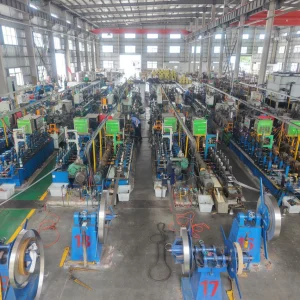
CE Certification China SUS304/304L Stainless Steel Strip Suppliers
Wholesale Stainless Steel Pipe Direct Factory Manufacturer & Global Exporter
Custom High Cost-Effective 201 Cold Rolled Stainless Steel Sheet
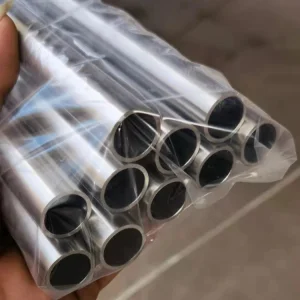
CE Certification China SUS304/304L Low Carbon Stainless Steel Pipe
Request Mill-Direct Wholesale Quotations & Technical Specs
Connect directly with our engineering sales team in Wuxi for custom dimensions, wall thickness tolerances, surface finishes, and container freight pricing.
Inquire Now / Get Custom Quote