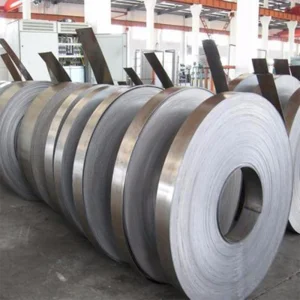
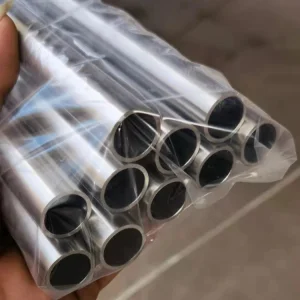
Featured Industrial Stainless Steel Products (Batch 1)
Explore certified mill-grade stainless steel plates, sheets, strips, and industrial pipes manufactured under international ISO & ASTM quality protocols.
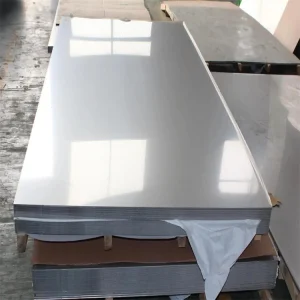


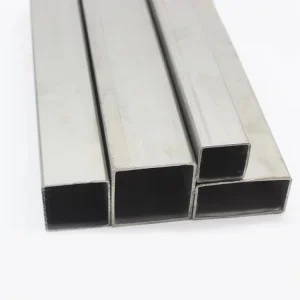



Macro Industry Landscape & B2B Procurement Dynamics
Sourcing wholesale stainless steel plates requires navigating price movements across London Metal Exchange (LME) nickel, ferrochrome, and molybdenum stocks. Supply chain agility depends on direct-from-mill partnerships that stabilize raw material surcharges.
Leading Chinese factories are implementing Electric Arc Furnace (EAF) processing alongside hydrogen-based direct reduced iron (DRI) methods. This lowers the embodied carbon per ton of stainless plate, meeting rigorous ESG requirements for global projects.
Global fabricators are moving away from raw, unprocessed heavy plates toward ready-to-weld slit coils, precision laser-cut sheet geometries, continuous perforated panels, and surface-treated architectural metals.
Industrial Manufacturing Infrastructure
Our integrated manufacturing facilities in Wuxi, Jiangsu, deliver unmatched scale, continuous metallurgical quality assurance, and short export lead times.
Stainless Steel Plate Grade Selection & Mechanical Properties
Selecting the optimal stainless steel plate requires matching environmental corrosion conditions with mechanical yield thresholds. Below is an engineering reference for our standard inventory.
| Grade Category | AISI / UNS Grade | Chemical Composition Highlights | Yield Strength (MPa Min) | Tensile Strength (MPa Min) | PREN Rating | Primary Environment suitability |
|---|---|---|---|---|---|---|
| Austenitic | 304 / 304L (UNS S30403) | 18% Cr, 8% Ni, Low C | 205 | 515 | 18.0 - 20.0 | General industrial, food processing, architecture |
| Austenitic (Mo-Alloyed) | 316 / 316L (UNS S31603) | 16-18% Cr, 10-14% Ni, 2-3% Mo | 220 | 520 | 23.0 - 25.0 | Chloride exposure, marine hardware, chemical tanks |
| High Temp Austenitic | 310S (UNS S31008) | 24-26% Cr, 19-22% Ni | 205 | 515 | 25.0 | High-temperature oxidation (Up to 1150°C), furnace parts |
| Ferritic | 430 (UNS S43000) | 16-18% Cr, Nickel-Free | 205 | 450 | 16.0 | Cost-effective interior trim, household appliances |
| Duplex | 2205 (UNS S31803 / S32205) | 22% Cr, 5% Ni, 3% Mo, 0.17% N | 450 | 620 | 32.0 - 35.0 | High stress corrosion cracking resistance, oil & gas |
| Super Duplex | 2507 (UNS S32750) | 25% Cr, 7% Ni, 4% Mo, 0.27% N | 550 | 750 | > 42.0 | Aggressive seawater desalination, offshore platforms |
Surface Finishes & Precision Metal Processing
Annealed and descaled (pickled) surface suitable for heavy industrial structural members, pressure vessels, and storage tanks where surface reflectivity is not required.
2B (Smooth, non-reflective) and BA (Bright Annealed, mirror-like) finishes offer precise gauge tolerances ($Ra < 0.4 \mu m$), ideal for stamping and sanitary fabrication.
Unidirectional mechanical polishing provides clean linear grain textures. Highly requested for architectural cladding, elevator doors, and commercial kitchen equipment.
Super-mirror polished surfaces and custom embossed non-slip checker patterns engineered for high-traffic decorative applications and industrial flooring security.
Localized Industrial Solutions & Application Scenarios
Scenario: Coastal desalination facilities and offshore platform topsides exposed to high atmospheric salts and splash-zone corrosion.
Solution: Heavy-gauge 316L and Duplex 2205 plates engineered to resist chloride pitting and stress corrosion cracking under high structural loads.
Scenario: Nitric, sulfuric, and organic acid storage tanks requiring strict leak-proof integrity and chemical stability.
Solution: ASTM A240 certified 304L/316L hot-rolled plates featuring controlled carbon content below 0.03% to prevent intergranular carbide precipitation during field welding.
Scenario: Dairy processing, brewery vessels, and pharmaceutical distillation towers demanding smooth surfaces free of microbial traps.
Solution: 2B and BA finish 304/316L sheets combined with custom slitting for continuous tube-mill welding line feedstock.
Quality Assurance, Certification & Export Verification
Every shipment of wholesale stainless steel metal plates is delivered with authentic Mill Test Reports detailing chemical heat analysis, mechanical tensile/yield testing, hardness values, and intergranular corrosion test results.
To ensure structural integrity for critical heavy plates, our quality team conducts Ultrasonic Testing (UT) to detect internal laminations and Positive Material Identification (PMI) via XRF spectrometry to prevent alloy mix-ups.
Plates and sheets are protected with polyethylene film, waterproof kraft paper wrapping, metal edge guards, and fumigated wooden skids/frames to ensure zero moisture ingress or physical damage during long-distance ocean transit.
Wholesale Pricing Structure & Quote Calculation Formula
For Chromium-Nickel Stainless Steel (Grades 304, 304L, 316, 316L):
$$\text{Weight (kg)} = \text{Thickness (mm)} \times \text{Width (m)} \times \text{Length (m)} \times 7.93$$
(For Ferritic Grade 430, use density factor $7.70$; for Duplex 2205, use density factor $7.98$).
Factory-direct orders leverage scale economies. Standard full-container loads (FCL 25-27 Metric Tons) minimize freight costs per ton. Mixed-grade container consolidations are available for regional distributors.
Technology Roadmap: 2025–2030 Metallurgical Evolution
Integration of automated optical inspection (AOI) lines utilizing deep-learning visual algorithms to detect surface micro-scratches, pits, and gauge variations in real time at rolling speeds over 120m/min.
Advanced cold-rolling technologies allowing the production of high-strength lean duplex plates down to thin-gauge sheets without compromising yield strength or corrosion resistance.
Blockchain-enabled digital product passports (DPP) tracking scrap input origin, recycled material ratios (>80%), and exact carbon footprints per plate batch for global environmental compliance.
Frequently Asked Questions (FAQ)
Featured Industrial Stainless Steel Products (Batch 2)
Browse additional high-demand inventory, including specialized decorative strips, perforated structural plates, and industrial welded piping systems.