
Explore our precision-manufactured stainless steel raw materials, structural elements, and processed components supplied directly from our Chinese manufacturing ecosystem to global B2B buyers.



Architectural & Industrial Stainless Steel Escutcheon Manufacturing Excellence
In architectural hardware, industrial valve containment, and sanitary plumbing installations, the stainless steel escutcheon serves as a critical interface between structural conduits and aesthetic surfaces. Though historically classified as a simple decorative trim or wall flange cover plate, modern engineering demands that wholesale stainless steel escutcheons meet strict dimensional tolerances, offer high corrosion resistance, and withstand extreme mechanical shear in demanding environments.
Selecting the appropriate wholesale stainless steel escutcheon factory requires evaluating manufacturing infrastructure beyond basic metal stamping. A leading factory must integrate metallurgical testing, precision progressive die stamping, automated robotic surface polishing (8K Mirror, Hairline, PVD Vapor Deposition), and rigid quality control compliant with international standards including ASTM A240, EN 10088-2, and ISO 9001:2015.
Strategic Strategic Advantages of Sourcing Stainless Steel Escutcheons from China
China's metal fabrication clusters—specifically within Jiangsu (Wuxi, Suzhou) and Guangdong (Guangzhou, Foshan)—represent the world's most vertically integrated ecosystem for stainless steel processing. Sourcing wholesale stainless steel escutcheon plates directly from Tier-1 Chinese manufacturers grants international enterprise procurement teams unmatched competitive advantages across several core operational dimensions:
1. Upstream Mill-Direct Material Integration
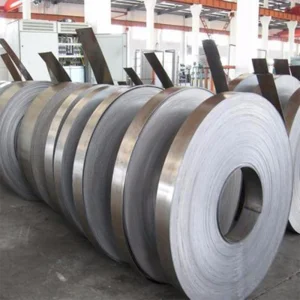
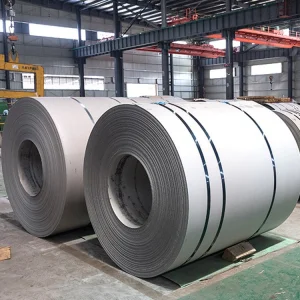
Leading Chinese escutcheon factories maintain direct raw material supply agreements with global steel conglomerates such as Tsingshan, TISCO, Baosteel, and POSCO. Access to high-grade SUS304, SUS316L, and Super Duplex 2507 hot/cold-rolled strip coils ensures strict chemical purity, traceable MTCs (Mill Test Certificates per EN 10204 3.1), and immune pricing volatile spikes.
2. In-House Progressive Tooling & CAD/CAM Design
Tooling cost and mold creation turnaround dictate project speed. Chinese escutcheon factories leverage high-speed CNC EDM wire cutting, 5-axis machining centers, and CAD simulation software (AutoForm for deep-drawing analysis) to engineer complex progressive stamping dies within 7-14 business days, drastically lowering initial capital investment for custom OEM shapes.
3. High-Speed Automated Mass Production
Utilizing 100T to 500T high-precision hydraulic punch presses equipped with automatic coil feeders, top-tier factories achieve production capacities exceeding 250,000 escutcheon units per day. Automated optical inspection (AOI) vision sorting systems eliminate dimensional flaws, flash burrs, and surface scratches prior to bulk packaging.
Global Industry Development Trends in Escutcheon Manufacturing
Driven by evolving architectural preferences, smart building integration, and stringent green building regulations (LEED, BREEAM), the global wholesale stainless steel escutcheon market is experiencing a profound technological transition:
- Physical Vapor Deposition (PVD) & Advanced Surface Metallurgy: Conventional electroplating is being rapidly replaced by environmentally safe PVD titanium ion plating. Escutcheons are now requested in high-durability aesthetic finishes including Matte Black, Brushed Rose Gold, Champagne Gold, and Gunmetal, achieving surface hardness ratings above 2000 HV.
- Smart Lock & IoT Hardware Integration: Modern architectural door escutcheons are no longer mere keyhole trims. Escutcheon plates now feature precision laser-cut cutouts for biometric fingerprint sensors, capacitive touch keypads, magnetic RFID readers, and LED status rings requiring ultra-tight flat tolerances (under 0.05mm across the plate area).
- Anti-Microbial & Hydrophobic Surface Coatings: In post-pandemic healthcare, cleanroom, and commercial kitchen design, escutcheons are specified with nano-scale copper-ion or SiO2 hydrophobic coatings. These invisible surface modifications reduce microbial adhesion by 99.9% and resist fingerprints, oil stains, and detergent oxidation.
- Transition to Ultra-Low Carbon Alloys (SUS316L & Duplex): Industrial pipeline escutcheons and marine deck hardware are migrating from basic SUS201/304 to SUS316L and Duplex 2205 alloys to counteract pitting corrosion caused by atmospheric chlorides, acid rain, and aggressive cleaning chemicals.
Metallurgical Grade Selection Guide for Wholesale Escutcheons
Choosing the correct alloy matrix ensures optimal balance between production material cost, formability, and long-term environmental endurance. The comparison table below highlights key engineering metrics across primary escutcheon grades:
| Stainless Grade | Chemical Composition Key | Corrosion Resistance (PREN) | Deep Drawing Formability | Typical Industry Application |
|---|---|---|---|---|
| SUS201 | 16-18% Cr, 3.5-5.5% Ni, 5.5-7.5% Mn | Low (PREN ~ 16) | Moderate (High Work Hardening) | Budget indoor residential door handles, economical furniture escutcheons. |
| SUS304 / 304L | 18-20% Cr, 8-10.5% Ni | Medium-High (PREN ~ 19) | Excellent (High Ductility) | Commercial door hardware, interior plumbing flanges, hotel escutcheon trims. |
| SUS316 / 316L | 16-18% Cr, 10-14% Ni, 2-3% Mo | High (PREN ~ 25) | Very Good | Coastal architectural hardware, pharmaceutical cleanrooms, marine plumbing. |
| Duplex 2205 / 2507 | 22-25% Cr, 5-7% Ni, 3-4% Mo, N | Extreme (PREN 32 - 42) | Requires High Tonnage Tooling | Offshore oil rig pipe flanges, aggressive chemical plant wall covers. |
Localized Application Scenarios & Macro Industry Solutions
Stainless steel escutcheons perform crucial seal and trim functions across diverse global industries. Factory custom manufacturing offers engineered solutions tailored to specific environment stresses:
Commercial High-Rise Real Estate
High-traffic office towers, luxury hotels, and municipal complexes require escutcheon rose plates capable of enduring millions of mechanical handle actuations. Solutions utilize heavy-gauge SUS304 (1.2mm - 2.0mm thickness) with internal reinforced steel chassis, retaining rings, and sound-dampening polymer inserts.
Industrial Fluid & Pipeline Penetrations
In power plants, HVAC networks, and water treatment facilities, heavy-duty split or solid wall flange escutcheons cover raw pipe wall pass-throughs. Engineered with SUS316L stainless steel, these split escutcheons allow easy retrofitting over existing lines, preventing dust ingress while accommodating thermal pipe expansion and vibration.
Hygienic Plumbing & Sanitary Engineering
Bathrooms, commercial laundries, and food processing plants rely on deep-drawn round and square pipe escutcheons to shield wall plumbing valves. Featuring rolled safety edges, precision inner-diameter silicone seals, and mirror-polished surfaces, these plates eliminate water pooling and bacterial harbor sites.
Global B2B Procurement Framework & Quality Assurance Protocols
For global hardware distributors, OEM door lock manufacturers, and international EPC contractors, establishing a robust Quality Assurance (QA) protocol with your wholesale stainless steel escutcheon factory is paramount. A rigorous procurement control plan should mandate the following evaluation milestones:
- Spectrometric Material Verification: X-ray Fluorescence (XRF) alloy analysis on raw coil receipt to verify Nickel, Chromium, and Molybdenum content match target mill certificates.
- Deep-Draw Wall Uniformity Check: Ultrasonic thickness testing across critical bend radius zones to verify minimum thickness reduction remains within 15% of nominal sheet stock.
- Neutral Salt Spray Testing (ASTM B117): Verification that finished electroplated or PVD coated escutcheon samples achieve minimum 96h to 240h zero-rust performance.
- Flatness & Parallelism Optical Profilometry: Laser scanning to confirm surface deviation does not exceed 0.05mm across the entire mounting face.
Browse additional certified stainless steel materials, structural plates, and high-performance coils directly from our manufacturing inventories.



Frequently Asked Technical & Procurement Questions (FAQ)
Direct technical answers addressing long-tail engineering, customization, and factory sourcing queries for B2B decision-makers:
Q1: What is the ideal sheet metal gauge/thickness for deep-drawn architectural escutcheons?
For residential interior doors, 0.8mm to 1.0mm thickness stainless steel sheet is standard. However, commercial-grade architectural rose plates and heavy-duty lock escutcheons utilize 1.2mm to 1.5mm cold-rolled SUS304 sheet. High-pressure pipe flanges or heavy valve escutcheons may require 2.0mm to 3.0mm plate stock to prevent deformation under bolt tightening torque.
Q2: How do Chinese escutcheon factories prevent surface scratching during deep-drawing stamping?
Leading manufacturers apply a heavy-duty PE or PVC protective film (70 to 100 microns thick) directly to the strip coil prior to stamping. Additionally, progressive stamping dies are coated with Titanium Nitride (TiN) or Diamond-Like Carbon (DLC) and lubricated with synthetic high-viscosity drawing oils to minimize metal-on-metal friction.
Q3: Why choose SUS316L over SUS304 for coastal and marine escutcheon applications?
SUS316L contains 2% to 3% Molybdenum (Mo) and lower carbon levels (<0.03%), significantly boosting its Pitting Resistance Equivalent Number (PREN ~ 25) compared to SUS304 (PREN ~ 19). In environments exposed to airborne sea salt or high humidity, SUS304 will eventually develop brown tea-staining, whereas SUS316L remains corrosion-free.
Q4: What custom OEM/ODM surface finishes can a wholesale factory provide?
Factories offer extensive finishing capabilities including #4 Satin Brushed, Hairline (HL), 8K Ultra-Mirror Polishing, Vibration, Bead Blasted, and electroplated antique brass/bronze. Advanced surface treatments include PVD coating (Matte Black, Gold, Rose Gold) and anti-fingerprint (AFP) nano-ceramic clear coating.
Q5: What are typical tooling charges and lead times for custom escutcheon mold development?
Simple single-stage punch dies cost between $800 and $1,500 USD with 7-day turnaround. Complex progressive multi-station dies for high-speed automated production range from $3,000 to $8,000 USD depending on part complexity, taking 15 to 25 days. Tooling fees are typically refunded once order volumes reach agreed thresholds (e.g., 50,000 units).
Q6: How are stainless steel escutcheons packaged for international ocean freight?
To prevent inter-item friction and moisture damage, each escutcheon is wrapped in protective PE film, placed in individual bubble sleeves or molded tray dividers, packed into double-wall corrugated inner boxes, and sealed in heavy-duty export master cartons strapped to fumigated wooden or plastic pallets wrapped in moisture-proof shrink stretch film.