
Factory-Direct Stainless Steel Products
Mill-certified seamless pipes, structural tubes, precision sheets, and cold-rolled coils sourced directly from top-tier production lines.

Custom China 201 Stainless Steel Pipe Suppliers - Premium Quality Glossy Tubes for Stairs and Guardrails
View Specifications
Wholesale High Cost-effective 201 Cold Rolled Stainless Steel Sheet from China Suppliers & Factory
View Specifications
CE Certification China SUS304/304L Stainless Steel Strip Suppliers - High-Quality Factory-Direct
View Specifications
Wholesale Prime Quality 201 Stainless Steel Pipe from China Suppliers | Durable and Stylish Factory-Direct Solutions
View Specifications
Wholesale Prime Quality 201 Stainless Steel Pipe Suppliers in China - Durable, Glossy Tubes
View Specifications
Custom China SUS304 Stainless Steel Cold-Rolled Plate Suppliers - Food Grade Material
View Specifications
Custom China Perforated Stainless Steel Sheet Suppliers - High-Quality Custom Metal Mesh
View Specifications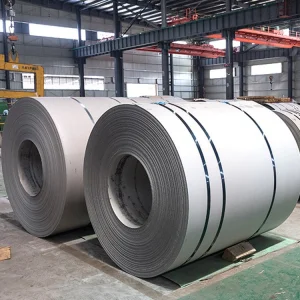
Wholesale China Hot Rolled Stainless Steel Coil Suppliers - Thick & Wide Industrial Coils
View SpecificationsTechnical Standard & Metallurgical Specification of Stainless Steel 304 Seamless Pipes
An authoritative technical analysis of UNS S30400 / EN 1.4301 seamless tubing, manufacturing processes, microstructural stability, and international compliance benchmarks.
1. Microstructural Analysis & Passive Film Formation
Stainless Steel 304 (AISI 304 / UNS S30400 / Werkstoff 1.4301) represents the canonical austenitic chromium-nickel stainless steel. The fundamental advantage of a seamless SS 304 pipe over its welded counterparts lies in its continuous, homogeneous crystalline structure. Produced via hot extrusion or cold drawing without longitudinal weld seams, seamless pipes eliminate the Heat-Affected Zone (HAZ), thereby mitigating grain boundary chromium depletion and subsequent intergranular corrosion risks.
The corrosion resistance of Grade 304 is derived from an ultra-thin, self-healing passive chromium oxide ($\text{Cr}_2\text{O}_3$) film. Maintaining an 18% minimum Chromium threshold ensures robust passivation under oxidizing atmospheric and aqueous conditions. Nickel stabilizes the face-centered cubic (FCC) austenite structure, imparting outstanding ductility, non-magnetic properties (in fully annealed states), and superior impact strength down to cryogenic temperatures (-196°C).
Chemical & Mechanical Specification Matrix (ASTM A312 / A213 vs EN 10216-5)
| Element / Parameter | ASTM A312 TP304 | ASTM A312 TP304L | EN 1.4301 (X5CrNi18-10) | EN 1.4307 (X2CrNi18-9) |
|---|---|---|---|---|
| Chromium (Cr) % | 18.0 - 20.0 | 18.0 - 20.0 | 17.5 - 19.5 | 17.5 - 19.5 |
| Nickel (Ni) % | 8.0 - 11.0 | 8.0 - 12.0 | 8.0 - 10.5 | 8.0 - 10.5 |
| Carbon (C) % max | 0.08 | 0.035 | 0.07 | 0.030 |
| Manganese (Mn) % max | 2.00 | 2.00 | 2.00 | 2.00 |
| Silicon (Si) % max | 0.75 | 0.75 | 1.00 | 1.00 |
| Tensile Strength (MPa min) | 515 | 485 | 500 - 700 | 500 - 700 |
| Yield Strength (0.2% MPa min) | 205 | 170 | 210 | 200 |
| Elongation (% in 2") min | 35 | 35 | 40 | 45 |
According to ASME B31.3 Process Piping Code, the maximum allowable working pressure ($P$) for seamless pipe is calculated using Barlow's Formula adjusted by the weld joint quality factor ($E$). For seamless pipe, $E = 1.00$, whereas standard longitudinal welded pipe operates at $E = 0.85$. Sourcing wholesale SS 304 seamless pipes grants an immediate 17.6% increase in allowable operating pressure for identical wall thicknesses, guaranteeing superior failure margins under cyclic pressure spikes.
China Factory Ecosystem & Sourcing Competitiveness
Why Tier-1 Chinese seamless stainless steel pipe manufacturers dominate the global industrial supply chain in terms of raw material integration, technical scale, and quality control.
1. Upstream Billets Integration
Leading Chinese manufacturers utilize round billet feedstock directly from mega-steel mills such as Tsingshan, TISCO, POSCO China, and Baosteel. Direct integration ensures strict control over residual trace elements (S, P, N) and guarantees predictable hot-workability during rotary piercing and hot extrusion.
2. Advanced Cold-Pilgering & Drawing
Chinese factories leverage high-speed multi-roll cold pilger mills and automated hydraulic cold drawing benches. This dual processing technology allows precision wall tolerances (down to $\pm 8\%$) and superior internal surface smoothness ($Ra \le 0.4 \mu m$ after bright annealing).
3. 100% Non-Destructive Testing (NDT)
Quality assurance in modern Wuxi & Foshan pipe factories features online Hydrostatic testing up to 20 MPa, multi-channel Eddy Current Testing (ASTM E426), and Ultrasonic Defect Detection (ASTM A388) to detect subterranean voids, micro-cracks, and wall thickness variance.
End-to-End Seamless SS 304 Pipe Manufacturing Workflow
Macro Engineering Solutions & Localized Application Scenarios
Exploring how wholesale SS 304 seamless pipes solve critical fluid handling challenges across petrochemical, food/dairy, boiler heat exchanger, and architectural infrastructure sectors.
Petrochemical & Chemical Process Piping
In hydrocarbon refining, organic acid transport, and chemical synthesis plants, high operating pressure combined with moderately aggressive media demands high structural reliability. Seamless 304 pipes certified to ASTM A312 serve as standard process lines, offering resistance to nitric acid, dilute organic acids, and sulfurous gases. The absence of a longitudinal seam eliminates stress-corrosion cracking (SCC) initiation sites under high-pressure thermal cycling.
Hygienic Food, Dairy & Beverage Lines
Sanitary processing systems require seamless interior profiles that prevent bacterial entrapment and biofilm formation. Electropolished or mechanical cold-drawn SS 304 seamless tubes (ASTM A270 compliant) support Clean-in-Place (CIP) and Sterilize-in-Place (SIP) routines. Their resistance to sanitizing chemicals (sodium hydroxide, peracetic acid) ensures long-term operational hygiene in brewery, dairy, and biopharmaceutical installations.
Boilers, Condensers & Heat Exchangers
Utilized under ASTM A213 standards, seamless 304 heat exchanger tubes operate under severe thermal gradients and external shell-side pressures. The uniform thermal expansion coefficient and high elevated-temperature tensile strength prevent thermal fatigue failure in power plant feedwater heaters, economizers, and superheater coils running up to 800°C (1472°F).
Cryogenic & Low-Temperature Fluid Transport
Unlike carbon steels which undergo ductile-to-brittle transition at sub-zero temperatures, the face-centered cubic structure of SS 304 seamless pipe retains exceptional Charpy V-notch impact toughness below -196°C. This makes wholesale SS 304 seamless tubing indispensable for Liquefied Natural Gas (LNG) vaporizers, liquid nitrogen distribution manifolds, and aerospace propellant lines.
Future Technological Trends in Stainless Steel Pipe Manufacturing
How smart manufacturing, green hydrogen integration, and AI-driven quality inspection are reshaping the wholesale stainless steel pipe market.
1. Green Steel & Hydrogen Reduction
Global decarbonization mandates are driving Chinese mills to adopt hydrogen-based direct reduced iron (DRI) and Electric Arc Furnace (EAF) recycling. Sourcing green-certified SS 304 seamless pipes helps international EPC contractors reduce Scope 3 carbon footprint metrics in major infrastructure projects.
2. AI-Driven Visual & NDT Defect Detection
Modern pipe factories are replacing manual visual inspection with machine-vision AI inspection systems. Optical lasers scan pipe surfaces in real-time at 360-degree angles, identifying micro-scratches, pinholes, and eccentricity variances with sub-millimeter precision before bundle packaging.
3. Blockchain Heat Traceability & Digital MTC
To combat material fraud, top manufacturers issue QR-code linked Material Test Certificates (MTC) according to EN 10204 3.1/3.2. Sourcing agents can instantly verify ladle chemical heat numbers, tensile test curves, and NDT clearance certificates directly from cloud databases.
Global Buyer Sourcing Guide: Risk Mitigation & Factory Audit Matrix
A structured framework for international procurement managers, stockists, and engineering firms sourcing bulk seamless 304 stainless steel pipes from overseas manufacturers.
1. Factory Audit & QA Checkpoints
- Ladle Heat Traceability: Ensure raw material billets match MTC heat numbers to prevent mixed-grade shipments (e.g. 201 mislabeled as 304).
- Annealing Atmosphere Verification: Confirm bright annealing furnaces use pure hydrogen ($\text{H}_2$) atmospheres to avoid surface oxidation and pickling stain defects.
- Dimensional Tolerances: Audit outer diameter (OD) and wall thickness (WT) using digital ultrasonic gauges according to ASTM A999 / A999M.
- Third-Party Inspection (TPI): Verify factory openness to independent TPI agencies such as SGS, TÜV, Bureau Veritas, or Lloyd's Register.
2. Logistics, Packaging & Anti-Corrosion Protection
- Beveled Ends & Plastic Caps: Beveled pipe ends ($30^\circ \pm 5^\circ$) protected by heavy-duty polyethylene end protectors to prevent thread or edge damage during ocean transit.
- Seaworthy Bundling: Hexagonal steel-strapped bundles wrapped in waterproof woven plastic sheets with internal desiccant bags to eliminate sea-spray corrosion.
- Fumigated Wooden Cases: Thin-wall precision or bright annealed (BA) pipes packed in wooden cases compliant with ISPM 15 standards.
- Container Loading Optimization: Utilizing 20ft (max 5.8m pipe length) and 40ft (max 11.8m pipe length) containers with anti-shifting timber framing.
Frequently Asked Questions (FAQ) for B2B Sourcing
Expert technical responses to common engineering, quality, and commercial inquiries raised by global procurement buyers.
Q1: What is the key difference between SS 304 Seamless Pipe and SS 304 Welded Pipe?
Seamless SS 304 pipes are manufactured from solid round steel billets pierced and drawn into hollow tubes, featuring no longitudinal weld seam. Welded pipes are formed by roll-forming stainless steel strip and joining edges via TIG, Plasma, or Laser welding. Seamless pipes offer higher working pressure capacity (100% joint efficiency factor $E=1.0$), superior microstructural uniformity, zero risk of weld decay, and better performance under high temperature and mechanical stress.
Q2: How does SS 304 compare with SS 304L in seamless pipe applications?
SS 304L is the low-carbon variant of SS 304 (Carbon content $\le 0.035\%$ vs $\le 0.08\%$). The reduced carbon in 304L prevents chromium carbide precipitation during welding or high-temperature processing, thereby eliminating susceptibility to intergranular corrosion in the weld heat-affected zone. While standard 304 has slightly higher mechanical strength, 304L is preferred for heavy-wall welded fabrications or aggressive chemical environments. Dual-certified 304/304L seamless pipe meets both chemistry and strength requirements.
Q3: What international standards govern wholesale SS 304 seamless pipes?
Main international standards include: ASTM A312 / A312M (Standard Specification for Seamless Austenitic Stainless Steel Pipes), ASTM A213 (Seamless Ferritic and Austenitic Alloy-Steel Boiler, Superheater, and Heat-Exchanger Tubes), EN 10216-5 (Seamless Steel Tubes for Pressure Purposes), and JIS G3459 (Stainless Steel Pipes for Piping). Dimensions and schedule ratings typically comply with ASME/ANSI B36.19M and B36.10M.
Q4: What surface finishes are available for seamless 304 pipes from Chinese factories?
Standard mill finishes include AP (Annealed & Pickled) surface for industrial fluid lines, BA (Bright Annealed) surface processed in hydrogen atmosphere furnaces for ultra-clean applications, and EP (Electropolished) surface achieving internal roughness $Ra < 0.25 \mu m$ for pharmaceutical and semiconductor gas lines. Mechanical polished finishes such as 180-grit, 320-grit, and 400-grit mirror finishes are also available for structural and sanitary uses.
Q5: How do manufacturers calculate the Pitting Resistance Equivalent Number (PREN) for 304?
The PREN formula is expressed as: $\text{PREN} = \% \text{Cr} + 3.3 \times \% \text{Mo} + 16 \times \% \text{N}$. For standard SS 304 without Molybdenum addition, the PREN typically ranges between 18.0 and 20.0. While suitable for freshwater and urban atmospheric conditions, environments containing high chloride concentrations (marine splash zones, brine fluids) require higher PREN alloys such as SS 316L ($\text{PREN} \approx 23-25$) or Duplex 2205 ($\text{PREN} \ge 32$).
Related Stainless Steel Solutions & Mill Supplies
Explore super duplex plates, low-carbon industrial pipes, cold-rolled sheets, and specialty structural components available for global export.
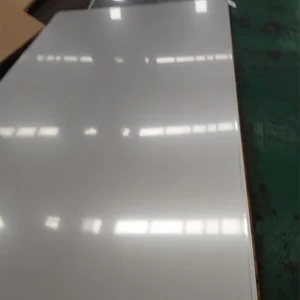
Wholesale Super Duplex Steel Plate 2507 UNS S32750 - High Corrosion Resistance | China Suppliers
View Specifications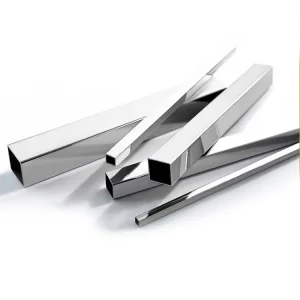
CE Certification Telescopic Stainless Steel Mop Handle Tube, Adjustable, 22mm OD, Anti-Fingerprint
View Specifications
Custom China SUS304 Stainless Steel Cold-Rolled Plate Supplier - Food Grade Factory Material
View Specifications
Custom 2507 Super Duplex Steel Plate - High Corrosion Resistance from China Suppliers & Factory
View Specifications
Wholesale China SUS304/304L Low Carbon Stainless Steel Pipe Suppliers | Factory-Direct Corrosion-Resistant
View Specifications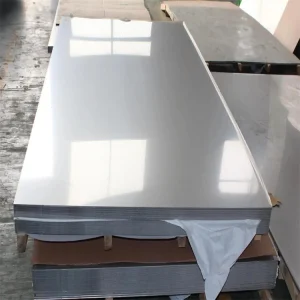
Custom Cold Rolled Stainless Steel Sheet Manufacturers & Factories
View Specifications
Custom China Suppliers Factory Stainless Steel Industrial Welded Pipe - Quality 201, 304, 316L
View Specifications