Featured Wholesale Hot & Cold Rolled Metal Solutions
High-performance stainless steel coils, plates, structural tubes, and custom decorative profiles engineered to meet strict international tolerances (ASTM, EN, JIS).
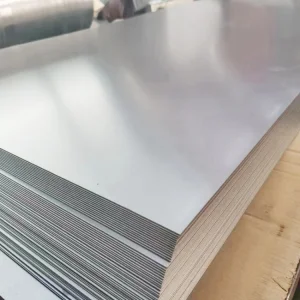
Wholesale High Cost-effective 201 Cold Rolled Stainless Steel Sheet
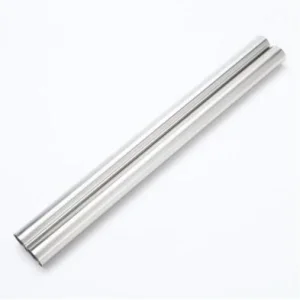
Wholesale 201 Stainless Steel Curtain Rod Tube, 25mm OD
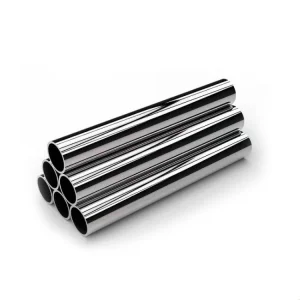
CE Certification Stainless Steel Decorative Pipe Supplier
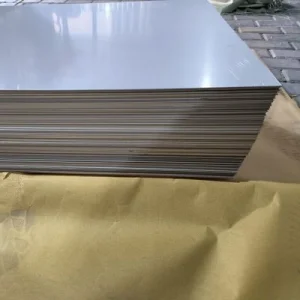
Custom China SUS304 Stainless Steel Cold-Rolled Plate
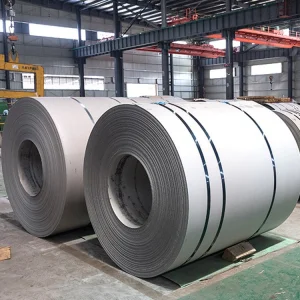
CE Certification Hot Rolled Stainless Steel Coils from Factory
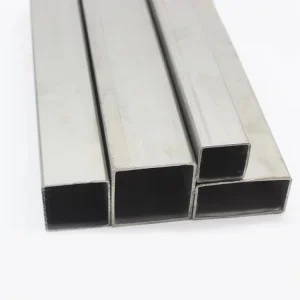
China High-Quality 201 Stainless Steel Pipe Solutions
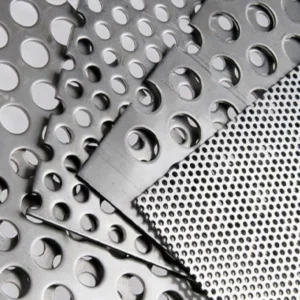
Custom China Perforated Stainless Steel Sheet Solutions
Custom Perforated Stainless Steel Sheet Metal Mesh
1. Advanced Metallurgy & Process Dynamics of Hot Rolled Metals
Hot rolling is the cornerstone of structural metal manufacturing. By processing steel slabs above their dynamic recrystallization temperature (typically between 1,100°C and 1,250°C), steel mills fundamentally alter the grain orientation, refine internal microstructures, and achieve superior ductility and toughness required for heavy industrial applications.
Thermomechanical Processing (TMCP)
Through controlled stage rolling and accelerated cooling, TMCP refines austenite grain size into ultra-fine ferrite-pearlite matrix structures. This metallurgical technique enhances yield strength without increasing expensive alloy concentrations, minimizing carbon equivalents (CEV) for flawless weldability.
Oxide Scale & Pickled Finish (P&O)
During high-temperature air exposure, hot rolled steel forms an iron oxide scale layer (Wüstite, Magnetite, Hematite). Pickled and Oiled (P&O) processing removes this abrasive oxide skin using hydrochloric acid baths, providing a smooth surface ready for laser cutting, precision stamping, and painting.
Cold Rolling vs. Hot Rolling Mechanics
While cold rolling works metal below recrystallization temp to achieve mirror finishes and tight gauge tolerances (±0.01mm), hot rolling prioritizes strain-rate plasticity and stress relief, making hot-rolled coil (HRC) and heavy plate the cost-efficient choice for heavy structural load-bearing components.
| Alloy Grade | Standard Spec | Yield Strength (MPa) | Tensile Strength (MPa) | PREN Value | Primary Industrial Application |
|---|---|---|---|---|---|
| AISI 304 / 304L | ASTM A240 / EN 10088-2 | ≥ 205 | ≥ 515 | 18.0 - 20.0 | Food & Architectural |
| AISI 316 / 316L | ASTM A240 / EN 10088-2 | ≥ 220 | ≥ 520 | 23.0 - 25.0 | Marine & Chemical Processing |
| Duplex 2205 (S31803) | ASTM A240 / EN 10088-2 | ≥ 450 | ≥ 655 | 32.0 - 35.0 | Oil & Gas / Desalination |
| Super Duplex 2507 | ASTM A240 / EN 10088-2 | ≥ 550 | ≥ 750 | ≥ 42.0 | Subsea Equipment / Harsh Chloride |
| AISI 310S (UNS S31008) | ASTM A240 / EN 10088-2 | ≥ 205 | ≥ 515 | - | High Temp Furnaces (Up to 1150°C) |
The pitting resistance of hot-rolled stainless alloys is mathematically modeled via PREN = %Cr + 3.3(%Mo + 0.5%W) + 16(%N). When sourcing wholesale hot rolled metals for off-shore installations or desulfurization scrubbers, maintaining a PREN > 40 (as in Super Duplex 2507) guarantees immunity to crevice corrosion under heavy biofouling conditions.
2. Global Commercial Trends & Industrial Demand Dynamics
The worldwide market for hot-rolled stainless and carbon metal products is undergoing a structural transformation driven by the energy transition, rapid urbanization across emerging markets, and strict decarbonization mandates in European and North American industrial hubs.
Renewable Energy Infrastructure Demand
Offshore wind turbine monopiles, solar mounting frameworks, and LNG regasification modules rely heavily on thick hot-rolled structural steel plates (ASTM A36, S355JR, SUS316L). The demand for high-yield, weldable heavy plates with guaranteed charpy impact toughness at -40°C has grown by over 14% annually.
Procurement teams must align with mill suppliers capable of executing continuous vacuum degassing and ladle refining to eliminate hydrogen-induced cracking (HIC) in heavy-gauge structural metal supply lines.
Raw Material Cost Indexing & Surcharges
Wholesale hot-rolled steel pricing is intricately linked to London Metal Exchange (LME) nickel spot rates, High-Carbon Ferrochrome indices, and Molybdenum oxide surcharges. Navigating this volatility requires procurement directors to lock in contracts with direct-from-factory suppliers backed by multi-billion-ton slab capacity.
Our strategic material sourcing agreements with mega-mills ensure stable base price formulas and transparent alloy surcharge calculations, mitigating spot-market exposure for global B2B buyers.
3. China Manufacturing Ecosystem & Supply Chain Synergies
China’s stainless steel production accounts for over 55% of global output. The localized industrial cluster centered around Wuxi and Jiangsu Province forms an unparalleled supply ecosystem, integrating raw nickel pig iron (NPI) refining, continuous billet casting, hot strip rolling, and down-stream value-added fabrication.
Integrated Mega-Mill Sourcing
Direct feedstock integration with Tier-1 steel producers—including Tsingshan Holding Group, TISCO (Taiyuan Iron & Steel), Baosteel, and POSCO—guarantees heat-traceable chemistry, low sulfur/phosphorus impurity levels, and uniform mechanical properties across thousands of metric tons.
In-House Secondary Processing
By operating 5+ automatic coil slitting lines, 6 high-speed polishing modules (8K Mirror, No.4 Satin, Hairline), 2 heavy-gage sheet embossing stations, and over 80 welded pipe mills under one roof, we eliminate intermediate transport overhead and reduce order lead times by up to 40%.
Seaworthy Logistics & Export Security
Exporting heavy hot-rolled metal coils and plates demands specialized packaging. Products are protected with VCI (Vapor Corrosion Inhibitor) paper, heavy-duty edge guards, wooden skids, and steel strap tie-downs designed to withstand trans-oceanic humidity and container motion.
4. Localized Industry Applications & Case Study Analyses
Hot-rolled metals fulfill distinct mechanical roles depending on localized stress vectors, corrosive media, and thermal cycles. Below are detailed engineering evaluations from key sector deployments.
Case Study A: Offshore Oil & Gas Manifolds (Duplex 2205)
Challenge: An energy contractor in North Sea offshore operations required heavy 16mm hot-rolled plate capable of resisting hydrogen sulfide (H2S) stress corrosion cracking while handling fluid pressure exceeding 400 bar.
Solution: We supplied solution-annealed hot-rolled Duplex 2205 (UNS S31803) heavy plate matching ASTM A240 standards, featuring a balanced 50/50 ferrite-austenite microstructure. Ultrasonic testing (UT Class S1) verified zero subsurface laminations.
Result: Reduced structural weight by 25% compared to conventional 316L due to double the yield strength (450 MPa min), achieving full compliance with NORSOK M-630 specifications.
Case Study B: High-Temperature Calcination Kilns (AISI 310S)
Challenge: A cement and metallurgical processing plant in the Middle East faced rapid thermal degradation of furnace structural liners operating under continuous 1,050°C heat cycles.
Solution: Delivery of wholesale hot-rolled 8mm AISI 310S (25% Cr, 20% Ni) stainless steel sheets. The high chromium and nickel content forms a stable, adherent oxide layer that resists cyclic oxidation and carburization.
Result: Extended maintenance interval from 8 months to over 36 months, saving over $420,000 in operational downtime and component replacement costs.
5. Technological Roadmap & Next-Generation Green Steel
The future of hot-rolled metal manufacturing centers on decarbonization, green hydrogen direct reduction, real-time closed-loop gauge monitoring, and micro-alloy optimization.
Green Hydrogen DRI & EAF Melting
Transitioning from blast-furnace coke reduction to Green Hydrogen Direct Reduced Iron (DRI) coupled with Electric Arc Furnaces (EAF) reduces Scope 1 and Scope 2 CO2 emissions by up to 85%, fulfilling strict European Carbon Border Adjustment Mechanism (CBAM) requirements.
AI-Driven AGC Rolling Precision
Modern hot strip mills integrate Hydraulic Automatic Gauge Control (HAGC) and X-ray thickness measurement sensors. Operating at mill speeds exceeding 20 meters per second, real-time AI algorithms adjust roll gaps every 2 milliseconds to hold gauge tolerances within ±0.02mm.
Niobium-Titanium Stabilized Alloys
Micro-alloying hot-rolled stainless steel with dual stabilization elements (Nb + Ti) ties up interstitial carbon and nitrogen, completely eliminating chromium carbide precipitation at grain boundaries during heavy seam welding (Zero Weld Decay).
6. Quality Verification, NDT Protocols & Global Compliance
Ensuring operational safety in pressure vessels, structural frameworks, and fluid conduits requires absolute material compliance. Every batch of hot-rolled metal undergoes rigorous non-destructive and destructive testing before dispatch.
EN 10204 3.1 / 3.2 MTC
Full chemical ladle analysis, mechanical yield/tensile tests, elongation, and hardness values certified by independent ISO/IEC 17025 accredited laboratories.
Ultrasonic Testing (UT)
Immersion and contact UT according to ASTM A578 / EN 10160 level S1/E1 to detect internal inclusions, micro-voids, and delaminations in thick hot-rolled plates.
PMI Spectrometry
100% Positive Material Identification (PMI) using X-ray Fluorescence (XRF) hand-held analyzers to verify alloy element percentages prior to bundling.
Regulatory Compliance
Certifications include CE Marking, Pressure Equipment Directive (PED 2014/68/EU), AD 2000-W0, ISO 9001:2015, and ISO 14001:2015 environmental standards.
Additional Industrial Metal Products & Factory Quotes
Browse our extended inventory of 316L sheets, low-carbon SUS304 pipes, and narrow precision slit coils for immediate global export loading.
Custom China 316L Stainless Steel Sheet Suppliers
CE Certification SUS304 Cold-Rolled Plate for Food Safety
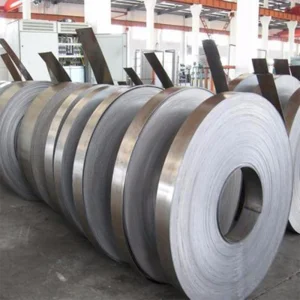
China 201 Stainless Steel Strip/Coil Manufacturers
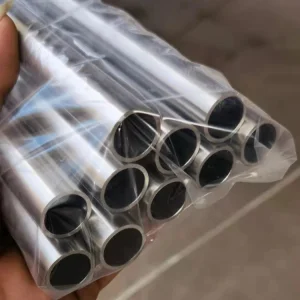
CE Certified SUS304/304L Low Carbon Stainless Pipe
SUS304/304L Pipe for Corrosion Resistance & Welding
China High-Quality Hot Rolled Stainless Steel Coils
China 316L Stainless Steel Sheet Direct Manufacturer
SUS304 Cold-Rolled Stainless Plate Food Grade Factory
Frequently Asked Procurement & Metallurgical Questions
Detailed answers compiled by our senior metallurgical engineers to assist global B2B procurement managers, structural engineers, and stockists.