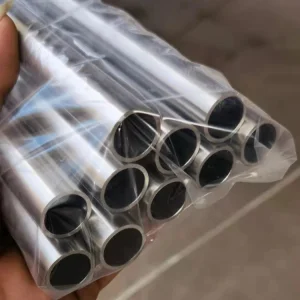
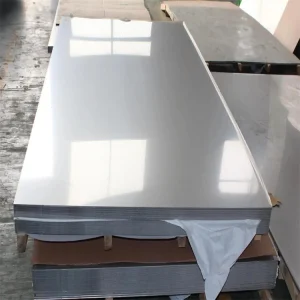
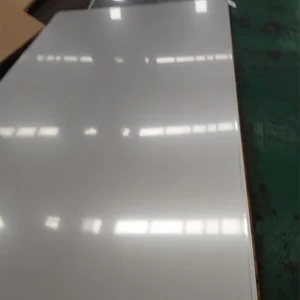
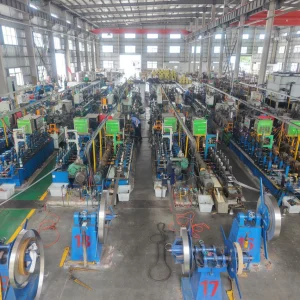
Featured Industrial Mill Inventory (Batch 01)
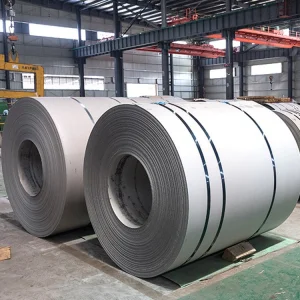
Precision-engineered austenitic coils, plates, structural decorative tubing, and certified industrial piping direct from tier-1 manufacturing units.
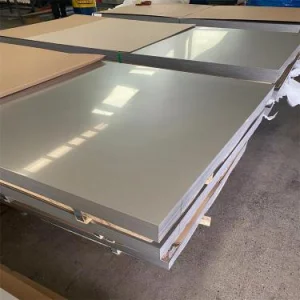
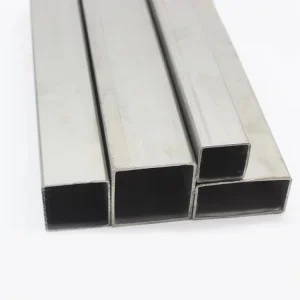
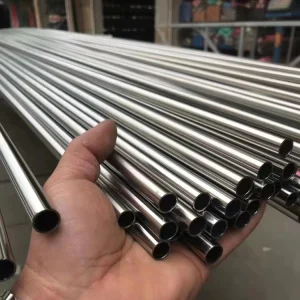
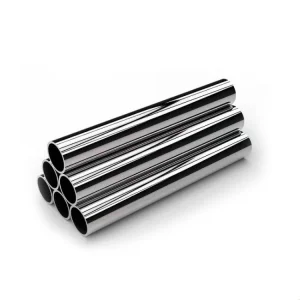
Metallurgical Fundamentals: Grade 304 vs. Grade 316 Deep Dive
Selecting the optimal stainless steel grade requires an understanding of chemical composition, phase stability, and resistance mechanisms against localized corrosion. While both AISI 304 and AISI 316 belong to the austenitic stainless steel family—characterized by their face-centered cubic (FCC) crystal structure—their microstructural additions result in distinctly different operational capabilities.
AISI 304 (UNS S30400 / EN 1.4301)
Widely regarded as the industry workhorse, 304 stainless steel contains approximately 18% Chromium and 8% Nickel. The Chromium content guarantees the formation of a self-healing Chromium Oxide (Cr₂O₃) passive film, providing general atmospheric and mild chemical corrosion resistance. The Nickel stabilization retains the ductile austenitic structure at room temperature.
- Nominal Composition: 18% Cr, 8% Ni, ≤ 0.07% C
- Yield Strength: ~205 MPa (0.2% offset)
- Pitting Resistance Equivalent Number (PREN): ~18.0 - 20.0
- Primary Focus: Cost-effective structural integrity, food-grade processing, general architectural installations.
AISI 316 (UNS S31600 / EN 1.4401)
Grade 316 incorporates 2% to 3% Molybdenum (Mo). The addition of Molybdenum alters the chemistry of the passive oxide film, significantly enhancing resistance to chloride ion pitting, crevice corrosion, and acidic media. Grade 316L (UNS S31603) features a restricted carbon ceiling (< 0.03%) to eliminate chromium carbide precipitation during welding.
- Nominal Composition: 16-18% Cr, 10-14% Ni, 2-3% Mo, ≤ 0.03% C (316L)
- Yield Strength: ~220 MPa (0.2% offset)
- PREN Index: ~23.0 - 25.0
- Primary Focus: Marine structures, pharmaceutical equipment, high-chloride processing streams, chemical reactors.
Engineering Rule of Thumb for Buyers: Calculate the Pitting Resistance Equivalent Number (PREN = %Cr + 3.3x%Mo + 16x%N). Environments exceeding 250 ppm chloride concentrations or operational temperatures above 60°C demand a PREN > 23, making 316/316L the technical baseline to avoid pitting failures.
| Property Parameter | 304 Stainless Steel | 316 Stainless Steel | 316L (Low Carbon Variant) |
|---|---|---|---|
| Chromium (Cr) Content | 17.5% - 19.5% | 16.0% - 18.0% | 16.0% - 18.0% |
| Nickel (Ni) Content | 8.0% - 10.5% | 10.0% - 14.0% | 10.0% - 14.0% |
| Molybdenum (Mo) Content | N/A | 2.0% - 3.0% | 2.0% - 3.0% |
| Carbon (C) Max Limit | 0.07% | 0.08% | 0.03% |
| Max Operating Temp (Oxidation) | 870°C | 870°C | 870°C |
| Intergranular Corrosion Risk | Moderate post-welding | Moderate post-welding | Extremely Low (Sensitization Immune) |
Global Market Trends & Strategic Enterprise Sourcing
The global stainless steel supply chain is shaped by raw material pricing, international decarbonization mandates, and geopolitical trade adjustments. Sourcing executives and engineering managers must evaluate total cost of ownership (TCO) beyond initial FOB mill quotes.
Nickel & Mo Alloy Surcharges
Fluctuations in LME Nickel contracts and Molybdenum oxide spot markets directly dictate the alloy surcharges applied to 304 and 316 quotes. Modern enterprise buyers hedge raw material volatility by securing fixed-surcharge contracts with integrated rolling mills.
Decarbonization & CBAM
The European Union's Carbon Border Adjustment Mechanism (CBAM) imposes carbon footprint reporting on imported steel. Advanced manufacturers utilize Electric Arc Furnaces (EAF) powered by renewable grids and higher scrap ratios to lower Scope 1 & 2 carbon intensities.
Supply Chain Diversification
Global OEMs are moving away from single-source models to dual-sourcing hubs across Asia-Pacific. Sourcing directly from verified Chinese mill facilities in Jiangsu and Zhejiang offers raw material access, comprehensive slitting/polishing capabilities, and scalable output.
Macro Industry-Specific Application Engineering
Material failure in critical infrastructure incurs high operational downtime and safety hazards. Matching the structural and chemical tolerances of 304 and 316 alloys to operating conditions ensures mechanical performance and regulatory compliance.
Chemical & Petrochemical
Processing streams carrying organic acids, sulfur derivatives, and low-concentration chlorides require 316L seamless or welded tubes. Low carbon prevents sensitization at heat-affected zones (HAZ), maintaining grain boundary stability in heat exchangers and pressure vessels.
Food, Beverage & Pharma
Sanitary applications require ultra-smooth surface topologies. Grade 304 cold-rolled sheets with 2B or BA finishes (electropolished to Ra < 0.4 µm) eliminate bacterial traps, withstand CIP (Clean-In-Place) caustic washes, and prevent flavor contamination.
Marine & Offshore Engineering
Coastal architectural facades, offshore platform piping, and desalination intake manifolds demand Molybdenum-bearing 316 or Super Duplex alloys. Standard 304 in marine splash zones suffers rapid tea-staining and crevice pitting due to salt accumulation.
Architecture & Structural Frames
Commercial curtain walls, structural hollow sections (HSS), and public transportation hubs leverage 304 No.4 satin/hairline brushed sheets. Its tensile toughness allows structural weight reduction compared to carbon steel alternatives.
Water Treatment & Utilities
Municipal water transport networks increasingly substitute ductile iron with 304/316 welded stainless piping. Zero leaching, superior burst pressures, and a 100-year design life minimize municipal maintenance capital expenditure.
Automotive Exhaust & Energy
High-temperature exhaust manifolds and fuel cell balance-of-plant systems deploy modified 304 and heat-resistant 310S/316 grades, resisting thermal cyclic oxidation up to 870°C while maintaining structural rigidity.
Compliance, Quality Assurance & Global Logistics Support
Quality assurance in tier-1 stainless steel manufacturing extends beyond dimensional checksheets. Rigorous non-destructive testing (NDT), chemical heat analysis, and international standardization validate material integrity before container loading.
Material Test Certificates (EN 10204 3.1)
Every shipment is backed by Mill Test Certificates (MTC) detailing spectroscopic chemical composition, mechanical tensile strength, yield points, elongation values, and Hardness (HRB/HV). Supplementary testing includes Intergranular Corrosion testing according to ASTM A262 Practice E.
- ASTM Standards: ASTM A240 (Plate/Sheet), ASTM A312 (Seamless/Welded Pipe), ASTM A269 (Tubing), ASTM A480 (General Requirements).
- EN / European Norms: EN 10088-2, EN 10217-7, EN 10216-5.
- Japanese Standards: JIS G4304, JIS G4305.
Precision Processing & Custom Packaging
Factory processing capabilities streamline end-user integration. Services include coil slitting down to 10mm strip widths, cut-to-length sheet leveling, mirror polishing (8K), decorative embossing, and custom tube laser cutting.
- Non-Destructive Testing: 100% Eddy Current testing for welded tubes, Hydrostatic testing up to 20MPa, Ultrasonic testing for thick plates.
- Export Packaging: Seaworthy wooden cases, rust-inhibiting VCI plastic wrapping, edge protectors, steel strapping designed for intermodal container shipping.
Technology Roadmap: Next-Gen Stainless Steel Manufacturing
The stainless steel industry is undergoing a technological transition driven by metallurgy digital twins, automated continuous annealing lines, and green hydrogen refining.
1. Hydrogen-Based Reduction
Replacing fossil pulverized coal with green hydrogen in the reduction of nickel-iron ore ores significantly cuts direct carbon emissions during initial smelting, paving the way for zero-carbon 304/316 variants.
2. AI-Assisted Surface Inspection
High-resolution computer vision systems positioned on cold-rolling lines scan moving coil strips at 300 m/min, detecting micro-scale surface pinholes, roll marks, or inclusions with sub-millimeter precision.
3. Ultra-Thin Precision Slitting
Advanced gauge control (AGC) hydraulic systems yield cold-rolled 304/316 foils down to 0.05mm thickness with micro-tolerances for hydrogen fuel cell bipolar plates and electronic shielding components.
Technical & Procurement FAQ (Frequently Asked Questions)
Clear answers to engineering, metallurgical, and commercial questions regarding 304 and 316 stainless steel wholesale procurement.
Full Processing Catalog & Extended Grade Lineup (Batch 02)
Explore specialized low-carbon SUS304/304L piping, precision narrow strips, cold-rolled sheets, and high-strength Super Duplex 2507 plates.