
Wholesale Stainless Steel Pipes & Raw Material Portfolio
Explore our primary manufacturing outputs available for immediate volume dispatch, including welded industrial pipe, precision decorative tubing, and food-grade cold-rolled sheet stock.

CE Certification Stainless Steel Decorative Pipe Supplier, Quotes
Request Factory Quote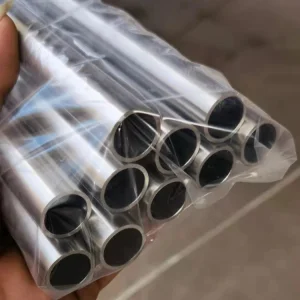
Wholesale SUS304/304L lower carbon stainless steel pipe Factory, Quotes
Request Factory Quote
China SUS304 Cold-Rolled Stainless Steel Plate Suppliers | Food Grade
Request Factory Quote
Wholesale China Stainless Steel Decorative Pipe Suppliers - Factory Direct
Request Factory Quote
Custom China SUS304 Stainless Steel Cold-Rolled Plate Suppliers
Request Factory Quote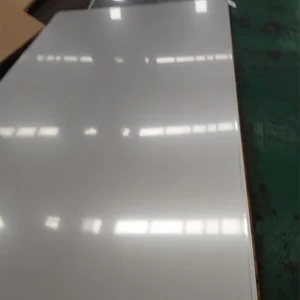
Wholesale Super Duplex Steel Plate 2507 UNS S32750 High Corrosion Resistance
Request Factory Quote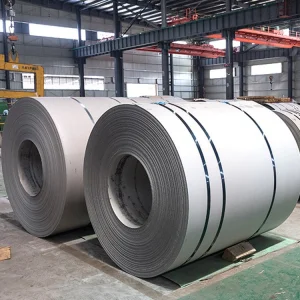
CE Certification Hot Rolled Stainless Steel Coils for Heavy Industrial Use
Request Factory Quote
High-Quality Stainless Steel Industrial Welded Pipes Reliable Factory Quotes
Request Factory QuoteMetallurgical Fundamentals & Quality Engineering of 304 Stainless Steel Pipe
Grade 304 (UNS S30400 / EN 1.4301 / SUS304) is the world’s most versatile austenitic stainless steel. Engineered with nominal composition of 18% chromium and 8% nickel, it forms a self-healing chromium oxide ($\text{Cr}_2\text{O}_3$) passive layer that delivers exceptional oxidation resistance and structural stability across extreme temperature gradients.
Chemical & Mechanical Integrity Benchmark
Our mill controls raw material chemistry from top-tier primary smelters (such as Tsingshan, TISCO, Baosteel), ensuring strict compliance with ASTM A312, ASTM A249, ASTM A554, and EN 10217-7. Lower carbon content (SUS304L variant) minimizes carbide precipitation during welding, virtually eliminating intergranular corrosion risks in heat-affected zones (HAZ).
- Pitting Resistance Equivalent Number (PREN): Rated $\ge 18.5 - 20.0$, ideal for fresh water and low-chloride industrial atmospheres.
- Yield Strength ($\sigma_{0.2}$): $\ge 205 \text{ MPa}$ ($30 \text{ ksi}$).
- Tensile Strength ($\sigma_b$): $\ge 515 \text{ MPa}$ ($75 \text{ ksi}$).
- Elongation ($A_5$): $\ge 35\% - 40\%$, guaranteeing superior bendability, flare testing, and hydro-forming capability.
Advanced Manufacturing Technologies
Operating over 80 automated high-frequency Electric Resistance Welding (ERW), TIG (Tungsten Inert Gas), and Laser-welding production lines, our Wuxi facility guarantees 100% seam continuity, zero porosity, and absolute wall uniformity.
- Online Weld Seam Annealing: High-frequency heat treatment at $1050^\circ\text{C}-1100^\circ\text{C}$ followed by rapid water quenching to restore full austenitic phase purity.
- Eddy Current & Hydrostatic Testing: Every linear meter of pipe undergoes non-destructive Eddy Current Testing (ECT) per ASTM E426 and hydrostatic proofing up to $20 \text{ MPa}$.
- Surface Precision Finishing: Automated mechanical polishing lines achieving surface roughness from $R_a \le 0.8\,\mu\text{m}$ (industrial) down to $R_a \le 0.2\,\mu\text{m}$ (sanitary BA/mirror).
| Standard Designation | Chromium (% Cr) | Nickel (% Ni) | Carbon (% C) | Yield Strength (MPa) | Tensile Strength (MPa) | Primary Application Scope |
|---|---|---|---|---|---|---|
| ASTM A312 / UNS S30400 | 18.00 - 20.00 | 8.00 - 10.50 | ≤ 0.08 | ≥ 205 | ≥ 515 | Industrial Fluid Lines, Petrochemical, Water Treatment |
| ASTM A312 / UNS S30403 (304L) | 18.00 - 20.00 | 8.00 - 12.00 | ≤ 0.03 | ≥ 170 | ≥ 485 | Heavy-Wall Welded Structures, Corrosive Chemical Process |
| ASTM A249 / ASME SA249 | 18.00 - 20.00 | 8.00 - 10.50 | ≤ 0.08 | ≥ 205 | ≥ 515 | Boilers, Superheaters, Condensers & Heat Exchangers |
| ASTM A554 (Structural) | 18.00 - 20.00 | 8.00 - 10.50 | ≤ 0.08 | ≥ 205 | ≥ 515 | Architectural Handrails, Decorative Tube, Automotive Exhaust |
| EN 10217-7 / 1.4301 | 17.50 - 19.50 | 8.00 - 10.50 | ≤ 0.07 | ≥ 210 | ≥ 520 | European Pressure Equipment (CE PED Compliant) |
Global Industry Trends Transforming 304 Stainless Steel Pipe Demand
The global market for 304 stainless steel piping is experiencing a structural shift driven by decarbonization, stringent hygienic legislation, urban building efficiency, and green manufacturing mandates.
1. Decarbonization & Green Energy Transition
With global net-zero targets pushing energy providers toward clean hydrogen transport, solar thermal loops, and carbon capture infrastructure, 304 and 304L stainless steel pipes are replacing conventional carbon steel. Their immunity to hydrogen embrittlement at ambient temperatures and low maintenance overhead makes them indispensable for green gas distribution network retrofits.
2. Strict Hygienic Regulations in Food & Pharma
Regulatory frameworks such as the US FDA, European EHEDG, and national sanitary codes require complete bio-film prevention in fluid delivery lines. 304 stainless steel, when processed with internal electropolishing or bright annealing, provides an ultra-smooth contact surface that halts bacterial adhesion and withstands aggressive Clean-in-Place (CIP) chemical washdowns.
3. Carbon Border Adjustment & ESG Compliance
European and North American B2B buyers now scrutinize the scope 1, 2, and 3 emissions of imported metals. Modern mills utilizing Electric Arc Furnaces (EAF) powered by renewable energy grids achieve up to 70% lower embedded carbon footprints compared to blast-furnace routes, giving procurement officers a clear path to scope 3 reduction goals.
Solving Key Pain Points for International Supply Chain Executives
B2B procurement officers, stockists, and EPC contractors face recurring friction in international metal sourcing: non-conforming chemistry, delayed delivery, edge defects, and incomplete mill documentation. Here is how our factory eliminates sourcing risk.
Total Cost of Ownership (TCO) Optimization
Ordering direct from a primary Wuxi manufacturer eliminates intermediate trading markups, cutting unit costs by 12% to 18%. Combined with our internal slitting, cold drawing, and automated polishing, buyers avoid sub-contracting logistics costs and extra handling delays.
Zero-Defect Traceability & MTC EN 10204 3.1
Every shipment is issued with a comprehensive Material Test Certificate (MTC) according to EN 10204 3.1, detailing heat numbers, spectral chemical analysis, tensile testing, flattening/flaring results, and intergranular corrosion test compliance (ASTM A262 Practice E).
Flexible Lead Times & Buffer Stocking
We maintain a permanent raw coil reserve of over 20,000 metric tons across standard 304, 304L, 316L, and 201 grades. Standard pipe sizes (OD $1/2''$ to $12''$) ship within 7–10 days; custom fabrication orders ship within 15–20 days.
Seaworthy Protective Export Packaging
Pipes are protected with plastic end caps, wrapped in anti-watercraft woven plastic jackets, and bundled in steel-strapped wooden crates or heavy-duty hexagonal frames to guarantee zero scratching, denting, or seawater oxidation during long ocean transits.
Application-Specific Solutions for Global Industrial Sectors
Different operational environments demand precise metallurgical adjustments, wall thickness tolerances, and surface treatments. Discover our sector-tailored engineering packages.
Solution A: Food, Beverage & Dairy Sanitary Lines
Specification: ASTM A270 / DIN 11850 / ISO 2037 | Grade 304 / 304L
In dairy, brewery, and soft drink processing, fluid lines must prevent bacterial entrapment. We supply bright-annealed (BA) seamless and welded 304 pipes subjected to internal mechanical polishing up to $R_a < 0.4\,\mu\text{m}$.
- Full orbital weldability without excessive root heat discoloration.
- 100% cap testing and air-under-water pressure testing.
- Protective plastic sleeves for individual pipe protection during install.
Solution B: Petrochemical & Process Fluid Transfer
Specification: ASTM A312 / ASME SA312 | Schedule 10S, 40S, 80S
Designed for moderate acidic, alkaline, and solvent media transport under elevated pressure. Pipelines undergo chemical passivation in nitric-hydrofluoric bath to maximize chromium oxide layer depth.
- Radiographic testing (RT) of longitudinal weld seams for class-1 joints.
- Beveled end preparation (ANSI B16.25) for immediate field welding.
- High resistance to atmospheric corrosion in coastal refiner complexes.
Solution C: High-End Architectural Frameworks & Handrails
Specification: ASTM A554 | Round, Square, Rectangular Profiles
For modern commercial skyscrapers, airports, and luxury public infrastructure requiring flawless aesthetic appeal combined with structural wind-load resistance.
- Surfaces available in Satin 240 grit, Hairline (HL), and 8K Mirror polish.
- Strict dimensional tolerance: Outer diameter controlled within $\pm 0.10 \text{ mm}$.
- UV-resistant PE protective tape prevents scratching during installation.
Solution D: Heat Exchangers, Boilers & Condensers
Specification: ASTM A249 / ASME SA249 | U-Bent & Straight Bundles
Engineered for efficient thermal transfer in power plants, HVAC chillers, and waste heat recovery boilers operating up to $600^\circ\text{C}$.
- Bright annealed condition with zero surface scale for maximum heat transfer.
- 100% pneumatic underwater bubble testing and reverse-bend tests.
- Stress relief annealing on all custom U-bent tube radius zones.
Localization Framework, Certifications & Quality Assurance
We bridge international supply chain gaps through comprehensive regional support, localized documentation, multi-currency trade contracts, and multi-tier quality control.
International Quality Certifications
Our mill holds accredited management system certifications including ISO 9001:2015 (Quality Management), ISO 14001:2015 (Environmental System), and ISO 45001:2018 (Occupational Health). Products comply fully with the European Pressure Equipment Directive (PED 2014/68/EU) and AD 2000-W0 standards for pressure vessels.
Third-Party Inspection (TPI) Welcome
We routinely collaborate with independent global inspection agencies such as SGS, Bureau Veritas (BV), TÜV Rheinland, Intertek, and Lloyd’s Register. Clients can request on-site chemical spectrographic validation, PMI (Positive Material Identification), ultrasonic testing, and visual dimensional audits prior to port departure.
Localized Logistics & IncoTerms Flexibility
We support all international commercial terms including FOB Shanghai/Ningbo, CIF, CFR, DDP, and DAP. Our logistics division manages customs clearance documentation, Certificates of Origin (Form E, Form R, CO), and direct sea/rail freight routing to Europe, the Americas, Middle East, and Southeast Asia.
Technical Roadmap & Future Outlook for Stainless Steel Piping
Our engineering team continuously advances manufacturing capabilities to meet next-generation industrial demands. Explore our ongoing R&D initiatives.
1. TIG-Laser Hybrid Welding Integration
Combining the deep penetration of fiber lasers with the wide gap-bridging capability of TIG welding allow us to double production line speeds while decreasing weld heat input by 40%. This results in significantly smaller Heat-Affected Zones (HAZ), superior microstructural toughness, and virtually zero residual weld stress.
2. AI-Driven Real-Time Surface Defect Detection
Deploying high-resolution machine vision cameras with deep-learning vision models across all continuous tube mills. The system inspects 100% of the pipe surface at full line speed, detecting micro-scratches, seam misalignments, or pinhole defects down to 50 micrometers and automatically tagging non-conforming sections for cut-out.
3. Ultra-Low Carbon Nitrogen-Enhanced Alloys (SUS304LN)
To support high-pressure cryogenic liquid gas (LNG, liquid nitrogen) handling, our metallurgy lab is expanding production of nitrogen-alloyed austenitic grades. Adding $0.10\% - 0.16\%$ nitrogen boosts room-temperature yield strength by 30% without sacrificing ductileness or toughness at $-196^\circ\text{C}$.
4. Closed-Loop Chemical Passivation & Zero Water Discharge
Under our eco-factory modernization commitment, our pickling and passivation plants feature closed-loop acid recovery systems and RO water purification units that recycle 98% of process water while eliminating heavy metal effluent emissions.
Frequently Asked Questions by Global Engineering & Procurement Teams
In-depth answers addressing material selection, standards, testing protocols, wall tolerances, and ordering procedures for wholesale 304 stainless steel pipe procurement.
What is the key difference between 304, 304L, and 304H stainless steel pipes?
The primary differentiation lies in carbon concentration, which dictates weldability and high-temperature performance:
- Standard 304: Carbon content $\le 0.08\%$. Suitable for general corrosion resistance and structural piping up to $800^\circ\text{C}$.
- 304L (Low Carbon): Carbon content $\le 0.03\%$. Prevents chromium carbide precipitation during welding, making it the preferred choice for heavy-wall welded structures requiring maximum intergranular corrosion resistance in the as-welded state.
- 304H (High Carbon): Carbon content controlled between $0.04\% - 0.10\%$. Provides elevated creep strength and tensile endurance at operating temperatures exceeding $525^\circ\text{C}$, ideal for power plant boilers and superheaters.
Should I specify Seamless or Welded 304 Stainless Steel Pipe for my project?
Selection depends on pressure requirements, code compliance, and budget considerations:
- Welded Pipe (ASTM A312 / A554): Manufactured from cold-rolled strip, offering highly uniform wall thickness, precise concentricity, and smooth internal surface finish at 20% to 35% lower cost. With modern online solution annealing and non-destructive eddy current testing, welded pipe joint efficiency ($E = 1.0$) matches seamless performance for most pressure applications up to 100 bar.
- Seamless Pipe (ASTM A312): Extruded from solid billets without longitudinal welds. Recommended for extreme pressure environments (over 150 bar), lethal fluid transport, nuclear service, or critical subsea oil and gas applications where zero risk of weld joint defect is mandated by design code.
What wall thickness tolerances and dimensional standards apply to your 304 pipes?
Industrial piping adheres strictly to ANSI/ASME B36.19M and ASTM A999 standards. Outer diameter tolerances for nominal sizes $1/8''$ through $8''$ are held within $\pm 0.79 \text{ mm}$. Wall thickness tolerance is maintained within $\pm 10\%$ to $\pm 12.5\%$ for standard schedules (Sch 5S, 10S, 40S, 80S). For high-precision ornamental or sanitary tubing (ASTM A270 / A554), outer diameter can be specified down to $\pm 0.05 \text{ mm}$ upon request.
How does 304 stainless steel perform in chloride-containing water or marine environments?
Grade 304 demonstrates excellent resistance in potable water and low-chloride environments (up to ~200 ppm chlorides at room temperature). However, in seawater or high-salinity marine splash zones where chloride concentration exceeds 1,000 ppm, 304 can experience localized pitting and crevice corrosion. For direct seawater contact, we recommend upgrading to Grade 316L (2-3% Molybdenum added) or Duplex 2205 / Super Duplex 2507.
What surface finishes are available for factory wholesale orders?
We operate 6 automatic polishing lines capable of delivering diverse surface finishes tailored to application requirements:
- No.1 (Hot Rolled, Pickled): Industrial matte finish for pressure vessels and structural frameworks.
- 2B (Cold Rolled, Mill Finish): Smooth, slightly reflective finish typical for re-drawing feed stock.
- BA (Bright Annealed): Highly reflective, scale-free surface annealed in a protective hydrogen atmosphere.
- Grit 180 / 240 / 320 (Brushed / Satin): Uniform directional grain texture popular for architectural handrails and appliances.
- 8K Mirror Polish: Super-reflective distortion-free mirror finish for decorative interior and elevator interiors.
What quality control documents are delivered with each wholesale container shipment?
Every shipment is accompanied by a full export documentation bundle, including:
- EN 10204 3.1 Inspection Certificate: Certified chemical ladle heat analysis, mechanical tensile/yield test results, hardness values, and hydro-test pressure verification.
- Non-Destructive Examination Reports: 100% Eddy Current or Radiographic test confirmation records.
- Certificate of Origin (CO): Chamber of Commerce issued or regional preferential tariff certificates (Form E, R, EUR.1).
- Commercial Packing List & Bill of Lading: Detailing bundle numbers, net/gross weights, pipe piece counts, and heat number cross-references.
Explore Additional Stainless Steel Grades & Product Lines
In addition to standard 304 pipes, our factory manufactures specialized austenitic, ferritic, and duplex steel forms for full industrial integration.

CE Certification Premium 201 Stainless Steel Pipes Top Suppliers
Request Factory Quote
China High-Quality Hot Rolled Stainless Steel Coils Factory Solutions
Request Factory Quote
Wholesale Factory for Perforated Stainless Steel Sheet Mesh Solutions
Request Factory Quote
Custom China SUS304 Stainless Steel Cold-Rolled Plate Supplier
Request Factory Quote
CE Certification SUS304/304L Low Carbon Stainless Steel Pipe Suppliers
Request Factory Quote
China Stainless Steel Industrial Welded Pipe 201, 304, 316L Wide Specs
Request Factory Quote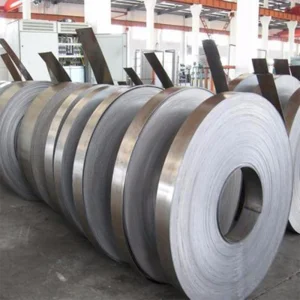
China High Quality 201 Stainless Steel Strip/Coil Excellent Ductility
Request Factory Quote
Custom China SUS304 Stainless Steel Cold-Rolled Plate Suppliers Pricelist
Request Factory QuoteInitiate Your Direct Factory Procurement Inquiry Today
Contact our metallurgical engineering sales team for real-time mill pricing, custom specification analysis, and seamless container allocation.