
Standard & Custom Stainless Steel Pipe Solutions
Explore initial mill-direct inventory encompassing welded fluid tubes, precision cold-rolled strips, and structural architectural piping manufactured to international quality benchmarks.

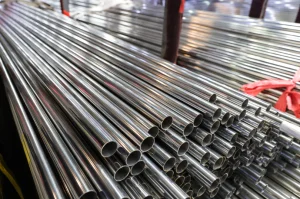




Navigating Custom Stainless Steel Pipe Standards: A Factory-Direct Perspective
In modern industrial engineering, specifying the correct stainless steel pipe standard is the definitive threshold between long-term operational success and catastrophic material failure.
Modern process industries—spanning petrochemical refining, offshore cryogenic LNG transport, green hydrogen synthesis, and pharmaceutical cleanroom fluid transfer—require precise metallurgical formulations and strict mechanical tolerances. As a premier Chinese manufacturer specializing in custom stainless steel piping, Jiangsu Renzhi Holding Group Co., Ltd. operates over 80 automated welded pipe lines and multi-stage cold-drawing mills. Our manufacturing infrastructure converts premium raw coil stock from world-class smelters (such as Tsingshan, TISCO, POSCO, and Baosteel) into fully compliant, mill-certified industrial piping.
Understanding Custom Stainless Steel Pipe Standards requires an in-depth analysis of chemical composition ranges, heat treatment regimes, grain boundary stability, non-destructive testing (NDT) mandates, and dimensional tolerance matrices. Below, our senior engineering director breaks down the core global standards governing austenitic, ferritic, duplex, and super-duplex stainless steel piping systems.
ASTM / ASME Standards
Governing North American industrial piping. Key specs include ASTM A312 (seamless and welded austenitic pipes), ASTM A249 (welded boilers & heat exchangers), and ASTM A269 (general service tubing).
EN Harmonized Norms
Dominant across European infrastructure projects. Key specifications include EN 10217-7 (welded steel tubes for pressure purposes) and EN 10216-5 (seamless stainless tubes with specified elevated temperature properties).
JIS Standard Protocols
Standardized for Asia-Pacific precision fabrication. Standards include JIS G3459 (stainless steel pipes for piping) and JIS G3463 (boiler and heat exchanger stainless steel tubes).
Global Stainless Steel Piping Standards Comparison Matrix
A side-by-side technical breakdown of equivalent standard classifications, testing mandates, and application envelopes across major international regulatory frameworks.
| Standard Specification | Material Scope / Alloy Focus | Manufacturing Route | Permissible Wall Tolerance | Mandatory Quality Control Tests | Primary Industrial Sector |
|---|---|---|---|---|---|
| ASTM A312 / A312M | TP304/304L, TP316/316L, TP321, TP347, S31803, S32750 | Seamless, Automatic Welded (Single/Double Pass) | t ± 12.5% | Hydrostatic / Eddy Current, Intergranular Corrosion (ASTM A262), Radiographic Inspection | Heavy Petrochemical, Refineries, High-Pressure Fluid Lines |
| EN 10217-7 (TC1 / TC2) | 1.4301, 1.4307, 1.4404, 1.4435, 1.4462 (Duplex) | Laser, TIG, Plasma Welded (Solution Annealed) | ISO 1127 D3/T3 - D4/T4 | 100% Weld Line Eddy Current, Tensile, Transverse Bend Test, Flattening Test | European Pressure Vessels, PED Equipment, Food & Dairy |
| JIS G3459 | SUS304, SUS304L, SUS316, SUS316L, SUS310S, SUS321 | Cold Finished Seamless, Automatic Electric Arc Welded | JIS Class 1 / Class 2 | Pneumatic Air-Under-Water, Hydrostatic, Ultrasonic Flaw Detection (UT) | Japanese & East Asian Infrastructure, Marine Piping Systems |
| ASTM A249 / A249M | TP304, TP304L, TP316L, UNS S31254 (Super Austenitic) | Welded & Cold Worked (Bead Conditioned) | Wall ± 10% / OD ± 0.13mm | Flange Test, Reverse Flattening, Hardness Test (Rockwell B), Air Pressure Test | Shell & Tube Heat Exchangers, Condensers, Feedwater Heaters |
| ASTM A269 / A269M | TP304, TP316, TP317, UNS S32750 (Super Duplex) | Seamless & Welded Bright Annealed (BA) | Precision OD & Wall | 100% Hydrostatic / NDT, Microstructural Grain Size Evaluation, Surface Roughness (Ra) | Biopharmaceutical Clean lines, Instrumentation Tubing, Semiconductor Cleanrooms |
Macro-Industry Global Status & Targeted Piping Solutions
Industrial demand for custom stainless steel piping is accelerating driven by decarbonization mandates, extreme ocean exploration, and next-generation green energy networks.
1. Green Hydrogen & Clean Fuel Distribution Infrastructures
As the global energy paradigm pivots toward zero-emission green hydrogen, standard carbon steel and lower-tier alloys suffer from severe gaseous hydrogen embrittlement (HE) under high-pressure cyclic loading. Stainless steel pipes produced to strict high-nickel, low-carbon specifications (such as optimized 316L and specialized austenitic grades with nickel content > 12%) provide an impervious crystal structure (FCC austenitic matrix) that impedes hydrogen atom diffusion. Custom mill processing ensures polished internal surfaces (Ra < 0.4 μm) and continuous bright annealing, removing surface micro-defects where gaseous hydrogen could nucleate sub-surface cracking.
2. LNG Cryogenic Transport & Marine Offshore Platforms
Liquefied Natural Gas (LNG) processing demands piping systems capable of retaining extreme notch toughness at cryogenic temperatures down to $-196^\circ\text{C}$. Standard structural materials undergo a ductile-to-brittle transition, rendering them prone to sudden brittle fracture. Custom austenitic grades (ASTM A312 TP304L/316L) and Duplex stainless steels (UNS S31803 / S32750 Super Duplex) retain superior Charpy V-notch impact absorption values under sub-zero regimes. Furthermore, offshore FPSO units and coastal LNG regasification terminals require Pitting Resistance Equivalent Number (PREN) metrics exceeding 40:
PREN = %Cr + 3.3(%Mo + 0.5 × %W) + 16 × %N
For Super Duplex 2507 (UNS S32750): PREN ≥ 42, offering immunity to marine chloride stress corrosion cracking (SCC).
3. Desalination, Hypochlorite & Chemical Process Facilities
Reverse Osmosis (RO) sea water desalination plants in the Middle East and coastal Australia operate under aggressive chloride concentrations reaching 35,000 ppm at elevated operating pressures (up to 80 bar). Standard 304 stainless steel succumbs to localized pitting and crevice corrosion within months. Jiangsu Renzhi supplies custom-engineered 2205 Duplex and 2507 Super Duplex welded pipes featuring optimized ferrite-austenite phase balance (45% - 55% duplex ratio achieved via argon-shielded induction heat treatment), reducing lifecycle maintenance overhead by over 60% compared to legacy metallic materials.
Factory Fabrication & Quality Control Methodology
How Jiangsu Renzhi engineered a seamless vertical production chain from raw coil slitting to NDT weld inspection and international export packing.
Raw Feedstock PMI & Slitting
Traceable master coils from TISCO/Tsingshan undergo X-ray Fluorescence (XRF) Positive Material Identification before high-precision automated longitudinal slitting.
Continuous Roll Forming & Welding
Precision multi-pass roll forming combined with automatic TIG, Plasma Arc, or High-Frequency Induction welding under 99.999% pure Argon gas shielding.
Weld Bead Conditioning & Sizing
Internal and external weld bead rolling and mechanical scarfe removal to guarantee absolute internal smoothness and uniform wall concentricity.
Inline Solution Annealing
Continuous protective atmosphere bright annealing at $1040^\circ\text{C} - 1120^\circ\text{C}$ followed by rapid water quenching to dissolve chromium carbides and eliminate residual stress.
100% NDT Flaw Detection
Comprehensive Non-Destructive Testing including inline Eddy Current testing (ET), Hydrostatic pressure testing up to 250 bar, and Ultrasonic testing (UT).
Surface Polishing & Packaging
Automated exterior polishing (180 Grit, 320 Grit, 8K Mirror, Hairline) followed by end capping, waterproof plastic wrapping, and seaworthy wooden box packing.
Global Compliance Assurance & Regional Localization
Meeting regional structural codes, pressure vessel directives, and environmental guidelines across North America, the European Union, the Middle East, and East Asia.
Securing high-tier project approvals requires absolute alignment with localized statutory requirements. Jiangsu Renzhi maintains rigorous quality management systems audited to international standard benchmarks:
- European Union Pressure Equipment Directive (PED 2014/68/EU) & AD 2000-W0: Certification for stainless steel pressure piping installed across EU process plants, verified under EN 10204 3.1 & 3.2 Inspection Certificates with full chemical heat traceability.
- ASME Boiler & Pressure Vessel Code (BPVC Section II/VIII): Full compliance for material sourcing, non-destructive testing, and allowable stress values governing pressure vessel fabrication in North America.
- NACE MR0175 / ISO 15156 Sour Service Compliance: Strict hardness limits (HRC ≤ 22 for austenitic steels) and solution heat treatments to prevent hydrogen-induced stress cracking in sour gas petroleum environments.
- NORSOK M-650 / M-630 Qualification: Special verification for high-grade 2205 Duplex and 2507 Super Duplex piping installed in Norwegian and North Sea offshore drilling operations.
- Sanitary & Food Grade Mandates (3-A, FDA, EHEDG): Ultra-smooth inner diameter polishing (Ra < 0.38 μm) with electropolishing options for ultra-pure water (UPW) and pharmaceutical processing lines.
Technology Roadmap & Next-Gen Manufacturing Outlook
Pioneering intelligent production, zero-carbon green steel integration, and AI-driven quality assurance for the next decade of industrial piping.
AI Acoustic Emission Weld Monitoring
Integrating real-time deep learning neural networks to analyze weld pool acoustic signatures and optical spectroscopy during high-speed laser welding, eliminating micro-void formation instantaneously.
Zero-Carbon Hydrogen-Reduced Feedstock
Partnering with green steel smelters utilizing Direct Reduced Iron (DRI) powered by 100% renewable green hydrogen, reducing embedded Scope 3 CO2 emissions by up to 75% per ton of finished stainless pipe.
Micro-Alloy Nano-Stabilization
Developing customized nano-titanium and niobium carbide grain boundary locking mechanisms, increasing high-temperature creep strength in heat-resistant grades (310S / 321) up to $850^\circ\text{C}$.
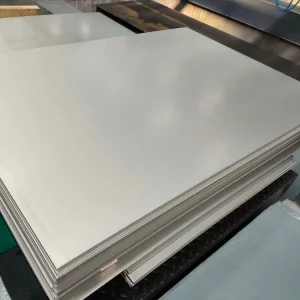
Specialty Sheets, Strips & Industrial Piping Lines
Explore secondary mill inventory featuring cold-rolled sheets, high-nickel strips, and heavy-wall industrial welded pipes engineered for global supply chains.



Frequently Asked Questions on Custom Stainless Steel Pipe Standards
Comprehensive engineering insights addressing procurement, chemical composition tolerances, testing certifications, and international standard equivalencies.
What is the key difference between ASTM A312 and ASTM A269 custom stainless steel pipes?
ASTM A312 is specifically tailored for heavy-duty industrial piping intended for high-temperature and general corrosive service where nominal pipe size (NPS) and Schedule wall thickness (SCH 5S to SCH 80S) dictate engineering design. In contrast, ASTM A269 governs seamless and welded tubing designed for general service requiring precise Outer Diameter (OD) and Wall Thickness tolerances (often polished to BA or EP finish for sanitary, biopharmaceutical, or instrumentation systems).
How does solution annealing affect the corrosion resistance of welded stainless steel pipes?
During the welding process, temperatures between $450^\circ\text{C}$ and $850^\circ\text{C}$ cause chromium carbides to precipitate along grain boundaries (sensitization), depleting adjacent areas of protective chromium and inviting intergranular corrosion. Solution annealing heats the welded pipe to $1040^\circ\text{C} - 1120^\circ\text{C}$, fully redissolving chromium carbides into the austenitic matrix, followed by rapid quenching to lock in maximum corrosion resistance.
Can Jiangsu Renzhi supply custom non-standard wall thicknesses and custom lengths?
Yes. Utilizing our flexible 80+ welded pipe production lines and in-house cold drawing benches, we manufacture custom outer diameters (from 6mm up to 2032mm) and non-standard wall thicknesses outside typical ASME schedules. Additionally, we offer custom fixed lengths up to 18 meters with bevelled, plain, or threaded ends to minimize job-site field welding.
What quality documentation accompanies international enterprise pipe shipments?
Every shipment is accompanied by a mill-issued EN 10204 3.1 Material Test Certificate (MTC) detailing exact heat number chemical analysis, mechanical property test results (Yield, Tensile, Elongation, Hardness), NDT test results (Eddy Current / Hydrostatic / Radiographic), and grain size evaluations. EN 10204 3.2 third-party inspection (TUV, SGS, BV, Lloyd's Register) is available upon request.
Why choose 2205 Duplex over 316L for coastal or marine piping systems?
While 316L contains 2-3% Molybdenum, its yield strength is relatively low (~220 MPa) and it remains susceptible to chloride stress corrosion cracking above $60^\circ\text{C}$. Duplex 2205 (UNS S31803 / S32205) features roughly double the yield strength (~450 MPa), allowing engineers to down-gauge wall thickness while providing near-total immunity to chloride SCC and superior pitting resistance (PREN ≥ 34 vs 316L PREN ≤ 25).