
Featured Stainless Steel Catalog (Part I)
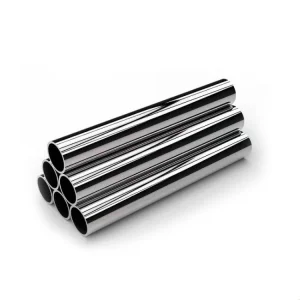
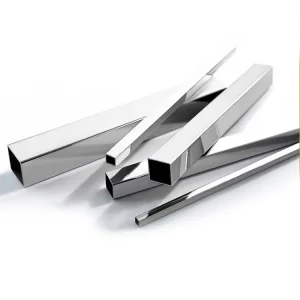
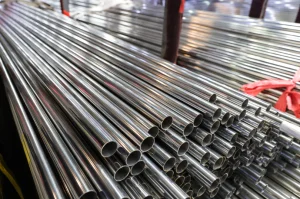
Explore our primary inventory of high-grade stainless steel pipes, duplex plates, custom tubes, and decorative sheets engineered for global distribution.


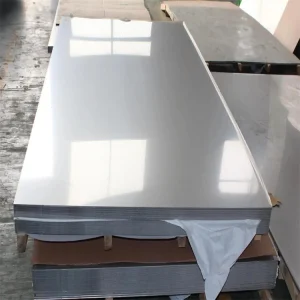
The Global Commercial & Industrial Landscape of Custom Mirror Stainless Steel Sheets
The global demand for custom mirror stainless steel sheets has experienced a monumental transformation over the past decade. No longer confined strictly to high-end interior decoration or architectural cladding, high-reflectivity stainless steel alloys have integrated deeply into advanced industrial sectors, including semiconductor cleanroom manufacturing, aerospace optical test rigs, marine luxury yacht fitting, bio-pharmaceutical storage vessels, and commercial transport infrastructure.
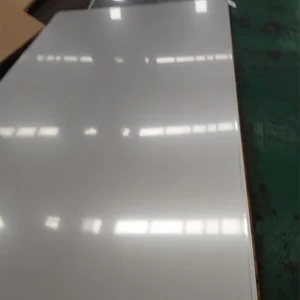
A mirror stainless steel sheet—frequently specified as an 8K No.8 finish or 10K super mirror finish—is produced through a rigorous multi-stage mechanical grinding and chemical-slurry polishing process. The primary objective is to progressively eliminate surface micro-scratch pits, inclusions, and directionality lines inherent to standard cold-rolled (2B or BA) mill finishes, yielding a distortion-free, highly reflective, mirror-like surface plane.
Architectural Architecture & Facades
Architects worldwide utilize PVD-colored mirror sheets (Gold, Rose Gold, Champagne, Black Titanium) for exterior building cladding, elevator interior cars, and luxury retail visual store fronts, requiring strict optical flatness and color consistency across production batches.
Sanitary & Bio-Pharmaceutical Vessels
Industrial processing facilities require electrolytic mirror polishing ($Ra < 0.1\mu m$) on vessel interiors to stop bacterial adhesion, prevent cross-contamination, and guarantee effortless Cleaning-In-Place (CIP) performance.
Cleanroom & Solar Optics
In high-tech optics and photovoltaic manufacturing, optical mirror-grade stainless steel plates act as solar concentrators, thermal reflective shields, and precise cleanroom partition screens that do not outgas or harbor micro-particles.
China's Manufacturing Superiority: Efficiency, Scale, and Metallurgical Precision
China has solidified its position as the world's primary manufacturing hub for custom mirror stainless steel sheets due to an integrated industrial ecosystem, massive economies of scale, and relentless technological modernization in surface-finishing machinery. As a leading manufacturer based in Wuxi, Jiangsu—China’s premier stainless steel distribution and processing capital—our operations embody these competitive structural advantages:
1. Vertical Supply Chain Integration with Top-Tier Primary Mills
Direct supply agreements with primary steel mills such as TISCO (Taiyuan Iron and Steel), Tsingshan Holding Group, POSCO China, and Baosteel ensure that our cold-rolled coils (2B finish) possess guaranteed chemical purity, controlled grain boundary structures, and zero non-metallic inclusion defects prior to mirror processing. This upstream raw material control eliminates surface pitting or "orange peel" textures during heavy mirror grinding.
2. Automated Continuous Polishing & Tension Leveling Lines
Legacy mirror polishing relied heavily on manual single-sheet grinding tables, causing batch-to-batch color drift and edge rounding. Modern Chinese manufacturing utilizes continuous multi-head automated mirror polishing lines equipped with real-time laser roughness sensors ($Ra$ monitors) and automated slurry recirculation systems. Integrated tension-leveling machinery guarantees extreme physical sheet flatness, eliminating optical wave distortions (frequently referred to as oil-canning) across large architectural sheet spans.
3. Advanced PVD (Physical Vapor Deposition) Vacuum Coating Technologies
To produce custom decorative mirror sheets, our facility operates state-of-the-art multi-arc ion PVD vacuum titanium-plating chambers. By evaporating ultra-pure titanium, zirconium, or chromium metals in a vacuum chamber infused with reactive gases (nitrogen, acetylene, oxygen), we deposit atomic-scale ceramic thin films (TiN, TiC, ZrN) onto the mirror surface. This yields brilliant metallic hues including Gold, Rose Gold, Champagne Gold, Sapphire Blue, Emerald Green, and Black Titanium that are highly scratch-resistant and UV-stable.
4. Anti-Fingerprint (AFP) Nano-Coating Application
To resolve the historic issue of smudge marks and fingerprint staining on mirror stainless steel, advanced nano-ceramic transparent coatings are applied via precision automated roll-coaters followed by high-temperature thermal curing. This hydrophobic and oleophobic layer lowers surface tension, causing oil and moisture to form beads that wipe off effortlessly without degrading the metallic mirror gloss.
Technical Specification & Finish Performance Matrix
Compare technical properties, surface roughness tolerances, alloy suitability, and protective film specifications across our mirror stainless steel product lines.
| Finish Grade | Surface Roughness ($Ra$) | Reflectivity % | Typical Alloy Grades | Standard Thickness Range | Primary Applications |
|---|---|---|---|---|---|
| 8K Mirror (No.8) | 0.015 - 0.030 $\mu m$ | > 90% | AISI 304, 304L, 316L, 201, 430 | 0.5 mm - 3.0 mm | Elevator cars, architectural cladding, interior decoration, furniture trims. |
| 10K Super Mirror | < 0.010 $\mu m$ | > 98% | AISI 304, 316L, 2205 Duplex | 0.8 mm - 6.0 mm | Optical mirrors, luxury storefronts, sanitary cleanroom screens, solar reflectors. |
| PVD Color Mirror | 0.015 - 0.035 $\mu m$ | 88% - 95% | AISI 304, 316L, 201 | 0.6 mm - 2.5 mm | Luxury hotel lobbies, hotel casino art installations, branded store facade display. |
| Etched / Embossed Mirror | Varies by Pattern | 80% - 90% (Base) | AISI 304, 316L, 430 | 0.7 mm - 2.0 mm | Non-slip flooring, anti-scratch elevator doors, decorative partition walls. |
| Electropolished Mirror | < 0.08 $\mu m$ (Chemical) | > 92% | AISI 316L, 316Ti, 2507 Super Duplex | 1.0 mm - 12.0 mm | Pharmaceutical bio-reactors, semiconductor gas distribution, marine fittings. |
Localized Application Scenarios & Global Engineering Case Studies
Understanding environmental stress factors, chemical exposure levels, and mechanical demands is essential when selecting the proper custom mirror stainless steel grade. Below are localized technical deployment scenarios engineered by our technical support team:
1. Coastal & High-Humidity Architectural Cladding (Grade 316L Mirror Sheets)
In coastal megacities such as Dubai, Singapore, Miami, and Sydney, airborne sea salts (chlorides) pose an extreme pitting corrosion threat to exterior metal panels. Standard 304 grade mirror sheets in coastal environments often develop tea-staining and micro-pitting within 12-24 months. We supply custom Grade 316L Mirror Stainless Steel Sheets with 2.0-3.0% Molybdenum addition, protected by dual-layer 100-micron UV-resistant laser protective film. These panels withstand salt spray testing (ASTM B117) exceeding 1,000 hours without red rust or mirror gloss haze.
2. Commercial Elevator Interiors & High-Traffic Public Spaces (Grade 304 + AFP Nano-Finish)
Elevator cabs, airport transit terminals, and shopping mall escalators face continuous physical contact, cleaning detergent exposure, and hand oil transfer. For these applications, we manufacture Grade 304 8K Mirror Sheets with Anti-Fingerprint (AFP) Nano-Ceramic Coating. The surface allows facility maintenance staff to remove grease, lipstick, and dirt using plain micro-fiber cloths without chemical solvents, cutting maintenance labor costs by up to 60% while maintaining crystal-clear optical reflection.
3. High-Purity Bio-Pharmaceutical & Food Processing Tanks (316L Electropolished Mirror)
Inside sterile drug manufacturing suites and dairy processing plants, standard mechanical polishing lines can leave micro-burrs that harbor bacteria. Our process utilizes a dual approach: continuous mechanical 8K polishing followed by Electrochemical Anodic Brightening (Electropolishing). This process preferentially dissolves microscopic peaks, enriches the passive chromium-oxide layer ($Cr_2O_3$), and produces a mirror surface meeting ASME BPE cleanability standards.
Global B2B Procurement Protocols & Stringent Quality Assurance
International procurement managers and engineering buyers face significant risks regarding surface scratching during ocean transit, thickness tolerance variations, wave deformation, and color mismatches. To eliminate import risks, our factory adheres to international quality management protocols:
Protective Film Technology
Every mirror sheet is laminated with specialized high-tack, fiber-laser-compatible Polyethylene (PE) protective film (Novacel or Nitto equivalent, 70μm to 120μm thick). This film prevents laser burn-through and edge peeling during CNC laser cutting and punch pressing.
Seaworthy Export Packaging
To prevent white rust, water spots, and edge damage during 30-45 day ocean voyages, sheets are interlaid with anti-rust neutral paper, wrapped in waterproof plastic film, fully enclosed in fumigated wooden crates or steel-framed skids, and strapped with heavy-duty steel bands.
Mill Test Certificates (EN 10204 3.1)
Full traceability is provided with every shipment. Mill Test Certificates report precise heat-number chemical analysis (C, Si, Mn, P, S, Cr, Ni, Mo), yield strength, tensile strength, elongation percentage, and Hardness (HV/HB) testing results matching ASTM A240 and EN 10088-2 standards.
Future Trends: Green Metallurgy, Smart PVD, and Textured Mirrors
As the global stainless steel industry pivots toward zero-carbon manufacturing and circular economy principles, custom mirror stainless steel production is evolving rapidly:
- Eco-Friendly Closed-Loop Polishing: Transitioning away from harsh nitric-hydrofluoric acid chemical pickling baths toward zero-emission mechanical polishing compounds and closed-loop filtration water recycling plants.
- Low-Carbon Stainless Alloys: Increasing usage of high-recycled-content stainless steel feedstock processed via Electric Arc Furnaces (EAF) powered by renewable energy, reducing embedded Carbon Equivalent ($CO_2e$) per ton of mirror steel produced.
- Hybrid Textured Mirrors: Combining 8K mirror polishing with chemical photo-etching, 3D laser engraving, and custom embossing (such as Water Ripple, Linen, and Leather patterns). These textured mirror surfaces diffuse light elegantly while concealing future scratches in high-traffic commercial environments.
Featured Stainless Steel Catalog (Part II)
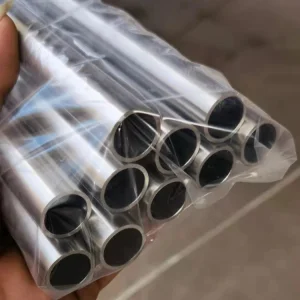
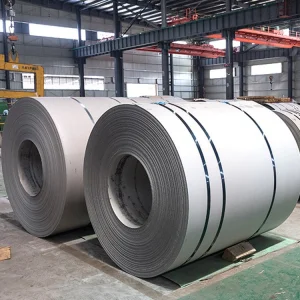
Explore our secondary catalog of super duplex plates, low-carbon industrial pipes, cold-rolled sheets, and hot-rolled coils manufactured to global ASTM & CE standards.


Frequently Asked Questions: Custom Mirror Stainless Steel Procurement
Technical responses to common inquiries submitted by international B2B buyers, procurement engineers, and architectural specifiers.
Grade 304: The global standard benchmark for interior elevator cabs, commercial restaurant fit-outs, cleanroom panels, and general architectural cladding.
Grade 316L: Formulated with 2-3% Molybdenum for high-chloride environments including coastal facades, marine fittings, swimming pool enclosures, and chemical/pharmaceutical processing plants.