
High-Performance Hot Rolled & Cold Rolled Steel Inventory
Explore mill-certified steel coils, sheets, plates, and pipes sourced directly from leading manufacturing clusters with guaranteed mechanical integrity.

Wholesale Perforated Stainless Steel Sheet from China Suppliers & Factory
View Product & Quotes
Custom China Stainless Steel Decorative Pipe Suppliers - Exquisite Designs
View Product & Quotes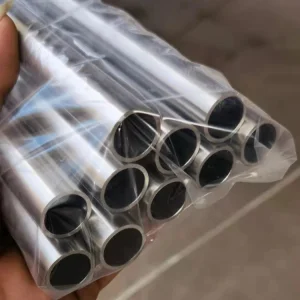
Custom China SUS304/304L Ultra-Low Carbon Stainless Steel Pipe Suppliers
View Product & Quotes
Custom Prime Quality 201 Stainless Steel Pipe from China Suppliers
View Product & Quotes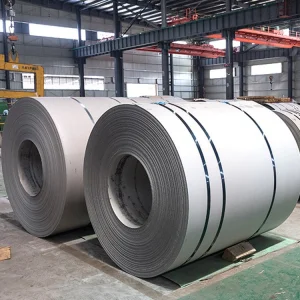
CE Certification China Suppliers Hot Rolled Stainless Steel Coils
View Product & Quotes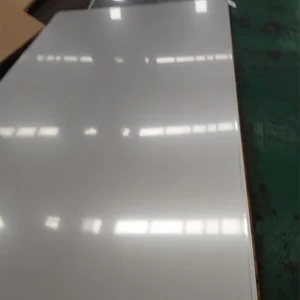
Custom 2507 Super Duplex Steel Plate Supplier & Factory Quotes
View Product & Quotes
Custom Stainless Steel Decorative Pipe - Diverse Surface Designs
View Product & Quotes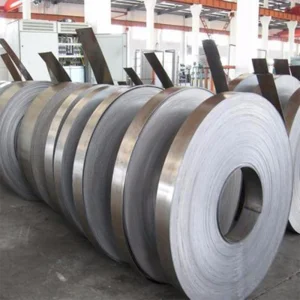
Wholesale High-Quality 201 Stainless Steel Strip/Coil China Direct
View Product & QuotesFundamental Differences: Hot Rolled vs. Cold Rolled Steel Engineering
In global industrial procurement, distinguishing between Hot Rolled (HR) and Cold Rolled (CR) steel is not merely a matter of processing temperature; it dictates the fundamental crystalline structure, mechanical yield limits, residual stress profiles, and surface finish qualities of the material. For procurement managers, structural engineers, and supply chain directors, selecting the correct rolling process balances physical performance with total cost of ownership (TCO).
Hot Rolled Steel is processed at elevated temperatures exceeding the steel's recrystallization threshold (typically above 1,700°F or 926°C). Passing slabs through high-tonnage rolling mills at these extreme thermal states yields a microstructurally soft material characterized by an equiaxed grain structure, free from internal strain hardening. Hot rolling allows for heavy thickness reductions and massive volume outputs, making it the primary choice for load-bearing civil infrastructure, heavy machinery framing, structural tubing, and pressure vessel manufacturing. The hallmark visual identifier of hot-rolled steel is its dark blue mill scale—a thin iron oxide layer formed during thermal cooling.
Cold Rolled Steel undergoes subsequent processing at ambient room temperatures following the hot rolling stage. The descaled, pickled hot-rolled coil is subjected to cold reduction mills, where compressive stress induces severe work hardening, increasing the material's yield strength by up to 50% while refining dimensional accuracy. Subsequent bright annealing or skin-pass rolling restores necessary ductility while maintaining tight gauge tolerances ($\pm 0.01\text{ mm}$ to $\pm 0.05\text{ mm}$). Cold rolling produces an ultra-smooth surface finish (such as 2B, BA, or No. 4 brushed) suitable for automated stamping, deep drawing, architectural cladding, and precision automotive components.
| Metallurgical Parameter | Hot Rolled (HR) Steel | Cold Rolled (CR) Steel | Impact on B2B Procurement |
|---|---|---|---|
| Processing Temperature | Above Recrystallization (>926°C) | Ambient Temperature (<50°C) | HR requires lower energy per ton; CR requires secondary processing. |
| Dimensional Tolerance | Standard (Thickness $\pm 0.15\text{mm}$ to $0.50\text{mm}$) | Ultra-Tight (Thickness $\pm 0.01\text{mm}$ to $0.05\text{mm}$) | CR eliminates downstream machining for precision fits. |
| Surface Finish ($R_a$) | Rough with Mill Scale ($R_a \approx 3.2 - 6.3\,\mu\text{m}$) | Smooth / Bright ($R_a \approx 0.1 - 0.8\,\mu\text{m}$) | CR is essential for electroplating, painting, and visual surfaces. |
| Mechanical Yield Strength | Lower Yield (e.g., $235 - 355\text{ MPa}$) | Higher Yield (e.g., $350 - 800+\text{ MPa}$) | CR allows lightweighting (thinner gauges for equal strength). |
| Internal Residual Stress | Minimal (Relieved during cooling) | Higher (Induced by work hardening) | Un-annealed CR may distort during heavy flame cutting; HR remains stable. |
| Commercial Price Point | Baseline Economy ($/Ton) | Premium Surcharge (+15% to +35%) | HR optimizes budgets for heavy non-decorative structures. |
China's Manufacturing Supremacy in Custom Hot & Cold Rolled Steel
How fully integrated metallurgical clusters, continuous technological upgrading, and port-adjacent supply chains deliver unmatchable price-to-performance value for global buyers.
Fully Integrated Metallurgical Clusters
China's steel manufacturing hubs (concentrated in Jiangsu, Shandong, and Hebei) bring blast furnace smelting, continuous casting, hot strip mills (HSM), cold reduction mills (CRM), and continuous galvanizing lines into a unified 15-kilometer radius. This extreme proximity eliminates intermediate transit tariffs and thermal energy loss.
State-of-the-Art Rolling Equipment
Modern Chinese mills feature 20-high Sendzimir cold rolling mills, automated gauge control (AGC) systems, and hydrogen-powered continuous bright annealing furnaces. This technological scale guarantees sub-micron level gauge consistency across 2,000mm ultra-wide coils that legacy overseas mills struggle to replicate.
Agile Customization & MOQ Flexibility
Unlike Western steel mills requiring massive minimum order quantities (MOQs) of 500+ tons per gauge, Chinese custom steel suppliers offer flexible coil slitting, custom sheet cutting, specialized chemical passivation, and tailored alloy tweaking for medium-batch enterprise orders starting at under 10 metric tons.
Port Logistics & Seaworthy Export Packaging
Direct deep-water port access (Shanghai, Ningbo, Tianjin, Qingdao) streamlines ocean logistics. Steel products are packaged with heavy VCI anti-rust paper, galvanized steel edge protectors, heavy-duty iron radial strapping, and fumigated wooden skids to prevent marine humidity oxidation during transoceanic shipping.
International Standard Compliance & Engineering Certifications
Mitigating procurement risks through rigorous third-party inspection, chemical heat-traceability, and global code adherence.
Global procurement teams in civil engineering, automotive manufacturing, and pressure vessel fabrication demand full compliance with international standards before issuing purchase orders. Premium Chinese steel suppliers adhere strictly to cross-regional standard harmonization matrices:
ASTM / ASME (Americas)
Full compliance with ASTM A36, A1008, A1011, A240, A568, and ASME SA240 for structural steel, cold-rolled sheet, carbon coils, and stainless pressure vessel plates. Testing includes Charpy V-notch impact and bend tests.
EN / DIN (European Union)
Strict adherence to EN 10025 (S235JR, S355JR/J2), EN 10130 (DC01, DC04), EN 10088-2 for stainless grades. Guaranteed tolerances according to EN 10051 and EN 10131, accompanied by CE Marking.
JIS / GB (Asia-Pacific)
Manufacturing verified to JIS G3101 (SS400), JIS G3141 (SPCC, SPCD), GB/T 700, GB/T 3280. Ideal for Japanese and East Asian joint-venture assembly lines requiring tight formability index verification.
Mill Test Certificates (MTC)
Every shipment is delivered with an official EN 10024 3.1 or 3.2 MTC documenting actual heat chemistry (Spectro-analysis of C, Mn, Si, P, S, Cr, Ni, Mo), yield strength, ultimate tensile strength, elongation percentage, and hardness testing.
Macro Industry Solutions: Engineering Steel for Specific Applications
From deep-sea platforms to ultra-thin consumer electronics, tailored hot and cold rolled steel grades solve critical structural and environmental challenges.
Automotive & Electric Vehicle (EV) Stamping
Requirement: High strength-to-weight ratio, extreme deep drawability, and flawless surface for exterior panels.
Solution: Cold rolled Advanced High-Strength Steels (AHSS), Dual-Phase (DP) steels, and CR SPCC/DC04 grades. These materials allow automotive OEMs to stamp complex unibody chassis parts while meeting stringent crash safety and lightweighting mandates.
Structural Civil Infrastructure & Heavy Machinery
Requirement: Heavy plate yield strength, weldability, fatigue resistance, and load bearing.
Solution: Hot rolled high-strength low-alloy (HSLA) plates (S355, ASTM A572, Q355B). Widely utilized in skyscraper structural skeletons, sea-crossing bridges, gantry crane beams, and heavy excavator chassis framing.
Energy, Oil/Gas & Process Equipment
Requirement: Corrosion resistance against H2S, high-pressure containment, elevated temperature strength.
Solution: Hot rolled heavy stainless steel plates (SUS304/304L, 316L, 2507 Super Duplex) and boiler quality carbon steel plates (ASTM A516 Gr 70). Applied in refinery cracking towers, heat exchangers, offshore platform piling, and cross-country pipelines.
HVAC, Home Appliances & Electrical Cabinets
Requirement: Tight gauge tolerances, flat sheet tension leveling, superior paint/powder coating adhesion.
Solution: Cold rolled steel sheet (2B, oiled/dry, skin-passed) and electro-galvanized CR coils. Chosen by refrigerator manufacturers, server rack fabricators, and commercial HVAC ductwork contractors.
Understanding Hot Rolled & Cold Rolled Steel Pricelist Dynamics
Demystifying FOB/CIF spot quotations, mill surcharge calculations, and key variables influencing global steel pricing structures.
B2B steel buyers often encounter fluctuating spot price quotes across different suppliers. Steel pricing is determined by a baseline raw material index combined with processing surcharges, alloy additions, dimensional tolerances, and logistics variables:
1. Upstream Raw Material Benchmark Index
Hot rolled coil (HRC) serves as the primary base price metric globally. Raw material fluctuations in iron ore fines (62% Fe CFR China index), metallurgical coking coal, nickel pig iron (NPI for stainless series), and scrap metal directly push baseline mill prices up or down on a weekly index cycle.
2. Cold Reduction & Annealing Surcharges
Cold rolled coil (CRC) commands a price premium over HRC (typically ranging from $80 to $180 per metric ton). This surcharge covers acid pickling line costs, electrical power consumed during cold rolling mill passes, bell/bright annealing cycles, and skin-pass tension leveling operations.
3. Alloy & Chemical Surcharges
For stainless, alloy, and high-carbon steel grades, additions of Chromium (Cr), Nickel (Ni), Molybdenum (Mo), and Vanadium (V) add an alloy surcharge. For instance, 316L (containing 2% Molybdenum) incurs a higher alloy surcharge than standard 304, directly reflecting global London Metal Exchange (LME) ingredient spot pricing.
4. Dimensional & Width Extra Charges
Ultra-thin gauges (e.g., Cold Rolled strip below 0.3mm) or non-standard wide sheets (>1,800mm) incur "size extras" due to slower rolling speed pass rates and increased roll wear. Custom slitting to narrow ribbon widths or cut-to-length sheet flattening also adds nominal processing charges per ton.
| Steel Category & Grade | Standard Specification | Typical Thickness Range | Estimated Price Baseline (FOB China)* | Primary Industry Target |
|---|---|---|---|---|
| Hot Rolled Carbon Steel Coil | ASTM A36 / SS400 / Q235B | 1.5mm – 20.0mm | Competitive Market Base | Structural Framing, Piling, Pipes |
| Cold Rolled Carbon Steel Coil | SPCC / DC01 / SAE 1008 | 0.3mm – 3.0mm | Base + $90–$140/Ton | Appliance Panels, Automotive Stamping |
| Hot Rolled Stainless Coil / Plate | SUS 304 / 304L (No. 1 Finish) | 3.0mm – 50.0mm | Alloy Index Baseline | Chemical Vessels, Heavy Flanges |
| Cold Rolled Stainless Coil / Sheet | SUS 304 / 316L (2B / BA Finish) | 0.3mm – 3.0mm | Alloy + CR Surcharge | Food Machinery, Architectural Decor |
| Super Duplex Stainless Steel Plate | 2507 / UNS S32750 | 2.0mm – 30.0mm | High Alloy Premium | Desalination, Offshore Marine Oil/Gas |
*Note: Prices vary dynamically based on daily LME/ShFE alloy markets, gauge dimensions, volume tier discounts, and customized packing requirements. Request an official RFQ for binding quotes.
Future Trends: Decarbonization & AI-Driven Rolling Technology
How green steel manufacturing, hydrogen reduction, and digital twin rolling mills are redefining global steel quality and sustainability standards.
Green Steel & Hydrogen Direct Reduction (DRI)
Global carbon border adjustment mechanisms (CBAM) are prompting tier-1 Chinese steelmakers to transition from traditional coal-fired blast furnaces to Electric Arc Furnaces (EAF) powered by green hydrogen Direct Reduced Iron (DRI). Sourcing low-carbon hot rolled coils allows global enterprise buyers to reduce Scope 3 embodied carbon emissions significantly.
AI-Powered Automatic Gauge & Shape Control
Next-generation cold rolling mills integrate real-time computer vision and laser thickness sensors coupled with Artificial Intelligence neural networks. These AI-AGC systems measure coil thickness at 1,000 data points per second, automatically adjusting mill hydraulic roll gaps to achieve unprecedented $\pm 0.005\text{mm}$ cross-coil uniformity.
Ultra-High Strength Lightweighting Alloys
Research and development in thermo-mechanically controlled processing (TMCP) is enabling the production of thinner hot-rolled structural steels with yield strengths exceeding $700\text{ MPa}$ without losing low-temperature impact toughness or weldability. This breakthrough directly reduces material tonnage in commercial transport trailers and crane booms.
Frequently Asked Questions by Industrial Steel Buyers
Direct answers from senior metallurgical engineers regarding material selection, surface finishes, testing protocols, and export logistics.
What is the primary difference in surface finish between Hot Rolled No.1 and Cold Rolled 2B stainless steel?
Can Hot Rolled steel be laser cut without removing mill scale?
How does work hardening affect Cold Rolled steel forming and bending?
What quality documentation is provided to verify chemical and mechanical compliance?
How do custom China steel factories prevent ocean moisture rusting during transit?
What are the standard lead times for custom slitting and cut-to-length orders?
Precision Steel Pipes, Sheets & Specialty Stainless Alloys
Complete your procurement requirements with specialized cold-rolled sheets, duplex structural plates, and ultra-low carbon stainless piping solutions.

China 316L Stainless Steel Sheet - Leading Factory Manufacturers
View Product & Quotes
China High-Quality 201 Stainless Steel Pipe Suppliers & Factory Direct
View Product & Quotes
Custom 316L Stainless Steel Sheet Manufacturers & Pricelist
View Product & Quotes
Custom Cold Rolled Stainless Steel Sheet Suppliers - High Strength
View Product & Quotes
Custom China SUS304 Stainless Steel Cold-Rolled Plate Food Grade
View Product & Quotes
Wholesale 2507 Super Duplex Stainless Steel Plate Suppliers
View Product & Quotes
China SUS304/304L Lower Carbon Stainless Steel Pipe Factory
View Product & Quotes
Custom China SUS304/304L Low Carbon Stainless Steel Pipe Supplier
View Product & QuotesRequest Custom Steel Quotation & Mill Technical Consultation
Connect directly with senior metallurgical engineers to confirm alloy chemistry, gauge tolerances, surface finishing requirements, and volume-tiered pricelists tailored to your project.
Contact Our Engineering Procurement Team