
Featured Stainless Steel Products & Mill Supply Range
Direct mill-sourced cold-rolled and hot-rolled stainless steel sheets, decorative tubes, industrial welded pipes, and precision strips manufactured under ASTM A240, EN 10088-2, and JIS G4304 certification standards.
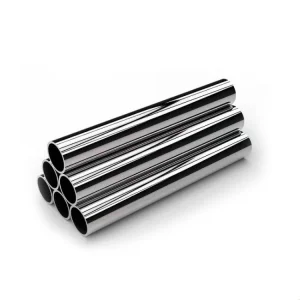
China Stainless Steel Decorative Pipe - Exquisite Designs & Custom Finishes

316L Stainless Steel Sheet - Premium Corrosion Resistant Plate Solutions
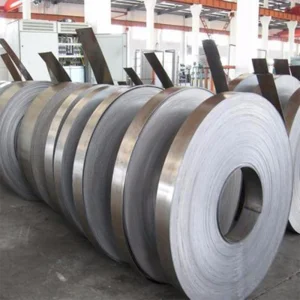
201 Stainless Steel Strip/Coil - Precision Cold Rolled Slitting Feedstock
CE Certified 201 Cold Rolled Sheet - Accurate Gauge & High Cost Efficiency

Perforated Stainless Steel Sheet - Custom Punch Mesh & Architectural Panels

SUS304/304L Stainless Steel Strip - Premium Slit Coils for Tube Mills
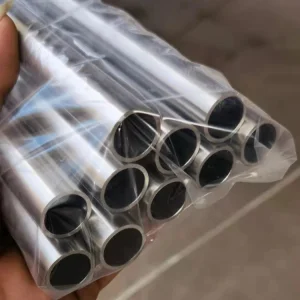
SUS304/304L Low Carbon Stainless Steel Pipe - Corrosion Resistant Lines
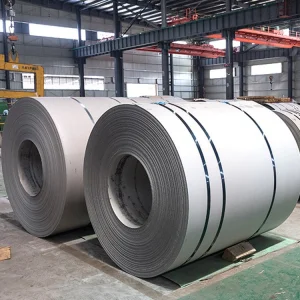
Hot Rolled Stainless Steel Coils - Industrial Grade HRAP Heavy Plates
SUS316L Stainless Steel Metallurgy: Chemical Balance & Mechanical Performance
SUS316L (UNS S31603 / EN 1.4404) represents the pinnacle of standard austenitic stainless steels utilized across demanding processing industries. The defining characteristics of SUS316L lie in its precise chemical modification relative to standard SUS304: the deliberate addition of 2.0% to 3.0% Molybdenum (Mo) combined with a strictly controlled ultra-low carbon ceiling of C ≤ 0.030%.
Molybdenum enrichment dramatically increases the alloy's resistance to localized pitting and crevice corrosion in harsh chloride-bearing media, marine atmospheres, and acidic solutions. Concurrently, the reduced carbon content eliminates chromium carbide precipitation ($\text{Cr}_{23}\text{C}_6$) along grain boundaries during thermal cycles such as welding. This immunity to sensitization guarantees superior intergranular corrosion resistance in the as-welded state, removing the necessity for post-weld solution annealing.
| Chemical Composition (% Wt) | Carbon (C) | Molybdenum (Mo) | Chromium (Cr) | Nickel (Ni) | Manganese (Mn) | Silicon (Si) | Phosphorus (P) | PREN Rating |
|---|---|---|---|---|---|---|---|---|
| ASTM A240 SUS316L Standard | ≤ 0.030% | 2.00 - 3.00% | 16.00 - 18.00% | 10.00 - 14.00% | ≤ 2.00% | ≤ 0.75% | ≤ 0.045% | 23.5 - 26.5 |
| TISCO / Tsingshan Prime Slab | 0.021% | 2.15% | 16.85% | 10.12% | 1.35% | 0.48% | 0.028% | 24.1 PREN (Pass) |
Pitting Resistance Equivalent (PREN)
Calculated via $\text{PREN} = \%\text{Cr} + 3.3(\%\text{Mo}) + 16(\%\text{N})$. SUS316L consistently scores above 23.5, providing robust defense against pitting corrosion induced by marine sea spray and saline washdowns.
High Weldability & Formability
Yield strength $R_{p0.2} \ge 220 \text{ MPa}$, Tensile strength $R_m = 520\text{--}670 \text{ MPa}$, and elongation $A_5 \ge 40\%$. Ideal for deep drawing, laser beam welding, and heavy cold roll-forming operations.
Cryogenic & Thermal Stability
Maintains high structural toughness down to cryogenic temperatures (-196°C) while providing continuous oxidation resistance up to 870°C in intermittent thermal service.
Industry Trends: The Evolution of Chinese Stainless Steel Sheet Manufacturing
China's stainless steel manufacturing ecosystem has undergone a profound technological transformation over the past decade. Moving beyond mass-volume standard commodity output, key industrial clusters in Wuxi, Jiangsu and Foshan, Guangdong have integrated state-of-the-art continuous rolling technologies, smart green metallurgy, and precision surface processing.
1. Green Metallurgy & Low-Carbon Electric Arc Furnace (EAF) Smelting
Leading Chinese mills like Tsingshan, TISCO, POSCO China, and Baosteel have aggressively deployed Electric Arc Furnaces utilizing recycled stainless scrap alongside Direct Reduced Iron (DRI). This transition significantly reduces the Scope 1 and Scope 2 carbon footprint per ton of SUS316L produced, fulfilling carbon boundary adjustments mandated by global markets such as Europe's CBAM (Carbon Border Adjustment Mechanism).
2. Ultra-Wide Rolling & Micron-Level Gauge Precision
Modern Chinese cold rolling mills now utilize 20-high Sendzimir rolling mills equipped with automated AGC (Automatic Gauge Control) and laser profile sensors. This allows for mill tolerances as tight as $\pm 0.02\text{ mm}$ across sheet widths up to 1500mm and 2000mm, minimizing material waste during OEM laser cutting and stamping operations.
Digital Twin Quality Tracking
Real-time optical defect detection systems sweep cold-rolled coil surfaces at 800m/min, automatically cataloging micro-scratches, pinholes, and edge burrs before slitting.
Dynamic Alloy Surcharge Hedging
Transparent pricing models tied directly to LME Nickel and Platts Molybdenum indexes, providing international procurement teams with predictable cost forecasting.
Advanced Surface Processing
In-house 8K mirror polishing, vibration hairline buffing, PVD color coating (Titanium Gold, Black Ti, Rose Gold), and deep anti-fingerprint nanocoating execution.
China SUS316L Stainless Steel Sheet Pricelist Structure & Valuation Model
Understanding how Chinese mills and exporters structure pricing allows buyers to negotiate optimal FOB, CFR, or CIF contract terms.
SUS316L sheet pricing from China is calculated based on five primary cost parameters:
- Base Material Price: Sourced from raw coil ingot indexes (Tsingshan/TISCO baseline).
- Molybdenum & Nickel Surcharge: Fluctuates based on London Metal Exchange (LME) raw nickel and ferro-molybdenum market spot rates.
- Thickness & Width Premiums: Ultra-thin gauges (< 0.5mm) and extra-wide plates (> 1800mm) carry rolling process surcharges.
- Surface Finish Costs: Standard 2B cold-rolled is base; Bright Annealed (BA), No.4 Satin finish, and 8K Mirror polish incur per-square-meter processing fees.
- Protective Coating Options: Fiber laser PE film, double-layer 100-micron PVC film, or paper interleaves.
| Grade & Finish | Thickness (mm) | Standard Width (mm) | Estimated Price Range (USD/MT FOB Ningbo/Shanghai) | Lead Time |
|---|---|---|---|---|
| SUS316L Cold Rolled 2B | 0.5mm - 3.0mm | 1219mm / 1500mm | $2,850 - $3,200 / MT | 7 - 12 Days |
| SUS316L Bright Annealed (BA) | 0.8mm - 2.0mm | 1000mm / 1219mm | $3,050 - $3,450 / MT | 10 - 15 Days |
| SUS316L Hot Rolled No.1 (HRAP) | 3.0mm - 25.0mm | 1500mm / 1800mm / 2000mm | $2,650 - $2,980 / MT | 5 - 10 Days |
| SUS316L No.4 / Hairline + PVC | 1.0mm - 6.0mm | 1219mm / 1500mm | $2,950 - $3,350 / MT | 8 - 14 Days |
| SUS316L 8K Mirror Polished | 1.0mm - 3.0mm | 1219mm | $3,200 - $3,600 / MT | 12 - 18 Days |
*Note: Prices above serve as historical benchmark references. Spot quotes vary according to daily LME raw nickel index shifts and order volume discounts.
Macro Industry Solutions: Where SUS316L Sheet Demonstrates Value
Global engineering procurement teams specify China-manufactured SUS316L sheets across mission-critical industrial domains where structural integrity and chemical inertness are non-negotiable.
Chemical Processing & Petrochemicals
Used in chemical reaction tanks, pressure vessels, and distillation columns. SUS316L resists organic acids, fatty acids, and sulfuric acid vapors up to moderate thermal concentrations.
Marine & Desalination Plant Engineering
Crucial for reverse osmosis (RO) membrane housing shells, marine exhaust gas scrubbers (EGCS), and coastal seawater intake screens requiring immunity to chloride ion pitting.
Biopharmaceutical & Food Processing
With an electropolished 8K mirror finish (Ra < 0.38 μm), SUS316L prevents bacterial adhesion, supporting strict CIP (Clean-in-Place) and SIP (Sterilize-in-Place) protocols.
Quality Assurance Protocol, MTR Certification & Seaworthy Logistics
To eliminate procurement risks for international buyers, tier-1 Chinese manufacturers enforce comprehensive quality control frameworks aligned with European and American quality standards.
1. Material Traceability & MTC EN 10204 3.1
Every batch of SUS316L sheet is shipped with a certified Mill Test Certificate (MTC) according to EN 10204 3.1. MTCs detail actual ladle chemical heats, mechanical tensile testing, hardness numbers, and intergranular corrosion test results (ASTM A262 Practice E).
2. PMI & Non-Destructive Inspection
Before dispatch, 100% of sheets undergo handheld XRF Positive Material Identification (PMI) testing to confirm exact Molybdenum (> 2.0%) and Nickel (> 10.0%) concentrations. Ultrasonic flaw detection (UT) is conducted for heavy plates (> 10mm).
3. Heavy-Duty Seaworthy Export Packaging
Sheets are layered with anti-corrosion VCI paper, encased in heavy-duty galvanized steel corner protectors, placed on wooden pallets reinforced for crane loading, and tightly banded with steel strapping to withstand long-distance ocean voyages.
Extended Product Catalog: Pipes, Plates & Precision Alloys
Complete your supply chain requirement with our factory-direct stainless steel pipes, ultra-low carbon tubing, duplex alloys, and decorative sheets.
SUS304/304L Ultra-Low Carbon Stainless Pipe - Factory Direct
SUS304/304L Low Carbon Welded Pipe - Ultimate Resistance

Certified Stainless Steel Pipe - Complete Processing & Custom Sizing

SUS304 Cold-Rolled Plate - Food-Grade Hygienic Material
Wholesale Stainless Decorative Tube - Architectural Luxury Finishes
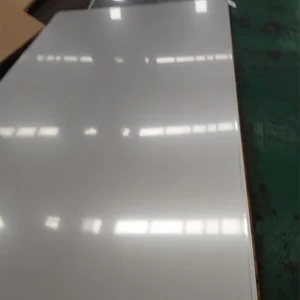
2507 Super Duplex Plate - High Strength & Extreme Chloride Resistance
CE Certified Industrial Welded Pipe - 201, 304, 316L Grades Available
Custom Stainless Decorative Tubing - Mirror & Satin Surface Options
Technical Roadmap: Next-Generation SUS316L Innovation (2026-2035)
As advanced industries transition toward green hydrogen, next-gen semiconductors, and ultra-deepwater energy extraction, Chinese stainless steel research institutions and mills are pioneering critical upgrades to standard SUS316L chemistry:
1. High-Nitrogen Enriched 316LN Alloys
By adding controlled Nitrogen (0.10% to 0.16% N) to standard SUS316L, metallurgists are producing 316LN grade sheets. Nitrogen acts as an interstitial solid solution strengthener, doubling the yield strength ($R_{p0.2} \ge 280\text{ MPa}$) without compromising ductility or cryogenic impact toughness.
2. Ultra-Low Magnetic Permeability Tuning for High-Tech Electronics
In semiconductor cleanroom equipment and MRI medical shielding, residual magnetic permeability ($\mu$) induced by cold work must be kept near $\mu \le 1.005$. Modified nickel-stabilized 316L variants prevent strain-induced martensitic transformation during severe cold bending.
3. Hydrogen Fuel Cell Bipolar Plate Feedstock
Developing ultra-thin precision SUS316L foil down to $0.07\text{mm}\text{--}0.10\text{mm}$ thickness with conductive anti-corrosion carbon or gold-titanium PVD coatings for PEM fuel cell bipolar plates.
Frequently Asked Questions by Global B2B Buyers
Clear, direct answers regarding standards, chemical composition, pricing mechanisms, and manufacturing tolerances.
What is the key chemical difference between SUS316 and SUS316L?
The primary difference is carbon content. Standard SUS316 has a maximum carbon limit of 0.08%, whereas SUS316L has an ultra-low carbon ceiling of 0.030% max. The "L" stands for Low Carbon, which prevents chromium carbide precipitation during welding and ensures superior resistance to intergranular corrosion in welded structures without requiring post-weld heat treatment.
How does SUS316L compare to SUS304 for marine environment applications?
SUS304 contains 18% Chromium and 8% Nickel but lacks Molybdenum. SUS316L contains 2.0% to 3.0% Molybdenum, which increases its Pitting Resistance Equivalent Number (PREN) from ~19 (304) to over 24 (316L). This makes SUS316L significantly more resistant to pitting and crevice corrosion caused by saltwater, marine sea spray, and de-icing salts.
What standard surface finishes are available for China SUS316L sheets?
Common finishes include No.1 (Hot rolled, annealed, and pickled HRAP for industrial structural use), 2B (Cold rolled, smooth semi-reflective finish), BA (Bright Annealed mirror-like finish), No.4 / Satin (Brushed directional finish for appliances), and 8K (High-reflectivity non-directional optical mirror finish).
Which international standards cross-reference China SUS316L stainless steel sheet?
China SUS316L corresponds directly to American standard ASTM A240 / ASME SA240 UNS S31603, European standard EN 10088-2 1.4404 (X2CrNiMo17-12-2), Japanese standard JIS G4305 SUS316L, and Chinese national standard GB/T 24511 022Cr17Ni12Mo2.
What documentation is provided to verify batch chemistry and physical properties?
Every order is supplied with an official EN 10204 3.1 Mill Test Certificate (MTC) containing heat number chemical analysis, tensile strength, yield strength, hardness, elongation, PMI verification, and grain size testing results. Independent third-party inspection (SGS, TÜV, BV) can also be arranged prior to loading.