
Mill-Direct Stainless Steel Products (Batch 01)
Precision-engineered cold-rolled and hot-rolled stainless steel sheets, pipes, and strips manufactured to strict international standards (ASTM A240, EN 10088-2, JIS G4304) sourced directly from Wuxi metallurgical hubs.


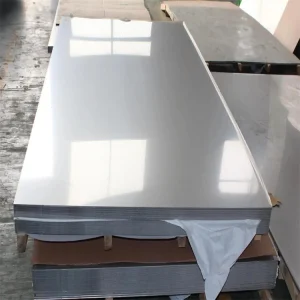


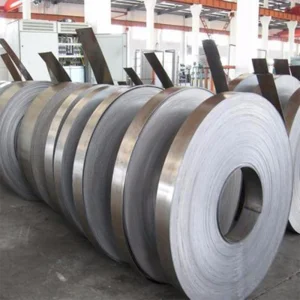
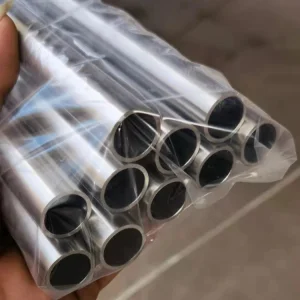
1. Global Commercial & Industrial Status of Stainless Steel (SUS) Plates
Japanese Industrial Standards (JIS) designation SUS (Steel Use Stainless) plates represent a critical cornerstone in modern B2B manufacturing, structural infrastructure, chemical processing, and sanitary engineering. Today, the global consumption of SUS plate—spanning conventional austenitic grades (SUS304, SUS316L), heat-resistant alloys (SUS310S), ferritic variants (SUS430), and advanced duplex steel formulations (UNS S31803 / S32205 / S32750)—exceeds 55 million metric tons annually. China accounts for over 56% of global crude stainless steel production, positioning Chinese factory ecosystems at the heart of global raw material supply chains.
The macroeconomic trajectory of stainless steel plate procurement is defined by three fundamental forces:
- Volatility in Raw Material Alloy Indices: Fluctuations in London Metal Exchange (LME) Nickel, Ferrochrome, and Molybdenum spot prices directly govern mill surcharges. Procurement strategies increasingly mandate direct factory partnerships to lock in transparent tier-one pricing models.
- Decarbonization & Green Steel Mandates: European Carbon Border Adjustment Mechanism (CBAM) regulations and ESG initiatives push factories toward Electric Arc Furnace (EAF) processing using recycled scrap metal, reducing carbon intensity per ton of finished SUS plate.
- Demand for Specialized Metallurgical Performance: Standard 304/304L plates are frequently upgraded to Molybdenum-bearing SUS316L or nitrogen-alloyed Duplex 2205 in chemical, marine, and offshore infrastructure due to severe pitting and crevice corrosion challenges.
2. Technical Manufacturing Roadmap & Processing Paradigms
Transforming raw slab into certified SUS plate involves rigorous thermal and mechanical processing. At integrated manufacturing bases in Wuxi (such as Jiangsu Renzhi Holding Group Co., Ltd.), production lines are synchronized from primary melting to final surface preservation.
Hot Rolling vs. Cold Rolling
Hot-Rolled (No.1 Finish): Slab heated above 1100°C is reduced to heavy plate (3.0mm to 100mm+). Used for structural, industrial, and pressure vessel applications requiring robust yield strength.
Cold-Rolled (2B / BA Finish): Re-rolled at ambient temperatures for tighter dimensional tolerances (0.3mm to 6.0mm), ultra-smooth surface topography, and enhanced tensile properties.
Precision Slitting & Flattening
Operating 5 automated flattening and slitting units allows wide master coils (1219mm, 1500mm, 1800mm, 2000mm) to be converted into custom sheet lengths and precision strips without edge burrs, camber, or residual internal stress.
Surface Engineering Lines
Equipped with 6 advanced polishing lines and 2 custom embossing units, mills produce finishes ranging from No.4 satin finish, Hairline (HL), and 8K Mirror to specialized anti-fingerprint coatings and perforated acoustic mesh patterns.
Chemical Metallurgy & Material Grade Specification Matrix
Matching the precise chemical composition to operational environments is mandatory to eliminate catastrophic field failures such as Stress Corrosion Cracking (SCC) or Intergranular Attack (IGA).
| SUS Grade | JIS / EN Standard | Nominal Chemistry Composition | PREN Rating | Primary Industrial Characteristics |
|---|---|---|---|---|
| SUS201 | 1.4372 / Cr-Mn | 16-18% Cr, 1-1.5% Ni, 5.5-7.5% Mn | ~16 | Cost-effective indoor decorative & light architectural use |
| SUS304 / 304L | 1.4301 / 1.4307 | 18-20% Cr, 8-10.5% Ni, <0.03% C (304L) | ~19.0 | Universal food-grade standard, excellent weldability & deep drawing |
| SUS316 / 316L | 1.4401 / 1.4404 | 16-18% Cr, 10-14% Ni, 2-3% Mo | ~25.0 | Superior chloride pitting resistance for marine & chemical processing |
| SUS310S | 1.4845 / Heat Resistant | 24-26% Cr, 19-22% Ni | ~26.0 | High-temperature oxidation resistance up to 1150°C continuous service |
| Duplex 2205 | 1.4462 / UNS S32205 | 22% Cr, 5% Ni, 3% Mo, 0.17% N | ~35.0 | High yield strength (~450 MPa), resists stress-corrosion cracking |
| Super Duplex 2507 | 1.4410 / UNS S32750 | 25% Cr, 7% Ni, 4% Mo, 0.27% N | >42.0 | Extreme seawater pitting resistance; oil & gas offshore platforms |
* Pitting Resistance Equivalent Number (PREN) calculated via formula: $\text{PREN} = \%\text{Cr} + 3.3(\%\text{Mo} + 0.5\,\%\text{W}) + 16(\%\text{N})$.
3. Industrial Solutions & Localized Application Engineering
SUS plates are not one-size-fits-all commodity materials; their microstructural properties dictate optimal integration into demanding structural and process environments worldwide.
Chemical & Petrochemical Pressure Vessels
Heavy hot-rolled SUS316L and Duplex 2205 plates serve as wall linings and dished heads for reactors, distillation columns, and acid storage tanks. Low carbon content prevents chromium carbide precipitation along grain boundaries during heavy weld passes, preserving passivity.
Sanitary Food, Beverage & Pharma Equipment
Cold-rolled SUS304 and SUS316L sheets with 2B or No.4 polished surface finishes (Ra < 0.4 µm) eliminate microscopic crevices where bacteria accumulate. Widely deployed in milk silo tanks, brewhouses, and pharmaceutical fluid mixing units.
Marine, Offshore & Desalination Units
Severe marine atmospheres containing concentrated sodium chloride ions demand Super Duplex 2507 and 316L structural plates. Used in port crane components, reverse osmosis desalination skids, and ballast water treatment tanks.
Architectural Cladding & Elevator Interiors
Aesthetic cold-rolled SUS304 and 201 plates with 8K Mirror, Hairline, color PVD coatings, or custom perforated designs provide long-lasting exterior curtain walls, escalator paneling, and interior decorative partitions.
Thermal Power & Furnace Engineering
Grade SUS310S plates retain high creep strength and structural integrity under severe thermal cycling. Ideal for heat exchangers, industrial burner nozzles, radiant tubes, and heat treatment muffles operating above 900°C.
Automotive & Exhaust System Baffles
Ferritic SUS430 and lean-austenitic 201/304 plates are cold-formed into heat shields, exhaust catalytic converter housings, and heavy transport structural cross-members requiring corrosion resistance combined with thermal fatigue endurance.
4. Industry Trends, Innovation Roadmaps & Future Outlook
As global engineering standards become more demanding, Chinese stainless steel mills are transitioning from high-volume commodity manufacturing to high-precision, value-added metallurgical engineering. Supply chain intelligence points toward several major technological evolutions over the next decade:
1. AI-Assisted Ultrasonic & Optical QC Inspection
Next-generation factory floors integrate continuous online optical defect scanning and high-frequency ultrasonic non-destructive testing (NDT) to detect internal voids, inclusions, or surface scratches at mill line speeds exceeding 120 m/min.
2. Expansion of Lean Duplex & Ultra-Thin High-Strength Alloys
To reduce total structural weight without sacrificing load-bearing capacity, industries are replacing thick 304/316 plates with thinner gauge, high-yield Strength Duplex (UNS S32101 / S32205) plates, yielding up to 30% material cost savings.
3. Closed-Loop Circular Metallurgy
Leading Chinese steel groups are expanding direct scrap metal recycling loops, raising recycled scrap content in EAF melting above 80%, substantially shrinking embedded scope 1 & 2 carbon footprints to meet global net-zero targets.
5. Quality Assurance, Feedstock Traceability & Compliance
Trustworthiness in metal supply chains depends on complete material traceability. Jiangsu Renzhi Holding Group Co., Ltd. strictly sources prime raw material coils and slabs from tier-one domestic and international steel masters including Tsingshan Holding Group, TISCO (Taiyuan Iron & Steel), POSCO, and Baosteel.
Spectrographic Analysis
100% X-ray fluorescence (XRF) positive material identification (PMI) on every heat batch to confirm Cr, Ni, Mo chemical composition.
Dimensional Tolerances
Precision laser gauge monitoring ensures compliance with ASTM A480 / EN 10088-2 tight thickness and flatness tolerances.
EN 10204 3.1 Certification
Every shipment is dispatched with original Mill Test Certificates (MTC) detailing chemical analysis, tensile, yield, and elongation tests.
Seaworthy Packaging
Heavy-duty wooden crates, waterproof craft paper, steel strapping, and edge protectors to eliminate sea transport corrosion.
Mill-Direct Stainless Steel Products (Batch 02)
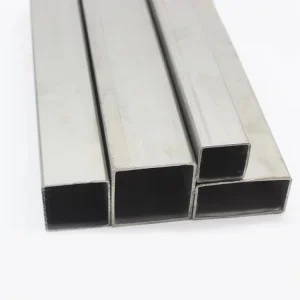
Explore our secondary catalog of industrial welded pipes, customized cold-rolled SUS304 plates, precision strip coils, and telescopic handle tubing manufactured for global distribution.
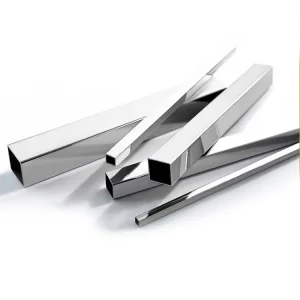
6. B2B Technical Q&A: Master Procurement Guidance
Direct insights from our senior metallurgical engineers addressing common questions raised by international procurement teams, fabricators, and engineering EPC contractors.
What is the key difference between SUS304 and SUS316L plate for industrial processing?
While both belong to the austenitic family, SUS304 contains 18% Chromium and 8% Nickel, offering standard corrosion resistance for food contact, architectural cladding, and general equipment. SUS316L contains an added 2–3% Molybdenum and maintains a lower carbon cap (<0.03%). The inclusion of Molybdenum significantly elevates its Pitting Resistance Equivalent Number (PREN ~25 vs. ~19 for 304), making SUS316L far more resistant to chloride pitting, acidic environments, and sea breeze exposure, while low carbon prevents sensitization during heavy plate welding.
How does Duplex 2205 plate lower total lifecycle costs compared to SUS316L?
Duplex 2205 (1.4462) features a dual-phase ferritic-austenitic microstructure that delivers nearly double the yield strength (~450 MPa) of austenitic 316L (~220 MPa). This elevated strength allows structural engineers to reduce plate thickness (gauge down-gauging) by up to 30-40% without compromising pressure rating or structural integrity. Furthermore, 2205 provides immunity to chloride stress corrosion cracking (SCC), making it far more durable in aggressive chemical, oil & gas, and wastewater processing plants.
Which international testing standards govern China SUS plate exports?
Export products manufactured at our Wuxi base strictly comply with major global standard frameworks:
• American Standards: ASTM A240 / A240M (Heat-resisting chromium and chromium-nickel plate, sheet, strip for pressure vessels and general applications).
• European Standards: EN 10088-2 (Technical delivery conditions for sheet/plate of corrosion resisting steels for general purposes).
• Japanese Standards: JIS G4304 (Hot-rolled stainless steel plate, sheet and strip) & JIS G4305 (Cold-rolled stainless steel plate, sheet and strip).
All goods are certified with full Mill Test Certificates according to EN 10204 3.1.
What surface finish options are recommended for hygienic vs. architectural applications?
For sanitary, food processing, and medical equipment, smooth cold-rolled finishes such as 2B (Cold rolled, annealed, pickled and skin passed) or BA (Bright Annealed) are recommended because they minimize surface roughness (Ra), preventing bacterial adherence. For architectural facades, interior walls, and elevator cabs, decorative surface treatments like No.4 (Brushed Satin), Hairline (HL), 8K Mirror Polished, or Embossed Patterned plates are preferred for visual appeal and scratch resistance.
What is the standard lead time, MOQ, and export sea-packing protection?
Standard inventory specifications (SUS304 / SUS316L 2B/No.1 plates in 1219x2438mm or 1500x6000mm) ship within 5 to 7 working days. Custom cut-to-length, perforated, or mirror-finished plates take 12 to 15 days. Minimum order quantities (MOQ) start from 1 metric ton for stock items. Export sea-packing involves wooden skids, waterproof poly-wrap, corrosion-inhibitor interleaving paper, metal corner guards, and heavy-duty steel strapping inside 20ft or 40ft FCL containers to prevent moisture and mechanical damage during ocean transit.