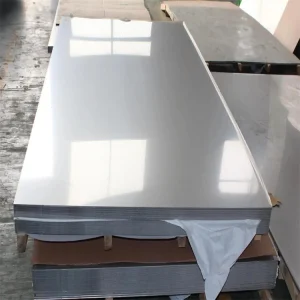
Precision Stainless Steel Plates, Pipes & Strips
Direct factory supply with certified thickness tolerances, superior surface finishes, and customized metallurgical processing.





Comprehensive Engineering Analysis of Stainless Steel Plate Thickness
In modern industrial engineering, selecting the appropriate stainless steel plate thickness is critical to ensuring structural integrity, corrosion resistance, and operational safety. Thickness dictates load-bearing capacity under high mechanical stress, pressure vessel containment efficiency, and thermal conductivity in heat transfer applications.
Cold-Rolled Plate Thickness Dynamics
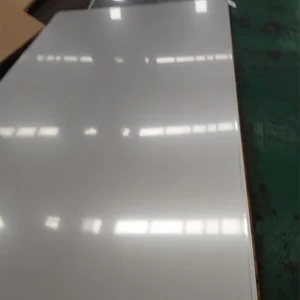
Cold-rolled stainless steel plates (CR) typically span thicknesses from 0.3mm to 6.0mm. Produced through precision reduction rolling at ambient temperatures, cold rolling delivers exceptional surface smoothness (2B, BA, No.4, Mirror), uniform mechanical properties, and extremely tight dimensional tolerances adhering to ASTM A480 / EN 10088-2 standards.
Hot-Rolled Plate Thickness Dynamics
Hot-rolled stainless steel plates (HR) range from 3.0mm up to 120mm+. Rolled at elevated recrystallization temperatures (>1100°C), hot-rolled plates exhibit a characteristic No.1 pickled finish. They are preferred for heavy structural fabrication, pressure vessels, marine structures, and industrial machinery where yield strength and ductile toughness outweigh surface aesthetics.
Standard Thickness & Tolerance Matrix (ASTM A240 / EN 10088)
| Nominal Thickness Range (mm) | Common Standard Gauge | Cold-Rolled Tolerance (ASTM A480) | Hot-Rolled Tolerance (ISO 9444 / EN 10029) | Primary Industrial Use Case |
|---|---|---|---|---|
| 0.30mm – 0.80mm | 28 Gauge – 22 Gauge | ± 0.02 mm | N/A (Ultra-Thin Foil) | Precision Electronics, Flexible Bellows, Decorative Trim |
| 1.00mm – 3.00mm | 20 Gauge – 11 Gauge | ± 0.04 mm | ± 0.15 mm | Food Processing, Commercial Kitchens, Architectural Cladding |
| 4.00mm – 8.00mm | 3/16" – 5/16" Plate | ± 0.08 mm | ± 0.25 mm | Chemical Storage Tanks, Transport Tankers, Structural Channels |
| 10.00mm – 25.00mm | 3/8" – 1" Heavy Plate | Custom Mill Request | ± 0.35 mm | Pressure Vessels (ASME VIII), Marine Bulkheads, Boiler Shells |
| 30.00mm – 100.00mm+ | Extra Heavy Industrial Plate | N/A | ± 0.50 mm – 0.80 mm | Nuclear Power Plants, Offshore Oil Rigs, Heavy Machinery Bases |
China Factory Supply Chain Advantages in Stainless Steel Production
China produces over 55% of the world's crude stainless steel. Sourcing stainless steel plate directly from leading Chinese suppliers like Jiangsu Renzhi Holding Group Co., Ltd. located in Wuxi—China’s premier stainless steel distribution hub—delivers unparalleled structural advantages to international B2B buyers.
Upstream Feedstock Integration
Our strategic partnerships with tier-one primary steel mills including Tsingshan, TISCO, POSCO, and Baosteel ensure continuous access to high-purity slab and master coils. This integration guarantees consistent chemical compositions (Cr, Ni, Mo content) and stable mill-direct pricing free from intermediary markups.
Advanced In-House Processing Infrastructure
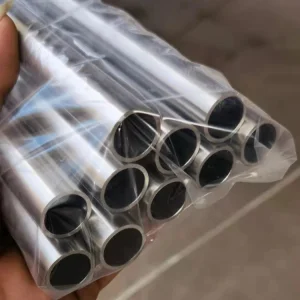
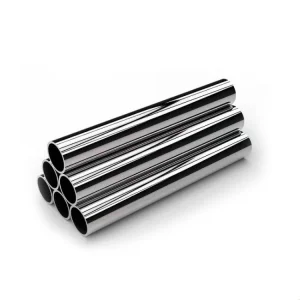
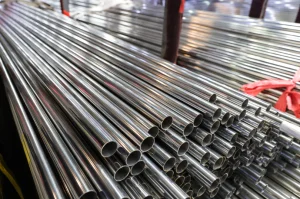
Equipped with 5 automatic high-speed flattening & slitting lines, 6 automated surface polishing lines (No.4, Hairline, 8K Mirror), and 80+ welded tube lines, our facility handles complex custom width and length requests with minimal lead times and high yield efficiency.
Economies of Scale & Cost Efficiency
By streamlining high-tonnage production runs, optimized energy utilization, and localized logistics clusters in Jiangsu province, Chinese suppliers offer global buyers competitive total cost of ownership (TCO) without compromising metallurgical compliance.
Localized Application Scenarios Categorized by Plate Thickness
Matching the correct grade and thickness specification to specific mechanical environments prevents localized stress corrosion cracking (SCC), pitting, and premature structural failure.
1. Architectural Facades & Interior Design (0.5mm – 2.0mm)
Primary Grades: SUS201, SUS304, SUS430
Surface Finishes: Hairline, 8K Mirror, PVD Color Coated, Embossed
Engineering Focus: Architectural cladding and curtain walls require tight flatness tolerances and uniform visual texture. Thin gauge cold-rolled sheets provide light dead-weight ratio while maintaining wind load resistance in high-rise structures.
2. Food, Beverage & Pharmaceutical Equipment (1.5mm – 6.0mm)
Primary Grades: SUS304, SUS304L, SUS316L
Surface Finishes: 2B, Sanitary Polished (Ra < 0.4μm)
Engineering Focus: Tanks, mixing vessels, and piping manifolds require biological inertness and resistance to CIP (Clean-In-Place) chemical sterilizers. Smooth cold-rolled thickness guarantees pore-free surfaces preventing bacterial entrapment.
3. Heavy Chemical Processing & Pressure Vessels (6.0mm – 30.0mm)
Primary Grades: 316L, 317L, 310S, Duplex 2205
Surface Finishes: No.1 Hot Rolled Pickled
Engineering Focus: Autoclaves, heat exchangers, and distillation columns operate under high internal pressure and aggressive chloride exposure. Thicker hot-rolled plates designed under ASME Section VIII Division 1 guidelines absorb hoop stress and mechanical fatigue.
4. Marine, Seawater Desalination & Offshore Engineering (10.0mm – 80.0mm)
Primary Grades: Super Duplex 2507, 254SMO, 904L
Surface Finishes: No.1 Heavy Industrial
Engineering Focus: Offshore oil platforms and reverse osmosis desalination plants face extreme pitting corrosion (PREN > 40). Thick duplex plates combine high yield strength (>550 MPa) with exceptional resistance to crevice corrosion.
Global Compliance, Quality Control & E-E-A-T Assurance
For global procurement buyers, compliance and traceability are non-negotiable. Jiangsu Renzhi Holding Group maintains rigorous quality management frameworks to ensure every shipment complies fully with international metallurgical directives.
Traceable EN 10204 3.1 / 3.2 MTC
Every plate and pipe shipment is accompanied by an authentic Material Test Certificate (MTC) according to EN 10204 3.1 or independent 3.2 inspection. Certificates detail heat numbers, full ladle chemical analysis, and mechanical test results (tensile, yield, elongation, impact, hardness).
Non-Destructive Testing (NDT)
Thick hot-rolled structural plates undergo Ultrasonic Testing (UT) per ASTM A578 to detect internal lamination or voids. Welded pipes undergo Eddy Current Testing (ET), Hydrostatic Pressure Testing, and X-ray weld inspection prior to seaworthy packaging.
International Certification Compliance
Manufacturing facilities operate under ISO 9001:2015 Quality Management Systems, ISO 14001:2015 Environmental Systems, CE Pressure Equipment Directive (PED 2014/68/EU), and RoHS compliance for international customs verification.
Industry Development Trends: Precision & Green Steel
The global stainless steel industry is shifting rapidly toward higher strength-to-weight ratios, material downgauging, and decarbonized manufacturing processes.
1. Lightweighting with Duplex Steels
Engineers are increasingly replacing standard 304/316L thick plates with high-strength Duplex 2205 and Super Duplex 2507. Because duplex stainless steels offer nearly double the yield strength, designers can reduce plate thickness by 30% to 40% without compromising load rating—drastically lowering deadweight and freight cost.
2. Ultra-Thin Precision Cold-Rolling
Demand for ultra-thin stainless steel foils and precision strips (down to 0.05mm – 0.15mm) is accelerating in hydrogen fuel cell bipolar plates, EV battery enclosures, and 5G telecommunication shields. This requires automated laser gauge thickness monitoring systems during continuous rolling.
3. Decarbonization & Circular Economy
Modern Chinese mills are adopting Electric Arc Furnace (EAF) technologies powered by renewable microgrids and utilizing over 80% recycled stainless steel scrap. Sourcing low-carbon green stainless steel helps global OEMs meet Scope 3 carbon reduction targets.
Frequently Asked Technical & Procurement Questions
Expert answers regarding stainless steel plate thickness tolerances, mill certifications, and custom processing options.
Industrial Grade Stainless Steel Products & Components
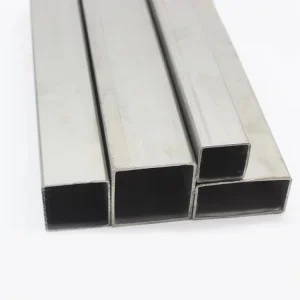
Factory direct wholesale options for decorative tubing, duplex plates, high-carbon lower-carbon alloys, and specialized structural pipes.