
Mill-Direct Stainless Steel Products & Components
Precision-engineered cold-rolled sheets, industrial welded pipes, custom coils, and structural plates direct from China's leading manufacturing hub.





Global Market & Industrial Landscape of Stainless Steel Golden Pipes
The global demand for high-value-added decorative metal tubing has undergone a structural shift over the past decade. Among specialized architectural surface finishes, Stainless Steel Golden Pipes—engineered via advanced Physical Vapor Deposition (PVD) Titanium Nitride (TiN) vacuum coating—have transcended traditional interior decoration to become critical structural and aesthetic components across luxury hospitality, commercial facades, mega-infrastructure projects, and marine environments.
Historically, achieving a durable gold aesthetic on industrial tubing required wet chemical electroplating or gold leaf application, both of which suffer from severe environmental liabilities, low abrasion resistance, and propensity to peel or tarnish when exposed to atmospheric sulfur and UV radiation. China's manufacturing sector has spearheaded a technological transformation by integrating precision ERW (Electric Resistance Welding) and seamless stainless steel pipe extrusion with high-vacuum magnetron sputtering PVD technologies. This innovation has democratized access to gold-finish steel tubing, delivering superior mechanical longevity at a fraction of the cost of legacy electroplating.
According to recent metallurgical market indices, the Asia-Pacific region accounts for over 68% of global stainless steel golden pipe production, with Chinese manufacturers in major steel clusters like Wuxi and Foshan leading the supply chain. This dominance is anchored by complete vertical integration: from raw feedstock sourcing (such as hot-rolled and cold-rolled coils from Tsingshan, TISCO, and Baosteel) to continuous automatic tube welding, multi-stage surface polishing (8K mirror and hairline), and industrial-scale vertical PVD vacuum chambers capable of coating pipes up to 12 meters in length.
Cost-Efficiency at Scale
By leveraging mass automated PVD batch processing, Chinese manufacturers achieve up to a 40% cost reduction compared to European surface treatment workshops, without compromising on film thickness or adhesion strength.
Eco-Friendly PVD Process
Zero toxic waste discharge. Vacuum magnetron sputtering eliminates hazardous cyanide and chromium chemical baths, fully aligning with global ISO14001 environmental standards and EU REACH directives.
Extreme Wear & UV Hardness
Titanium Nitride (TiN) physical vapor films yield surface hardness levels exceeding 2000 Vickers (HV), making golden pipes immune to scratching, oxidation, and direct solar color degradation.
Technical Roadmap & Metallurgy of PVD Golden Pipes
The creation of a high-performance Stainless Steel Golden Pipe involves a multi-tier engineering pipeline. Understanding this technical sequence is vital for global B2B procurement managers to specify the exact grade, finish, and coating thickness required for their specific structural environments.
Substrate Metallurgy Comparison
The underlying substrate steel determines the structural integrity and corrosion resistance of the golden pipe. PVD titanium coating provides surface hardness, but substrate selection prevents pitting beneath the golden film.
- Grade 201 (17Cr-4.5Ni-6Mn-N): Cost-effective option for indoor decorative installations, hotel furniture frameworks, balustrades, and curtain rods. Best suited for dry, climate-controlled environments.
- Grade 304 / 304L (18Cr-8Ni): The global benchmark for architectural facades, outdoor handrails, and public transport infrastructure. Offers excellent intergranular corrosion resistance after welding.
- Grade 316 / 316L (16Cr-10Ni-2Mo): Enhanced with 2-3% Molybdenum to prevent chloride pitting. Crucial for luxury yacht interiors, coastal architectural columns, and marine resort structures.
- Duplex 2205 / 2507: High yield strength combined with extreme resistance to stress corrosion cracking, utilized in specialized industrial decorative frameworks exposed to aggressive chemical vapors.
Multi-Step Manufacturing Workflow
Cold-rolled stainless steel strip is uncoiled, slit to exact widths, and continuously formed into round, square, or rectangular tube profiles using multi-stage roller dies.
Automatic TIG or high-precision Fiber Laser welding bonds the seam under argon gas shielding. The internal and external weld beads are continuously leveled to maintain structural homogeneity.
Pipes pass through automated multi-head polishing lines to achieve either an 8K Mirror polish (Ra < 0.05μm) or a uniform Hairline/Brushed satin texture prior to coating.
Pipes undergo 5-stage chemical degreasing before loading into vertical PVD chambers. High-purity Titanium targets are ionized in a nitrogen plasma to deposit a micro-thin (0.3 - 1.5μm) TiN golden film.
China Stainless Steel Golden Pipe Wholesale Pricelist & Cost Structure
A detailed breakdown of benchmark factory-direct pricing trends, raw material pricing dynamics, and customization surcharge factors.
Formulating a realistic purchasing strategy for Stainless Steel Golden Pipes requires an understanding of how base metal spot prices on the London Metal Exchange (LME) and Shanghai Futures Exchange (SHFE) interact with surface treatment premiums. Golden pipe pricing is calculated using a dual matrix: [Base Stainless Steel Pipe Weight Cost/Ton] + [PVD Chamber Batch Surface Fee/Meter or SQM].
| Stainless Steel Grade | Standard Pipe OD & Thickness | Surface Finish | Estimated FOB China Price (USD/Ton) | Estimated FOB Price (USD/Meter) |
|---|---|---|---|---|
| Grade 201 (Decorative) | OD 25.4mm x WT 0.8mm | Mirror PVD Titanium Gold | $1,450 - $1,750 / Ton | $0.85 - $1.20 / Meter |
| Grade 201 (Decorative) | OD 50.8mm x WT 1.2mm | Hairline Rose / Champagne Gold | $1,500 - $1,800 / Ton | $2.10 - $2.70 / Meter |
| Grade 304 (Standard) | OD 25.4mm x WT 1.0mm | 8K Mirror Gold (TiN) | $2,650 - $3,100 / Ton | $1.75 - $2.30 / Meter |
| Grade 304 (Standard) | OD 76.2mm x WT 1.5mm | Brushed Gold / Matte Gold | $2,700 - $3,200 / Ton | $5.20 - $6.50 / Meter |
| Grade 316L (Marine Grade) | OD 38.1mm x WT 1.5mm | Mirror PVD Gold (1.0μm Film) | $3,900 - $4,500 / Ton | $4.80 - $5.90 / Meter |
| Grade 316L (Marine Grade) | OD 101.6mm x WT 2.0mm | Hairline PVD Titanium Gold | $4,000 - $4,650 / Ton | $12.50 - $15.80 / Meter |
Key Drivers Influencing Golden Pipe Cost
- LME Nickel & Molybdenum Volatility: Nickel constitutes over 60% of the raw material cost in 304 and 316 series. A $1,000/ton swing in LME nickel directly shifts final tube export pricing by approximately 6-8%.
- PVD Coating Thickness & Target Purity: Standard decorative golden pipes utilize a 0.3μm - 0.5μm TiN film. Exterior architectural or high-wear applications requiring a 1.0μm - 1.5μm film incur a 15-25% coating surcharge due to extended vacuum chamber residence time.
- Golden Color Hue Variance: Standard hues include Ti-Gold (Yellow Gold), Rose Gold (Cu-N target blend), Champagne Gold (Light Yellow), and Zirconium Gold (Brass Tone). Custom color matching using Spectrophotometer Delta-E controls requires specific gas mix recalibration.
- Tube Shape & Geometric Complexity: Custom oval, slotted, twisted, or heavy-wall square golden tubing requires specialized polishing jigs and manual loading inside the vacuum chamber, increasing labor costs compared to standard round pipes.
Localized Application Scenarios & Strategic Solutions
How global engineering firms, luxury brand architects, and structural fabricators integrate Chinese golden pipes into flagship projects.
1. Luxury Commercial & Hotel Architecture
Scenario: Atrium lobby columns, revolving door frames, glass curtain wall mullions, and elevator interior structural trims in 5-star hotels and luxury retail flagship stores.
Solution: Specifying SUS304 8K Mirror Gold Pipes with anti-fingerprint nano-sealant. The mirror finish maximizes ambient light reflection, while the anti-fingerprint coating drastically reduces maintenance costs in high-traffic public areas.
2. Marine Interior & Coastal Balustrades
Scenario: Deck handrails, superyacht exterior accents, and seaside resort perimeter fencing subjected to continuous salt spray, high humidity, and atmospheric chlorides.
Solution: Utilizing AISI 316L Hairline PVD Golden Tubing passing 1,000-hour Neutral Salt Spray Testing (ASTM B117). The Molybdenum alloy matrix prevents crevice oxidation beneath the PVD titanium layer.
3. Modern Sanitaryware & Household Components
Scenario: Premium bathroom shower columns, towel warming racks, telescopic mop handles, and high-end curtain display hardware.
Solution: Custom-drawn Grade 201 or 304 thin-wall golden tubes with specialized anti-fingerprint surface treatments that resist hot water, alkaline soaps, and daily mechanical abrasion.
4. Public Infrastructure & Transportation Hubs
Scenario: Airport terminal guiding barriers, subway station decorative handrails, and museum exhibition display frameworks.
Solution: Heavy-wall Grade 304 structural golden pipes engineered with high yield strength to withstand heavy crowd impact loads while retaining decorative lustre without chipping.
International Standards & Factory Verification Protocols
Ensuring chemical compliance, mechanical integrity, and PVD film longevity before shipment.
To avoid receiving sub-standard products—such as low-nickel grade 201 mislabeled as grade 304, or non-vacuum spray-painted pipes passing as genuine PVD golden pipes—global procurement officers must enforce strict mill test certificates (MTC according to EN 10204 3.1) and verification benchmarks.
Chemical & Metallurgical Norms
Compliance with global specifications: ASTM A240 (Heat-resisting chromium and chromium-nickel plate/sheet/strip), ASTM A554 (Welded stainless steel mechanical tubing), EN 10088-2, and JIS G4304.
PVD Film Testing
Verification via X-ray Fluorescence (XRF) Spectrometry to confirm TiN layer thickness (0.3 - 1.5μm), Cross-cut Adhesion Testing (ISO 2409 / ASTM D3359 Class 5B), and Vickers Hardness (>2000 HV).
CE & Export Compliance
CE Certification according to EU Construction Products Regulation (CPR 305/2011), factory ISO9001:2015 quality management compliance, and full traceability from steel slab heat number to finished pipe bundling.
Industrial Welded Pipes, Perforated Sheets & Tubing Range
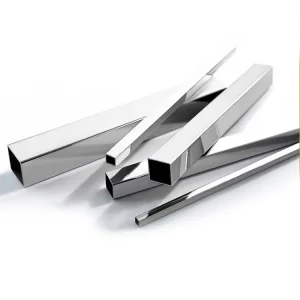
Select from our extensive inventory of CE-certified low carbon stainless steel pipes, custom perforated metal panels, and precision drawn telescopic tubes.



Frequently Asked Questions & Technical Guidance
In-depth answers to critical procurement, fabrication, and chemical performance questions regarding China stainless steel golden pipes.
How does Physical Vapor Deposition (PVD) gold compare to traditional electroplating?
PVD (Vacuum Magnetron Sputtering) deposits a thin, highly adherent Titanium Nitride (TiN) alloy ceramic coating in a high-vacuum chamber. Unlike water-electroplating, PVD produces zero toxic liquid effluents, yields a much higher surface hardness (>2000 HV vs ~400 HV for gold plating), provides superior scratch resistance, and will not peel, chip, or flake over time when subjected to thermal expansion.
Can Stainless Steel Golden Pipes be cut and welded without ruining the gold finish?
Yes. Golden pipes can be cut using cold saw blades or fiber laser cutting systems. When welding golden pipes, TIG welding with argon gas back-purging is recommended. However, heat-affected zones (HAZ) adjacent to the weld seam will burn off the PVD layer. Fabricators typically conceal joints using decorative golden sleeve fittings, internal expansion connectors, or perform localized touch-up PVD/PVD repair spray.
Will the golden color fade under direct sunlight or exterior UV exposure?
Genuine Titanium Nitride (TiN) PVD golden coatings are chemically inert inorganic metallic ceramics. They possess complete immunity to solar ultraviolet (UV) radiation and will not fade, discolor, or turn chalky even after decades of exterior architectural installation. Color shifts only occur if low-quality organic lacquer topcoats are applied instead of true PVD sputtering.
What is the typical minimum order quantity (MOQ) and production lead time?
For standard round golden pipe sizes (e.g., OD 25.4mm, 38.1mm, 50.8mm in Grade 201 or 304), MOQ is typically 1 to 3 Metric Tons per size. Custom ODs, wall thicknesses, or special color hues (Rose Gold, Champagne Gold) require a minimum vacuum chamber batch size (approx. 500-1000 meters). Production lead times generally range from 15 to 25 days depending on base pipe milling and PVD chamber scheduling.
Which stainless steel grade should I choose for an outdoor coastal installation?
For outdoor coastal or high-humidity environments, Grade 316 or 316L stainless steel substrate must be specified. The 2-3% Molybdenum content in Grade 316 protects the underlying metal against salt-spray pitting corrosion. PVD coating over Grade 201 or standard 304 in coastal salt air may result in sub-surface rusting over time if microscopic pinholes occur in the finish.
What export packaging is used to protect golden pipe surfaces during sea freight?
To prevent surface scratches and abrasion during transit, each individual golden pipe is encased in a protective PE sleeve or high-tack removable protective film. Pipes are then wrapped in moisture-proof woven plastic wrapping and secured inside heavy-duty fumigated wooden crates or steel-framed bundles equipped with lifting slings for forklift unloading.
Sourcing Checklist for China Stainless Steel Golden Pipes
Follow these key engineering verification steps before placing high-volume contract orders.
1. Material Verification
Always request a third-party PMI (Positive Material Identification) spectrometer test report or an EN 10204 3.1 Mill Test Certificate to verify Nickel, Chromium, and Molybdenum composition prior to PVD processing.
2. Spectrophotometer Color Standard
Define an agreed Delta-E (ΔE < 0.8) color tolerance limit using a spectrophotometer to ensure perfect color matching across multiple container shipments and production batches.
3. Film Adhesion & Hardness
Mandate cross-hatch tape adhesion testing and scratch resistance testing on sample pipes from each PVD vacuum chamber batch to verify coating integrity.
4. Packaging & Protective Film Audit
Ensure protective PE films are UV-resistant and specified for clean removal within 6 months of job site installation to prevent adhesive residue bonding to the golden PVD surface.