
Featured Stainless Steel Plates & Sheets
Precision-rolled, high-temperature, and corrosion-resistant stainless steel flat products manufactured to ASTM A240, EN 10088-2, and JIS G4304 technical standards.
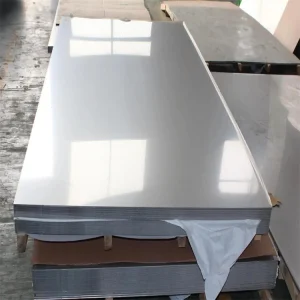




Executive Metallurgy Blueprint: Grade 321 Stainless Steel Chemistry & Thermal Dynamics
An authoritative engineering breakdown of Titanium-stabilized austenitic stainless steel plate (UNS S32100 / EN 1.4541), analyzing microstructural behavior, intergranular corrosion mitigation, and high-temperature creep performance.
Titanium Stabilization & Chromium Carbide Suppression
Grade 321 is a stabilized austenitic stainless steel modified from the basic 18/8 chromium-nickel alloy (Grade 304) by the addition of Titanium (Ti). When standard unstabilized austenitic steels such as 304 are exposed to temperatures within the critical carbide precipitation range of 427°C to 816°C (800°F to 1500°F), chromium carbides ($Cr_{23}C_6$) precipitate along grain boundaries. This depletes the adjacent matrix of chromium, rendering the alloy highly vulnerable to Intergranular Corrosion (IGC)—frequently called "weld decay".
In 321 stainless steel plates, Titanium possesses a significantly higher thermodynamic affinity for Carbon than Chromium does. The alloy formulation mandates a Titanium content equal to at least 5 times the carbon concentration ($Ti \ge 5 \times (C+N)$). As a result, Titanium Carbides ($TiC$) form preferentially throughout the grains rather than chromium carbides at grain boundaries. This preserves the chromium concentration ($>17\%$) across the austenite matrix, maintaining passive oxide film integrity ($Cr_2O_3$) even during prolonged thermal exposure or multi-pass heavy plate welding.
High-Temperature Creep Rupture & Mechanical Durability
Beyond its resistance to intergranular attack, 321 stainless steel plate demonstrates superior elevated-temperature mechanical properties compared to 304 and 304L grades. At operating temperatures exceeding 500°C, design engineers must account for creep—the time-dependent plastic deformation of metals under constant mechanical stress.
The dispersion of fine Titanium Carbide precipitates within the 321 crystal lattice acts as an effective barrier against dislocation movement (pinning grain boundary sliding). Consequently, 321 plates deliver higher stress-rupture values and improved creep resistance up to 870°C (1600°F). For ultra-high thermal applications, specialized high-carbon variants such as 321H (UNS S32109) with controlled carbon content ($0.04\% - 0.10\%$) and elevated solution annealing temperatures ($1020°C - 1120°C$) are deployed to maximize long-term creep rupture strength.
Grade Comparison Matrix: 321 vs. 304, 316L, 310S & 347
Selecting the optimum stainless steel plate requires balancing high-temperature mechanical properties, chemical resistance, and total cost of ownership. Review our technical chemical and mechanical benchmark table.
| Steel Grade | UNS / EN Standard | Chemical Composition (%) | Max Temp (°C) | Primary Corrosion Mechanism | Ideal Application Intent |
|---|---|---|---|---|---|
| 321 Stainless Steel | UNS S32100 / EN 1.4541 | Cr: 17.0–19.0 | Ni: 9.0–12.0 | Ti: 5x(C+N)–0.70 | 870°C | Resists Intergranular Corrosion in $427-816^\circ\text{C}$ range | Aircraft exhaust stacks, petrochemical expansion joints, boilers |
| 304 / 304L | UNS S30400 / EN 1.4301 | Cr: 17.5–19.5 | Ni: 8.0–10.5 | C: ≤0.07 / ≤0.03 | 800°C | Susceptible to carbide precipitation if welded/heated above 427°C | General food processing, architectural trim, low-temp storage |
| 316L | UNS S31603 / EN 1.4404 | Cr: 16.0–18.0 | Ni: 10.0–14.0 | Mo: 2.0–3.0 | 850°C | Superior pitting & crevice corrosion resistance in chlorides | Marine hardware, pharmaceutical vessels, chemical transport |
| 310S | UNS S31008 / EN 1.4845 | Cr: 24.0–26.0 | Ni: 19.0–22.0 | C: ≤0.08 | 1150°C | High resistance to oxidation & cyclic thermal scaling | Kiln muffles, furnace baffles, thermal treatment equipment |
| 347 Stainless Steel | UNS S34700 / EN 1.4550 | Cr: 17.0–19.0 | Ni: 9.0–13.0 | Nb: 10x(C) min | 870°C | Niobium-stabilized alternative against intergranular attack | High-stress thermal piping, heavy-wall pressure vessels |
Localized Industrial Application Scenarios for 321 Stainless Steel Plates
Engineered for extreme thermal cycling and severe operating environments. China 321 stainless steel plate manufacturers deliver customized plate solutions across core global heavy industries.
Aerospace & Defense Thermal Shielding
In jet engines, missile shrouds, and aircraft exhaust manifolds, components endure rapid thermal ramp-ups exceeding 700°C alongside high vibrational stress. Thin cold-rolled 321 stainless sheets and medium hot-rolled plates provide structural integrity without thermal distortion, preventing grain-boundary embrittlement under continuous exhaust gas exposure.
Petrochemical Refining & Catalytic Cracking
Refineries operate fluid catalytic cracking units (FCCU), hydrotreaters, and thermal piping manifolds within the sensitization temperature window. Heavy-gage 321 hot-rolled stainless plates (10mm to 50mm thickness) are flame-cut, rolled, and submerged-arc welded into pressure vessels and reactor walls requiring strict resistance to polythionic acid stress corrosion cracking during shutdown periods.
Thermal Power Generation & Boiler Shells
Superheater tubes, reheater headers, and boiler casing liners rely on 321 plate fabrications. With high allowable stress values defined under ASME Boiler and Pressure Vessel Code (BPVC) Section VIII, 321 plate delivers long service life in coal-fired, biomass, and combined-cycle gas turbine (CCGT) steam generators.
Expansion Joints & Metallic Bellows
High-flex, heat-resistant expansion bellows in industrial HVAC, diesel engine exhaust systems, and chemical processing lines require high fatigue strength and ductile forming capabilities. Precision cold-rolled 2B finish 321 sheets ensure consistent grain size, permitting multi-ply convolution forming without micro-cracking.
Automotive High-Performance Exhaust Systems
Modern turbocharged exhaust downpipes, flex pipes, and catalytic converter housings experience severe thermal shock. Substituting 409 or 430 ferritics with 321 stainless steel plate extends component lifecycle, preventing oxidation scaling from entering high-rpm turbocharger turbines.
Industrial Kiln Baffles & Heat Treatment Fixtures
Annealing furnaces, carburizing boxes, and heat-treatment trays demand structural alloys that retain load-bearing capacity without sagging or spalling oxide scales under continuous thermal cycling up to 850°C.
Technology Roadmap & Future Outlook: Advanced Stainless Plate Manufacturing
How leading Chinese mills are leveraging Vacuum Oxygen Decarburization (VOD), AI-driven AGC gauge control, and ultra-clean steelmaking to elevate 321 plate quality for next-generation clean energy applications.
Modern Chinese stainless steel mills (such as TISCO, Tsingshan, and Baosteel) utilize advanced Argon Oxygen Decarburization (AOD) alongside Vacuum Oxygen Decarburization (VOD) converters. This process reduces dissolved gas inclusions (Oxygen, Hydrogen, Nitrogen) and tightens carbon chemistry tolerances down to ±0.005%. Precise addition of Ferro-Titanium master alloys prevents element burning and guarantees homogeneous Ti distribution across massive 30-ton slabs.
Next-generation 4-High and 20-High Sendzimir cold-rolling mills integrated with Automatic Gauge Control (AGC) maintain plate thickness tolerances within ±0.01mm across entire 1500mm/2000mm sheet widths. Automated online laser thickness gauges and multi-channel ultrasonic flaw detectors scan 100% of plate volume to ensure zero internal voids or lamination defects prior to leveling.
To achieve maximum corrosion resistance, advanced processing lines deploy a specialized stabilization anneal at 870°C to 900°C (1600°F to 1650°F). This thermal soak causes complete precipitation of carbon as Titanium Carbide while allowing chromium to redistribute evenly throughout the matrix. Modern continuous bright annealing lines utilizing high-purity hydrogen atmosphere deliver pit-free BA surface finishes, eliminating liquid pickling acid waste.
Aligning with global carbon neutrality mandates, Chinese stainless steel manufacturers are transitioning to electric arc furnace (EAF) steelmaking powered by renewable energy grids and direct reduced iron (DRI) processes. This lowers embedded carbon footprints by up to 40% for export-bound 321 stainless steel plates entering European and North American decarbonization markets.
China Supply Chain Resilience & Manufacturing Efficiency Advantages
Unpacking the structural economic, geographical, and industrial ecosystem advantages that allow Wuxi and Jiangsu stainless steel manufacturing clusters to deliver world-class quality at competitive quotes.
Wuxi-Jiangsu Industrial Cluster Synergies
Centered in Wuxi, Jiangsu—the epicenter of China's stainless steel processing and distribution sector—our production footprint benefits from immediate raw material coil access from Tier-1 primary smelters (TISCO, Baosteel, Tsingshan, POSCO). This eliminates long-distance raw material freight delays, allowing factory production to start within 24 hours of order placement.
Within a 15-kilometer radius, integrated processing centers offer state-of-the-art heavy plate laser cutting, plasma arc cutting, waterjet machining, precision slitting, hydraulic flattening, and mirror polishing (8K/No.4/Hairline). This vertical consolidation reduces manufacturing lead times by up to 50% compared to fragmented international supply chains.
Cost Efficiency & Scale Economics
China's massive stainless steel output accounts for over 55% of global production. Primary mills leverage low-cost Nickel Pig Iron (NPI) integration and high-speed continuous casting lines. These scale economies pass directly to international buyers in the form of lower FOB/CIF mill quotes per metric ton, without compromising material purity or certification integrity.
By offering direct-from-factory quotes, international buyers avoid intermediary stockist surcharges, obtaining transparent price breakdowns spanning base metal cost, alloy surcharges (Nickel, Chromium, Titanium), and custom processing fees.
Global Commercial Trends & 321 Stainless Plate Sourcing Economics
Navigating raw material price dynamics, alloy surcharge calculations, and international procurement strategies for procurement heads and engineering EPC contractors.
Alloy Surcharge Mechanics
Prices for 321 stainless steel plate are indexed against London Metal Exchange (LME) nickel spot prices, ferro-chrome benchmarks, and sponge titanium availability. Understanding monthly alloy surcharge adjustments empowers procurement teams to lock in forward contracts during price corrections, protecting capital project budgets.
Energy Transition Demand Drivers
Global investments in green hydrogen electrolyzers, carbon capture and storage (CCS) facilities, and concentrated solar power (CSP) receivers have accelerated global demand for heat-resistant 321 and 310S plates. 321 plate serves as a crucial bridge material where standard 304 fails due to thermal fatigue and nickel-superalloys prove cost-prohibitive.
Seaworthy Export Packaging & Logistics
To prevent surface scratching and sea-atmosphere oxidation during transoceanic shipping, 321 plates undergo rigorous export packaging: inter-leaving moisture-proof paper, PE film wrap, steel edge protectors, heavy-duty wooden skids, and containerized lashing certified for breakbulk or FCL transportation.
E-E-A-T Quality Assurance, Testing Protocols & International Compliance
Every shipment of 321 stainless steel plate is accompanied by a full EN 10204 3.1 Mill Test Certificate (MTC), certifying chemical heat analysis, mechanical tensile/yield testing, hardness values, and intergranular corrosion verification.
Comprehensive Quality Testing Workflow
- Positive Material Identification (PMI): 100% X-ray Fluorescence (XRF) hand-held gun testing on every plate to verify Titanium ($Ti \ge 5\times C$) and Nickel alloy ratios prior to dispatch.
- ASTM A262 Practice E Corrosion Testing: Copper-Copper Sulfate-16% Sulfuric Acid test for detecting intergranular corrosion susceptibility in stabilized austenitic stainless steels.
- Ultrasonic Flaw Detection (UT): Executed according to ASTM A578 Level A/B standards to guarantee internal plate soundness for pressure vessel grade plates.
- Dimensional & Flatness Inspection: Laser micrometer verification of thickness, diagonal squareness, and flatness tolerance under ASTM A480 / EN 10088-2.
Global Regulatory Certifications
Our manufacturing partner facilities hold rigorous international quality accreditations to simplify border compliance and engineering approvals in destination countries:
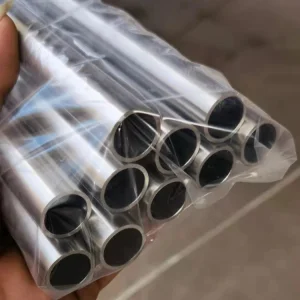
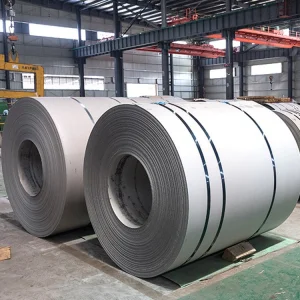
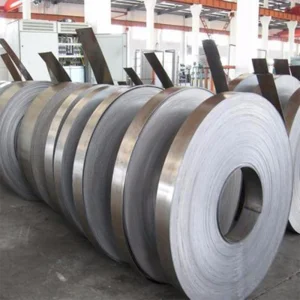
Explore Related Stainless Steel Sheets, Pipes & Coils
Browse our extended product portfolio featuring high-grade austenitic, low-carbon, and duplex stainless steel products available for worldwide export.
Frequently Asked Questions (FAQ) - 321 Stainless Steel Plate
Expert responses to critical engineering and procurement inquiries regarding 321 stainless steel plate specifications, manufacturing lead times, and thermal performance.
What is the main advantage of using 321 stainless steel plate over 304 in high-temperature applications?
The primary advantage is Titanium stabilization. When exposed to temperatures between 427°C and 816°C (800°F–1500°F), Grade 304 precipitates chromium carbides along grain boundaries, depleting chromium and causing intergranular corrosion ("weld decay"). Grade 321 contains Titanium ($Ti \ge 5 \times C$), which binds with Carbon to form stable Titanium Carbides ($TiC$), preserving matrix chromium content and maintaining full corrosion resistance during high-temperature service and welding.
How does 321 stainless steel compare to 316L in acidic or chloride-rich environments?
For marine or ambient chloride environments, 316L is superior due to its 2.0%–3.0% Molybdenum addition, which specifically resists chloride pitting and crevice corrosion. However, for elevated temperatures ($>500^\circ\text{C}$) where intergranular corrosion or thermal creep is the dominant threat, 321 outperforms 316L. 321 is tailored for thermal endurance, whereas 316L is tailored for chemical pit resistance.
What standard dimensions and surface finishes are available for 321 stainless plates?
We supply 321 cold-rolled sheets in thicknesses from 0.3mm to 3.0mm (Widths: 1000mm, 1219mm, 1500mm; Finishes: 2B, BA, No.4 hairline, 8K mirror) and hot-rolled plates from 3.0mm to 100mm+ (Widths: 1500mm, 1800mm, 2000mm, 2500mm; Finish: No.1 pickled and annealed). Custom length shearing, plasma cutting, laser profiling, and waterjet blanking are performed in-house.
Does 321 stainless steel require post-weld heat treatment (PWHT)?
Generally, no. Because the Titanium stabilization prevents chromium carbide precipitation during welding, 321 stainless steel plates can be welded using standard fusion techniques (GTAW/TIG, GMAW/MIG, SMAW) without requiring post-weld annealing. However, for extreme service conditions where stress-corrosion cracking is a concern, a stabilization heat treatment at 870°C to 900°C may be specified.
What documentation and certification accompany an export order of 321 plates?
All shipments include a certified EN 10204 3.1 Material Test Report (MTC) detailing melt heat numbers, exact chemical composition (including Ti ratio), tensile strength, yield strength, elongation, Brinell/Rockwell hardness, and intergranular corrosion test results (ASTM A262 Practice E). Third-party inspection (SGS, TUV, Bureau Veritas, Intertek) is available upon request.