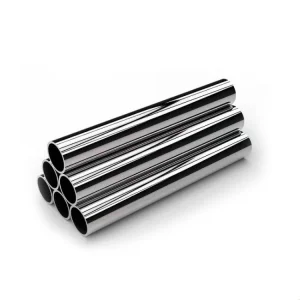
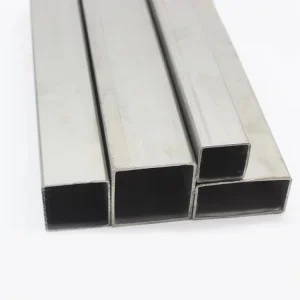
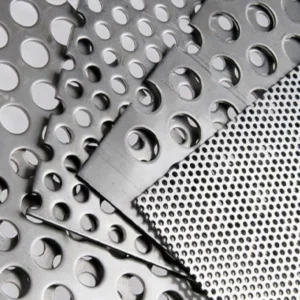
Featured CE-Certified Stainless Steel Products
Direct mill-source stainless steel tubes, coils, and plates manufactured to international tolerances and tested for high-pressure & structural applications.
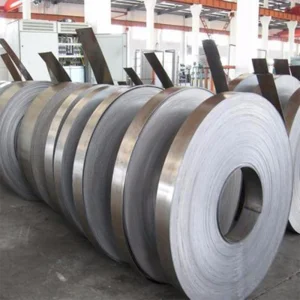
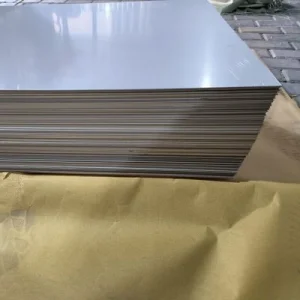
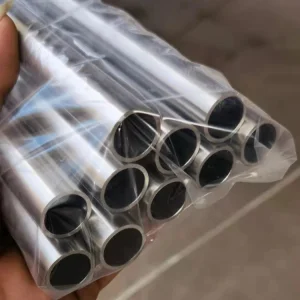
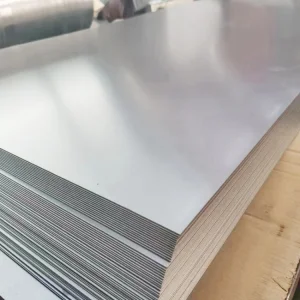
1. Global Industrial Status of Stainless Steel Tubing
Analyzing global consumption patterns, regulatory standard shifts, and supply chain dynamics driving the international tubular steel industry.
Global Market Volume & Demand Drivers
The global stainless steel tube market has surpassed $34 Billion in valuation, driven by expanding infrastructure, chemical processing, pharmaceutical cleanroom setups, and offshore energy projects. Austenitic grades (304/304L, 316/316L) account for over 68% of global consumption, while Duplex (2205) and Super Duplex (2507) exhibit the fastest compound annual growth rate due to high chloride resistance requirements in desalination and marine systems.
Regulatory Mandates & CE Harmonization
Compliance with the European Pressure Equipment Directive (PED 2014/68/EU) and Construction Products Regulation (CPR 305/2011) has transitioned from an optional advantage to a mandatory market access entry point. European and Middle Eastern EPC contractors strictly enforce CE certification alongside EN 10217-7 (welded steel tubes for pressure purposes) and EN 10216-5 (seamless steel tubes) to guarantee structural safety under thermal and mechanical stress.
Precision Manufacturing Shifts
Modern industrial projects demand stricter dimensional tolerances than legacy ASTM specifications. B2B procurement managers now specify wall thickness consistency tolerances within ±5%, micro-inch surface roughness (Ra < 0.4 µm for sanitary lines), and 100% Non-Destructive Testing (Eddy Current + Hydrostatic testing) directly at the mill floor prior to global ocean shipment.
Technical Insight: Sourcing CE-marked stainless steel tubing ensures full metallurgical traceability under EN 10204 3.1 certification, eliminating legal risks for importers operating within the European Economic Area (EEA) and strict international jurisdictions.
Jiangsu Renzhi Industrial Scale & Supply Metrics
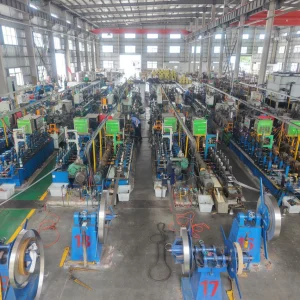
Engineered for global procurement reliability—integrated raw material sourcing, automated slitting, high-frequency welding, and certified metallurgical testing.
2. CE Certification Technical Framework & Quality Audit
Understanding the rigorous compliance standards required for CE marking under EU Directives for pressure piping and structural steel tubing.
Pressure Equipment Directive (PED 2014/68/EU)
For industrial stainless steel tubes deployed in pressure fluid conveyance, heat exchangers, and boilers, CE certification under PED 2014/68/EU is non-negotiable. Qualified Chinese factories must undergo rigorous Auditing Category I through IV depending on pressure-volume design ratings.
- Material Compliance (EN 10217-7 / EN 10216-5): Ensures specific tensile yield strengths, elongation percentages (>35%), and impact values at sub-zero temperatures.
- Weld Integrity Testing (ISO 15614-1): Automatic TIG/Laser welding lines are certified via destructive bend tests, micro-structure intergranular corrosion tests (ASTM A262 Practice E), and hydrostatic leak detection.
- Traceability & EN 10204 3.1 Certification: Every batch is accompanied by an authentic Mill Test Certificate (MTC) documenting chemical heat numbers from prime steel mills (Tsingshan, TISCO, POSCO, Baosteel).
Core CE Testing Standards Applied
3. Comprehensive Stainless Steel Tube Dimensions & Schedules
Standard engineering dimensional cross-reference matrix for Seamless and Welded Stainless Steel Tubing (ANSI/ASME B36.19M & ISO 1127 / EN ISO 1127).
Understanding exact nominal pipe sizes (NPS), outside diameters (OD), wall thicknesses (WT), and theoretical weights per meter is critical for fluid dynamic calculations and structural design load budgeting. Below is the standardized manufacturing schedule table produced by certified Chinese mills.
| NPS Size (Inches) | Outside Diameter (mm) | SCH 5S Wall (mm) | SCH 10S Wall (mm) | SCH 40S Wall (mm) | SCH 80S Wall (mm) | Weight (kg/m - 304/316L SCH 40S) |
|---|---|---|---|---|---|---|
| 1/8" | 10.29 mm | 0.89 mm | 1.24 mm | 1.73 mm | 2.41 mm | 0.37 kg/m |
| 1/4" | 13.72 mm | 1.25 mm | 1.65 mm | 2.24 mm | 3.02 mm | 0.64 kg/m |
| 3/8" | 17.15 mm | 1.24 mm | 1.65 mm | 2.31 mm | 3.20 mm | 0.86 kg/m |
| 1/2" | 21.34 mm | 1.65 mm | 2.11 mm | 2.77 mm | 3.73 mm | 1.29 kg/m |
| 3/4" | 26.67 mm | 1.65 mm | 2.11 mm | 2.87 mm | 3.91 mm | 1.71 kg/m |
| 1" | 33.40 mm | 1.65 mm | 2.77 mm | 3.38 mm | 4.55 mm | 2.54 kg/m |
| 1-1/4" | 42.16 mm | 1.65 mm | 2.77 mm | 3.56 mm | 4.85 mm | 3.44 kg/m |
| 1-1/2" | 48.26 mm | 1.65 mm | 2.77 mm | 3.68 mm | 5.08 mm | 4.10 kg/m |
| 2" | 60.33 mm | 1.65 mm | 2.77 mm | 3.91 mm | 5.54 mm | 5.52 kg/m |
| 2-1/2" | 73.03 mm | 2.11 mm | 3.05 mm | 5.16 mm | 7.01 mm | 8.76 kg/m |
| 3" | 88.90 mm | 2.11 mm | 3.05 mm | 5.49 mm | 7.62 mm | 11.45 kg/m |
| 4" | 114.30 mm | 2.11 mm | 3.05 mm | 6.02 mm | 8.56 mm | 16.30 kg/m |
Standard Dimensional Tolerances (ASTM A269 / EN ISO 1127 Tolerance Class D3/T3)
4. China Sourcing Synergy & Factory Cost Efficiency
How the Wuxi Stainless Steel Industrial Cluster delivers superior manufacturing speed, economies of scale, and cost-effective B2B procurement pricing.
Raw Material Feedstock Integration
Located in Wuxi, Jiangsu—the epicenter of China's stainless steel processing hub—factories maintain direct strategic partnerships with top-tier steel mills including Tsingshan, TISCO, POSCO, and Baosteel. This guarantees steady coil feedstock supply, precise metallurgical chemistry, and zero delays during raw material market surges.
Vertical In-House Processing
Leading manufacturers operate continuous coil slitting, high-frequency TIG/Plasma welding, bright annealing (BA), mirror polishing (8K), hairline finishing (No.4), and hydraulic tube bending under one umbrella. Eliminating third-party processing markups reduces total unit production costs by 12% to 18%.
Port Logistics & Export Packaging
Proximity to Shanghai and Ningbo deep-water ports facilitates streamlined FOB/CIF container loads and breakbulk ocean freight. Tubing is packed with end caps, plastic sleeve protection, waterproof wrapping, and heavy-duty wooden crate bundling to prevent marine salt-spray oxidation during ocean transport.
5. B2B Sector Application Scenarios
Matching specific stainless steel material grades and tube dimensions to severe industrial working conditions.
Chemical & Petrochemical Processing
Used in acid transport pipelines, heat exchanger tube bundles, and condenser lines. Molybdenum addition in 316L (2.0-3.0% Mo) prevents pitting and crevice corrosion in chloride-heavy process fluids.
Food, Beverage & Dairy Plants
Requires internal surface mechanical polishing (Ra < 0.4 µm or electropolished) to prevent bacterial adhesion. Standard DIN 11850 and SMS dimensional tubes dominate high-purity fluid lines.
Offshore Marine & Desalination
PREN (Pitting Resistance Equivalent Number) > 40 ensures survival in high-salinity seawater intake systems, offshore drilling platforms, and reverse osmosis high-pressure piping manifolds.
Architecture & Structural Engineering
Cost-effective austenitic 201 and ferritic 430 square/rectangular welded tubes are widely applied in architectural handrails, curtain wall framework, glass balustrades, and indoor furniture.
6. B2B Tube Pricelist Structure & Cost Calculation Drivers
Understanding factory quote structures, raw material surcharges, and order quantity thresholds for industrial procurement.
Primary Price Formula
Stainless steel tube pricing is indexed directly against LME Nickel and Shanghai Molybdenum metal futures. Seamless tubes carry a higher processing surcharge than welded tubes due to multi-pass cold drawing and pilgering operations.
Estimated Price Matrix (Reference Only)
- Grade 201 Decorative Welded Tube: $1,350 - $1,650 / MT
- Grade 304 Welded Pressure Tube: $2,450 - $2,850 / MT
- Grade 316L Seamless Industrial Pipe: $3,800 - $4,400 / MT
- Duplex 2205 Seamless Pipe: $5,200 - $6,100 / MT
7. Future Trends in Stainless Steel Tube Manufacturing (2025–2030)
Key technological innovations reshaping industrial tubular manufacturing, quality verification, and environmental sustainability.
Green Steel & Decarbonization
European Union CBAM (Carbon Border Adjustment Mechanism) implementation is driving Chinese mills to adopt Electric Arc Furnace (EAF) recycling and hydrogen-based reduction process lines to minimize embodied carbon per ton of finished stainless pipe.
AI-Driven Automated NDT Inspection
Real-time laser weld seam monitoring and AI-powered Ultrasonic Flaw Detection (UT) replace manual spot checks, catching internal microscopic voids during continuous high-frequency welding.
Hydrogen Transport Infrastructure
The global green hydrogen transition requires specialized high-pressure 316L and Duplex micro-tubing capable of resisting hydrogen embrittlement under continuous storage pressures exceeding 700 bar.
8. Frequently Asked Questions (Technical & Commercial FAQ)
Comprehensive answers for procurement leads, structural engineers, and global metal stockists.
Q1: What is the difference between CE PED certification and standard ISO 9001 for steel tubes?
ISO 9001 is a general organizational quality management system standard, whereas CE PED (Pressure Equipment Directive 2014/68/EU) is a mandatory European legal certification verifying that the specific steel tubes meet hydrostatic, mechanical, and metallurgical safety requirements for pressurized fluid applications.
Q2: How do I select between ASTM A312 Grade 304L and 316L for industrial piping?
Choose 304L for general industrial, food grade, and atmospheric applications where cost efficiency is paramount. Upgrade to 316L if your piping system is exposed to chlorides, marine salt spray, or aggressive acids, as 316L contains 2-3% Molybdenum to prevent pitting corrosion.
Q3: Can Chinese factories supply custom dimensional tolerances outside standard ASTM/EN schedules?
Yes. Fully integrated Chinese mills can produce non-standard outside diameters (OD) and custom wall thicknesses via cold drawing or precision roll-forming lines. Custom cut lengths up to 12 meters can be specified with tight cut tolerances (+5mm / -0mm).
Q4: What non-destructive testing (NDT) reports are included with CE-marked tube shipments?
Standard compliance documentation includes 100% Eddy Current Testing (ET), Hydrostatic Pressure Testing, Intergranular Corrosion Testing (ASTM A262 Practice E), Tensile & Elongation verification, and chemical heat analysis documented in an EN 10204 3.1 Mill Test Certificate.
Q5: What surface finish options are available for stainless steel structural and decorative tubes?
Available finishes include No.1 (Hot Rolled Annealed & Pickled), 2B (Cold Rolled Smooth), BA (Bright Annealed), No.4 (Brushed Satin / Hairline), and 8K Mirror Polish. PE protective film is applied to polished tubes to avoid surface scratches during transit.
Q6: What is the average manufacturing lead time for full container load (FCL) tube orders?
Standard welded tubes in 304/316L have a production lead time of 15 to 20 days. Custom seamless tubes or specialty alloys (Duplex 2205/2507) typically require 25 to 35 days depending on raw material billet availability and thermal heat treatment schedules.
Complete Factory Supply Line & Raw Material Options
Explore our full range of factory-direct stainless steel structural pipes, decorative tubes, industrial sheets, and precision slit coils.