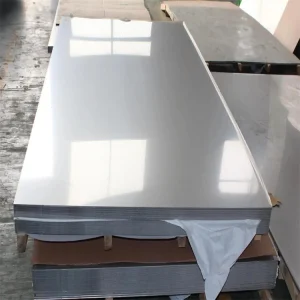
CE Certified Stainless Steel & Alloy Products (Catalog Selection 1-8)
Precision-engineered polished pipes, super duplex plates, and cold-rolled stainless solutions certified for European and international structural, sanitary, and pressure vessel applications.

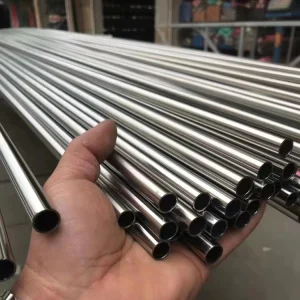

1. Global Commercial & Industrial Landscape of Stainless Steel Polished Pipes
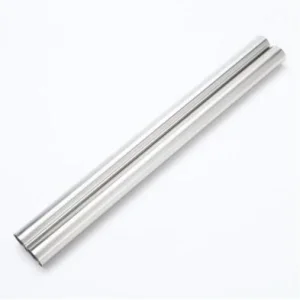
The global demand for high-grade CE certified stainless steel polished pipes has undergone a structural transformation. No longer confined to pure aesthetic architecture or basic plumbing, mechanical and electro-polished tubular products are now critical infrastructure components across high-purity biopharmaceuticals, semiconductor cleanrooms, food and dairy processing, hydrogen transportation, and desalination technology.
As international regulatory bodies tighten environmental, safety, and sanitary compliance frameworks, global enterprise procurement teams must navigate complex metallurgical criteria. In particular, the European Union's Pressure Equipment Directive (PED 2014/68/EU) and Construction Products Regulation (CPR) mandate full certification, traceability, and rigorous surface roughness verification (Ra μm) for all structural and fluid-handling pipes imported into the Single Market.
Projected annual market expansion for sanitary and high-purity stainless polished tubing through 2030.
Achieved via automated mechanical multi-pass grit polishing and electropolishing (EP) lines.
Essential qualification for pressurized stainless fluid conduits across European industrial sectors.
2. Jiangsu & Wuxi Manufacturing Ecosystem: Scale, Efficiency, and Supply Chain Integration
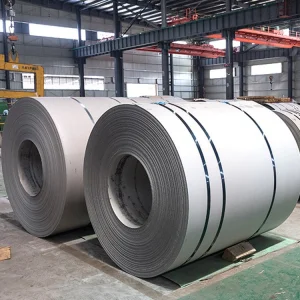
Centering in major industrial metal hubs such as Wuxi, Jiangsu Province, Chinese manufacturers like Jiangsu Renzhi Holding Group Co., Ltd. represent the apex of integrated stainless steel processing. By consolidating raw feedstock procurement from premier global primary melt suppliers—including Tsingshan, TISCO (Taiyuan Iron & Steel), POSCO, and Baosteel—with in-house slitting, cold drawing, orbital welding, and multi-stage polishing, these integrated manufacturing complexes deliver unprecedented lead-time speed and cost efficiencies.
Vertical Supply Chain Integration
Unlike regional re-processors who purchase pre-cut strip or outsource tube polishing, tier-1 Chinese factories manage the complete metallurgical workflow. With over 80 automated welded pipe lines, continuous casting synergy, and direct access to primary coils, processing efficiency gains lower overall production costs by 15% to 22% compared to Western European counterparts.
Quality Rigor & Automated Inline NDT
Modern production facilities utilize inline Eddy Current Testing (ECT), hydrostatic pressure testing, and automatic laser wall-thickness scanning during continuous tube forming. This guarantees that every CE-marked pipe conforms tightly to tolerance limits established in ASTM A240, ASTM A312, ASTM A554, EN 10217-7, and JIS G4304 specifications.
3. Comprehensive Stainless Steel Alloy Grade Matrix & Metallurgical Selection
Selecting the optimal stainless alloy grade requires an engineering evaluation balancing mechanical yield strength, thermal expansion, pitting corrosion resistance, and total cost of ownership. Below is an executive selection guide provided by our Senior Metallurgical Quality Engineers:
| Alloy Grade | Structure & Key Chemistry | PREN Rating | Surface Polishing Capabilities | Primary Industrial Applications |
|---|---|---|---|---|
| AISI 201 / UNS S20100 | Austenitic (Cr-Mn-Ni series; high N) | ~ 15 - 17 | 180 Grit to 600 Grit Mirror Finish | Architectural balustrades, decorative curtain rods, household hardware. |
| AISI 304 / 304L (1.4301 / 1.4307) | Austenitic (18% Cr, 8% Ni; Low Carbon L-grade) | ~ 18 - 20 | Sanitary Satin (Ra ≤ 0.8μm) to 8K Mirror | Food & dairy conveyance, beverage lines, general fluid piping, kitchen equipment. |
| AISI 316 / 316L (1.4401 / 1.4404) | Austenitic (16-18% Cr, 10-14% Ni, 2-3% Mo) | ~ 23 - 25 | High Purity EP (Ra ≤ 0.25μm), 400 Grit Hairline | Biopharm systems, marine hardware, chemical process lines, offshore platforms. |
| AISI 310S (1.4845) | High-Temp Austenitic (25% Cr, 20% Ni) | ~ 25 - 27 | 240 Grit Mechanical Polished | Heat exchangers, furnace exhaust tubes, thermal processing equipment (≤ 1150°C). |
| Ferritic 430 (1.4016) | Ferritic (16-18% Cr, Nickel-free, Magnetic) | ~ 16 - 18 | BA (Bright Annealed), 320 Grit Satin | Appliance trims, architectural interior panels, kitchen appliance structural tubing. |
| Duplex 2205 (UNS S32205 / 1.4462) | Austenitic-Ferritic 50/50 Dual Phase | ~ 32 - 35 | Mechanical Polished 320 Grit / Custom EP | High-pressure desalination, oil & gas flowlines, chemical tankers, structural members. |
| Super Duplex 2507 (UNS S32750) | Super Duplex (25% Cr, 7% Ni, 4% Mo, 0.28% N) | ≥ 42 | Custom Process Polish for Aggressive Service | Subsea umbilicals, FGD scrubbers, highly concentrated chloride chemical loops. |
Formula Note: Pitting Resistance Equivalent Number (PREN) = %Cr + 3.3(%Mo + 0.5%W) + 16(%N). Higher values indicate superior immunity to localized pitting and crevice corrosion under marine and acidic testing conditions.
4. Localized Industrial Application Scenarios for Polished Tubing
The operational environment determines the exact mechanical and surface polishing requirements. Engineered polished stainless steel pipes excel across diverse localized sector demands:
A. Sanitary Food, Dairy & Beverage Lines
In dairy processing and brewery installations, interior weld seams must be perfectly bead-rolled and polished to match parent metal roughness (Ra < 0.8μm). Stainless steel 304 and 316L pipes prevent bio-film accumulation and enable reliable Clean-in-Place (CIP) and Sterilize-in-Place (SIP) thermal sanitation protocols without micro-crack initiation.
B. Ultra-High Purity (UHP) Pharmaceutical & Semiconductor Systems
For WFI (Water for Injection) distribution loops and gas delivery tubing in wafer fabrication cleanrooms, electropolished (EP) AISI 316L tubes are specified. Electropolishing removes iron atoms from the surface, creating a ultra-smooth chromium-oxide passive film that eliminates particle generation down to nanometer scales.
C. High-End Architectural Trim & Public Infrastructure
In luxury commercial facades, airport terminal balustrades, and elevator interiors, aesthetic brilliance and scratch resistance are paramount. 201 and 304 grade pipes finished with 8K mirror polish or consistent No.4 hairline directionality provide pristine visual appeal alongside long-term mechanical durability.
D. Marine, Offshore & Desalination Heat Exchangers
Handling chlorinated seawater or sour gas at elevated pressures requires high yield strength and immunity to chloride stress corrosion cracking (SCC). CE-certified Duplex 2205 and Super Duplex 2507 polished tubes deliver double the structural yield strength of standard austenitic grades while resisting aggressive pitting in heat exchanger bundles.
5. Future Trends & Technological Innovations in Stainless Tube Manufacturing
The stainless steel pipe industry is undergoing a digital and ecological evolution. Advanced factories are pioneering green metallurgical practices and AI-assisted precision quality control:
Green Metallurgy & Decarbonization
Adoption of Electric Arc Furnace (EAF) smelting utilizing up to 80% recycled scrap steel significantly reduces the carbon footprint per ton of finished pipe. Solar-powered annealing furnaces and zero-emission closed-loop water filtration systems further ensure sustainable manufacturing alignable with ESG targets.
AI Laser Weld Monitoring
Next-generation TIG, Plasma, and Laser welding heads now incorporate real-time vision sensors and AI neural networks. These systems monitor weld pool geometry and temperature profiles at 1,000 frames per second, instantly correcting heat input to ensure zero weld defects or gas porosity.
Nanotech Passivation Coatings
Post-polishing chemical treatments are evolving beyond standard nitric acid passivation. Nanotechnology-assisted citric acid formulations form ultra-dense passivation layers without toxic hazardous waste runoff, providing double the salt-spray hour resistance in ASTM B117 testing.
6. Strategic B2B Procurement Framework for Enterprise Buyers
When procuring CE-certified stainless polished pipe lots from overseas factories, quality control teams must enforce a rigorous multi-stage verification framework to mitigate commercial and engineering risks:
1. Document & Certificate Validation
- Verify EN 10204 3.1 or 3.2 Mill Test Certificates (MTC) detailing exact chemical melt heat analysis and mechanical tensile testing.
- Confirm valid CE Mark registration linked to Notified Body audits under PED 2014/68/EU or CPR.
- Request third-party inspection reports (SGS, TÜV, Bureau Veritas) for wall thickness, ovality, and surface roughness (Ra).
2. Export Packaging & Logistics Protection
- Polished external surfaces must be individual sleeve-wrapped or protected with PE protective film to avoid transport abrasion.
- Pipe ends must feature plastic end caps to protect bevels and internal bore cleanliness against sea-salt contamination.
- Heavy-duty wooden crates or steel-strapped seaworthy hexagonal bundling designed for breakbulk or containerized ocean freight.
7. Technical & Commercial FAQ for Global Procurement
Direct answers from our senior technical engineering team addressing common specification, regulatory, and logistics queries.
Related Industrial Piping, Sheet & Strip Catalog (Selection 9-16)
Explore our complete manufacturing portfolio including industrial welded pipes, cold-rolled sheets, and stainless precision strips for high-durability applications.