
Featured Stainless Steel Tubing & Plate Portfolio
Traceable mill feedstock, CE-certified production lines, and precision mirror-polishing solutions for critical industrial operations.





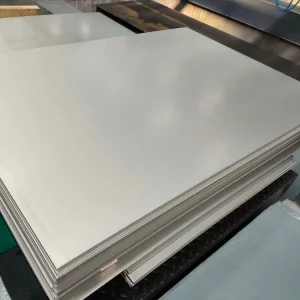
Executive Summary: The Global Market Trajectory of Mirror-Polished Stainless Steel Tubing
Mirror-polished stainless steel tubing—specifically engineered to achieve reflective surface finishes ranging from 400 Grit up to 8K Super Mirror (Ra < 0.05 µm)—represents a critical convergence of metallurgical purity, mechanical precision, and aesthetic brilliance across global supply chains.
High-Purity Bio-Pharma Demand
Biopharmaceutical process lines require micro-smooth interior surfaces to prevent microbial bio-film adhesion, guaranteeing zero contamination in WFI (Water for Injection) systems.
Mandatory CE & PED Directives
Full European Union compliance under the Pressure Equipment Directive (PED 2014/68/EU) ensures structural integrity under cyclic thermal and pressure loads.
Architectural & Marine Growth
Escalating procurement across luxury architectural facades, mega-yacht marine structural handrails, and high-end automotive trim where optical perfection meets chloride resistance.
Modern B2B buyers no longer evaluate stainless steel tubing purely on per-ton raw metal pricing. Technical compliance, precise surface roughness metrics (Ra, Rz, RMS), mill-traceable chemical heat numbers, and non-destructive testing (NDT) documentation form the core baseline of corporate procurement framework evaluation.
Surface Metrology & Polishing Mechanics: Mechanical vs. Electropolishing (EP)
Achieving a true mirror surface on austenitic and duplex stainless steel tubing involves multi-pass mechanical deformation followed by chemical or electrochemical surface levelling. Understanding surface topology parameters is vital for selecting the correct specification.
1. Multi-Stage Mechanical Mirror Polishing (8K Finish)
Mechanical mirror polishing utilizes progressively finer abrasive belts (Grit 180 → 240 → 320 → 400 → 600 → 800) combined with liquid polishing compounds containing aluminum oxide or chromium oxide micro-particles. The process removes macro-peaks from cold-rolled tubing, achieving an ultra-reflective 8K surface.
- Roughness Parameter: Average Ra values between 0.08 µm to 0.15 µm.
- Visual Profile: High optical reflectivity, distortion-free specular reflection.
- Primary Scope: Architectural handrails, food production exterior casings, decorative trim.
2. Electrochemical Polishing (Electropolishing / EP)
Electropolishing operates as an anodic dissolution process where the stainless tube is immersed in a temperature-controlled phosphoric/sulfuric acid electrolyte bath under direct current. The electrical charge concentrates on micro-peaks, dissolving them selectively while enriching the surface passive oxide layer with Chromium (Cr/Fe > 1.5).
- Roughness Parameter: Ultra-clean surface with Ra < 0.025 µm to 0.05 µm.
- Chemical Advantage: Complete removal of free iron, stress-free micro-passivation.
- Primary Scope: Semiconductor gas lines, biopharmaceutical cleanrooms, ultra-pure water systems.
Metallurgical Grade & Surface Specification Matrix
| Grade / Alloy | UNS / EN Standard | Cr-Ni-Mo Composition | Pitting Resistance (PREN) | Typical Surface Finish | Primary Industrial Sector |
|---|---|---|---|---|---|
| SUS201 | UNS S20100 / 1.4372 | 16-18% Cr / 3.5-5.5% Ni / 0.5% Mo | ~ 17.5 | 400-600 Grit Mirror (Ra ≤ 0.2 µm) | Indoor structural, commercial furniture, display fixtures |
| SUS304 / 304L | UNS S30400 / 1.4301 | 18-20% Cr / 8-10.5% Ni | ~ 19.0 | 600-8K Super Mirror (Ra ≤ 0.1 µm) | Food processing, architectural facades, sanitary plumbing |
| SUS316 / 316L | UNS S31603 / 1.4404 | 16-18% Cr / 10-14% Ni / 2-3% Mo | ~ 25.0 | 8K Mirror / Electropolished (Ra ≤ 0.05 µm) | Pharmaceutical WFI, chemical processing, marine fittings |
| Duplex 2205 | UNS S32205 / 1.4462 | 22-23% Cr / 4.5-6.5% Ni / 3-3.5% Mo | ~ 35.0 | Mechanical Mirror (Ra ≤ 0.15 µm) | Offshore oil & gas, marine desalination, heavy chemical |
| Super Duplex 2507 | UNS S32750 / 1.4410 | 24-26% Cr / 6-8% Ni / 3-5% Mo | ≥ 42.0 | Custom Industrial Mirror / Passivated | Subsea umbilicals, high-salinity marine environments |
China Manufacturing Powerhouse: Supply Chain Infrastructure & Quality Control
China’s stainless steel industry—centered in premier industrial clusters like Wuxi (Jiangsu) and Foshan (Guangdong)—offers unmatched scale, automated precision, and comprehensive integration from raw slab casting to finished export packaging.
Direct Mill Sourcing
Raw material coils sourced directly from top-tier steelmakers including Tsingshan, TISCO, Baosteel, and POSCO, assuring chemical purity and heat traceabilty.
80+ Automated Lines
High-speed TIG, Plasma, and Laser welding lines integrated with online Eddy Current defect testing for continuous seam integrity.
Cost-to-Performance
Streamlined production logistics reduce manufacturing overhead by up to 25% compared to Western counterparts without compromising compliance.
Rigorous QA Systems
100% PMI chemical verification, hydrostatic pressure testing, laser wall-thickness measurement, and profilometer roughness checks.
Localized Application Scenarios & Global Industry Deployment
From European biopharmaceutical facilities to Middle Eastern marine infrastructure, mirror-polished stainless steel tubing fulfills both functional hygienic criteria and demanding aesthetic expectations.
Pharmaceutical & Biotechnology
System Requirement: Seamless/Welded 316L mirror-polished tubing compliant with ASME BPE and ASTM A270 standards.
Inner wall electropolishing ensures zero pit points for bacterial colonization, supporting CIP (Clean-in-Place) and SIP (Sterilization-in-Place) cycles under high-pressure steam environments.
Food, Dairy & Beverage Processing
System Requirement: Sanitary SUS304 / 304L mirror tubes with smooth orbital-weldable ends.
Eliminates product residue build-up in milk processing plants, brewery fermentation tanks, and automated soft-drink bottling lines, maintaining strict EHEDG hygiene standards.
Luxury Marine & Architectural Structures
System Requirement: 316L / 2205 Duplex 8K Super Mirror decorative tubing (ASTM A554).
Deployed on mega-yacht handrails, coastal luxury hotel balustrades, and airport glass facade framing. Provides optimal resistance against aggressive marine salt-spray pitting.
Global Procurement Checklist: Navigating CE Certification & Technical Audit
Procuring structural or pressure-grade mirror stainless steel tubing requires a rigorous vendor verification matrix to guarantee material compliance and minimize risk.
1. CE Marking & Pressure Equipment Directive (PED)
For tubing intended for fluid pressure containment above 0.5 bar in the European Economic Area (EEA), the manufacturing mill must possess CE certification under PED 2014/68/EU Annex I. Key audit checks include:
- EN 10217-7 Certification: Welded stainless steel tubes for pressure purposes.
- Notified Body Audit: Annual third-party inspection of mill quality control systems (ISO 9001:2015).
- Material Test Report (EN 10204 3.1): Heat-specific chemical analysis and mechanical tensile testing verification.
2. Surface Roughness & Packaging Protocols
Preventing surface degradation during transoceanic shipping is a critical aspect of supplier evaluation:
- Profilometer Surface Reports: Certified Ra and Rz graph readouts attached to every shipping batch.
- PE Laser Protective Film: Heavy-duty 70–100 micron protective film applied to mirror surfaces.
- Export Packaging: Fumigated wooden crates, internal PVC sleeve protection, and desiccants to eliminate condensation stain risk.
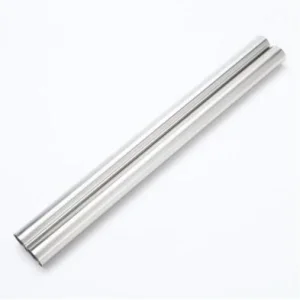
High-Performance Industrial Stainless Steel Tubing & Sheets
Select from our standard stock dimensions or request custom laser-cutting, bending, and specialized mirror-polishing solutions.



Next-Gen Industry Development & Technological Innovations
The mirror-polished stainless steel tubing industry is undergoing a digital transformation driven by strict green manufacturing mandates and AI-assisted surface defect detection.
AI Optical Defect Inspection
High-resolution optical laser scanners inspect mirror surfaces on continuous polishing lines, identifying micro-scratches, pinholes, and buffing haze with sub-micron accuracy.
Green Electropolishing Solutions
Transitioning to eco-friendly closed-loop acid recycling, reducing hazardous effluents while maintaining optimal surface passivation and chromium enrichment ratios.
High-Strength Duplex Polishing
Overcoming work-hardening challenges in 2205 Duplex and 2507 Super Duplex alloys, expanding mirror-finish applications into high-stress subsea environments.
Frequently Asked Questions (FAQ)
Detailed answers addressing technical specifications, CE certification compliance, surface roughness standards, and export logistics.
A 400-grit finish is produced using fine silicon carbide abrasives, producing high reflectivity with visible microscopic directionality (Ra approx. 0.15–0.20 µm). An 8K Super Mirror finish undergoes multi-directional polishing with liquid compounding compounds, resulting in an optical-grade reflection with no visible grit lines and an ultra-smooth roughness (Ra ≤ 0.05 µm).
CE certification confirms compliance with European Economic Area standards. For pressure-retaining tubing, compliance with the Pressure Equipment Directive (PED 2014/68/EU) and EN 10217-7 guarantees that materials, welding seams, mechanical properties, and non-destructive testing (NDT) meet strict EU safety requirements.
While mechanical polishing creates a shiny surface, it leaves microscopic mechanical cold-work stresses and potential abrasive entrapment. Electropolishing chemically removes micro-peaks, stress-relieves the outer atomic surface, and increases the Chromium-to-Iron ratio (Cr/Fe > 1.5), significantly enhancing corrosion resistance and cleanability.
We supply austenitic grades SUS201, SUS304, SUS304L, SUS316, SUS316L, SUS310S, SUS321, and high-performance Duplex alloys 2205 and 2507 Super Duplex. Choice depends on chloride concentration, operating temperature, and structural strength mandates.
Each mirror tube is jacketed with continuous PE protective laser film or mesh sleeve protection, sealed at the ends with plastic dust caps, bundled in water-resistant wrapping, and packed into fumigated seaworthy wooden crates with internal desiccant packs.
For decorative tubing under ASTM A554, outer diameter tolerances are held within ±0.10 mm. For sanitary precision tubing under ASTM A269 / EN 10217-7, wall thickness and outer diameter tolerances are controlled within ±0.05 mm.
Yes, our Wuxi processing hub features multi-axis CNC rotary tube benders, automated fiber laser tube cutters, and end-flanging equipment to supply complete custom fabrications ready for assembly.
All shipments include Mill Test Certificates (MTC) according to EN 10204 3.1 detailing heat chemistry, mechanical tensile/yield data, Eddy Current NDT test reports, CE declaration of conformity, and profilometer roughness verification readouts.