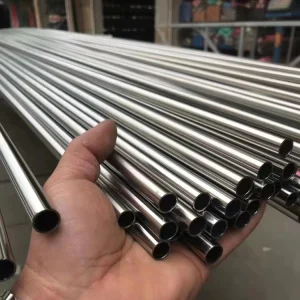
CE Compliant Industrial Steel Sheets & Tubing
Direct factory supply featuring verified chemical composition, precision gauge tolerances, and certified structural durability for international engineering projects.
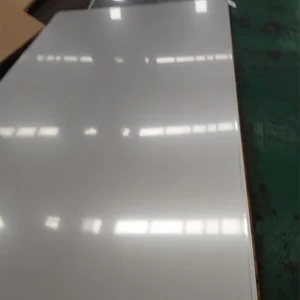
Wholesale 2507 Super Duplex Stainless Steel Plate - High Corrosion Resistance | China Suppliers & Factory Manufacturers, Supplier
View Product Specs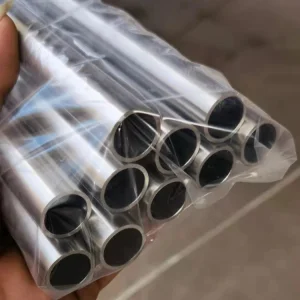
Wholesale China SUS304/304L Low Carbon Stainless Steel Pipe Suppliers | Factory-Direct Corrosion-Resistant Solutions Manufacturers, Factories
View Product Specs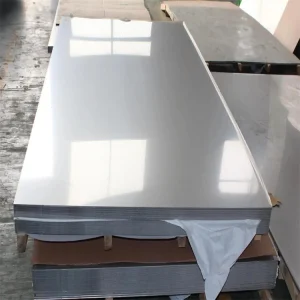
China Cold Rolled Stainless Steel Sheet from China Suppliers - High Strength & Corrosion Resistant | Factory Direct Services Supplier, Pricelist
View Product Specs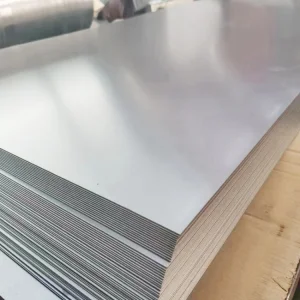
Custom China 316L Stainless Steel Sheet Suppliers - High-Quality Stainless Steel Sheets from Trusted Factory Manufacturers, Factory
View Product Specs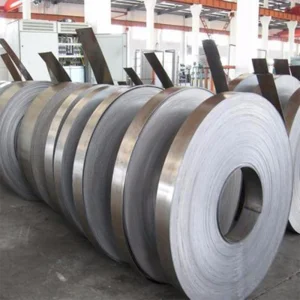
China 201 Stainless Steel Strip/coil Manufacturers, Factories
View Product Specs
CE Certification 2507 Super Duplex Steel Plate Supplier in China - High Strength and Corrosion Resistance from Leading Factory Factory, Pricelist
View Product Specs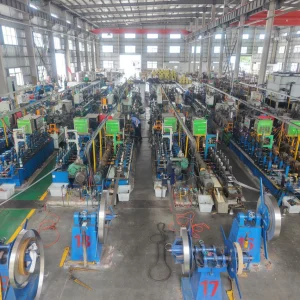
China Stainless Steel Industrial Welded Pipe - China Suppliers & Factory | 201, 304, 316L Materials, Wide Specifications Manufacturers, Supplier
View Product Specs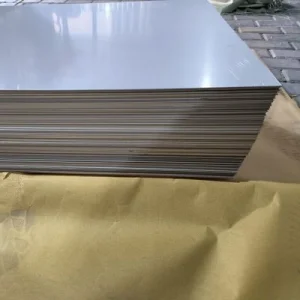
Custom China SUS304 Stainless Steel Cold-Rolled Plate Suppliers - Factory Direct, Corrosion-Resistant Food Grade Material Manufacturers, Factory
View Product SpecsCE Certified Galvanized Iron (GI) Sheet & Gauge Technical Standard
Understanding the critical intersection of European Conformity (CE) marking, continuous hot-dip galvanizing parameters, and precise linear gauge measurements for architectural and industrial applications.
The Mandatory Mechanics of CE Certification (EN 10346)
In modern industrial construction and HVAC duct fabrication, specifying CE Certified Galvanized Iron (GI) Sheets is not merely a preference—it is a strict regulatory requirement under the European Construction Products Regulation (CPR 305/2011). CE marking verifies that the manufacturing facility operates under a audited Factory Production Control (FPC) system conforming to EN 10346 (Continuously hot-dip coated steel flat products for cold forming) and EN 10143 (Tolerances on dimensions and shape).
A certified GI sheet gauge supplier must guarantee traceable chemical composition (controlled Carbon, Manganese, Silicon, Phosphorus, and Sulfur content) alongside verified mechanical properties including yield strength ($R_e$), tensile strength ($R_m$), and elongation at fracture ($A_{80}$).
Demystifying Sheet Gauge vs. Nominal Thickness in Millimeters
One of the most persistent procurement errors in global B2B steel trading stems from mismatched gauge conversion systems. Historically, Manufacturers' Standard Gauge (MSG) and Manufacturers Standard for Sheet Steel dictate thickness, yet engineering calculations demand decimal millimeter precision.
For instance, a 24 Gauge GI Sheet standardly equates to approximately 0.70 mm to 0.74 mm depending on tolerance bounds (minus tolerance standard EN 10143 Class F vs Class S). Premium factories utilize automated online X-ray fluorescence (XRF) and laser micrometer systems to hold gauge variance within $\pm 0.02\text{ mm}$, eliminating material fatigue and weld burnout during automated processing.
Comprehensive GI Sheet Gauge to Millimeter & Zinc Mass Matrix
Engineering reference table specifying standard steel gauges, equivalent millimeter dimensions, mass per unit area, and recommended zinc coating classifications for certified factory sourcing.
| Standard GI Gauge | Nominal Thickness (mm) | Tolerance Range (EN 10143) | Theoretical Weight ($kg/m^2$) | Standard Zinc Mass ($g/m^2$) | Primary Industrial Applications |
|---|---|---|---|---|---|
| 10 Gauge | 3.42 mm | ± 0.15 mm | 27.50 kg/m² | Z275 / Z350 / Z600 | Heavy structural purlins, industrial silos, highway guardrails |
| 12 Gauge | 2.66 mm | ± 0.12 mm | 21.36 kg/m² | Z180 / Z275 | Structural framing, heavy equipment enclosures, cable trays |
| 14 Gauge | 1.90 mm | ± 0.09 mm | 15.26 kg/m² | Z140 / Z275 | Fire-rated doors, architectural framing, solar mounting tracks |
| 16 Gauge | 1.52 mm | ± 0.07 mm | 12.21 kg/m² | Z120 / Z275 | HVAC main headers, automotive panels, electrical cabinets |
| 18 Gauge | 1.21 mm | ± 0.06 mm | 9.73 kg/m² | Z100 / Z180 / Z275 | Commercial HVAC ductwork, roofing deck profiles, elevator doors |
| 20 Gauge | 0.91 mm | ± 0.05 mm | 7.32 kg/m² | Z90 / Z140 / Z275 | Acoustic ceiling panels, partition studs, appliance housings |
| 22 Gauge | 0.76 mm | ± 0.04 mm | 6.11 kg/m² | Z80 / Z120 | General HVAC spiral ducts, metal roofing sheets, rainwater gutters |
| 24 Gauge | 0.61 mm | ± 0.04 mm | 4.90 kg/m² | Z80 / Z100 | Light agricultural corrugated cladding, duct fittings, ceiling grids |
| 26 Gauge | 0.45 mm | ± 0.03 mm | 3.62 kg/m² | Z60 / Z80 | Residential roofing sheets, thermal insulation jacketing |
| 28 Gauge | 0.38 mm | ± 0.03 mm | 3.06 kg/m² | Z60 / Z80 | Light decorative cladding, packaging drums, temporary panels |
Macro Global Industry Landscape & Supply Chain Realities
Navigating decarbonization imperatives, trade policy compliance, and automated production shifts across European and overseas industrial sectors.
Decarbonization & Green Galvanizing Initiatives
The global galvanized steel sector is undergoing a monumental shift driven by the EU Carbon Border Adjustment Mechanism (CBAM) and ESG mandates. Leading Tier-1 GI sheet factories in China are transitioning to zero-emission continuous galvanizing lines (CGL) fueled by hydrogen-blend natural gas heating.
In addition, the integration of high-purity recycled zinc anodes reduces the embodied carbon footprint per metric ton of Z275 sheet by up to 28%, empowering European importers to maintain compliance with stringent ESG reporting protocols.
Supply Chain Resilience & Mill Stock Feedstock
Supply chain reliability hinges upon raw substrate quality. Tier-1 suppliers source substrate coils (CRFH - Cold Rolled Full Hard) directly from world-class steel makers including Tsingshan, TISCO, POSCO, and Baosteel.
This ensures superior yield strength consistency ($DX51D+Z$, $DX52D+Z$, $S280GD+Z$, $S350GD+Z$), preventing unexpected coil splitting during roll-forming or deep drawing processes in client factories worldwide.
Strict CE Factory Production Control (FPC) Audits
To issue valid CE declarations of performance (DoP), manufacturing mills undergo rigorous annual third-party audits by EU Notified Bodies. The inspection verifies continuous coating mass monitoring, mechanical bend testing ($0T$ to $2T$ bend tests without micro-cracking), and adhesion strength under high-impact conditions.
Purchasing from audited factories guarantees smooth customs clearance at major global ports (Rotterdam, Hamburg, Antwerp, Dubai, Singapore).
Continuous Hot-Dip Galvanizing & Passivation Technology
Step-by-step technical breakdown of the advanced continuous galvanizing process that ensures zero surface defects, uniform zinc crystallization, and enhanced shelf life.
Electrolytic Cleaning
Full alkaline degreasing and surface pickling to remove all residual rolling oils and iron fines before annealing.
NOF Annealing
Non-Oxidizing Furnace (NOF) atmosphere recrystallization annealing to achieve specified tensile ductility and yield strength.
Zinc Bath Immersion
Molten zinc bath at $450^\circ\text{C}$ with automated air knives controlling precise zinc mass (Z60 to Z600 $g/m^2$).
Passivation & Oiling
Trivalent Chromium (Cr3+) environment-friendly passivation or anti-fingerprint resin sealing to prevent white rust.
Spangle Morphologies: Regular, Minimized, vs. Zero Spangle
Modern GI sheet suppliers offer tailored surface finish options depending on end-use post-processing requirements:
- Regular Spangle: Traditional flower pattern formed during slow zinc cooling. Ideal for unpainted structural roofing and agricultural ductwork.
- Minimized Spangle: Controlled zinc grain growth using lead-free bath chemistries, yielding an ultra-smooth surface for general painting.
- Zero Spangle (Extra Smooth): Skin-passed post galvanizing. Creates a completely uniform, flat surface essential for high-gloss automotive and home appliance prepainted steel (PPGI) substrates.
Corrosion Prevention Chemistry & Sacrificial Anode Protection
The fundamental longevity of a GI sheet relies on zinc's standard electrode potential ($-0.76\text{ V}$), which acts as a galvanic sacrificial anode to protecting the underlying iron matrix ($-0.44\text{ V}$). Even if cut edges or drill holes expose raw carbon steel, zinc ions migrate electrochemically to heal the perimeter, stifling lateral oxide creep.
Upgrading to advanced Zinc-Aluminum-Magnesium (ZAM) coatings further enhances cut-edge self-healing performance in salt-laden coastal marine zones (C4/C5 atmospheric classifications per ISO 12944-2).
Localized Application Scenarios & Engineering Field Performance
From high-velocity commercial HVAC networks in Western Europe to heavy agricultural storage infrastructure in the Americas, CE-certified GI sheet gauges deliver specialized structural reliability.
High-Velocity Commercial HVAC & Ducting (EN 1506)
Duct fabricators in Germany, the UK, and Northern Europe standardly specify 18 Gauge, 20 Gauge, and 22 Gauge GI sheets with Z275 coating mass. High lock-forming quality ($Lock-Forming\ Quality - LFQ$) ensures that seam folding does not cause zinc flaking or coating delamination.
The anti-fingerprint (AFP) acrylic sealing reduces dust accumulation, providing a clean interior duct aesthetic that complies with European indoor air quality standard EN 13779.
Agricultural Silos & Grain Storage Infrastructure
Granary structures in South America and the Middle East require heavy-duty gauge profiles capable of withstanding massive hydrostatic grain lateral pressure. Utilizing 10 Gauge to 14 Gauge structural grade GI sheets ($S350GD+Z$ or $S550GD+Z$) with Z450 to Z600 heavy zinc mass protects against chemical corrosion from grain fumigants and ambient moisture condensation.
Solar Mounting Photovoltaic Framing (C/Z Purlins)
Utility-scale solar arrays situated in coastal or desert environments demand high structural rigidity and corrosion resilience over a 25-year design lifespan. Cold-formed 12 Gauge and 14 Gauge $S350GD+Z275$ GI sheets are punched and roll-formed into solar purlins, providing ideal strength-to-weight ratios while reducing civil engineering foundation loads.
CE Marking Compliance & Quality Audit Framework
Ensuring total traceability from raw molten steel chemistry to container shipment loading through rigorous laboratory testing protocols.
Mill Test Certificate (MTC) EN 10204 3.1 Verification
Every batch of CE certified GI sheets shipped from premier China supplier factories is accompanied by an authentic Mill Test Certificate (MTC) in full accordance with EN 10204 3.1. The MTC explicitly details:
- Heat Number & Master Coil Identification
- Ladle Chemical Analysis (C, Si, Mn, P, S, Cr, Ni, Cu)
- Actual Yield Strength ($MPa$), Tensile Strength ($MPa$), and % Elongation
- Tri-spot Hydrochloric Acid Dissolution Zinc Mass Test Results ($g/m^2$)
- Zero Surface Defect Inspection Log & Dimensional Gauge Audit
Seaworthy Export Packaging & Logistics Assurance
Galvanized iron coils and flat sheet bundles are susceptible to moisture oxidation (white rust or wet storage stain) if exposed to seawater vapor or dew-point condensation during oceanic transit. Certified factories execute export packaging protocols:
- Heavy-duty VCI (Vapor Corrosion Inhibitor) waterproof protective paper wrapping
- Galvanized outer steel metal jacket with internal and external protective corner rings
- High-tensile radial and circumferential steel strapping attached to wooden pallets
- Desiccants placed inside container loads to mitigate trans-equatorial humidity shifts
Frequently Asked Questions (FAQ)
Expert responses to critical procurement, technical specification, and certification inquiries for B2B buyers and structural engineers.
What specific documentation proves CE certification for GI sheet gauge orders?
How do I convert standard GI Sheet Gauge numbers to decimal millimeters?
What zinc coating weight ($g/m^2$) should be specified for outdoor structural applications?
What is the difference between DX51D+Z and structural grades like S350GD+Z?
How does anti-fingerprint (AFP) chemical treatment benefit GI sheet fabrication?
Can GI sheets be customized in specific coil slit widths or cut-to-length sheet bundles?
Additional High-Grade Factory Direct Offerings
Explore related specialized stainless steel plates, precision strips, and welded industrial piping available for immediate global export.
China 2507 Super Duplex Steel Plate - High Strength and Corrosion Resistance | China Suppliers & Factory Supplier, Factories
View Product Specs
Wholesale SUS304/304L Stainless Steel Strip for pipe Suppliers, Factories
View Product Specs
Wholesale High-Quality SUS304/304L Stainless Steel Strip from China Suppliers & Factory for Luxury Manufacturing Factory, Quotes
View Product Specs
Custom High-Quality 201 Stainless Steel Strip/Coil from China Suppliers | Factory Direct Discounts Supplier, Quotes
View Product Specs
China China SUS304 Cold-Rolled Stainless Steel Plate Suppliers - Corrosion Resistant Food Grade Factory Products Factories, Quotes
View Product Specs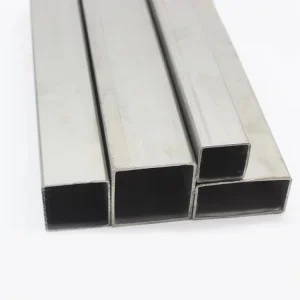
Custom Prime Quality 201 Stainless Steel Pipe from China Suppliers - Durable and Aesthetic Factory Selection Manufacturer, Quotes
View Product Specs
CE Certification Cold Rolled Stainless Steel Sheet from China Suppliers - High Strength and Corrosion Resistant with Custom Processing Factory Suppliers, Quotes
View Product Specs