
Featured Certified Industrial Steel Products (Batch 01)
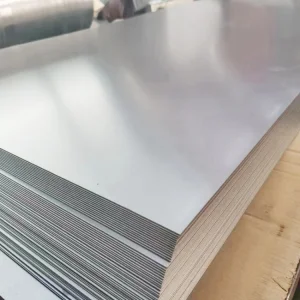
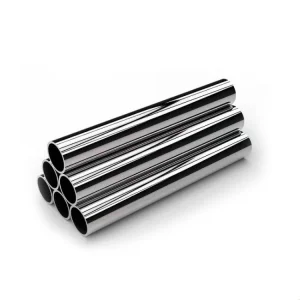
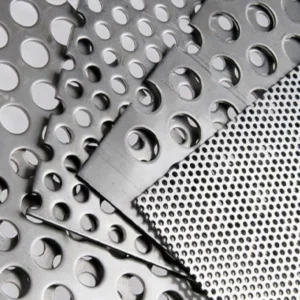
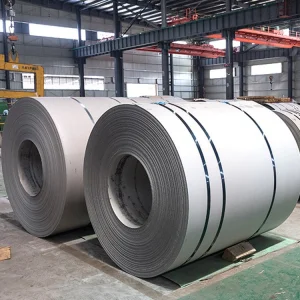
Explore our factory-direct stainless steel materials certified under international quality management systems including CE, ISO 9001, and PED 2014/68/EU standards.
1. Executive Summary & Metallurgy of Grade 321 (UNS S32100 / EN 1.4541)
Grade 321 (AISI 321, UNS S32100, DIN 1.4541) is a stabilized austenitic stainless steel engineered specifically to mitigate intergranular corrosion in high-temperature operating environments. Where standard 18/8 chromium-nickel steels such as Grade 304 fail due to chromium carbide precipitation at grain boundaries during thermal exposure between 427°C and 816°C (800°F – 1500°F), Grade 321 relies on the addition of Titanium.
By forming highly stable Titanium Carbides (TiC), the chemical composition prevents the depletion of Chromium near the grain boundaries. The minimum Titanium content is strictly governed by metallurgical equations:
This structural stability renders CE-certified 321 stainless steel round bars indispensable across thermal processing plants, aerospace propulsion assemblies, petrochemical cracking furnaces, and high-pressure steam conveyance lines. Procurement officers sourcing from accredited Chinese mills receive material fully compliant with European Pressure Equipment Directive (PED 2014/68/EU) and EN 10272 specifications.
Metallurgical Property Comparison Matrix
| Steel Grade | UNS / EN Standard | Stabilizing Element | Max Operating Temp | Intergranular Corrosion Risk | Primary Industrial Intent |
|---|---|---|---|---|---|
| AISI 321 | UNS S32100 / 1.4541 | Titanium (Ti ≥ 5×C) | 816°C (1500°F) | Negligible (Stabilized) | High-temp thermal service & pressure vessels |
| AISI 304 | UNS S30400 / 1.4301 | None | 425°C (797°F) | High above 425°C | General architectural, food grade & structural |
| AISI 316L | UNS S31603 / 1.4404 | Ultra-Low Carbon (C ≤ 0.03%) | 450°C (842°F) | Low (Low Carbon) | Marine, aggressive chemical & chloride service |
| AISI 310S | UNS S31008 / 1.4845 | High Cr (25%) & Ni (20%) | 1150°C (2100°F) | Moderate (Oxidation resistant) | Furnace muffles, kiln components & heat treating |
2. CE Certification Framework & Material Test Report Standards
Obtaining authentic CE Certification for 321 stainless steel round bars is not merely a bureaucratic requirement; it is a critical safety parameter for pressure equipment operated within the European Economic Area (EEA). Factories manufacturing round bars under CE mandates must undergo stringent third-party audits by EU Notified Bodies (NB).
EN 10272 Compliance
Defines technical delivery conditions for stainless steel bars used in pressure vessel manufacturing. Guarantees yield strength ($R_{p0.2}$), tensile strength ($R_m$), and impact energy values across wide temperature spectrums.
PED 2014/68/EU
Pressure Equipment Directive compliance ensures material traceability from raw heat numbers to finalized round bar billets. Requires Particular Material Appraisal (PMA) for non-harmonized grades.
EN 10204 3.1 & 3.2 MTC
Every shipment is backed by Mill Test Certificates (MTC) according to EN 10204 Type 3.1 (factory independent QA inspector) or Type 3.2 (verified by independent international inspection bodies like SGS, TUV, or Lloyd's Register).
3. Global Industrial Landscape & Specialized Local Application Scenarios
Demand for CE-certified 321 stainless steel round bars is driven by heavy industry automation, green hydrogen infrastructure, power generation expansion, and localized refining upgrades. Understanding where and why 321 bars are deployed allows engineering teams to optimize material selection.
Aerospace & Propulsion
Engine manifold collectors, jet engine turbine rings, structural fasteners, and rocket fuel exhaust ducting operating under severe thermal cycling.
Petrochemical & Refining
Thermal catalytic cracking units, hydroprocessing reactors, flare stack components, and polythionic acid environments prone to intergranular cracking.
Thermal Power Generation
Superheater tubes, steam turbine shaft couplings, boiler pressure components, and geothermal energy steam header assemblies.
Heavy Machinery OEMs
Forged flanges, high-duty valves, pump shafts, heat treatment furnace rollers, and industrial kiln transport mechanisms.
4. Technical Roadmap, Manufacturing Routes & Non-Destructive Testing (NDT)
Achieving superior grain structure, mechanical ductility, and surface precision in 321 round bars requires strict oversight across the primary refining, hot forging, heat treatment, and surface processing stages. Premium Chinese manufacturing facilities utilize advanced secondary metallurgy pathways:
Refining: EAF + AOD + ESR
Raw materials undergo Electric Arc Furnace (EAF) melting followed by Argon Oxygen Decarburization (AOD). For nuclear or aerospace grade 321 bars, Electro-Slag Remelting (ESR) is applied to eliminate non-metallic inclusions and ensure macro-homogeneity.
Heat Treatment: Solution Annealing
Bars are solution annealed at 1050°C to 1150°C (1922°F – 2102°F) followed by rapid water quenching. This dissolves carbides into the matrix while retaining titanium in a dispersed state for maximum high-temperature resistance.
Full-Scope NDT Verification
100% Non-Destructive Testing is executed prior to factory dispatch: Ultrasonic Testing (UT per ASTM A388 / EN 10228-3 class 3/4), Eddy Current (ET) surface defect inspection, and Positive Material Identification (PMI) via XRF analyzers.
5. Commercial Procurement Strategy, Quotation Structures & Risk Mitigation
Procuring 321 stainless steel round bars from overseas factories requires a deep understanding of cost drivers, dimensional tolerances, custom surface conditions, and protective export packaging.
Factors Influencing Quotations
- • Base Metal Surcharges: Nickel & Chromium LME index fluctuation.
- • Titanium Additive Premiums: Alloy additions required to meet stabilization ratios.
- • Processing Method: Cold drawn (h9, h10 tolerance) vs. Centerless Ground vs. Hot Rolled / Forged (k11, k12).
- • Testing Scope: Third-party witness fees (SGS, TUV) and extra mechanical impact testing at sub-zero temperatures.
Dimensional & Surface Options
- • Diameter Range: 4mm to 600mm (Forged billets up to 1200mm).
- • Length Standard: 5.8m, 6.0m, or customized cut-to-length billets.
- • Surface Finishes: Black industrial surface, Peeled / Peeled + Polished, Bright Drawn, Centerless Ground (Ra ≤ 0.4µm).
Seaworthy Export Protection
- • VCI Protective Wrap: Volatile Corrosion Inhibitor paper to prevent seawater corrosion.
- • End Caps & Wooden Crates: Plastic end caps to protect bevels/threads and heat-treated ISPM 15 wooden boxes.
- • Container Strapping: Heavy-duty steel webbing and wooden chocks for secure ocean freight.
6. Frequently Asked Questions (FAQ) for Procurement Officers & Engineers
Grade 321 (UNS S32100) has a carbon content capped at a maximum of 0.08%. Grade 321H (UNS S32109) is the high-carbon modification containing 0.04% to 0.10% Carbon. Grade 321H is engineered specifically for elevated temperature creep strength requirements above 537°C (1000°F). Both grades utilize Titanium stabilization.
Yes, 321 has excellent weldability across conventional fusion and resistance welding methods. Because titanium burns off in an electric arc, matching welding consumables use Niobium (Columbium) stabilized Grade 347 filler metals (e.g., AWS E347 or ER347) to preserve intergranular corrosion resistance in the weld joint.
The presence of hard Titanium Carbide (TiC) inclusions within the austenitic matrix makes Grade 321 slightly more abrasive on cutting tools than Grade 304. Machine shops should use heavy feeds, continuous lubrication, carbide-tipped tooling, and slow cutting speeds to overcome work hardening and tool wear.
Every shipment comes accompanied by a Certificate of Conformity (CE Mark declaration), an EN 10204 3.1 or 3.2 Mill Test Certificate detailing chemical composition, room and elevated temperature tensile properties, hardness, grain size, intergranular corrosion test results (ASTM A262 Practice E), and NDT reports (Ultrasonic/Eddy Current).
Authentic CE certificates issued for metallic pressure equipment materials must come from an accredited European Notified Body (e.g., TÜV Rheinland, Bureau Veritas, DNV, SGS). You can verify the certificate validity directly by cross-referencing the certificate number on the official database of the issuing Notified Body or NANDO system.
Featured Certified Industrial Steel Products (Batch 02)
Review additional high-demand stainless steel product categories available directly from our manufacturing partner facilities with fast global dispatch.
Ready to Request an Instant CE-Certified 321 Bar Factory Quotation?
Connect directly with our senior metallurgical engineering leads and international trade coordinators. Send us your required chemical tolerances, bar diameters, processing finishes, and destination port for an immediate, transparent factory quote.
Submit Industrial RFQ / Contact Sales Engineers