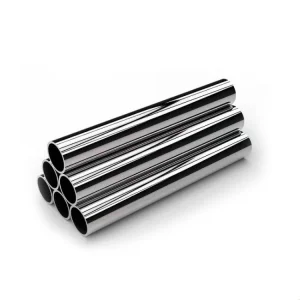
CE-Compliant Stainless Steel Products Portfolio
Direct mill supply of certified stainless steel pipes, sheets, plates, and precision strips manufactured under strict EN 10088-2 and ASTM A240 standards.
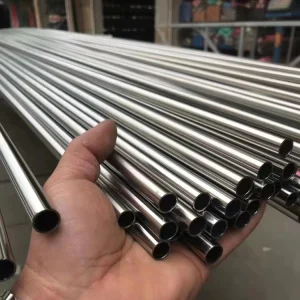
China China Stainless Steel Pipe Factory: Direct Suppliers for All Sizes with Custom Processing Services Supplier, Factory
View Product Specifications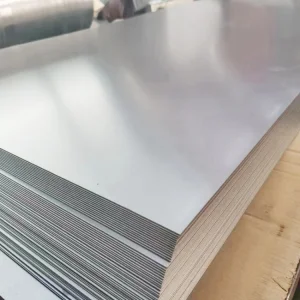
Wholesale High Cost-Effective 201 Cold Rolled Stainless Steel Sheet from China Suppliers and Factory - Precision Tolerances Available Manufacturer, Pricelist
View Product Specifications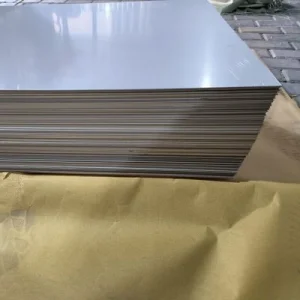
Custom China SUS304 Stainless Steel Cold-Rolled Plate Supplier - Corrosion-Resistant Food Grade Factory Material Manufacturers, Factories
View Product Specifications
China China Factory Suppliers for 316L Stainless Steel Sheet - High-Quality and Durable Metal Solutions Supplier, Suppliers
View Product Specifications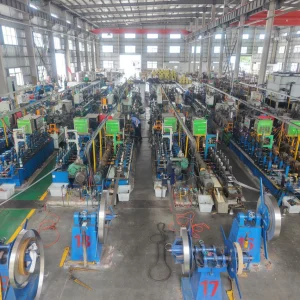
CE Certification China SUS304/304L Stainless Steel Strip Suppliers - High-Quality Factory Material for Pipes and Luxury Decor Manufacturer, Factories
View Product Specifications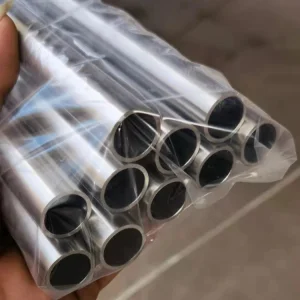
CE Certification China SUS304/304L Ultra-Low Carbon Stainless Steel Pipe Suppliers - Superior Corrosion Resistance & Welding Performance Factory Suppliers, Factory
View Product Specifications
CE Certification High-Quality SUS304/304L Stainless Steel Strips from China Suppliers - Premium Factory Source for Pipes and Luxury Decor Factory, Pricelist
View Product Specifications
Custom High Cost-effective 201 Cold Rolled Stainless Steel Sheet - China Suppliers and Factory Supplier, Factory
View Product SpecificationsGlobal Commercial & Industrial Landscape of 2205 Duplex Stainless Steel
Analyzing the shift toward high-yield, chloride-resistant duplex alloys in modern chemical processing, offshore marine infrastructure, and heavy industrial applications.
Evolution of UNS S31803 to UNS S32205 Dual Specification
Duplex stainless steel 2205 was originally developed to resolve the severe stress corrosion cracking (SCC) vulnerabilities inherent to conventional 300-series austenitic steels (such as 304L and 316L) when exposed to warm, chloride-bearing aqueous environments.
The transition from legacy UNS S31803 to the optimized UNS S32205 specification represents a tight control over Chromium (Cr), Molybdenum (Mo), and Nitrogen (N) chemical ranges. Modern 2205 duplex sheets supplied by certified Chinese manufacturers maintain minimum nitrogen levels around 0.14-0.20%, guaranteeing higher localized pitting resistance and preventing intermetallic phase precipitation during welding thermal cycles.
Economic Efficiency & Structural Weight Savings
From an engineering economic standpoint, 2205 duplex sheet offers almost double the yield strength of standard austenitic grades. Design engineers can significantly reduce plate wall thickness in pressure vessel fabrication, chemical storage tanks, and structural components without compromising mechanical safety factors.
By leveraging reduced plate thickness, global procurement teams achieve dual benefits: reduced structural weight leading to lower sea-freight transit costs, and lower overall alloy material consumption per unit volume of pressure equipment.
Chemical Composition, Mechanical Properties & CE Standards
Rigorous compliance matrix for CE-certified 2205 duplex stainless steel sheets operating under Pressure Equipment Directive (PED 2014/68/EU) and Construction Products Regulation (CPR 305/2011).
Table 1: Chemical Composition Requirements (UNS S32205 / EN 1.4462)
| Element Mass % | Chromium (Cr) | Nickel (Ni) | Molybdenum (Mo) | Nitrogen (N) | Carbon (C) | Manganese (Mn) | Silicon (Si) | Phosphorus (P) | Sulfur (S) |
|---|---|---|---|---|---|---|---|---|---|
| UNS S32205 Min. | 22.00 | 4.50 | 3.00 | 0.14 | - | - | - | - | - |
| UNS S32205 Max. | 23.00 | 6.50 | 3.50 | 0.20 | 0.030 | 2.00 | 1.00 | 0.030 | 0.020 |
| EN 1.4462 Range | 21.00 - 23.00 | 4.50 - 6.50 | 2.50 - 3.50 | 0.10 - 0.22 | ≤ 0.030 | ≤ 2.00 | ≤ 1.00 | ≤ 0.035 | ≤ 0.015 |
Table 2: Mechanical Properties at Room Temperature ($20^\circ\text{C}$)
| Standard Specification | 0.2% Yield Strength $R_{p0.2}$ (MPa) | Tensile Strength $R_m$ (MPa) | Elongation $A_5$ (%) | Hardness (HBW Max) | Charpy-V Impact Energy ($-40^\circ\text{C}$) |
|---|---|---|---|---|---|
| ASTM A240 / UNS S32205 | ≥ 450 | 655 - 880 | ≥ 25 | 293 HBW | ≥ 40 Joules (Transverse) |
| EN 10088-2 / 1.4462 | ≥ 450 | 650 - 880 | ≥ 25 | 270 HBW | ≥ 80 Joules (Longitudinal) |
Localized Application Scenarios for 2205 Duplex Sheet
From high-salinity coastal marine plants to aggressive chemical reactors, explore where CE-certified 2205 sheet excels over alternative metals.
Marine & Desalination (SWRO) Systems
In Seawater Reverse Osmosis (SWRO) desalination facilities and offshore oil platforms, components are subjected to high operating pressures combined with severe chloride pitting conditions.
2205 duplex sheets are widely fabricated into high-pressure evaporator shells, seawater piping manifolds, pump casings, and marine structural splash zones where standard 316L suffers rapid pitting perforation.
Chemical & Petrochemical Processing Vessels
Chemical processing plants handling organic acids, chloride-contaminated solution baths, and nitric/hydrofluoric acid pickling tanks rely on the microstructural stability of 2205 duplex.
Its elevated Molybdenum (3.0-3.5%) and Nitrogen content preserves localized passivity, eliminating stress cracking hazards in continuous reactor digestors and heat exchangers.
Pulp & Paper Bleaching Equipment
Paper mills utilize strong oxidizing bleaching agents containing chlorine dioxide ($ClO_2$) and hypochlorites. Bleaching towers, rotary washers, and digester vats constructed from certified 2205 sheet withstand these aggressive acidic oxidizing vapors.
This localized reliability extends operational service life by more than three times compared to conventional 316L plates.
Manufacturing Technology Roadmap & Future Outlook
How advanced AOD refining, continuous thermomechanical control processing (TMCP), and smart inspection technologies drive next-generation duplex sheet quality.
Thermomechanical Processing & Phase Balancing
Achieving the precise 50% Austenite and 50% Ferrite dual-phase equilibrium requires sophisticated thermal control during hot rolling and solution annealing.
- Vacuum Induction Melting & AOD Refining: Ultra-precise decarburization guarantees carbon levels below 0.020%, minimizing carbide precipitation at grain boundaries.
- Controlled Solution Annealing ($1040^\circ\text{C} - 1080^\circ\text{C}$): Rapid water quenching directly following heat treatment suppresses brittle Sigma ($\sigma$) phase formation.
- Automated Microstructural Verification: Every heat lot undergoes metallographic etching to confirm ferrite volume fraction is maintained strictly between 40% and 60% per ASTM E562.
Future Technological Horizons & Industry Trends
The global steel industry is transitioning toward digital quality monitoring, green hydrogen refining, and zero-defect non-destructive testing (NDT).
- Laser-Guided Ultrasonic Thickness Gaging: Real-time automated thickness scanners across continuous cold rolling lines maintain sub-millimeter tolerances.
- Hybrid Nitrogen-Alloying Technologies: Pressurized nitrogen melting allows exact solubility control, improving welded joint toughness without post-weld heat treatment.
- Decarbonized Mill Supply Chains: Shift toward renewable-powered electric arc furnaces (EAF) to drastically reduce Scope 1 and Scope 2 carbon footprints for European green building compliance.
China Supply Chain Resilience & Manufacturing Advantages
How Wuxi and Jiangsu stainless steel industrial hubs integrate raw material refining, continuous slitting, surface finishing, and global port logistics.
Tier-1 Mill Raw Material Sourcing
Our raw material slabs and master coils are directly sourced from primary steelmakers including TISCO, Tsingshan, POSCO, and Baosteel. This guarantees 100% chemical traceability and homogeneous mechanical properties across large batch orders.
In-House Precision Surface & Processing
Operating state-of-the-art continuous flattening, high-speed strip slitting, 8K mirror polishing, No.4 hairline brushing, and custom laser-cutting facilities under one roof eliminates third-party lead time bottlenecks and quality hand-off risks.
Strategic Coastal Logistics Proximity
Located in Wuxi, Jiangsu, our manufacturing facilities benefit from immediate highway access to Shanghai Port and Ningbo Port. This strategic geographical proximity guarantees rapid container stuffing, streamlined customs clearance, and predictable shipping schedules.
Localized Support & Global Compliance Assurance
Stringent quality control systems ensuring full traceability from raw heat numbers to final overseas port delivery.
Full Laboratory Testing & Mill Test Certificates (MTC)
Every shipment of 2205 duplex stainless steel sheet is accompanied by an original EN 10204 3.1 Inspection Certificate (3.2 available upon request for independent inspector sign-off by SGS, TUV, or Lloyd's Register).
- Chemical Analysis & Spectrometry: Positive Material Identification (PMI) verified per heat.
- Corrosion Resistance Verification: Intergranular corrosion test according to ASTM A262 Practice E and ASTM G48 Method A pitting tests.
- Mechanical & NDT Testing: Tensile, yield, impact toughness at $-40^\circ\text{C}$, and 100% X-ray / Ultrasonic defect evaluation.
Export-Standard Packaging & Seaworthy Protection
To prevent mechanical scratches, moisture exposure, and edge deformation during long-distance maritime ocean transit, we implement robust export packaging standards:
- Protective Film Coating: Heavy-duty PVC / PE protective laser film applied to polished surfaces (2B, BA, No.4).
- Moisture & Rust Prevention: Waterproof craft paper wrapping and vapor corrosion inhibitor (VCI) desiccant bags.
- ISPM 15 Fumigated Wooden Skids: Heavy-duty wooden pallets reinforced with metallic corner protectors and high-tensile steel banding.
Frequently Asked Questions (FAQ) for Procurement Engineers
Detailed technical answers to common questions regarding CE certification, duplex metallurgy, heat treatment, and order execution.
1. What is the difference between UNS S31803 and UNS S32205 duplex stainless steel sheets?
UNS S32205 is a dual-certified, higher-alloyed version of UNS S31803. While S31803 has wider chemical ranges, S32205 specifies higher minimum levels of Chromium (22.0% min), Molybdenum (3.0% min), and Nitrogen (0.14% min). This tightened range ensures superior pitting resistance (PREN ≥ 34) and prevents harmful intermetallic phase precipitation during welding.
2. How does CE Certification impact 2205 stainless steel sheet procurement for European projects?
CE Certification confirms compliance with European Union regulations, specifically EN 10088-2 for general structural applications (CPR 305/2011) and EN 10028-7 / PED 2014/68/EU for pressure equipment. CE marking verifies that the manufacturer’s Factory Production Control (FPC) system has been audited by a Notified Body, enabling seamless legal importation into EU member states.
3. Why is 2205 duplex stainless steel preferred over 316L in chloride environments?
Standard 316L stainless steel has a PREN value of approximately 23-25 and is susceptible to chloride stress corrosion cracking (SCC) at temperatures above $60^\circ\text{C}$. In contrast, 2205 duplex offers a PREN value of ≥ 34 and a mixed 50:50 austenitic-ferritic microstructure that halts SCC propagation, providing far higher reliability in seawater, brine, and acidic media.
4. What surface finishes are available for cold-rolled and hot-rolled 2205 sheets?
Cold-rolled 2205 sheets (typically 0.5mm to 6.0mm thickness) are available in 2B (cold rolled, annealed and pickled), BA (bright annealed), No.4 (brushed), and 8K mirror finishes. Hot-rolled plates (3.0mm to 100mm) are supplied in No.1 finish (annealed and pickled/descaled).
5. What welding precautions are required when fabricating 2205 duplex sheets?
To preserve the 50:50 ferrite-austenite phase balance in the Heat Affected Zone (HAZ), weld heat input should be maintained between 0.5 to 2.5 kJ/mm. Over-alloyed filler metals containing 8-10% Nickel (such as ER2209) are recommended, along with shielding gas containing 1-3% Nitrogen to avoid local nitrogen depletion.
Additional Certified Stainless Steel Products
Explore our full line of industrial welded pipes, super duplex plates, decorative tubes, and precision strips available directly from factory inventory.
Custom China Suppliers Factory Stainless Steel Industrial Welded Pipe - Quality 201, 304, 316L - Wide Specifications & High Strength Suppliers, Pricelist
View Product Specifications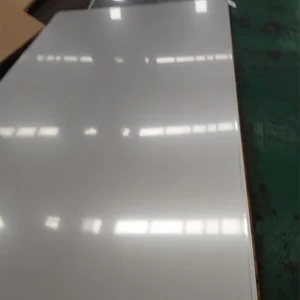
Custom 2507 Super Duplex Steel Plate Supplier, Quotes
View Product Specifications
Custom China SUS304 Stainless Steel Cold-Rolled Plate Suppliers - Corrosion-Resistant Food Grade Material from Factory Manufacturer, Pricelist
View Product Specifications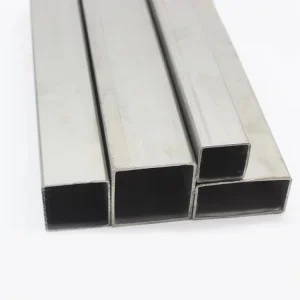
Custom Prime Quality 201 Stainless Steel Pipe - Durable & Aesthetic | China Suppliers & Factory for Stair Railings and Household Use Manufacturers, Suppliers
View Product Specifications
China China SUS304 Stainless Steel Cold-Rolled Plate - Food Grade, Corrosion Resistant | Reliable Suppliers & Factory Supplier, Factory
View Product Specifications
Custom Prime Quality 201 Stainless Steel Pipe from China Suppliers - Durable, Glossy & Ideal for Stairs and Handrails Factory, Quotes
View Product Specifications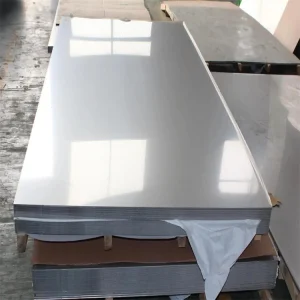
Custom Cold Rolled Stainless Steel Sheet Manufacturers, Factories
View Product Specifications