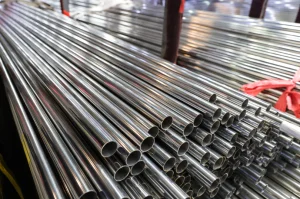
Featured CE Certified Stainless Steel Products (Batch 01)
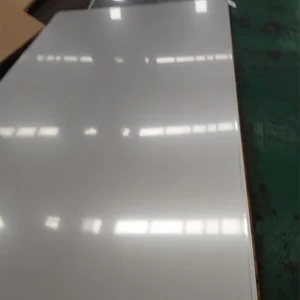

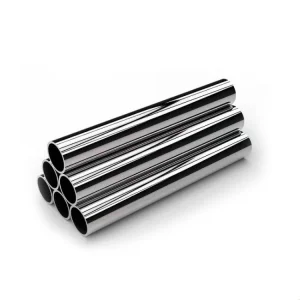


Metallurgical Architecture & Engineering Baseline of 201 Stainless Steel Coils
In the global paradigm of modern materials engineering, 201 Grade Stainless Steel Coil represents a pivotal technological breakthrough in austenitic alloy formulation. Engineered by strategically substituting traditional nickel content with precise balances of manganese (Mn) and nitrogen (N), 201 stainless steel delivers an extraordinary mechanical yield strength while preserving crucial formability and aesthetic brilliance.
Alloy Chemistry & Nitrogen Yield Strengthening
The addition of nitrogen acts as a potent interstitial solid-solution strengthener. In CE-certified 201 formulations, nitrogen elevates yield strength to approximately 350-400 MPa—nearly 30% higher than classic 304 austenitic steel—without inducing phase transformation or magnetic instability during moderate cold working.
CE Compliance & Structural Rigidity
Under EU Construction Products Regulation (CPR) and pressure/structural safety standards, CE certification verifies that cold-rolled 201 steel coils possess verified chemical homogeneity, strict dimensional tolerances (EN 10088-2), and zero internal delamination, guaranteeing long-term mechanical safety.
Cost-Performance Ratio Optimization
With London Metal Exchange (LME) nickel volatility presenting ongoing operational risks for international B2B buyers, 201 stainless steel coil acts as an economical hedge. It lowers baseline material costs by 35% to 50% compared to 300-series alloys in non-saline indoor and structural applications.
2025-2030 Global Industrial Trends & Strategic Procurement Shift
The international metal manufacturing landscape is undergoing a systemic structural transformation. Procurement departments in Europe, North America, Southeast Asia, and the Middle East are shifting from single-variable price negotiation to total cost of ownership (TCO) evaluation and supply chain resilience.
1. Precision Slitting & Custom Coil Width Demand
Modern automated stamping, roll-forming, and fiber-laser cutting lines require narrow-slitting tolerance to eliminate downtime. Direct mill-to-factory suppliers that provide sub-millimeter precision slit edge (slit width down to 20mm) cut down client scrap rate by up to 14%.
2. Advanced Surface Treatment Integration
Demand has escalated for multi-stage surface treatments applied directly at the coil phase. Rather than processing flat sheets individually, global enterprises source pre-buffed 8K Mirror, PVD Color-Coated, Hairline (HL), and Anti-Fingerprint (AFP) treated 201 coils to maximize continuous manufacturing throughput.
3. Green Metallurgy & ESG Decarbonization
Leading Chinese steel manufacturers are adopting hydrogen-based electric arc furnace (EAF) smelting and closed-loop scrap recycling networks. Purchasing CE-certified 201 coils produced under strict ESG audits enables international buyers to comply with EU CBAM (Carbon Border Adjustment Mechanism) carbon footprint reporting.
China Factory 4.0: Jiangsu & Wuxi Industrial Cluster Advantages
As the global hub of stainless steel cold-rolling and precision processing, Wuxi (Jiangsu Province) combines massive raw material feedstock reserves from primary smelters (such as Tsingshan, TISCO, Baosteel) with state-of-the-art downstream finishing capability.
20-High Sendzimir Cold Rolling Mills
Our partner manufacturing facilities employ continuous 20-high Sendzimir cold-rolling mills equipped with real-time X-ray gauge control. This setup guarantees ultra-precise thickness uniformity from coil head to tail, eliminating crown variation.
Pure Hydrogen Bright Annealing (BA) Lines
By utilizing 100% pure hydrogen atmospheric bright annealing furnaces, the oxide scale is prevented from forming during heat treatment. The resulting surface exhibits mirror-like reflectivity, superior ductility, and optimal grain structure for deep drawing.
Integrated Logistics & Port Dispatch
Proximity to Shanghai and Ningbo deep-water sea ports enables seamless containerized and break-bulk shipping. Specialized seaworthy packaging—including anti-rust VCI paper, plastic film wrapping, galvanized steel outer sleeves, and heavy-duty wooden skids—ensures zero ocean transit corrosion.
Metallurgical Performance & Chemical Benchmark Matrix
To assist engineering departments and technical buyers in specifying the ideal alloy, the following matrix compares key chemical and mechanical properties of CE-certified 201 against standard industrial grades (304 and 430).
| Alloy Parameter / Grade | Grade 201 (CE Certified) | Grade 304 (Standard) | Grade 430 (Ferritic) |
|---|---|---|---|
| Chromium (Cr) Content | 13.5% – 15.5% | 18.0% – 20.0% | 16.0% – 18.0% |
| Nickel (Ni) Content | 1.0% – 4.0% (Substituted by Mn) | 8.0% – 10.5% | ≤ 0.75% |
| Manganese (Mn) Content | 5.5% – 7.5% | ≤ 2.0% | ≤ 1.0% |
| Nitrogen (N) Content | 0.05% – 0.25% (Yield Boost) | ≤ 0.10% | N/A |
| Yield Strength R0.2 (MPa) | ≥ 350 MPa | ≥ 205 MPa | ≥ 260 MPa |
| Tensile Strength Rm (MPa) | ≥ 700 MPa | ≥ 520 MPa | ≥ 450 MPa |
| Elongation A50mm (%) | ≥ 40% | ≥ 40% | ≥ 22% |
| Magnetism (Annealed State) | Non-Magnetic (Slight after cold work) | Non-Magnetic | Fully Magnetic |
| Relative Cost Index | Economy (1.0x Baseline) | Premium (1.6x - 1.9x) | Moderate (1.1x) |
Localized Application Scenarios & Global Industry Implementations
Due to its unique combination of mechanical toughness, high yield capacity, and attractive surface polishability, 201 Stainless Steel Coil is utilized across extensive commercial and structural sectors.
Architectural Hardware & Elevator Cabins
Embossed, etched, and titanium PVD-coated 201 coils are widely used for interior elevator paneling, decorative door trim, baseboards, and wall cladding. The high yield strength provides enhanced dent resistance against impact in high-traffic commercial zones.
Commercial Catering & Kitchenware Fabrication
Deep-drawing grade 201 coils (J4/J3 variants with controlled copper additions) allow smooth press-forming of stainless steel sinks, chafing dishes, stock pots, and countertop surfaces where direct contact with heavy mineral acids is limited.
Automotive Trim & Structural Tubing
Automotive OEMs implement narrow slit 201 coils for window molding trims, wiper arms, bus handrails, and decorative exhaust sleeves, capitalizing on its structural strength and high-polish aesthetic at optimized unit costs.
Industrial Decorative & Structural Piping
Tube mills transform slit 201 coil stock into round, square, and rectangular welded ornamental pipes. These are integrated into stair handrails, guardrails, urban furniture, and protective security barriers worldwide.
Frequently Asked Questions (Technical Procurement Q&A)
Direct answers to technical questions raised by international sourcing managers, quality engineers, and metal service centers regarding CE certified 201 coils.
• J1 (High Cu 0.8%-1.0%): Excellent deep drawing capacity, ideal for kitchen sinks and complex stampings.
• J4 / J3 (Mid Cu 0.4%-0.6%): Standard deep-drawing and shallow bending grade, balanced cost-performance.
• J2 / J5 (Low Cu <0.2%): Harder grade with higher carbon, suited primarily for flat sheets, structural trim, and decorative piping.