
Featured Cold-Rolled & Corrosion-Resistant Plates
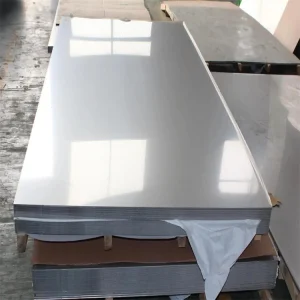
Direct mill supply of high-precision stainless steel sheets certified for heavy industry, nuclear engineering, and severe chemical processing across Russian industrial hubs.


Russian Industrial Stainless Steel Landscape: Macro Analysis & Import Substitution
An executive overview of structural shifts in Russian metallurgical procurement, mega-infrastructure demands, and cross-border supply chain integration.
Evolving Supply Dynamics & Demand Drivers
The Russian market for flat-rolled stainless steel products has undergone an unprecedented structural realigning. Historically reliant on European mills for specialized chemical and cryogenic grades, Russian industrial enterprises—spanning oil & gas refining, LNG processing, mineral fertilizer manufacturing, and naval shipyards—have rapidly reoriented their procurement channels towards top-tier Chinese manufacturing centers like Wuxi and Foshan.
Domestic production in Russia remains concentrated in long products and heavy structural carbon steels, creating a structural deficit in wide cold-rolled thin sheets (0.5mm to 3.0mm) and high-alloy heavy plates (above 10mm in Duplex 2205, 310S, and 316Ti). Consequently, import volumes of stainless steel plates have maintained strong momentum, driven by state-backed modernizations in the Arctic LNG-2 sector, Yamal infrastructure projects, and large-scale chemical syntheses in Tatarstan and Bashkortostan.
GOST Compliance & Technical Adaptation
Procurement teams operating in Saint Petersburg, Moscow, Ekaterinburg, and Vladivostok face a dual requirement: securing cost-competitive volumetric supply while ensuring strict compliance with GOST 5632-2014, GOST 7350-77, and GOST 5582-75 specifications.
To successfully pass inspection by Russian technical supervision authorities (Rostekhnadzor), overseas suppliers must demonstrate flawless equivalence between international standards (ASTM A240, EN 10088-2) and Russian GOST grades. This includes mandatory verification of intergranular corrosion (IGC) resistance per GOST 6032 (Method AM/AMU) and mechanical impact testing at cryogenic temperatures (-196°C) for sub-zero pipeline applications.
Stainless Steel Grade Specification Matrix: GOST vs. International Equivalents
Comprehensive engineering reference mapping Russian metallurgical standards against AISI, EN, and JIS designations for structural, pressure vessel, and chemical applications.
| Russian GOST Grade | AISI / ASTM Grade | EN Standard | Chemical Composition Key Feature | Primary Industrial Application in Russia |
|---|---|---|---|---|
| 08X18H10 | AISI 304 | 1.4301 | Cr 17-19%, Ni 8-10%, C ≤ 0.08% | Food processing equipment, architectural cladding, general machinery. |
| 03X18H11 | AISI 304L | 1.4307 | Cr 17.5-19.5%, Ni 8-10.5%, C ≤ 0.03% | Welded structures eliminating carbide precipitation, cryogenic vessels. |
| 12X18H10T | AISI 321 | 1.4541 | Titanium stabilized (Ti 5xC to 0.7%), Cr 17-19% | High-temperature exhaust lines, heat exchangers, boiler pressure parts up to 800°C. |
| 03X17H14M3 | AISI 316L | 1.4404 | Mo 2.0-3.0%, Cr 16-18%, Ni 10-14% | Marine hardware, coastal infrastructure, urea and fertilizer production reactors. |
| 10X17H13M2T | AISI 316Ti | 1.4571 | Mo 2.0-2.5%, Titanium stabilized | Aggressive organic acid processing, heavy chemical synthesis in Urals industrial zones. |
| 20X23H18 | AISI 310S | 1.4845 | Cr 24-26%, Ni 19-22%, High heat resistance | Metallurgical annealing furnaces, thermal power plant baffles, petrochemical crackers. |
| 03X22H6M3N2 | Duplex 2205 (S31803) | 1.4462 | Cr 21-23%, Ni 4.5-6.5%, Mo 2.5-3.5%, N 0.14-0.20% | Offshore drilling rigs, desalination units, high-pressure brine and oil processing. |
| 02X25H7M4N | Super Duplex 2507 | 1.4410 | Cr 24-26%, Ni 6-8%, Mo 3-5%, PREN ≥ 42 | Arctic offshore platforms, deep-sea subsea pipelines, sour gas scrubbing systems. |
Global Supply & Technical Manufacturing Capabilities
Engineered for excellence, backed by traceable feedstock from leading primary mills including TISCO, Tsingshan, POSCO, and Baosteel.
Macro-Industrial Solutions for Key Russian Economic Sectors
Tailored metallurgical configurations engineered to withstand severe operating climates, aggressive chemical media, and extreme structural mechanical loads.
Arctic & Siberian Energy Infrastructure
Sub-zero conditions in Arctic LNG installations require metals that resist brittle failure. Austenitic grades 304L (03X18H11) and titanium-stabilized 321 (12X18H10T) deliver exceptional Charpy V-notch impact toughness down to -196°C. Heavy hot-rolled plates (No.1 finish) are extensively deployed in liquefied gas storage tanks, cryo-pipe jackets, and re-gasification modules.
Heavy Petrochemical & Fertilizer Plants
Synthesizing ammonia, nitric acid, and mineral fertilizers exposes processing equipment to extreme pitting and crevice corrosion. Molybdenum-bearing 316L (03X17H14M3) and 316Ti (10X17H13M2T) plates prevent localized halide attack. For media with elevated chloride concentrations, Duplex 2205 (03X22H6M3N2) provides twice the yield strength of austenitic grades while virtually eliminating stress corrosion cracking (SCC).
Metallurgical & Mining Ore Processing
Extracting nickel, copper, and gold in Norilsk and the Far East requires heavy-gauge plates capable of handling abrasive slurries and sulfuric acid leaching solutions. High-alloy 310S (20X23H18) and Super Duplex 2507 plates deliver superior hardness, oxidation resistance, and high erosion threshold, maximizing operational uptime in processing autoclaves.
Stainless Steel Plate Pricelist Structure & Cost Drivers in Russia
Transparent cost breakdown analysis: Understanding base price calculation, alloy surcharges, surface finish premiums, and cross-border logistics factors.
How Stainless Steel Plate Pricing is Calculated for Russian Buyers
Procurement prices for stainless steel plate exported to Russia are typically structured as:
Total Price per Metric Ton = Base Metal Price + Alloy Surcharge (Nickel/Moly/Chrome) + Processing Premiums + Freight & Customs Logistics
Because London Metal Exchange (LME) nickel and Shanghai Futures Exchange (SHFE) stainless steel contracts fluctuate continuously, direct factory pricelists are updated on a weekly basis. Below is an indicative benchmark price range for standard export specifications (FOB Chinese Main Port vs. Estimated CIF Russian Ports):
| Grade Designation | Thickness / Finish | FOB Wuxi/Shanghai (USD/MT) | CIF Vladivostok/Vostochny (USD/MT) | CIF Saint Petersburg (USD/MT) | Key Price Drivers |
|---|---|---|---|---|---|
| 201 (12X15G9ND) | 1.5mm - 3.0mm / 2B | $1,250 - $1,450 | $1,350 - $1,570 | $1,420 - $1,650 | Manganese content, copper additions, basic rolling. |
| 304 (08X18H10) | 2.0mm - 6.0mm / 2B or No.1 | $2,100 - $2,450 | $2,220 - $2,580 | $2,300 - $2,680 | LME Nickel price volatility, primary coil feedstock cost. |
| 321 (12X18H10T) | 3.0mm - 12.0mm / No.1 | $2,400 - $2,800 | $2,530 - $2,940 | $2,610 - $3,050 | Ferro-Titanium additions, specialized heat-treatment annealing. |
| 316L (03X17H14M3) | 3.0mm - 20.0mm / No.1 | $3,200 - $3,750 | $3,340 - $3,900 | $3,420 - $4,020 | Molybdenum ferroalloy index, high-purity nickel content. |
| 310S (20X23H18) | 4.0mm - 25.0mm / No.1 | $4,100 - $4,800 | $4,260 - $4,970 | $4,350 - $5,100 | High Nickel (20%) & Chrome (25%) alloy charge. |
| Duplex 2205 | 5.0mm - 30.0mm / No.1 | $3,400 - $4,100 | $3,550 - $4,270 | $3,640 - $4,380 | Nitrogen control, dual-phase solution annealing verification. |
*Note: Prices above are indicative benchmarks. Final project quotes depend on precise order volume, cut-to-length dimensions, tolerance requirements, and real-time exchange rates.
Cross-Border Logistics, Payment Financial Channels & EAC Compliance
Turnkey supply chain support tailored specifically to streamline trade routes, customs declaration, and currency clearance for Russian buyers.
Multi-Modal Freight Routes
We provide flexible shipping logistics: Direct maritime container vessels and breakbulk to Vladivostok, Vostochny, Saint Petersburg, and Novorossiysk. For inland destinations such as Yekaterinburg, Novosibirsk, and Chelyabinsk, we coordinate direct overland rail freight via Manzhouli/Zabaykalsk and Suifenhe/Grodekovo border crossings.
Direct CNY/RUB Payment Channels
To eliminate settlement bottlenecks and foreign exchange conversion risks, our commercial operations support direct cross-border payments in Chinese Yuan (RMB) and Russian Rubles (RUB) through CIPS-connected banking institutions (such as VTB Shanghai, Bank of China, and ICBC), enabling seamless financial transactions.
Complete Documentation & EAC Certification
Every shipment is dispatched with original EN 10204 3.1 Mill Test Certificates (MTC) detailing chemical heat analysis, mechanical yield/tensile tests, and ultrasonic flaw detection reports. We facilitate EAC declaration support and GOST-R compliance paperwork required for swift customs clearance.
Technology Roadmap & Future Processing Innovations
Advancing metallurgical precision: High-definition laser cutting, green steel decarbonization, and ultra-wide heavy plate rolling.
Advanced Processing & Custom Plasma/Laser Cut
Modern Russian fabricators demand near-net-shape components directly from the mill supplier to minimize workshop scrap. Our manufacturing facilities are upgraded with high-power 30kW fiber laser cutters, underwater plasma cutters, and precision waterjet systems capable of handling plate thicknesses up to 120mm.
This automated capability allows us to produce custom circular flanges, perforated baffle plates, bevel-edged weld prep panels, and intricate structural shapes delivered ready for immediate site assembly.
Low-Carbon Metallurgical Solutions & Ultra-Wide Rolling
In response to global sustainability mandates and heavy equipment efficiency demands, our production lines are expanding capacity for ultra-wide hot-rolled plates (up to 3000mm width). Wide plates significantly reduce longitudinal weld seams in large-diameter vessel fabrication, dramatically improving structural integrity and lowering NDT inspection expenses.
Furthermore, our partner mills utilize EAF (Electric Arc Furnace) recycling routes powered by renewable hydro-energy to lower embedded carbon footprint across all delivered 300 and 400 series plates.
Frequently Asked Questions (FAQ) for Russian Buyers
Direct answers from our metallurgical engineering team regarding standards, tolerances, shipping options, and custom processing.
Complete Stainless Steel Product Catalog for Russian Enterprises
Explore our full range of Duplex, Perforated, Hot-Rolled Heavy Plate, and Precision Strip inventory tailored for industrial procurement.


Require Direct Mill Pricing & GOST Technical Specs?
Our multilingual metallurgical engineering team provides customized project estimates, MTC verification, RMB/RUB invoice processing, and full logistics quotes within 24 hours.