
High-Demand Stainless Steel Solutions for Houston Sector
Engineered to withstand aggressive Gulf Coast environmental humidity, hydrogen sulfide sour service, and downstream chemical processing.

Houston Industrial Custom Prime Quality 201 Stainless Steel Pipe
Request Quote & Specs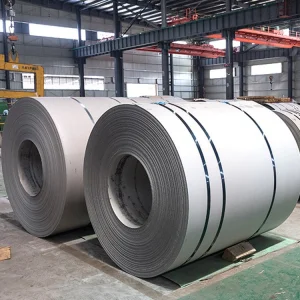
Houston Heavy-Duty Hot Rolled Stainless Steel Coil for Petrochemical Storage
Request Quote & Specs
Houston Refinery Grade Stainless Steel Industrial Welded Pipe
Request Quote & Specs
Houston Corrosion-Resistant Cold Rolled Stainless Steel Sheet
Request Quote & SpecsHouston’s Industrial Landscape & Advanced Stainless Sourcing
A comprehensive examination of material demands across the Houston Ship Channel, Energy Corridor, and Gulf Coast industrial hubs.
The Greater Houston metropolitan area represents the undisputed hub of the global energy and petrochemical manufacturing industry. Anchored by the Houston Ship Channel—one of the world's busiest waterways—and surrounding industrial clusters in Baytown, Deer Park, Pasadena, and Freeport, local manufacturing operations require raw materials that withstand extreme operational stress. High-temperature steam cracking, sour gas processing, marine atmospheric corrosion, and heavy chemical synthesis place unprecedented demands on metallic infrastructure.
In this challenging ecosystem, procuring hot products—specifically premium-grade stainless steel pipes, tubes, sheets, plates, and coils—is not merely a purchasing decision; it is a critical engineering requirement. Facility downtime caused by stress corrosion cracking (SCC), localized pitting, or weld fatigue can cost operators millions of dollars per day. As a result, Houston EPC contractors, refinery maintenance teams, and original equipment manufacturers (OEMs) require direct factory partners capable of delivering verified, fully traceable, and standardized stainless steel components.
Jiangsu Renzhi Holding Group Co., Ltd., operating from its massive production facility in Wuxi, China, bridges the gap between massive mill capacity and Houston's precise engineering specifications. By controlling every stage of production—from raw feedstock melting and slitting to continuous high-frequency pipe welding and automated surface polishing—we deliver hot products that meet and exceed ASTM, ASME, API, and EN standards. Our direct-factory logistics pipeline connects directly into Port Houston, providing local stocking distributors and project managers with scalable, risk-mitigated supply chains.
Engineering Specifications & Alloy Grade Selection
Comparative structural matrix tailored for Houston process engineers, metallurgists, and procurement officers.
| Alloy Grade | Microstructure & Alloy Composition | Pitting Resistance Equivalent (PREN) | Applicable Standards | Ideal Houston Application Field |
|---|---|---|---|---|
| AISI 201 | Austenitic (Cr-Mn-Ni) Low Nickel | PREN ~ 15 - 17 | ASTM A240 | Indoor structural support, commercial trim, low-corrosion architectural tubing |
| AISI 304 / 304L | Austenitic (18% Cr, 8% Ni, Ultra-Low C) | PREN ~ 18 - 20 | ASTM A312 / A240 | General chemical fluid transport, storage tanks, water treatment facilities |
| AISI 316 / 316L | Austenitic (16% Cr, 10% Ni, 2.5% Mo) | PREN ~ 23 - 25 | ASME SA312 / API | Coastal refinery pipelines, marine exposure equipment, H2S low-concentration service |
| AISI 310S | High-Temp Austenitic (25% Cr, 20% Ni) | PREN ~ 25 - 27 | ASTM A213 / A312 | Ethylene cracking furnaces, flare stacks, heat treatment heat exchangers |
| Duplex 2205 | Austenitic-Ferritic (22% Cr, 5% Ni, 3% Mo, N) | PREN ~ 32 - 35 | ASTM A789 / A790 | Offshore topsides, subsea manifold piping, high-pressure sour gas lines |
| Super Duplex 2507 | Super Austenitic-Ferritic (25% Cr, 7% Ni, 4% Mo, N) | PREN ≥ 42 | ASTM A240 / EN 10088 | Deepwater Gulf of Mexico platforms, aggressive seawater cooling systems |
Selection of the correct stainless steel grade is governed by the specific thermodynamic and chemical environments present in Houston industrial operations. For instance, in severe chloride-bearing marine environments along Galveston Bay, standard 304 grade stainless steel may experience localized pitting and stress corrosion cracking above 60°C. Adding 2.0–3.0% Molybdenum in 316L significantly improves resistance to halide attack, while Duplex 2205 doubles yield strength while maintaining exceptional SCC immunity in high-pressure oil patch applications.
Targeted Application Scenarios Across Greater Houston
How our factory direct hot products empower critical energy infrastructure and heavy industrial projects.
Downstream Refining & Petrochemicals
Utilized in major processing complexes along Texas Highway 225 and Baytown. Our 316L and 310S heavy-wall welded pipes handle aggressive hydrocarbon streams, hot organic acids, and thermal cracking units with zero leakage integrity.
Offshore Exploration & Marine Subsea
Providing Super Duplex 2507 plates and cold-rolled stainless sheets for offshore platform topsides operating in the Gulf of Mexico. Designed to combat marine splash-zone corrosion and high mechanical stress.
LNG Infrastructure & Clean Energy
Supporting clean energy transition initiatives in Freeport and Sabine Pass. Our cryogenic-grade 304L stainless steel coils and seamless-equivalent welded tubes remain ductile at extreme sub-zero temperatures.
Strict Quality Control & Houston Port Freight Logistics
Eliminating supply chain risk through rigorous mill testing, international certification, and fast-track shipping.
Quality reliability is non-negotiable for industrial buyers in Houston. Jiangsu Renzhi Holding Group maintains a total quality management (TQM) framework that governs raw material feedstock selection through to final export container packaging. Feedstock coils are exclusively sourced from premier tier-1 global mills including Tsingshan, TISCO, POSCO, and Baosteel. This guarantees consistent chemical compositions, minimal non-metallic inclusions, and highly predictable mechanical properties.
Prior to shipment, all hot products undergo extensive Non-Destructive Examination (NDE). Pipe and tube lines are subjected to 100% online hydrostatic pressure testing and automated Eddy Current flaw detection. For high-pressure process applications, Positive Material Identification (PMI) testing using handheld XRF analyzers verifies element fractions (Cr, Ni, Mo, Mn) against Mill Test Certificates (MTC) issued in strict compliance with EN 10204 3.1 and 3.2 specifications.
Full Chemical & Mechanical Testing
Intergranular corrosion tests according to ASTM A262 Practice E, tensile, yield, hardness, and Charpy V-notch impact testing at cryogenic temperatures.
Dimensional Tolerance Control
Precision automatic slitting lines ensure wall thickness variations stay well within tight ASTM A554, A269, and A312 tolerances, preventing fit-up issues during field welding.
Seaworthy Export Packaging
Heavy-duty wooden crates, plastic end caps, edge protectors, and moisture-proof vapor corrosion inhibitor (VCI) wrapping guarantee products arrive at Port Houston rust-free.
Technology Roadmap: Next-Gen Stainless Steel Manufacturing
Innovations driving decarbonized steel production, automated ultrasonic monitoring, and smart supply chain integration.
As Houston accelerates towards Net-Zero industrial goals and expanded hydrogen economy initiatives, material demands are evolving rapidly. Renzhi Stainless is investing heavily in next-generation manufacturing technologies to meet the upcoming challenges of energy transition engineering:
Hydrogen Infrastructure Compatibility
Developing ultra-smooth internal surface finishes (EP/BA grade) and optimized nickel-equivalent alloys to mitigate hydrogen embrittlement in high-pressure transport networks.
Green Manufacturing & Reduced Carbon
Integrating electric arc furnace (EAF) recycling technologies and closed-loop water treatment systems, lowering embodied carbon in finished stainless steel products by over 35%.
Digital Twin & Traceability
Implementing QR-code based mill certificate tracking on every individual pipe and coil bundle, allowing Houston field engineers to instantly pull MTR data on-site via mobile devices.
Full Spectrum Hot Products Supply Line
Explore our extensive line of custom stainless steel sheets, strips, perforated metal, and specialized alloy piping.

Houston Custom Perforated Stainless Steel Sheet & Metal Mesh
Request Quote & Specs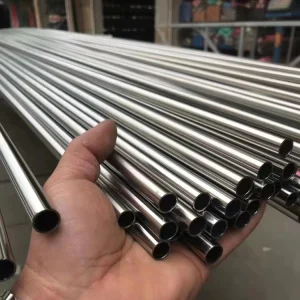
Houston ASTM Certified Stainless Steel Pipe Direct Factory Supply
Request Quote & Specs
Houston High-Precision SUS304/304L Stainless Steel Strip
Request Quote & Specs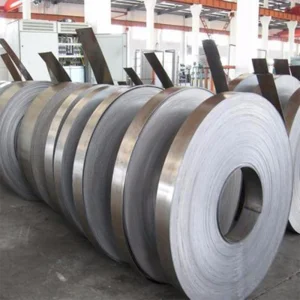
Houston High Ductility 201 Stainless Steel Strip & Coil
Request Quote & Specs
Houston Cost-Effective 201 Cold Rolled Stainless Steel Sheet
Request Quote & Specs
Houston Architectural Stainless Steel Decorative Pipe
Request Quote & Specs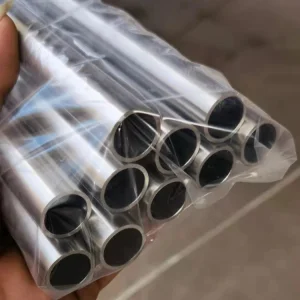
Houston Ultra-Low Carbon SUS304/304L Corrosion Resistant Pipe
Request Quote & Specs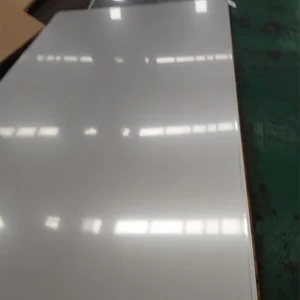
Houston 2507 Super Duplex Stainless Steel Plate for Offshore Service
Request Quote & SpecsFrequently Asked Questions for Houston B2B Procurement
Expert answers regarding standards compliance, ocean freight delivery timelines to Port Houston, testing certifications, and custom fabrication.
What is the typical transit lead time for ocean shipments from your factory to Port Houston?
Standard ocean transit time from Shanghai/Ningbo ports directly to Port Houston (Bayport or Barbours Cut Terminals) averages 28 to 35 days depending on direct shipping lane choices. Factory manufacturing and custom processing (slitting, beveling, polishing) generally take 10 to 15 days, allowing Houston buyers to plan project inventory with a 45-day total horizon.
Are your stainless steel pipes compliant with ASME B31.3 process piping standards?
Yes. All industrial welded pipes destined for chemical plants and oil refineries are manufactured in strict compliance with ASTM A312 / ASME SA312 specifications. Material test reports (MTC EN 10204 3.1) accompanying each lot verify chemical composition, tensile strength, yield strength, hydrostatic pressure test results, and non-destructive eddy current inspection.
How do you assist Houston clients in selecting between 304L, 316L, and Duplex 2205?
Our experienced metallurgical engineering team conducts line-item application evaluations. For general atmospheric or freshwater duty, 304L provides maximum cost efficiency. For elevated chloride concentrations, marine exposure, or mild sour gas environments along the Gulf Coast, 316L is recommended. For high-pressure offshore subsea or heavy sour gas service requiring immunity to stress corrosion cracking, Duplex 2205 is specified.
Can you provide third-party material inspection prior to port loading?
Absolutely. We routinely host independent global inspection agencies including SGS, BV (Bureau Veritas), TÜV, and Intertek at our Wuxi processing plant. Third-party inspectors perform PMI testing, wall thickness ultrasonic measurement, visual surface checks, and dimensional verification prior to container sealing.
What surface finishes are available for cold-rolled stainless sheets and coils?
We operate 6 in-house polishing lines and 2 embossing lines, capable of providing No.1 (Hot Rolled, Annealed and Pickled), 2B (Cold Rolled, Smooth), BA (Bright Annealed), No.4 (Brushed/Satin), Hairline (HL), 8K Mirror, and custom anti-fingerprint decorative coatings.
How are custom pipe lengths and end preparations handled for field welding?
We offer cut-to-length processing from standard 6-meter (20ft) bars up to custom 12-meter lengths. Pipe ends can be supplied plain square-cut or with 37.5-degree bevels according to ANSI/ASME B16.25 for immediate orbital welding at Houston jobsites.
Do you support contract pricing and blanket order stocking programs for local Houston stockists?
Yes, we establish annual framework contracts with tiered pricing structures and scheduled container deliveries. This enables Houston stockists and service centers to hedge against nickel raw material market volatility while ensuring continuous inventory replenishment.
What documentation is included in the export shipping package?
Every shipment includes Commercial Invoice, Packing List, Bill of Lading, Certificate of Origin (Form E/CO), Mill Test Certificate EN 10204 3.1, NDT/Hydrostatic Test Reports, and Third-Party PMI verification certificates.
Partner with a Premier Stainless Steel Manufacturer
Get direct factory quotes, mill test samples, and engineering consultation for your upcoming Houston area projects.
Send Inquiry Now