Featured Belgian High-Demand Stainless Steel Solutions
Precision-engineered, certified raw material solutions customized for industrial operations in Belgium and the wider Benelux territory.
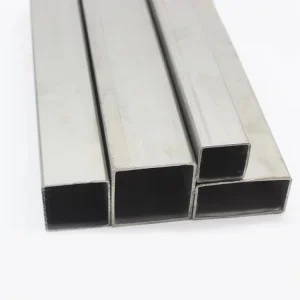
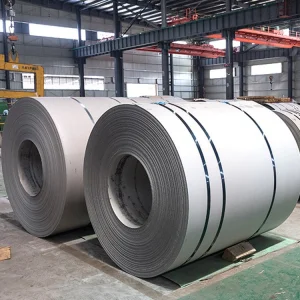
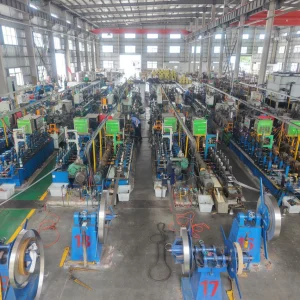
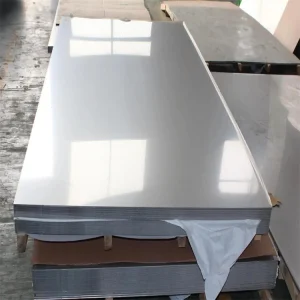
1. Belgian Industrial & Commercial Landscape: The Benelux Metallurgical Hub
Belgium occupies a central, highly strategic geographic and economic position within Western Europe's industrial core. Home to the world-renowned Port of Antwerp-Bruges—the second largest seaport in Europe and the continent’s premier integrated chemical sector cluster—Belgium presents rigorous demand for ultra-high-performance metal alloys, corrosion-resistant process piping, structural sheets, and custom-manufactured hot-rolled steel products.
The regional industrial dynamics across Belgium exhibit distinct micro-economic ecosystems that rely heavily on advanced metallurgical products:
The Flanders Chemical Corridor
Stretching between Antwerp and Ghent, this region demands extreme-grade 316L (1.4404) and Super Duplex 2507 (1.4410) seamless and welded pipes capable of withstanding aggressive organic solvents, high-pressure hydrocarbon streams, and saline coastal atmospheric exposure.
Wallonia Heavy Manufacturing & Steel Heritage
Centered around Liège and Charleroi, Wallonia’s historic metallurgy baseline has evolved toward advanced aerospace manufacturing, heavy structural machinery, and specialized defense engineering requiring high-yield strength hot-rolled stainless plates and custom forgings.
Brussels & National Infrastructure
As the administrative capital of Europe, Brussels drives demand for high-end architectural stainless steel profiles, 8K mirror sheets, perforated solar facades, and sustainable low-carbon construction alloys compliant with strict EU Taxonomy directives.
To supply Belgian contractors, fabricators, and OEMs effectively, foreign manufacturing facilities must adhere directly to European standardizations including EN 10088, EN 10217-7, and PED (Pressure Equipment Directive 2014/68/EU). Furthermore, modern Belgian procurement channels increasingly prioritize compliance with the EU Carbon Border Adjustment Mechanism (CBAM), prioritizing mills that track direct and indirect greenhouse gas emissions.
2. Global Metallurgical Landscape & Alloy Selection Matrix
Global industrial manufacturing faces ongoing volatility across raw material markets, notably around London Metal Exchange (LME) primary nickel quotes, ferrochromium surcharges, and molybdenum spot availability. Selecting the exact metallurgical composition for Belgian projects requires balancing upfront material cost against lifetime operational expense (LCOE) and pitting corrosion resistance (PREN).
Metallurgical Grade Comparison & Belgian Application Alignment
| Steel Grade | EN Standard / W.Nr. | Chemical Profile Highlights | PREN Rating | Primary Belgian Industry Application |
|---|---|---|---|---|
| Austenitic 201 | 1.4372 (Cr-Mn-Ni) | 16-18% Cr, 3.5-5.5% Ni, 5.5-7.5% Mn | ~15 - 17 | Indoor structural profiles, commercial food counters, decorative architecture in Brussels. |
| Austenitic 304 / 304L | 1.4301 / 1.4306 | 17.5-19.5% Cr, 8-10.5% Ni, Low C (≤0.03%) | ~18.5 - 20 | Belgian brewery storage tanks, dairy processing, general piping, HVAC ductwork. |
| Austenitic 316 / 316L | 1.4401 / 1.4404 | 16.5-18.5% Cr, 10-13% Ni, 2-2.5% Mo | ~23 - 25 | Antwerp chemical process lines, marine hardware, pharmaceutical bioreactors in Brabant. |
| High-Temp 310S | 1.4845 (Cr-Ni) | 24-26% Cr, 19-22% Ni, High Scaling Resistance | ~25 - 27 | Furnace liners, heat-treatment plants in Liège steel mills, incinerator components. |
| Duplex 2205 | 1.4462 (Austenitic-Ferritic) | 21-23% Cr, 4.5-6.5% Ni, 2.5-3.5% Mo, 0.14-0.20% N | ~32 - 35 | Zeebrugge offshore wind structures, marine desalter plants, high-pressure chemical transport. |
| Super Duplex 2507 | 1.4410 (Hyper Alloy) | 24-26% Cr, 6-8% Ni, 3-4.5% Mo, 0.24-0.32% N | >42 | North Sea subsea equipment, aggressive chloride gas scrubbers, phosphoric acid handling. |
*Note: PREN (Pitting Resistance Equivalent Number) calculated via %Cr + 3.3(%Mo + 0.5%W) + 16(%N).
3. Technology Roadmap: Smart Production & Carbon-Neutral Metallurgy
As digital technology and sustainability goals reshape European manufacturing, our industrial manufacturing partner ecosystem utilizes cutting-edge production methodologies tailored to satisfy future European regulatory mandates.
Green Hydrogen Smelting & EAF
Transitioning from blast furnace processes to Electric Arc Furnaces (EAF) powered by green hydrogen reduces embedded carbon emissions by up to 70%, guaranteeing smooth compliance with Belgian CBAM import declarations.
Automated Laser Welded Tube Lines
Utilizing high-power fiber laser welding with real-time melt pool monitoring ensures zero-defect weld seams in industrial pipes, preserving microstructural phase balance and joint ductility.
AI-Driven Surface Flaw Inspection
Continuous optical scanning systems detect micro-cracks, inclusions, or thickness variations during high-speed cold-rolling, guaranteeing pristine BA and 8K mirror sheet surfaces.
4. Localized Application Scenarios Across Key Belgian Economic Sectors
Custom stainless steel products are not one-size-fits-all. Different Belgian regional industrial centers mandate specific physical geometries, heat treatments, and surface finishes:
Belgian Brewing & Beverage Industry (Leuven, Hainaut)
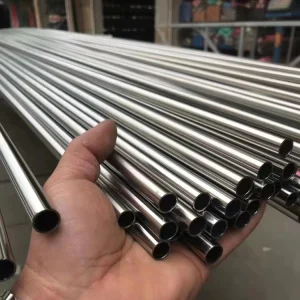
Belgium’s heritage brewing industry requires ultra-smooth internal roughness (Ra < 0.4 μm) in sanitary tubing to prevent bacterial adhesion and bio-film formation. Mechanically polished and electro-polished SUS304L and SUS316L tubes ensure uncompromised hygiene during hot wort transfer and fermentation cycles.
Petrochemical Refineries & Logistics Hubs (Antwerp Port)
Extensive tank farms and refinery cracking units in Antwerp utilize heavy-wall ASTM A312 / EN 10217-7 welded pipes and 2205 Duplex plate heat exchangers. These alloys withstand severe sulfide stress cracking (SSC) and localized pitting in saltwater coastal atmospheres.
Pharmaceutical Bioreactor Vessels (Walloon Brabant)
Biotech parks in Wavre and Gembloux demand ultra-low carbon stainless steel grades (316L with low Ferrite index) for pure water loops (WFI) and process vessels, supplied with EN 10204 3.1 chemical and mechanical material test reports (MTR).
Modern Architectural Cladding & Infrastructure (Brussels, Ghent)
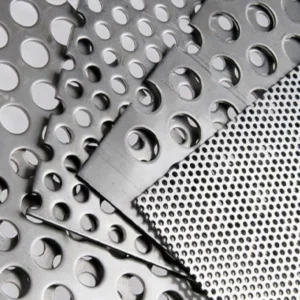
Urban revitalization projects across Belgian metropolises incorporate custom perforated metal mesh, anti-fingerprint cold-rolled sheets, and decorative PVD-coated stainless tubes for durable facade insulation, interior balustrades, and public transport hubs.
5. Quality Control Framework & Custom Fabrication Capacities
To eliminate procurement risks for procurement managers and engineering contractors in Belgium, our manufacturing ecosystem employs a rigorous multi-stage Quality Assurance (QA) system from raw ingot melting to final sea-freight container packing.
1. Material Traceability & PMI Testing
Every batch of coil, sheet, or pipe undergoes positive material identification (PMI) via optical emission spectrometry to verify exact Nickel, Chromium, and Molybdenum weight ratios prior to processing.
2. Precision Custom Machining
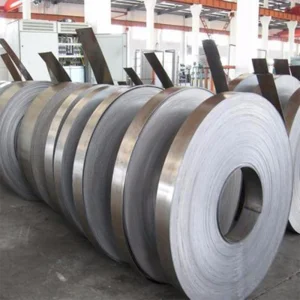
In-house processing units offer high-speed precision coil slitting, laser cutting, sheet embossing, 8K mirror polishing, custom tube bending, and end-beveling tailored to direct fabrication drawings.
3. Seaworthy Export Packaging
Materials shipped to Antwerp or Zeebrugge ports are encased in heavy-duty wooden crates, polyethylene waterproof wrapping, and edge protectors to guarantee zero transit oxidation or surface scratches.
6. Frequently Asked Questions (FAQ) for Belgian Procurement Specialists
Direct technical guidance covering international compliance, shipping routes to Belgium, material certification, and custom manufacturing specs.
Our stainless steel coils, sheets, and pipes are produced strictly in accordance with European standardizations including EN 10088-2 (for sheet/plate), EN 10217-7 (welded tubes for pressure purposes), and EN 10216-5 (seamless pressure tubes). Dimensions, tolerances, and testing procedures (hydrostatic, eddy current, ultrasonic) match equivalent DIN, BS, and ASTM specifications, backed by EN 10204 3.1 Material Test Reports.
Standard ocean transit times from major Chinese shipping terminals (Shanghai/Ningbo) to Antwerp or Zeebrugge range between 28 and 35 days. For custom fabrication orders (such as custom slitting, perforation, or mirror polishing), production lead times typically require 10 to 15 days prior to vessel loading.
Yes. As a forward-thinking global supplier, we provide comprehensive carbon emission data breakdowns required under the EU Carbon Border Adjustment Mechanism (CBAM). Our partner mills report direct emissions (Scope 1) and indirect electrical emissions (Scope 2) to streamline customs declarations into Belgium.
For food, brewery, and dairy applications, a 2B cold-rolled finish or No.4 (satin/brushed) finish polished to Ra < 0.4 μm is recommended to ensure effortless cleanability and sanitizeability. For architectural cladding in city centers, 8K mirror, BA (Bright Annealed), or PVD-tinted decorative surfaces offer superior durability and aesthetic appeal.
For standard stocked grades (such as 304, 304L, 316L), MOQ starts as low as 1 to 3 metric tons. For specialized custom alloys, unique wall thicknesses, or custom perforated sheet orders, MOQs are flexible and evaluated on a per-project drawing basis.
Complete Belgian Industry Hot Products Catalog
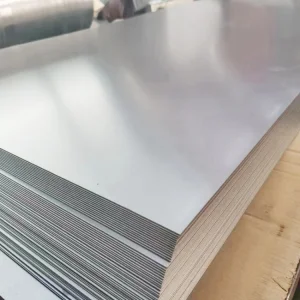
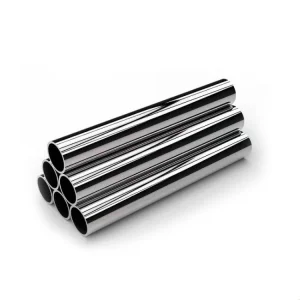
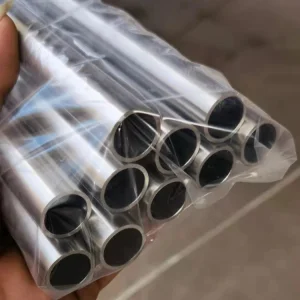
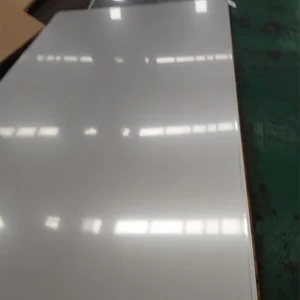
Explore our full extended range of high-performance stainless steel coils, perforated sheets, sanitary pipes, and super duplex plates available for global dispatch.
Partner with a World-Class Stainless Steel Manufacturer
Request mill-direct pricing, custom dimensional tolerances, or technical metallurgical consultations for your upcoming procurement in Belgium or across Europe.
Send Inquiry Now