
CE Certified Stainless Steel Plates & Sheets for Dutch Import
Fully compliant with European Construction Products Regulation (CPR) and Pressure Equipment Directive (PED 2014/68/EU).
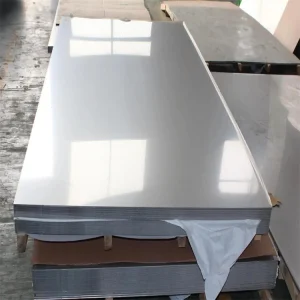
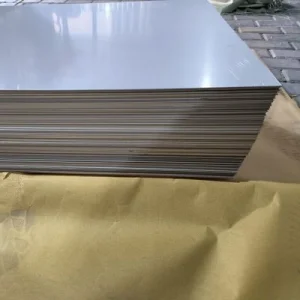
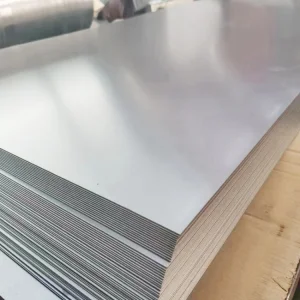
The Dutch Stainless Steel Ecosystem: Gateway to European Industry
Understanding the rigorous quality demands of North-West Europe's most advanced logistics and industrial manufacturing hub.
Connecting Global Metallurgical Production with Dutch Industrial Excellence
The Netherlands serves as the premier trade engine and industrial gateway for Western Europe. Anchored by the Port of Rotterdam, the Rotterdam-Rijnmond industrial cluster, and the technological strongholds of Brainport Eindhoven and Friesland, the Dutch market enforces some of the world's most exacting standards for imported raw materials.
With the Netherlands leading significant investments in North Sea offshore wind farms, green hydrogen development (such as the NortH2 project), high-tech machinery, and intensive agricultural/dairy processing, the demand for verified, high-performance stainless steel plates has expanded rapidly.
Dutch industrial buyers cannot afford structural failure, batch chemistry discrepancies, or regulatory delays at customs. As an established mill-direct manufacturing entity, our production lines are calibrated to meet the exact chemistry, mechanical strength, and non-destructive testing (NDT) criteria dictated by European Norms (EN 10088-2, EN 10028-7) and verified through CE Marking compliance.
CE Certification Whitepaper: Standardizing Safety & Performance
A rigorous breakdown of European compliance standards governing imported stainless steel plates for structural and pressure applications.
CPR (EU) No 305/2011 & EN 10088-2
For stainless steel plates utilized in load-bearing building structures, bridges, and civil engineering projects across Amsterdam, Rotterdam, and Utrecht, CE marking under the Construction Products Regulation (CPR) is mandatory. Our factory maintains Factory Production Control (FPC) audit trails ensuring yield strength ($R_{p0.2}$), tensile strength ($R_m$), and impact energy values strictly match EN 10088-2 specifications.
Pressure Equipment Directive (PED 2014/68/EU)
Dutch chemical plants in the Botlek area and OEM pressure vessel fabricators require stainless steel plates compliant with Annex I, Section 4.3 of PED 2014/68/EU. Our pressure-vessel grade plates (including EN 10028-7 1.4404 and 1.4462) undergo specific material appraisals, guaranteeing resistance to intergranular corrosion per ASTM A262 Practice E and ISO 3651-2.
Material Test Certificates EN 10204 3.1 / 3.2
Every shipment dispatched to Vlissingen, Rotterdam, or Schiphol cargo hubs includes a mill-issued EN 10204 3.1 Material Test Certificate (MTC). We provide full chemical melt analysis (C, Si, Mn, P, S, Cr, Ni, Mo, N), mechanical tensile testing, hardness measurements (HBW, HV, HRB), Charpy V-notch impact testing at low temperatures, and dimensional tolerance confirmation per EN 10029 Class B/C.
Stainless Steel Alloy Selection Matrix for Dutch Procurement
Comprehensive metallurgical mapping matching European Material Numbers (Werkstoff) with international equivalents and performance parameters.
| Steel Grade (EN / Werkstoff) | US Grade (AISI / UNS) | Microstructure Family | Pitting Resistance Equivalent (PREN) | Yield Strength $R_{p0.2}$ (MPa Min) | Primary Dutch Industry Application |
|---|---|---|---|---|---|
| 1.4301 / 1.4307 | AISI 304 / 304L | Austenitic | 18.0 - 20.0 | 200 - 220 | Architecture, indoor food equipment, general fabrication |
| 1.4401 / 1.4404 | AISI 316 / 316L | Austenitic | 23.1 - 26.5 | 220 - 240 | Marine fittings, dairy tanks (Friesland), coastal structures |
| 1.4541 / 1.4571 | AISI 321 / 316Ti | Stabilized Austenitic | 23.5 - 27.0 | 230 - 250 | Exhaust systems, high-temperature chemical processing |
| 1.4845 | AISI 310S | Heat Resistant | N/A (High Temp) | 210 | Furnace liners, industrial kilns, thermal processing units |
| 1.4462 | Duplex 2205 (S31803/S32205) | Austenitic-Ferritic | 32.0 - 35.0 | 450 | North Sea splash zones, desalination, chemical tankers |
| 1.4410 | Super Duplex 2507 (S32750) | Super Duplex | > 42.0 | 550 | Offshore oil & gas topsides, subsea manifolds, hydrogen pumps |
Formula Note: Pitting Resistance Equivalent Number (PREN) Calculation
$\text{PREN} = \% \text{Cr} + 3.3(\% \text{Mo} + 0.5 \% \text{W}) + 16(\% \text{N})$. For marine applications along the Dutch coast (Scheveningen, IJmuiden, Den Helder) where chloride ion concentration exceeds 19,000 mg/L, grades with a PREN > 32 (Duplex 2205) or PREN > 42 (Super Duplex 2507) are recommended to eliminate crevice corrosion and pitting.
Tailored Engineering Solutions for Core Dutch Sectors
Providing specialized stainless steel plate specifications to meet the exact working conditions across major industrial regions in the Netherlands.
1. Offshore Energy & Shipbuilding (Rotterdam & Vlissingen Maritime Hubs)
The North Sea environment represents one of the world's most aggressive corrosive atmospheres. Shipbuilders in Gorinchem and offshore rig fabricators in Vlissingen utilize our heavy-gauge Super Duplex 2507 and Duplex 2205 plates. Manufactured to ASTM A240 / EN 10028-7 standards, these plates offer exceptionally high yield strength (550 MPa min), reducing structural deadweight while resisting chloride stress corrosion cracking (SCC).
2. High-Purity Dairy & Agro-Food Processing (Friesland & Gelderland)
The Dutch dairy sector enforces strict hygiene rules set by the European Hygienic Engineering & Design Group (EHEDG). We supply cold-rolled AISI 316L (1.4404) plates with 2B and No.4 mechanical polished finishes ($R_a < 0.4\,\mu\text{m}$). These plates resist organic acid attack during pasteurization and Clean-In-Place (CIP) sanitation cycles involving nitric acid and caustic washings.
3. Water Management & Coastal Flood Protection (Delta Works Infrastructure)
Rijkswaterstaat flood protection projects and municipal water authorities require structural steel with a design lifespan exceeding 100 years. Heavy-section hot-rolled No.1 plates in grade 316L and 2205 are used for sluice gate gates, storm surge barriers, and pump impellers, standing up to continuous brackish water immersion and micro-biologically influenced corrosion (MIC).
4. Modern Sustainable Architecture (Amsterdam, Rotterdam & Utrecht)
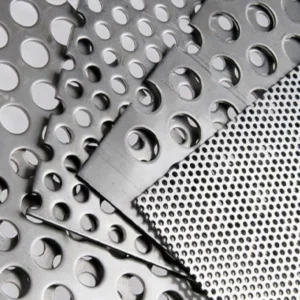
Architectural studios across Randstad specify our perforated, patterned, and 8K mirror cold-rolled sheets (grades 304 and 316) for sustainable facade cladding, urban bridges, and public transit terminals. Surface finishes feature anti-fingerprint coatings and tight flatness tolerances compliant with EN ISO 9445.
E-E-A-T Quality Testing Protocols & Batch Verification
Every plate leaving our mill undergoes strict non-destructive and destructive testing to eliminate material defect risks.
Ultrasonic Testing (UT)
Internal flaw inspection executed per EN 10160 (Classes S1/E1, S2/E2, or S3/E3). UT inspection prevents lamination defects and internal voids in heavy hot-rolled plates intended for pressure vessels.
PMI Spectroscopy Inspection
100% Positive Material Identification (PMI) via handheld X-ray fluorescence (XRF) analyzers prior to packing, ensuring zero mix-ups in nickel, molybdenum, or chromium contents.
Dimensional & Surface Profile
Laser gauge thickness measurement guaranteeing EN 10029 Class B or Class C tight thickness tolerances, along with automated surface visual inspection for scratch-free delivery.
Decarbonization, Scope 3 Tracking & The Green Hydrogen Era
Aligning with the European Green Deal, Fit for 55, and the CBAM (Carbon Border Adjustment Mechanism) framework.
Recycled Scrap-Based EAF Production
To assist Dutch buyers in reducing Scope 3 emissions, our stainless steel plates are manufactured using Electric Arc Furnace (EAF) technology with a recycled scrap ratio exceeding 80%. This process dramatically lowers carbon intensity per ton compared to traditional blast furnace routes.
Digital Product Passports (DPP) & CBAM Readiness
We provide full carbon footprint transparency for shipments into the EU. Every batch is traceable back to its melt source, providing audited environmental data sheets ready for Dutch customs CBAM declarations and EU Digital Product Passport compliance.
Specialized Alloys for Green Hydrogen Infrastructure
As the Port of Rotterdam establishes itself as Europe's central green hydrogen hub, equipment manufacturers require specialized materials that resist hydrogen embrittlement.
We manufacture low-magnetic permeability, high-purity 316L and 2507 plates engineered for high-pressure electrolyzer end-plates, liquid hydrogen cryogenic storage tanks (-253°C handling), and ammonia cracking reboilers.
Frequently Asked Questions for Dutch Stainless Steel Buyers
Clear engineering and commercial answers to simplify your import and specification process.
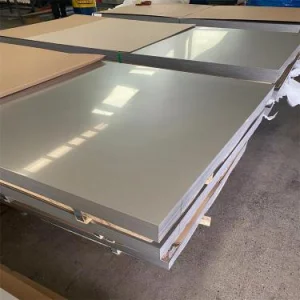
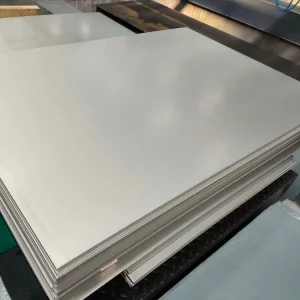
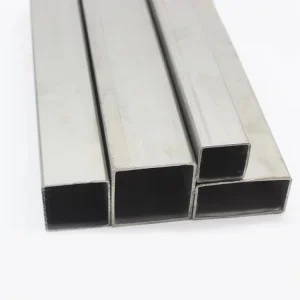
Complete Range of Certified Plates & Tubular Products
Explore our full catalogue of high-performance alloys engineered for Dutch industrial applications.
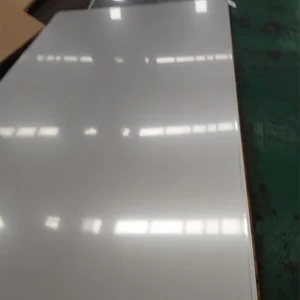
Require CE Certified Stainless Steel Plates in the Netherlands?
Connect directly with our engineering sales team for custom dimensions, MTC EN 10204 3.1 documentation, instant price quotes, and ocean freight scheduling to Rotterdam or Amsterdam.
Send Inquiry Now