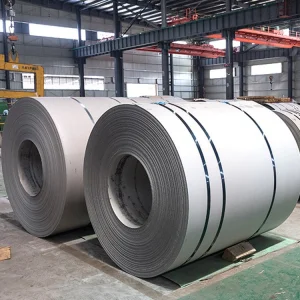
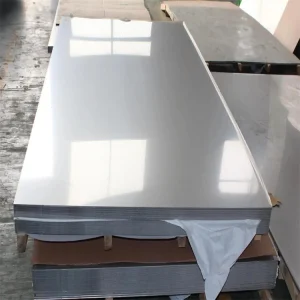
Featured Precision Stainless Steel & Polished Products
Direct factory inventory and customized processing quotes for high-grade sanitary tubes, industrial welded pipes, cold-rolled plates, and architectural profiles.
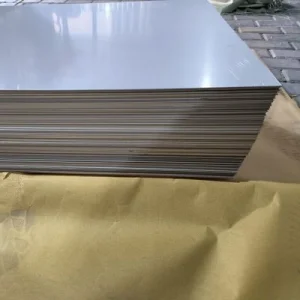
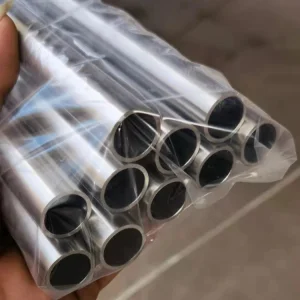
Industry Whitepaper: The Evolution of Stainless Steel Polished Tubing
A technical evaluation of surface topography, micro-passivation, and supply chain strategies for high-specification industrial applications.
In modern industrial manufacturing, fluid handling, and architectural engineering, the specification of stainless steel polished tubing has shifted from a purely aesthetic consideration to a critical performance parameter. The quality of a polished surface directly governs micro-biological resistance, fluid friction factors, corrosion resistance against halide attack, and ease of CIP (Clean-in-Place) or SIP (Sterilization-in-Place) protocols.
This comprehensive technical guide serves procurement executives, process engineers, and metallurgical buyers seeking actionable intelligence when evaluating wholesale stainless steel polished tube suppliers and quotes. By bridging the gap between raw metallurgical parameters (such as chromium depletion zones, delta ferrite content, and grain size) and commercial sourcing variables, this document establishes a benchmark framework for total cost of ownership (TCO) optimization.
Market Drivers Shaping Global Procurement
Global demand for high-purity and mechanically polished stainless steel tubes is experiencing unprecedented structural growth. Key macro-drivers include:
- Biopharmaceutical & Semiconductor Expansion: Ultra-high purity (UHP) gas and fluid lines demand internal electropolishing with surface roughness ($R_a$) values approaching $0.1\mu\text{m}$ to prevent contamination and bacterial biofilm entrapment.
- Architectural & Structural Durability: Urban infrastructure and marine construction increasingly specify high-grit (400-600 grit) mechanically polished 316L and Duplex 2205 tubing to prevent atmospheric pitting in coastal chloride micro-environments.
- Regulatory Standards Rigor: Stringent compliance frameworks—including FDA cGMP, EHEDG, ASME BPE, and PED 2014/68/EU—require fully traceable, mill-certified tubing accompanied by EN 10204 3.1 inspection certificates.
Global Procurement Dynamics & Total Cost of Ownership (TCO)
Navigating price fluctuations, raw material surcharges, and factory direct supplier evaluations.
Evaluating Surcharge Mechanics
Wholesale quotations for stainless steel tubing depend heavily on LME (London Metal Exchange) Nickel and Molybdenum pricing. Understanding the alloy surcharge calculation ($S_{alloy}$) enables procurement teams to lock in competitive pricing models and mitigate raw material volatility.
TCO Beyond FOB Pricing
Initial purchase price represents only ~60% of the lifecycle cost of high-purity tubing. Sub-standard polishing leads to premature corrosion, micro-cracking, downtime, and expensive chemical passivations. Quality mill sourcing eliminates latent surface defects.
Factory Direct Integration
Sourcing directly from integrated Chinese manufacturers like Jiangsu Renzhi Holding Group Co., Ltd. eliminates distributor markups while ensuring direct control over slitting, heat treatment, polishing grits, and non-destructive testing (NDT).
When soliciting wholesale quotes, always specify: 1) Steel mill feedstock origin (e.g., Tsingshan, TISCO, Baosteel), 2) Inner/Outer Surface Roughness ($R_a$ value in $\mu\text{m}$ or micro-inches), 3) Dimensional Tolerances under ASTM A1016 / EN ISO 1127, and 4) Passivation treatment method (Citric vs. Nitric Acid per ASTM A967).
Metallurgy, Polishing Mechanics & Surface Metrology
Understanding Mechanical Polishing (MP), Electropolishing (EP), and Surface Profilometry for Optimal Tube Specification.
Mechanical Polishing (MP) vs. Electropolishing (EP)
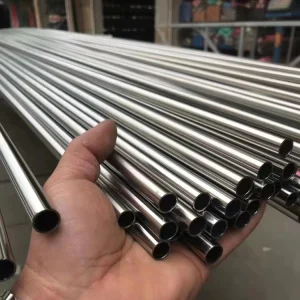
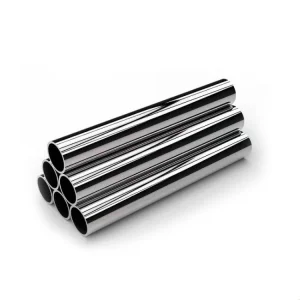
The method of surface finishing dictates both physical appearance and micro-structural corrosion resistance. Mechanical polishing utilizes flexible abrasive belts (from 180 grit up to 800 grit) to physically level microscopic peaks. Electropolishing, conversely, is an electrochemical process that preferentially dissolves high points on the metallic surface, enhancing chromium content and creating an ultra-smooth, featureless passive layer.
| Polishing Process | Typical Grit / Finish Code | Surface Roughness ($R_a$) | Microstructural Impact | Primary Industry Use |
|---|---|---|---|---|
| Commercial MP | 180 Grit / Satin Finish | $0.80\mu\text{m} - 1.20\mu\text{m}$ ($32 - 48\mu\text{in}$) | Directional scratches, cold-worked surface layer | Architectural handrails, furniture, structural frames |
| Fine MP | 320 - 400 Grit / Mirror Finish | $0.40\mu\text{m} - 0.60\mu\text{m}$ ($16 - 24\mu\text{in}$) | Reduced peak height, uniform visual reflectivity | Food processing, dairy, commercial kitchen equipment |
| Sanitary MP | 600 - 800 Grit / Bright Annealed | $0.25\mu\text{m} - 0.38\mu\text{m}$ ($10 - 15\mu\text{in}$) | Minimal micro-cavities, easy cleanability | Pharmaceutical process lines, beverage transfer |
| Electropolished (EP) | Mechanical + EP Bath | $≤ 0.13\mu\text{m} - 0.20\mu\text{m}$ ($5 - 8\mu\text{in}$) | Enriched $\text{Cr}/\text{Fe}$ ratio (> 1.5), stress-free surface | Semiconductor gas lines, UHP biotech, sterile injection |
Austenitic vs. Duplex Alloy Selection Guide
Choosing the correct alloy substrate is essential prior to polishing. Below is a chemical and mechanical matrix of primary grades supplied across global markets:
- SUS201 / AISI 201: Manganese-substituted austenitic alloy. Excellent cost efficiency for dry indoor decorative tubing. Not recommended for halide or outdoor marine exposure due to lower PREN (< 16).
- SUS304 / 304L (UNS S30400 / S30403): The universal workhorse ($18\%\text{ Cr}, 8\%\text{ Ni}$). Low carbon (304L) prevents chromium carbide precipitation during welding. Excellent polishability ($R_a < 0.2\mu\text{m}$).
- SUS316 / 316L (UNS S31600 / S31603): Molybdenum-bearing ($2-3\%\text{ Mo}$) austenitic stainless steel. Superior pitting resistance in chloride environments. Standard specification for sanitary and marine fluid lines.
- Duplex 2205 (UNS S32205 / EN 1.4462): Two-phase ferritic-austenitic structure offering yield strength double that of 304/316, alongside high resistance to stress corrosion cracking (SCC). Widely used in offshore and chemical processing systems.
Macro Industry Solutions & Sector Applications
Engineered stainless steel polished tubing solutions tailored for severe operating environments.
Biopharma & Life Sciences
ASME BPE compliant 316L tubing with internal electropolishing ($R_a \le 0.25\mu\text{m}$). Prevents protein adhesion and biofilm growth, ensuring batch-to-batch sterility in bioreactors and WFI (Water for Injection) systems.
Food, Dairy & Beverage
ASTM A270 sanitary tubes with 320-grit mechanical polish. Designed for rapid Clean-In-Place (CIP) cycle washdowns without chemical retention or flavor cross-contamination.
Architectural & High-End Decor
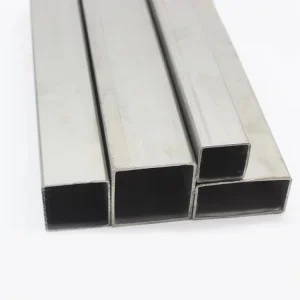
ASTM A554 201/304 decorative polished tubes with 600-grit 8K mirror or hairline brushed finishes. Ideal for luxury hotel balustrades, airport terminals, and curtain wall structures.
Quality Assurance, Compliance & Testing Standards
Rigorous quality control protocols ensuring zero-defect delivery across global export shipments.
To satisfy international engineering procurement requirements, all manufactured tubes undergo non-destructive and destructive testing prior to surface polishing and packaging:
PMI (Positive Material Identification)
XRF spectrometry verifies exact elemental alloy composition ($\text{Cr}, \text{Ni}, \text{Mo}, \text{Mn}$) prior to cold drawing or welding.
Eddy Current & Hydrostatic Testing
100% inline non-destructive electromagnetic testing per ASTM E426 to identify pinholes, weld seam discontinuities, or micro-fissures.
Laser Surface Profilometry
Automated non-contact surface profilometers log internal and external $R_a$, $R_z$, and $R_y$ parameters across the full tube length.
Every wholesale shipment includes Mill Test Certificates (MTC) conforming to EN 10204 3.1, detailing mechanical tensile tests, yield strength, elongation, hardness (HRB/HV), intergranular corrosion tests (ASTM A262 Practice E), and surface roughness inspection logs.
Global Supply Chain & Localized Support
Streamlined export logistics, protective packaging, and international trade compliance.
Seaworthy Export Packaging
Polished tubes require specialized protection against maritime corrosion and scratch damage during transoceanic transport. Standard export packaging includes individual PE sleeves, plastic end caps, sea-freight wooden cases, and anti-corrosion desiccant packs.
Customs & Tariff Optimization
Our global logistics department assists international buyers with preferential Form E, Certificate of Origin (CO), and HS Code classification (e.g., 7306.40, 7306.61) to streamline customs entry across North America, Europe, SE Asia, and the Middle East.
Just-In-Time (JIT) Buffer Stock
To minimize holding costs for OEM fabricators, we offer managed buffer stock agreements near major transit hubs in Wuxi and Shanghai, guaranteeing expedited dispatch for scheduled production runs.
Technology Roadmap: Next-Generation Polishing & Green Metallurgy
Investments in Industry 4.0 automation, AI visual quality control, and low-carbon stainless steel production.
AI-Driven Surface Flaw Inspection
Integration of high-speed 3D optical cameras and machine learning models along polishing lines. Micro-scratches, pits, and orange-peel effects are identified and quarantined automatically at line speeds exceeding 30 meters per minute.
Closed-Loop Acid-Free Passivation
Transitioning toward eco-friendly citric and ultrasonic passivation systems that eliminate hazardous nitric acid wastewater while exceeding ASTM A967 performance benchmarks.
Green Hydrogen Bright Annealing
Replacing traditional ammonia-dissociated atmosphere furnaces with 100% green hydrogen bright annealing lines. Eliminates oxide scale formation while drastically reducing Scope 1 manufacturing carbon emissions.
Frequently Asked Questions (Technical & Sourcing FAQ)
Detailed answers to the most common inquiries from industrial engineers and international procurement leads.
What factors directly influence the wholesale quotation for stainless steel polished tubes?
Wholesale prices are structured based on: 1) Steel grade and current LME alloy surcharges (e.g., 316L with Molybdenum carries a premium over 304), 2) Tube dimensions and wall thickness tolerances, 3) Required surface finish ($R_a$ micro-inch rating and mechanical vs. electropolishing), 4) Total order tonnage/volume, and 5) Specified non-destructive testing requirements (e.g., Hydrostatic, Eddy Current, or Radiographic weld inspection).
How do you verify internal surface roughness ($R_a$) for sanitary tubing orders?
We employ diamond-stylus profilometers and laser interferometers to measure internal $R_a$ values across multiple cut samples per heat lot. Inspection reports detailing $R_a$, $R_z$, and maximum peak-to-valley heights ($R_y$) are provided alongside the MTC EN 10204 3.1 documentation package.
What is the difference between ASTM A270, ASTM A554, and ASTM A269 tube standards?
ASTM A270 covers seamless and welded austenitic/ferritic stainless steel sanitary tubing intended for dairy, food, and pharmaceutical applications with strict surface finish controls. ASTM A554 specifies ornamental and structural welded tubing where visual finish and dimensional geometry dominate. ASTM A269 governs general service tubing requiring corrosion resistance and elevated temperature performance without mandatory surface polishing specs.
Can custom tube diameters, wall thicknesses, and special cut lengths be ordered?
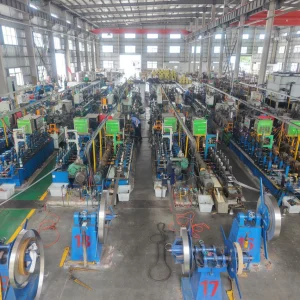
Yes. With over 80 welded pipe lines and comprehensive cold-drawing facilities in Wuxi, we manufacture custom outer diameters (OD from 6mm to 610mm), non-standard gauge wall thicknesses, and precision cut-to-length options (tolerance $\pm 0.5\text{mm}$) tailored to customer engineering drawings.
How do you protect mirror-polished tubes from water spots or scratches during ocean freight?
Every tube undergoes automated solvent cleaning and drying prior to packaging. Polished outer surfaces are wrapped in protective PE film or woven sleeves. Tubes are bundled with plastic end caps, packed with vapor-phase corrosion inhibitor (VCI) paper, and secured in fumigated ply-wooden cases designed for multi-modal shipping.
Additional Stainless Steel Product Lines & Wholesale Quotations
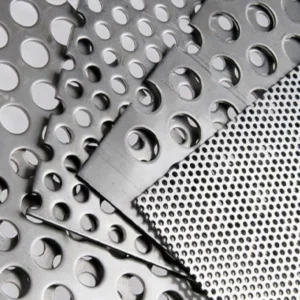
Explore our extended catalog of stainless steel coils, precision strips, structural pipes, and specialized plates available for immediate factory order.