
Engineered Stainless Steel Solutions
Explore our top-tier stainless steel sheets, coils, strips, and industrial pipes manufactured under rigorous chemical pickling and metallurgical quality standards.

Wholesale Perforated Stainless Steel Sheet from China Suppliers & Factory - Durable, Custom Metal Mesh
View Product Details
Custom High-Quality 201 Stainless Steel Strip/Coil from China Suppliers - Reliable Factory for Your Needs
View Product Details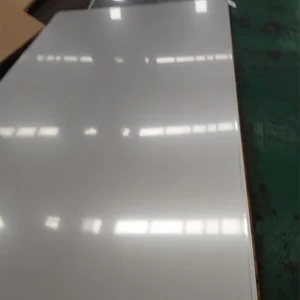
Wholesale Super Duplex Steel Plate 2507 UNS S32750 - High Corrosion Resistance | China Factory
View Product Details
Custom Prime Quality 201 Stainless Steel Pipe - Durable, Glossy & Ideal for Stairs and Handrails
View Product Details
CE Certification China Perforated Stainless Steel Sheet Suppliers - High-Quality Metal Mesh
View Product Details
China High-Quality 201 Stainless Steel Pipe | Durable and Aesthetic Solutions from Our Factory
View Product Details
Wholesale China SUS304 Stainless Steel Cold-Rolled Plate - Corrosion-Resistant Food Grade Material
View Product Details
Custom Stainless Steel Industrial Welded Pipe - Quality 201, 304, 316L Wide Specifications & High Strength
View Product DetailsThe Metallurgical Necessity of Stainless Steel Pickling & Passivation
An authoritative engineering overview on oxide scale removal, chromium depletion kinetics, and surface passive film passivation for heavy industrial B2B procurement.
1. Understanding Industrial Pickling: Chemical Mechanisms & Passive Layer Restoration
In high-grade stainless steel manufacturing, thermal processing—such as hot rolling, annealing, plasma cutting, and welding—exposes the metal surface to elevated temperatures above 400°C. This exposure triggers rapid oxidation, forming a complex, non-uniform layer of iron, chromium, and nickel oxide scale (often visible as weld heat tint or dark anneal scale). Crucially, the formation of this scale extracts chromium directly from the metal immediately beneath it, leaving behind a chromium-depleted boundary zone.
When this chromium-depleted zone remains intact, the stainless steel loses its inherent corrosion-resistant properties, rendering grades like 304, 316L, or 2205 duplex highly susceptible to localized pitting, crevice corrosion, and intergranular cracking in chloride-rich environments. Stainless steel pickling is the precise chemical process of immersing steel in specialized acid solutions to chemically dissolve the outer oxide scale and etch away the underlying chromium-depleted layer, restoring the bulk chromium mass fraction required for self-healing passive behavior.
Technical Insight: Pickling is not merely a visual surface cleaning step; it is a critical metallurgical purification procedure. Without effective pickling followed by nitric or citric acid passivation, stainless steel components will fail prematurely in chemical, offshore, and sanitary processing environments.
Chemical Kinetics of Mixed Hydrofluoric-Nitric Acid Baths
The global industry gold standard for stainless steel pickling relies on a balanced bath of Hydrofluoric Acid (HF) and Nitric Acid ($HNO_3$). Each component performs a distinct metallurgical role in scale removal:
- Nitric Acid ($HNO_3$): Acts as a powerful oxidizing agent. It oxidizes the underlying base metal, accelerating dissolution beneath the oxide scale, and maintains an elevated redox potential in the solution.
- Hydrofluoric Acid (HF): Acts as a potent complexing agent. HF dissolves insoluble chromium oxides ($Cr_2O_3$), silica contaminants, and titanium complexes by forming soluble hexafluorochromate and hexafluoroferrate ions ($[FeF_6]^{3-}$ and $[CrF_6]^{3-}$).
Following acid bath etching, exposure to ambient oxygen or specialized passivation baths allows chromium to instantly react with oxygen, forming a dense, continuous, 1.5-to-3.0 nanometer-thick Chromium Oxide ($Cr_2O_3$) passive film. This transparent barrier prevents further ionic exchange, guaranteeing superior longevity in harsh operating fluids.
Global Commercial Landscape & Localized Applications
How modern pickling and passivation practices drive performance across major industrial infrastructure worldwide.
Marine & Offshore Engineering
Offshore oil platforms, subsea manifolds, and desalination plants require Super Duplex 2507 and 316L steel treated with high-concentration pickling paste to resist severe chloride pitting in seawater conditions with high PREN demands.
Semiconductor & Ultra-Pure Water (UPW)
Fab processing pipework uses electro-pickled and chemical-passivated 316L VIM/VAR tubing. Extremely low surface roughness ($R_a \le 0.25 \mu m$) prevents micro-bacterial entrapment and ionic contamination in silicon wafer fabrication.
Chemical & Petrochemical Processing
Pressure vessels, heat exchangers, and storage tanks crafted from 304L, 316L, and 310S require full-immersion pickling bath treatments to handle concentrated organic acids, high-temperature gases, and caustic solutions safely.
Future Trends in Green & Automated Steel Pickling
The stainless steel surface treatment sector is undergoing a massive transformation toward zero-emission, automated, and non-toxic chemical processing.
Nitrate-Free & Hydrogen Peroxide Systems
Replacing $HNO_3$ with $H_2O_2$ and organic acids to completely eliminate hazardous NOx gaseous emissions and reduce nitrates in industrial wastewater discharge.
Zero Liquid Discharge (ZLD) Systems
Implementation of diffusion dialysis and membrane crystallization technologies to recover over 95% of spent free acids while reclaiming metal salts ($Fe, Cr, Ni$) as secondary raw materials.
AI Concentration & Electrochemical Sensing
Real-time spectral analysis and AI algorithms monitoring free acid ratios, iron ion accumulation, and bath temperature to automatically dose chemistry for uniform finish.
Laser-Chemical Synergy Processing
Combining high-power fiber laser ablation for heavy surface scale pre-treatment with ultra-light eco-pickling, cutting chemical consumption by up to 80%.
Stainless Steel Grade & Pickling Specification Matrix
Compare alloy families, chemical compositions, pitting resistance, and recommended surface pickling parameters for optimal engineering selection.
| Steel Grade | Structure Family | Chemical Composition | PREN Rating | Pickling Bath Medium | Corrosion Resistance | Typical Application |
|---|---|---|---|---|---|---|
| 201 | Austenitic (Cr-Mn) | 16-18% Cr, 3.5-5.5% Ni, 5.5-7.5% Mn | ~17.0 | Dilute HF + $HNO_3$ (Short Time) | Moderate | Indoor decorative tubing, furniture, curtain rods |
| 304 / 304L | Austenitic (Cr-Ni) | 18-20% Cr, 8-10.5% Ni, <0.03% C | ~19.0 | Standard $HF-HNO_3$ Bath (45°C) | High | Food processing, architectural panels, fluid pipes |
| 316 / 316L | Austenitic (Cr-Ni-Mo) | 16-18% Cr, 10-14% Ni, 2-3% Mo | ~25.0 | Standard $HF-HNO_3$ Bath (50°C) | Very High | Marine fittings, chemical tanks, heat exchangers |
| 310S | High-Temp Austenitic | 24-26% Cr, 19-22% Ni | ~27.0 | High-Concentration HF Gel/Bath | High Heat | Furnace components, boiler equipment, kilns |
| 430 | Ferritic | 16-18% Cr, <0.75% Ni | ~16.5 | Inhibited Nitric/Organic Solutions | Moderate | Home appliances, interior trims, kitchen sink units |
| 2205 (UNS S31803) | Duplex | 22% Cr, 5% Ni, 3% Mo, 0.18% N | ~35.0 | Heavy Duty Immersion Pickling | Superior | Oil & gas pipelines, marine desalination, pressure vessels |
| 2507 (UNS S32750) | Super Duplex | 25% Cr, 7% Ni, 4% Mo, 0.27% N | >42.0 | Specialized High-Temp Immersion Bath | Ultra-Extreme | Subsea oil equipment, chemical carriers, flue gas scrubbers |
* Note: Pitting Resistance Equivalent Number ($PREN = \%Cr + 3.3\%Mo + 16\%N$). Higher PREN values signify superior resistance to localized chloride pitting.
Integrated Production & Quality Control Excellence
Located in Wuxi, Jiangsu, China, Jiangsu Renzhi Holding Group Co., Ltd. delivers end-to-end manufacturing with traceable feedstock and comprehensive testing.
Raw Material Sourcing & Processing Plant
Our facility operates in Huishan District, Wuxi, close to primary steel logistics hubs. We source high-grade slab and coil stock directly from leading global mills: Tsingshan, TISCO, POSCO, and Baosteel. By managing every stage in-house—slitting, flattening, surface polishing, embossing, and automated pipe welding—we eliminate intermediate quality loss and keep strict control over chemical mill test certifications (MTC).
- 5 Automatic Flattening & Slitting Lines: Precision width cutting for custom strips.
- 6 Polishing Lines: Mirror 8K, No.4 brushed, Hairline, and Satin finishes.
- 2 Embossing Lines: Textured structural patterns for architectural applications.
- 80+ Welded Pipe Lines: High-frequency TIG and Plasma automatic pipe mills.
Quality Assurance & Testing Protocols
Every order dispatched from our Wuxi factory complies with global standards including ASTM A240, EN 10088-2, and JIS G4304. Before international packaging, products undergo multi-stage quality verifications to guarantee structural and surface integrity:
- Intergranular Corrosion Testing: Conducted per ASTM A262 Practice E to ensure zero weld-line sensitization.
- Hydrostatic & Eddy Current NDT: 100% non-destructive testing on fluid-carrying pipes.
- Surface Roughness ($R_a$) & Gloss Profilometry: Laser profilometer analysis for polished and pickled sheets.
- Seaworthy Export Packaging: Anti-rust paper, edge protectors, heavy-duty wooden cases, and plastic film wrapping.
Industrial Tubing, Coils & Specialty Plates
Complete your sourcing needs with our mill-certified pipes, low-carbon variants, hot-rolled coils, and super duplex steel plates.

CE Certification China SUS304/304L Low Carbon Stainless Steel Pipe - Enhanced Corrosion Resistance & Welding
View Product Details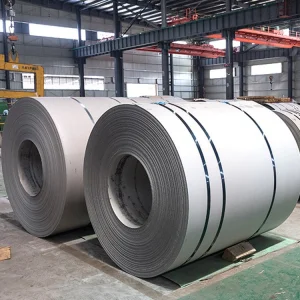
Wholesale China Hot Rolled Stainless Steel Coil Suppliers | Heavy-Duty Industrial Grade Factory Quality
View Product Details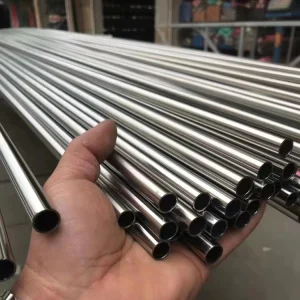
China Stainless Steel Pipe Factory - Direct Supplier with Certification & Custom Processing Services
View Product Details
Wholesale High Cost-Effective 201 Cold Rolled Stainless Steel Sheet - Precision Tolerances Available
View Product Details
CE Certification Hot Rolled Stainless Steel Coils | Thick & Durable for Heavy-Duty Industrial Use
View Product Details
Wholesale SUS304/304L Stainless Steel Strip for Pipe Suppliers & Factories - Slit to Custom Precision Widths
View Product Details
Wholesale Prime Quality 201 Stainless Steel Pipe Suppliers - Durable, Glossy Tubes from Trusted China Mill
View Product Details
CE Certification 2507 Super Duplex Steel Plate Supplier - High Strength & Corrosion Resistance
View Product DetailsFrequently Asked Technical & Commercial Questions
Detailed answers regarding stainless steel pickling chemistry, surface specifications, export logistics, and order parameters.
What is the primary difference between stainless steel pickling and passivation?
Which stainless steel grades does Jiangsu Renzhi Holding Group supply?
How does pickling impact the pitting resistance equivalent number (PREN)?
Which manufacturing and testing standards do your stainless products meet?
What raw material origin and mill certificates do you provide?
What surface finishes can be supplied after pickling or cold rolling?
How are products packaged for long-distance maritime transport?
Partner with a Certified Stainless Steel Pickling & Pipe Manufacturer
Whether you require custom slitting, specialized chemical pickling surface finishes, or high-volume wholesale pipe shipments, our engineering sales team in Wuxi is ready to support your technical specifications.
Plant Location: No.592 Shengan West Road, Huishan District, Wuxi, Jiangsu, China