
Primary Wholesale Stainless Steel Portfolio (Part I)
Direct factory products manufactured with certified annealing thermal cycles, consistent chemistry, and traceable origin.

CE Certification China Perforated Stainless Steel Sheet Suppliers - High-Quality Factory Products for Industrial and Architectural Use Suppliers, Factory
View Product Details
Custom High Cost-effective 201 Cold Rolled Stainless Steel Sheet from China Suppliers and Factory – Accurate Thickness and Performance Manufacturer, Factories
View Product Details
CE Certification Perforated stainless steel sheet Manufacturer, Suppliers
View Product Details
China China Factory Suppliers for 316L Stainless Steel Sheet - High-Quality and Durable Metal Solutions Supplier, Suppliers
View Product Details
China China Suppliers - High-Quality Stainless Steel Industrial Welded Pipes from Reliable Factory Quotes, Pricelist
View Product Details
Custom Prime Quality 201 Stainless Steel Pipe - Durable & Aesthetic | China Suppliers & Factory for Stair Railings and Household Use Manufacturers, Suppliers
View Product Details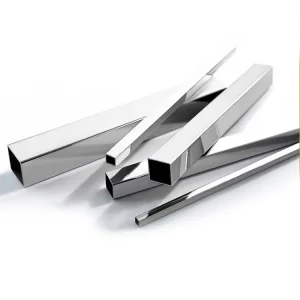
CE Certification Telescopic Stainless Steel Mop Handle Tube, Adjustable, 22mm OD, Anti-Fingerprint Manufacturers, Quotes
View Product Details
Wholesale Prime Quality 201 Stainless Steel Pipe Suppliers in China - Durable, Glossy Tubes from Trusted Factory Manufacturers, Supplier
View Product DetailsUnderstanding Stainless Steel Annealing: Thermodynamics & Metallurgy
A comprehensive examination of how controlled thermal treatment restores ductility, eliminates work hardening, and maximizes corrosion performance for global industrial applications.
In high-precision industrial manufacturing, purchasing annealed stainless steel is not merely a material acquisition; it is a critical engineering safeguard. Annealing represents a sophisticated heat treatment process wherein stainless steel is elevated above its critical recrystallization temperature, held for a calibrated duration, and subsequently cooled at controlled rates. This thermal cycle fundamentally restructures the alloy's crystalline lattice, dissolving precipitated chromium carbides back into the solid solution matrix and relieving residual internal stresses induced by hot or cold rolling operations.
Without proper solution annealing, stainless steel alloys—particularly austenitic grades like 304, 304L, 316, and 316L—suffer from chromium depletion near grain boundaries (a phenomenon known as sensitization). When exposed to aggressive thermal windows between 450°C and 850°C without subsequent solution quenching, chromium reacts with carbon to form M23C6 carbides. This leaves boundary areas deficient in free chromium (below the critical 10.5% threshold required to maintain a passive protective oxide layer), rendering the metal susceptible to catastrophic intergranular corrosion.
Solution Annealing (1040°C - 1150°C)
Designed primarily for 300-series austenitic steels and duplex grades. High-temperature heating followed by rapid water or forced-air quenching retains single-phase austenite, ensuring maximum corrosion resistance and minimum yield strength for complex deep-drawing operations.
Bright Annealing (BA)
Executed inside an atmosphere-controlled furnace containing pure hydrogen or dissociated ammonia (N2 + H2) with a dew point below -50°C. Prevents surface oxidation and scaling entirely, yielding a reflective, mirror-like finish ideal for sanitary, semiconductor, and decorative tubes.
Stress-Relief & Soft Annealing
Applied to ferritic (430) and martensitic stainless steels. Calibrated lower-temperature holds relieve sub-critical strain caused by severe machining, bending, or welding without altering magnetic permeability or causing phase transformation.
Macro Commercial Dynamics & Global Procurement Trends
Analyzing key industrial sectors driving global demand for wholesale annealed stainless steel pipes, sheets, coils, and specialty alloys.
01. Chemical, Petrochemical & Process Engineering
In chemical synthesis plants, refineries, and fertilizer complexes, exposure to hot organic acids, chlorides, and nitric compounds requires zero tolerance for sensitization. Solution annealed 316L and 310S stainless steel plates and pipes ensure extended equipment service life by retaining uniform passivity across heat-affected zones (HAZ) of field welds.
02. Ultra-High Purity (UHP) & Semiconductor Facilities
Semiconductor fabrication plants (Fabs) require gas delivery lines with internal surface roughness ($Ra$) below 0.13 µm. Bright annealed (BA) and electropolished (EP) stainless steel tubing prevents particulate generation, moisture retention, and outgassing under ultra-high vacuum conditions.
03. Food, Beverage & Pharmaceutical Processing
Meeting ASME BPE and EHEDG standards demands smooth, non-porous surfaces. Annealed 304 and 316L sanitary tubes eliminate microscopic crevices where bacteria accumulate, enabling seamless Clean-in-Place (CIP) and Sterilize-in-Place (SIP) thermal sanitation routines.
04. Desalination & Offshore Energy Infrastructure
Marine environments require superior Pitting Resistance Equivalent Numbers (PREN). Solution annealed Duplex 2205 and Super Duplex 2507 offer yield strength exceeding 550 MPa paired with high resistance to chloride-induced stress corrosion cracking (SCC).
Annealed Stainless Steel Grade Comparison & Properties
Comprehensive engineering reference for material selection, chemical compositions, corrosion thresholds, and standard applications.
| Grade | Metallurgical Class | Annealing Temp (°C) | PREN Rating | Mechanical Yield (MPa) | Primary Wholesale Applications |
|---|---|---|---|---|---|
| 201 | Austenitic (Cr-Mn-Ni) | 1010 - 1050 | ~16 - 18 | ≥ 295 | Decorative & Commercial Stair railings, mop handles, indoor curtain rods, architectural trim. |
| 304 / 304L | Austenitic (18/8 Cr-Ni) | 1040 - 1100 | ~18.5 - 20.0 | ≥ 205 | General Industrial Food processing equipment, deep-drawn sinks, standard welded pipe, sanitary sheet. |
| 316 / 316L | Austenitic (2-3% Mo) | 1040 - 1120 | ~23.0 - 25.5 | ≥ 220 | Chemical & Marine Marine hardware, pharmaceutical process lines, heat exchangers, pulp & paper. |
| 310S | High-Temp Austenitic | 1040 - 1150 | ~24.0 - 26.0 | ≥ 205 | Extreme Heat Furnace parts, radiant tubes, heat treatment fixtures, high-temp exhaust systems. |
| 430 | Ferritic (16-18% Cr) | 780 - 850 | ~16.0 - 17.5 | ≥ 240 | Magnetic / Dry Indoor Home appliance panels, kitchen trim, automotive exhaust cladding, cabinet hardware. |
| Duplex 2205 | Austenitic-Ferritic | 1020 - 1080 | ≥ 34.0 | ≥ 450 | High-Strength Chemical Oil & gas separators, seawater systems, chemical tankers, pressure vessels. |
| Super Duplex 2507 | Highly Alloyed Duplex | 1040 - 1100 | ≥ 42.0 | ≥ 550 | Aggressive Chloride Reverse osmosis plants, offshore rigs, flue gas desulfurization (FGD), mining equipment. |
Factory Operations & Quality Control Systems in Wuxi
Combining primary steel mill feedstock with state-of-the-art cold rolling, inline bright annealing, precision slitting, and non-destructive testing.
Jiangsu Renzhi Holding Group Co., Ltd. operates a modern manufacturing facility spanning Huishan District, Wuxi, China. By consolidating raw feedstock procurement, cold rolling, controlled-atmosphere heat treatment, surface finishing, and tube welding under a unified management system, Renzhi provides global procurement managers with an unbroken chain of quality assurance.
Traceable Mill Sources
Our raw material coils and slabs are direct-sourced from premier stainless steel producers including Tsingshan, TISCO, POSCO, and Baosteel. Every heat batch includes verified chemical ladle analysis and mechanical certification.
Advanced Processing Lines
Equipped with 5 automatic flattening and slitting lines, 6 surface polishing lines (8K mirror, No.4, hairline), and 2 sheet embossing lines capable of achieving custom sheet geometry and precise strip tolerances.
80+ Pipe Welding Mills
High-frequency TIG/Plasma automated welding lines produce sanitary, industrial structural, decorative, and heat exchanger tubing tested via continuous Eddy Current (ET) and hydrostatic pressure protocols.
Global Compliance Standards
Every shipment is delivered with standard EN 10204 3.1 Material Test Reports (MTRs), confirming compliance with ASTM A240, ASTM A312, EN 10088-2, JIS G4304, ASME, and PED 2014/68/EU directives.
Future Trends in Stainless Steel Heat Treatment & Decarbonization
Exploring green hydrogen bright annealing, Industry 4.0 thermal monitoring, and next-generation ultra-clean alloys.
Green Hydrogen Furnace Systems
Transitioning from fossil-fuel ammonia cracking to 100% green hydrogen derived from renewable electrolysis. Eliminates carbon intensity during the annealing cycle while elevating surface purity.
Digital Twin Microstructure Modeling
Integrating infrared optical pyrometry with artificial intelligence to continuously track grain growth dynamics inside continuous bright annealing furnaces, preventing batch variability.
Ultra-Low Carbon & Nitrogen Control
Developing vacuum-induction melted (VIM) and ESR-refined annealed stainless steels designed specifically for liquid hydrogen infrastructure (-253°C storage) and extreme cryogenic duty.
Wholesale Procurement & Technical Q&A
Expert insights regarding alloy selection, thermal treatment options, quality verification, and international shipping protocols.
What is the functional difference between Bright Annealing (BA) and 2B Annealed & Pickled Finish?
2B Finish: Cold-rolled, heat-treated (annealed) in an open furnace atmosphere, pickled in acid to remove oxide scale, and given a final light skin-pass roll. It exhibits a smooth, slightly reflective silver matte appearance suitable for general industrial fabrication.
Bright Annealed (BA): Annealed in a sealed, oxygen-free hydrogen/nitrogen furnace atmosphere. No oxide scale forms, eliminating the need for acid pickling and preserving an ultra-smooth, mirror-like surface ideal for sanitary, pharmaceutical, and high-aesthetic architectural installations.
Which stainless steel grades does Jiangsu Renzhi Holding Group supply in annealed condition?
We supply a complete spectrum of certified grades including austenitic 201, 304, 304L, 316, 316L, 310S, and 321, ferritic 430, and high-performance duplex grades Duplex 2205 and Super Duplex 2507. Products are available in seamless/welded pipe, tube, plate, sheet, strip, and coil formats.
How does solution annealing prevent intergranular corrosion in welded stainless steel structures?
During welding, regions adjacent to the weld bead spend time in the 450°C–850°C sensitization zone, allowing chromium carbides to precipitate at grain boundaries and depleting free chromium. Heating the entire component to 1040°C–1150°C dissolves these carbides back into solution, and rapid quenching traps the chromium uniformly across the austenitic matrix, completely restoring corrosion passivity.
Which quality assurance standards and certificates accompany your stainless steel shipments?
All orders include traceable EN 10204 3.1 Material Test Reports (MTRs) detailing chemical composition via optical emission spectroscopy, mechanical tensile/yield test data, hardness tests, and intergranular corrosion testing (ASTM A262 Practice E). Third-party inspection (SGS, TÜV, Lloyd’s Register) is available upon request.
What parameters are required to receive an accurate wholesale stainless steel quote?
To provide a competitive mill-direct quote, please specify: 1) Material Grade (e.g., 304L, 316L, 2205), 2) Product Form & Dimensions (Thickness, Width/OD, Length/Wall), 3) Annealing & Surface Finish (2B, BA, No.1, No.4), 4) Quantity (Tonnage or Total Meters), and 5) Destination Port for CIF/FOB pricing.
Primary Wholesale Stainless Steel Portfolio (Part II)
Explore specialty plates, industrial welded pipes, cold-rolled sheets, and coils engineered for extreme service conditions.

CE Certification 2507 Super Duplex Steel Plate Supplier in China - High Strength and Corrosion Resistance from Leading Factory Factory, Pricelist
View Product Details
China Stainless Steel Industrial Welded Pipe - China Suppliers & Factory | 201, 304, 316L Materials, Wide Specifications Manufacturers, Supplier
View Product Details
Custom China SUS304 Stainless Steel Cold-Rolled Plate Supplier - Corrosion-Resistant Food Grade Factory Material Manufacturers, Factories
View Product Details
Wholesale China Hot Rolled Stainless Steel Coil Suppliers - Durable Thick & Wide Industrial Coils from Trusted Factory Manufacturer, Factories
View Product Details
CE Certification China Suppliers Factory Industrial Stainless Steel Welded Pipe - 201, 304, 316L, High-Quality & Wide Specifications Supplier, Suppliers
View Product Details
China China SUS304 Cold-Rolled Stainless Steel Plate Suppliers | Factory Direct Food Grade Corrosion-Resistant Material Manufacturer, Quotes
View Product Details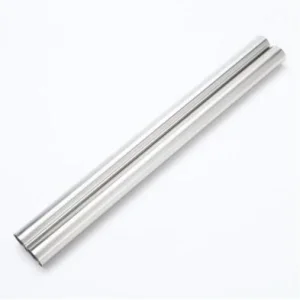
Wholesale 201 Stainless Steel Curtain Rod Tube, 25mm OD, Powder Coated, Custom Length Factory, Pricelist
View Product Details
Wholesale 2507 Super Duplex Stainless Steel Plate - High Corrosion Resistance | China Suppliers & Factory Manufacturers, Supplier
View Product DetailsRequest Your Custom Annealed Stainless Steel Wholesale Quote
Connect with our sales engineering team in Wuxi, China. Send your required material grade, specs, surface finish, and target port for factory-direct pricing within 24 hours.